 Ferndale Exterior
 Two Products Homeowners Ask About
When Ferndale homeowners start researching siding replacement, two names come up again and again: James Hardie fiber cement and LP SmartSide engineered wood. Both are marketed as durable upgrades over vinyl or old cedar lap siding, and both have a real track record in the Pacific Northwest. They are not the same material, though, and the differences matter more here than they would in a dry climate. This page walks through what each product actually is, how they perform against Whatcom County's salt air, driving rain, and long moss season, and why our company made the decision years ago to install only James Hardie.
This isn't a takedown of LP SmartSide. It's a legitimate engineered wood product with a real place in the market. Our goal is to explain the trade-offs honestly so you can make an informed call, whether you hire us or someone else.
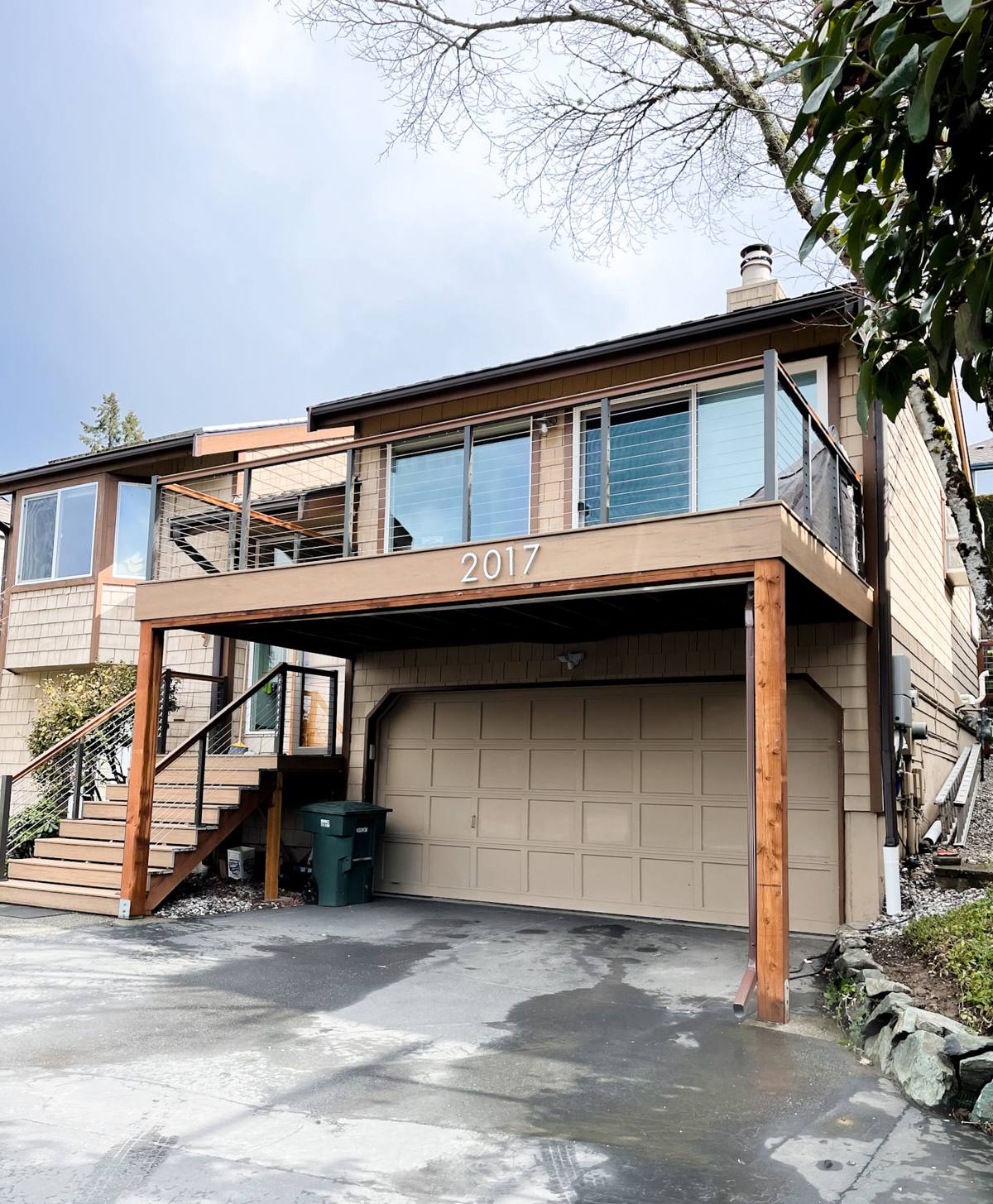
What LP SmartSide Actually Is
LP SmartSide is an engineered wood product. Wood strands are bonded with resins under heat and pressure, then treated with a zinc borate additive intended to resist fungal decay and insects. The panels or lap boards are finished with a primer coat, and many installers apply a topcoat paint on site.
Because the core material is still wood-based, it shares some of wood's basic behaviors: it can absorb moisture at cut edges, panel joints, and fastener penetrations if those areas aren't sealed correctly during installation. The zinc borate treatment helps resist rot, but it doesn't make the product waterproof — it makes it more resistant to the biological decay that untreated wood suffers from. Correct caulking, flashing, and edge-sealing at every cut is what keeps water out over the long run, and that puts a lot of weight on installation quality.
What James Hardie Fiber Cement Actually Is
James Hardie siding is fiber cement: a mix of Portland cement, ground sand, and cellulose fiber, cured into a rigid board. There is no wood pulp core to swell, and no resin binder to break down under repeated wetting and drying cycles. Hardie also engineers its product lines by climate zone — homes here fall under the HZ5 line, formulated for regions with more moisture exposure and freeze-thaw activity than the HZ10 line used in the desert Southwest.
Fiber cement is heavier and more brittle than engineered wood, which means it has its own installation requirements (proper fastening, blade selection for cutting, and following Hardie's published fastening and clearance specs). But its core composition doesn't feed mold, doesn't provide food value for insects, and is non-combustible — a genuine advantage during wildfire smoke and ember season, which has become a more regular late-summer concern even west of the Cascades.
Side-by-Side Material Comparison
| Factor | James Hardie Fiber Cement | LP SmartSide Engineered Wood |
|---|---|---|
| Core material | Cement, sand, cellulose fiber | Wood strands with resin binder, zinc borate treatment |
| Moisture response | Does not swell or rot; dimensionally stable when installed to spec | Resistant to decay when sealed; vulnerable at unsealed cuts and joints |
| Combustibility | Non-combustible | Combustible (wood-based core) |
| Factory finish | ColorPlus baked-on finish, multiple coats | Primed; topcoat often applied on-site or shortly after install |
| Climate-specific engineering | HZ5 line built for PNW moisture and freeze-thaw exposure | Single national product formulation |
| Typical warranty length | 30-year limited, non-prorated on siding; 15-year on ColorPlus finish | 5-year finish warranty common; substrate warranty terms vary by product line |
Why Ferndale's Climate Raises the Stakes
Ferndale sits close enough to Bellingham Bay and the Salish Sea that salt-laden air is a real factor on siding, trim, and fasteners — not just on waterfront lots, but well inland whenever onshore wind carries moisture across town. Add Whatcom County's driving winter rain, which comes in sideways during a lot of our storms, and siding here takes on water at wall assemblies that a drier climate never tests.
Then there's moss. Our extended damp season, especially on north- and west-facing walls that don't get much sun exposure, creates ideal conditions for moss and algae growth on any siding material that holds surface moisture. Fiber cement's non-organic composition means moss can grow on the surface (as it can on almost anything exposed to constant dampness) but it isn't feeding on the material the way it can compromise an engineered wood product's edges if moisture gets past the finish. That distinction matters over a 20- or 30-year ownership timeline, not year one.
None of this means engineered wood siding fails immediately in Ferndale. It means the margin for installation error is smaller here than in a drier region, and any lapse in caulking, flashing, or field-finish maintenance shows up faster.
Installation Sensitivity: Where the Real Difference Shows Up
Most siding problems, on any product, trace back to installation rather than the material itself. But the consequences of a mistake differ by product:
- Cut edges: Engineered wood needs field-sealing at every cut edge with the manufacturer-specified sealant, every time, with no gaps. Fiber cement is more forgiving because the core material doesn't absorb and swell the way a wood strand product can.
- Fastener placement: Both products require correct nailing patterns and clearances, but fiber cement's rigidity holds a tighter reveal over time; engineered wood can show more movement at seams as it responds to moisture cycling.
- Caulking maintenance: Any siding system relies on caulking at joints and penetrations, but engineered wood's long-term performance leans more heavily on that caulking staying intact, since it's one of the main barriers protecting the wood core.
- Grade clearance: Keeping the bottom edge of the siding well above grade and hardscape matters for every product, but it's especially critical for a wood-based product sitting in a region with our rainfall totals.
We install fiber cement to Hardie's published fastening, clearance, and flashing specifications on every job, because that's what keeps the 30-year warranty valid and what actually keeps water out of the wall assembly.
Finish and Long-Term Appearance
James Hardie's ColorPlus technology bakes multiple coats of finish onto the board at the factory, under controlled conditions, before it ever reaches a job site. That's a meaningfully different process than field-applying a topcoat over a primed engineered wood panel on a ladder in Whatcom County weather, where humidity and temperature swings affect cure quality. A factory finish also means color consistency across an entire elevation, since every board came off the same production line.
LP SmartSide products are available prefinished through some suppliers, which narrows this gap, but a large share of installations still rely on field-applied paint, which shifts both the quality and the maintenance schedule onto site conditions and future repainting cycles.
Warranty Structure: Read the Fine Print
Warranty length gets quoted a lot in sales conversations, but the structure matters more than the headline number. James Hardie's warranty on the siding itself is transferable to a new owner within the coverage period, which is a real selling point if you plan to sell the home down the road. The ColorPlus finish warranty is a separate, explicit coverage for fading and finish integrity — not just the substrate.
Engineered wood warranties tend to cover the substrate and the factory finish under different, often shorter terms, and installation errors (unsealed cuts, missed caulking, improper clearance) are typically the first thing a claim gets denied over — which loops back to why installation quality carries more weight with this material.
What to Ask Any Contractor Comparing These Products
- Which product line is rated for this climate zone, and can you show me the manufacturer's documentation?
- What is the exact fastening, clearance, and caulking spec you follow, and is it in writing?
- Is the warranty transferable if I sell the house, and what voids it?
- Is the finish factory-applied or field-applied, and what's the maintenance schedule either way?
- What happens at cut edges and panel joints specifically — walk me through it?
A contractor who can answer these specifically, rather than generically, is one who actually understands the material they're selling.
Why We Standardized on James Hardie
We made a decision to install only James Hardie fiber cement, in the HZ5 formulation built for our region, because it removes the installation-error margin that engineered wood depends on to perform well long-term. Between the salt air off the bay, the driving rain we get most winters, and the moss season that follows, we wanted a material whose core composition doesn't rely on an unbroken caulking seal to stay structurally sound for 30 years. That's not a knock on every engineered wood installation out there — it's a reflection of what we've seen hold up best on Ferndale homes over time, and what we're willing to put our name and warranty support behind.
If you're weighing siding materials for a home in Ferndale or elsewhere in Whatcom County, we're glad to walk through your specific house — sun exposure, wall orientation, existing substrate — and give you a straight answer, not a sales pitch. Reach out for a free, no-pressure estimate using the form below.