 Ferndale Exterior
 Exterior Work Built for Blaine's Coastal Conditions
Blaine sits at the northwest corner of Whatcom County, right on the water and close enough to the Canadian border that the weather patterns feel distinct from towns even a few miles inland. Homes here deal with a combination that a lot of contractors underestimate: salt-laden air blowing in off Semiahmoo Bay and Drayton Harbor, driving rain that comes in sideways during winter storms, and a moss season that can run most of the year on north-facing walls and rooflines. None of that is exotic information to anyone who has lived in Blaine for a winter or two, but it matters a great deal when you're choosing exterior materials and evaluating a contractor's work.
Ferndale Exterior Company works throughout Whatcom County, and Blaine is one of the areas where we see the clearest evidence of what salt air and sustained moisture do to siding, roofing, and windows over time. This page walks through what we look for on Blaine homes, how our services address those conditions, and why we've made deliberate choices about the materials we install.
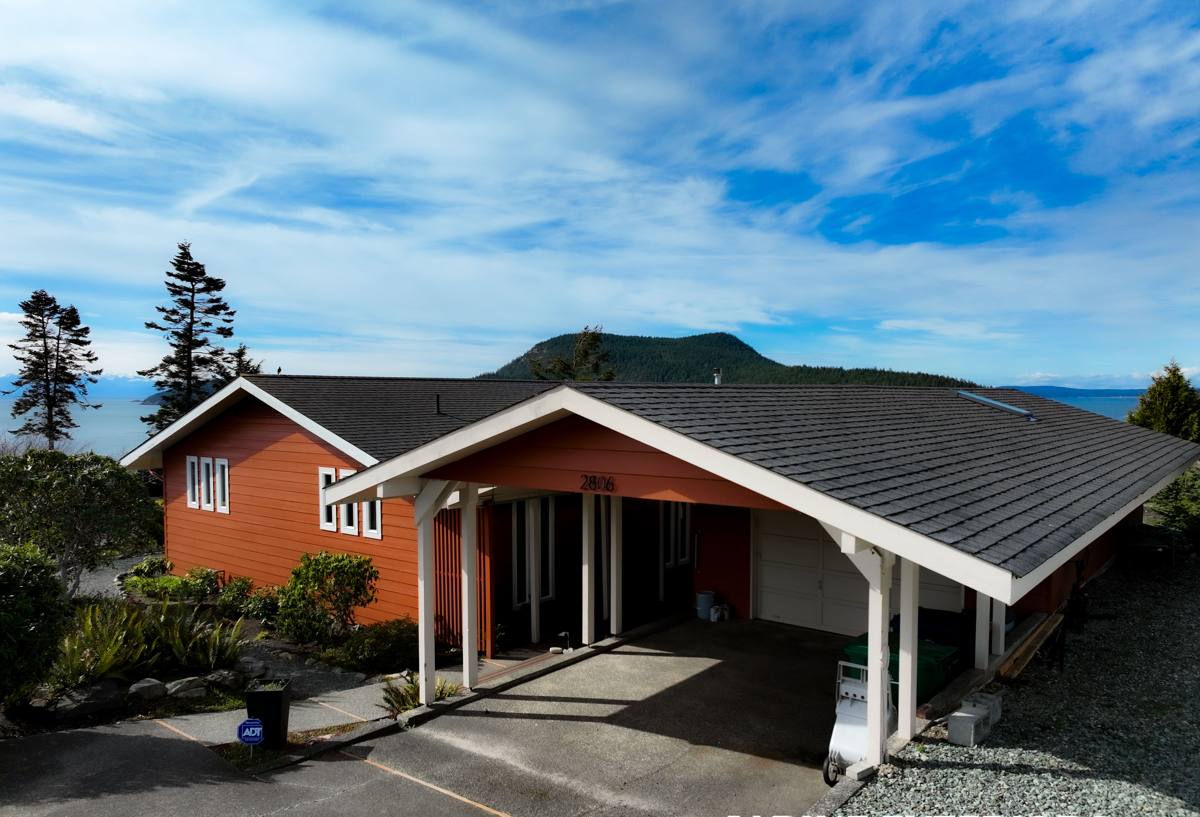
What Salt Air Actually Does to a House
Salt air is corrosive to metal and hard on organic materials. On a house near the water, that shows up in a few predictable ways over the years:
- Fasteners, flashing, and hardware corrode faster than the same components would inland, especially if they're not rated for coastal exposure
- Paint and factory finishes break down sooner when exposed to salt-laden moisture cycling wet and dry
- Wood trim and untreated wood-based siding absorb moisture more readily and stay damp longer in salty, humid air
- Metal roofing and gutters need corrosion-resistant coatings and fasteners, not standard-grade hardware
None of this means a house near Blaine's waterfront is doomed to constant repairs. It means the materials and installation details have to account for the environment instead of treating Blaine like any other Whatcom County address.
Driving Rain and Wind-Driven Water
Blaine's exposure to weather systems moving in off the water means wind-driven rain is a regular event, not an occasional storm. Wind-driven rain doesn't just fall on a wall — it gets pushed sideways and upward into seams, laps, and penetrations that would stay dry in a calmer climate. That makes flashing detail, house wrap integration, and proper lap sequencing on siding more important here than in a sheltered inland location. It's also why window installation quality matters as much as the window product itself; a good window installed with poor flashing will leak in Blaine's weather eventually.
The Long Moss Season
Moss needs shade, moisture, and organic material to grow on, and Blaine roofs and north-facing siding often provide all three for much of the year. Moss holds moisture against the surface it's growing on, which accelerates deterioration underneath — whether that's shingles, wood-based siding, or trim. Moss and algae staining is also one of the most common cosmetic complaints we hear from homeowners in this area, and it's a maintenance burden that some siding materials handle far better than others.
Siding: Why Fiber Cement Fits Blaine's Climate
Ferndale Exterior Company installs James Hardie fiber cement siding exclusively. That's a deliberate standard, not a limitation on what we're capable of installing, and it's especially relevant in an area like Blaine.
Fiber cement is non-combustible and dimensionally stable — it doesn't swell, warp, or rot the way wood-based products can when they take on moisture repeatedly. In a climate where siding is going to get wet often and dry slowly, that stability matters more than in a dry inland climate. James Hardie's ColorPlus factory finish is baked on and warranted against fading and peeling, which reduces one of the maintenance items homeowners near the water deal with most — repainting trim and siding that's taking a beating from salt air and UV.
James Hardie also makes climate-engineered HZ product lines specifically formulated for different exposure conditions, including higher-moisture regions like the Pacific Northwest. That engineering, combined with a strong transferable warranty, is why we standardized on this one product line instead of offering several options.
What We Don't Install, and Why
We don't install vinyl siding, LP SmartSide, Cemplank, Allura, primed spruce, or cedar siding. Each of those products has legitimate uses and reasonable homeowners choose them, but we've found the trade-offs don't hold up as well in Whatcom County's coastal conditions specifically:
| Material | Common trade-off in coastal WA conditions |
|---|---|
| Vinyl siding | Can warp or become brittle with temperature swings; seams and laps are more vulnerable to wind-driven rain intrusion over time |
| Wood-based composite (LP SmartSide) | Engineered wood core is more moisture-sensitive than fiber cement; edge sealing and maintenance schedule become critical in a wet climate |
| Cedar siding | Beautiful material, but requires ongoing sealing/staining and is more prone to moisture and moss issues in shaded, damp exposures |
| Primed spruce | Softwood substrate needs a disciplined repaint schedule; missed maintenance windows lead to moisture problems faster near the water |
| Cemplank / Allura (other fiber cements) | Similar core material to Hardie, but we've standardized on one manufacturer's system, warranty, and factory finish for consistency and accountability |
This isn't a claim that these products fail — it's an honest statement of the trade-offs we weighed and why we chose to put one product on every home we side, so we can stand behind the installation and the warranty without hedging.
Roofing in a High-Moisture, High-Moss Environment
Roofing work in Blaine has to account for the same moisture and moss pressures as siding, plus the added factor of gravity and drainage. A roof that sheds water quickly and dries out between rain events will outlast one that holds moisture in valleys, behind debris, or under moss growth.
Key details we pay attention to on roofing work in this area:
- Proper underlayment and ice-and-water-shield placement at eaves, valleys, and penetrations
- Flashing details around chimneys, skylights, and wall intersections, since these are the most common leak points in wind-driven rain
- Ventilation that lets the roof deck dry out rather than staying damp under sustained cloud cover
- Material choices and gutter/downspout sizing that account for heavier seasonal rainfall
We also talk with homeowners about realistic moss management — there's no permanent fix for a north-facing roof in a moss-prone climate, but roof design, ventilation, and periodic cleaning can keep it from becoming a structural problem.
Windows: Where Installation Quality Outweighs Product Specs
A quality window that's poorly flashed will leak in Blaine's weather, and a modest window installed correctly will often outperform it. Wind-driven rain finds gaps in flashing and sealant before it finds gaps anywhere else, so our window installations focus heavily on integration with the water-resistive barrier, proper flashing sequencing, and sealant details around the rough opening — not just the window unit itself.
Energy performance matters too. Homes near the water can see more temperature swings and wind exposure than sheltered inland properties, and window selection should reflect that rather than defaulting to whatever's standard for the region generally.
Signs Blaine Homeowners Should Watch For
- Soft or discolored trim around window and door openings
- Moss or algae buildup that's thickened noticeably over one season
- Peeling or bubbling paint on siding or trim, especially on north- and west-facing walls
- Visible corrosion on exterior hardware, gutters, or flashing
- Drafts or moisture at window frames during storms with driving rain
Decks: Built for Wet-Dry Cycling
Decks in Blaine take a similar beating to siding and roofing — repeated wetting from rain and salt-laden air, followed by drying periods, cycling over and over across the structure and the surface material. Fastener corrosion resistance, proper flashing where the deck ledger meets the house, and drainage away from the structure are all details that matter more here than in a drier inland setting. We build decks with those coastal conditions in mind rather than treating every deck project the same regardless of location.
Why a Local Crew Matters in Blaine
A contractor who mostly works dry, inland jobs can still do competent work, but a crew that regularly works Whatcom County's coastal towns has already seen what salt air and driving rain do to a dozen different installation details over the years. That experience shows up in small decisions — how flashing gets lapped, which fasteners get used, where extra sealant or drainage gets added — that don't show up on a spec sheet but make a real difference five and ten years down the road.
Ferndale Exterior Company is based locally and works this climate regularly, which means we're not guessing at how a product or installation detail will hold up near the water — we're applying what we've already seen work.
Planning an Exterior Project in Blaine
Whether you're dealing with aging siding, a roof that's showing its age, windows that leak in storms, or a deck that needs rebuilding, the starting point is the same: an honest look at the conditions your specific home faces and a straightforward explanation of the options. We're happy to walk through what we see, explain the trade-offs, and answer questions — no pressure, no hard sell.
If you'd like a free estimate for siding, roofing, windows, or deck work on your Blaine home, fill out the form below and we'll get in touch to schedule a time to take a look.