 Ferndale Exterior
 The Question Every Homeowner Asks First
A stain on the ceiling or a handful of lifted shingles doesn't automatically mean a new roof. Most of the time, a roof problem shows up as a single symptom — a leak, a soft spot, a shingle in the yard after a windstorm — and the real question isn't "how bad is this," it's "is this an isolated problem or a sign the whole system is wearing out." That distinction is what separates a $400 repair from a $15,000 replacement, and it's worth understanding before you call anyone out to look at it.
In Whatcom County, that decision gets complicated by our climate. Salt air off the Strait of Georgia, driving rain that comes in sideways off Bellingham Bay, and a moss season that can run eight or nine months out of the year all accelerate roof aging in ways that don't always match the "20-year shingle" label on the bag. A roof that would coast to year 25 in a dry inland climate can be showing real trouble by year 15 here.
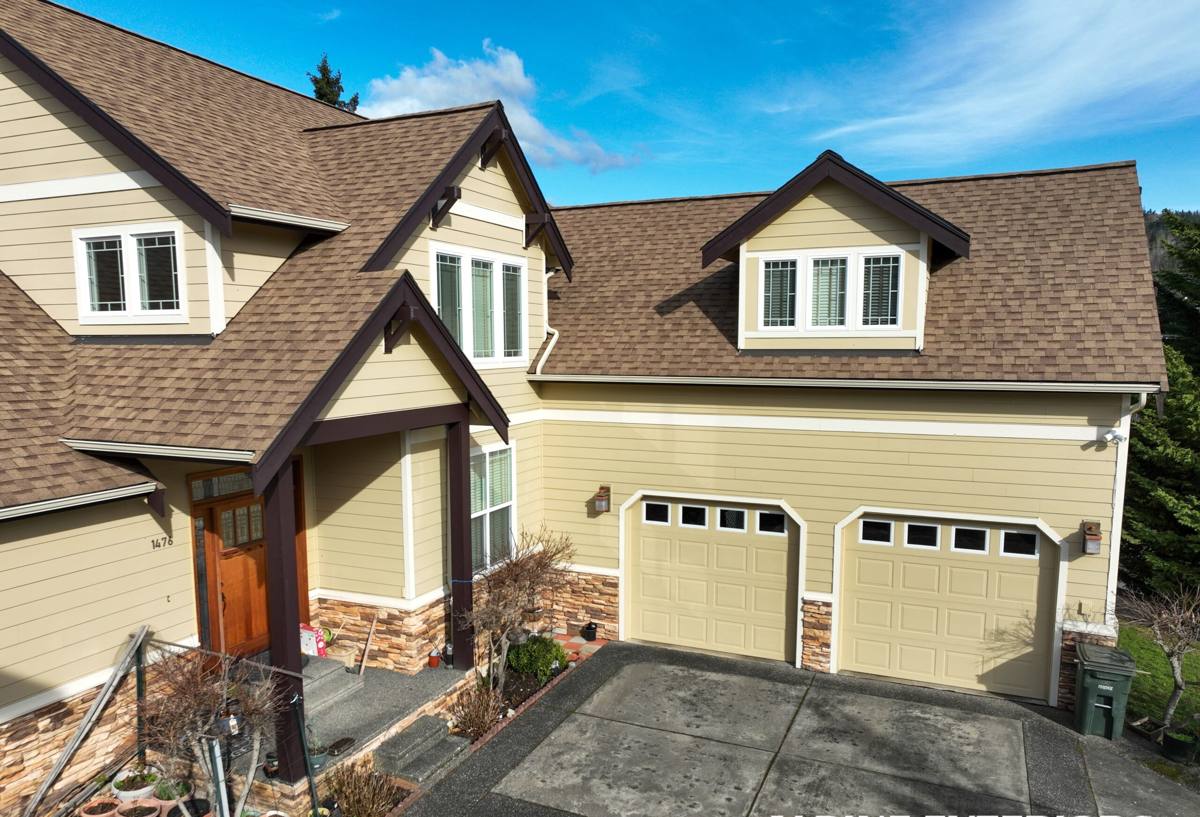
When a Repair Is the Right Call
Repairs make sense when the damage is localized and the rest of the roof is structurally sound. Common repairable situations include:
- A small number of cracked, curled, or missing shingles from wind or falling branches
- A single leak traced to a specific point — a pipe boot, a chimney flashing seam, a nail pop
- Isolated moss or moisture damage caught early, before it reaches the sheathing
- Damaged flashing around a skylight, vent, or dormer while the field shingles are still in good shape
- Gutter or fascia issues that are causing water intrusion but aren't a roofing material failure at all
If your roof is under 12-15 years old, has no widespread granule loss, and the damage is confined to one area, a repair is usually the honest recommendation — and any contractor who pushes a full tear-off in that situation should be asked to explain exactly why.
What a Good Repair Actually Involves
A proper repair isn't just slapping a patch over the visible problem. It means pulling back surrounding shingles to check the decking underneath for soft spots or rot, replacing underlayment in the repaired section, and matching flashing details to the existing roof so the fix doesn't just move the leak somewhere else. A repair done without checking what's underneath is a repair that often needs to be redone within a year or two.
When Replacement Is the Smarter Move
Replacement becomes the right call when the roof is failing as a system rather than in one spot. Signs that point toward full replacement include widespread granule loss showing bare, shiny patches of shingle; multiple leaks in different areas rather than one isolated point; shingles that are curling, cupping, or cracking across large sections of the roof; visible sagging in the roofline, which can indicate decking or structural issues; and a roof that's already had two or more rounds of repairs in recent years. At that point you're paying repair labor repeatedly on a roof that's going to need replacing anyway — the math stops favoring patchwork.
Age matters too, but it's not the only factor. A 20-year-old roof that's been well maintained, properly ventilated, and kept clear of moss can still have useful life left. A 12-year-old roof that was underventilated, shaded, and moss-covered for years can be structurally tired well ahead of schedule. The condition of the decking underneath — found by pulling back a section of shingle — tells you more than the calendar does.
How Ferndale's Climate Tips the Scale
Three things about our local climate push the repair-versus-replace decision in ways that don't apply everywhere:
Moss Season
Whatcom County's mild, wet winters and shaded lots mean moss can establish on north-facing and shaded roof slopes for most of the year. Moss holds moisture against the shingle surface, lifts shingle edges as it grows, and works its way under laps and flashing. A roof with heavy, longstanding moss growth often has moisture damage well beyond what's visible from the ground — this is one of the most common reasons a "just clean it off" repair turns into a replacement conversation once the roofer gets a closer look.
Driving Rain
Wind-driven rain off the water doesn't fall straight down — it pushes sideways under shingle laps, around flashing, and into any gap that a calm-weather rain would never find. Roofs here take more sideways water stress than roofs in drier, calmer inland areas, which means flashing details and underlayment quality matter more, and marginal repairs fail faster.
Salt Air
Proximity to the Strait of Georgia means metal roofing components — flashing, fasteners, vent caps, gutter hardware — corrode faster than they would further inland. A repair that reuses old, salt-corroded flashing is a repair with a shorter clock on it than the shingle work around it.
Comparing the Real Cost Factors
Cost is rarely a simple "repair is cheap, replacement is expensive" equation. Here's how the factors actually stack up:
| Factor | Repair | Full Replacement |
|---|---|---|
| Upfront cost | Lower, often a few hundred to a couple thousand dollars | Higher, typically a significant investment |
| Warranty coverage | Usually limited to the repaired section | Full material and workmanship warranty on the whole roof |
| Risk of hidden damage | Only what's exposed gets addressed | Full deck inspection and correction during tear-off |
| Long-term cost if roof is aging | Can require repeat repairs, adding up over a few years | One cost, resets the clock |
| Impact on home value / resale | Minimal, buyers still see an aging roof | New roof is a strong selling point locally |
| Insurance considerations | May not resolve underlying issues insurers flag | Often resets inspection concerns for coverage |
The trap homeowners fall into is treating each repair as a standalone decision without tallying what they've already spent. Three $800 repairs over four years on a roof that ultimately needs replacing anyway is $2,400 that didn't buy a new roof — it bought time on an old one.
Questions to Ask Before You Decide
Whether you're getting a repair quote or a replacement quote, these questions help you get a straight answer instead of a sales pitch:
- Will you check the decking underneath, not just the surface damage?
- How old is the current roofing system, and what's it rated for in years?
- Is the damage isolated, or are there early signs of trouble elsewhere on the roof?
- What's causing the moss or moisture buildup — shade, ventilation, or something else?
- If we repair now, what's the realistic timeline before replacement becomes necessary?
- Does the flashing and hardware show corrosion from salt air exposure?
- What warranty applies to a repair versus a full replacement?
A contractor who's willing to walk through these honestly — including telling you a repair is enough when it is — is one worth trusting with the bigger job later.
What Happens If You Wait Too Long
Delaying a needed replacement in favor of one more repair usually costs more than the repair itself once you factor in what's happening out of sight. Water that gets past aging shingles and underlayment reaches the decking, and wet decking leads to rot, sagging, and eventually the need to replace structural sheathing — not just shingles. In a climate with as much sustained moisture exposure as ours, that timeline can move faster than homeowners expect, especially on shaded or north-facing slopes where moss and moisture linger longest.
If your roof and siding are both getting up in years, it's also worth having both conversations at once. A full roof replacement is disruptive to the property regardless, and if your siding is due for attention too, coordinating the work can save a second round of scaffolding, staging, and site prep down the line.
Making the Call with Confidence
The honest version of this decision comes down to three things: how contained the damage is, how old and how well-maintained the roof has been, and what an inspection of the decking actually shows once someone gets past the surface. Anyone can eyeball a roof from the ground and guess. A useful answer requires getting up there, pulling back a few shingles, and checking what's underneath.
If you're weighing a repair against a replacement on your Ferndale home, we're happy to take a look, give you a straight read on what we find, and lay out the real options — no pressure, no upsell. Reach out for a free estimate and we'll tell you what your roof actually needs, not just what's easiest to sell.