 Ferndale Exterior
 Life on the Water Changes What Your Exterior Has to Do
Birch Bay sits right on the water, and that changes the math on every exterior material on your house. A home a few miles inland in Ferndale or elsewhere in Whatcom County deals with plenty of rain and gray winters, but a home facing Birch Bay's shoreline deals with something extra: salt-laden air moving off the water, near-constant wind exposure, and moisture that finds its way into seams, fasteners, and corners that inland homes rarely have to worry about. None of this is dramatic on any given day. It's cumulative. A house that looks fine in year three can show real wear by year eight if the materials and installation weren't matched to the site.
We work throughout Whatcom County, and Birch Bay is one of the areas where we're the most particular about material choice, flashing detail, and fastener selection, because the environment doesn't forgive shortcuts the way a sheltered inland lot might.
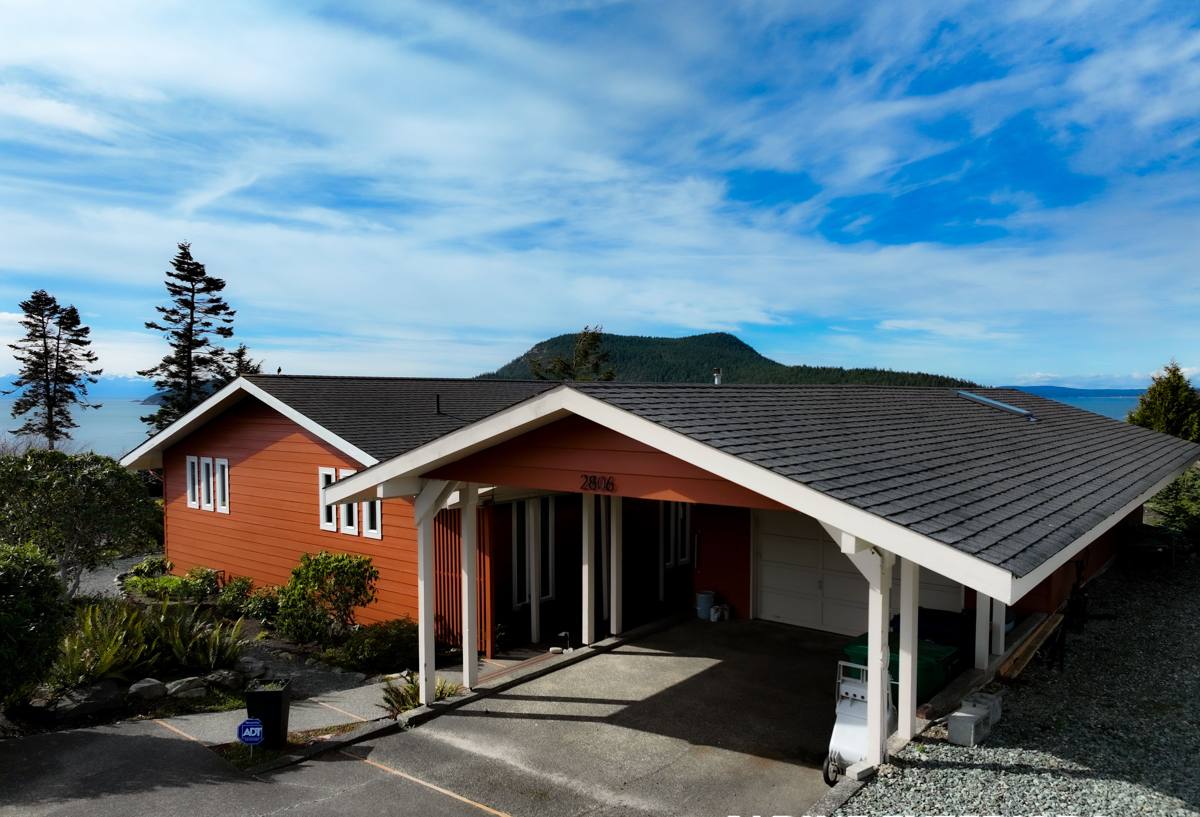
What Salt Air and Driving Rain Actually Do to a House
It helps to be specific about the mechanisms, because "salt air is tough on houses" is true but vague. Here's what's actually happening on a Birch Bay exterior over time:
- Corrosion of fasteners and metal trim. Airborne salt accelerates rust on exposed nail heads, hinges, gutter hardware, and lower-grade flashing.
- Wind-driven rain intrusion. Storms coming off the water push rain sideways and upward under laps, trim, and window flanges that would shed water fine in a calmer setting.
- Moss and algae growth. Persistent moisture and shade on north- and west-facing walls and roof planes feed moss, which holds water against the surface far longer than open air would.
- UV and wind fatigue on plastics and coatings. Vinyl and lower-grade paint finishes chalk, fade, and become brittle faster under sustained coastal sun and wind cycling than manufacturers' general ratings assume.
- Swelling and softening of wood-based products. Any wood or wood-fiber substrate that takes on repeated moisture without fully drying between events is on a slow path to rot, regardless of the paint on top of it.
None of this means a Birch Bay home is doomed to constant repair. It means the exterior needs to be built and installed with these specific stresses in mind, not with a generic "siding is siding" approach.
Why We Install Only James Hardie Fiber Cement Siding
We get asked often why we don't offer vinyl, LP SmartSide, cedar, or the primed spruce products some builders still use. In a coastal setting like Birch Bay, the answer is straightforward: those products each have a real weakness that this specific environment tends to expose.
Vinyl
Vinyl siding is inexpensive and low-maintenance in mild settings, but it's a plastic product that expands, contracts, and can become brittle with UV and temperature cycling. In coastal wind, panels can loosen or rattle at the locks over time, and impact resistance drops as the material ages. It also can't be painted a genuinely different color without voiding the warranty, which limits homeowners long-term.
LP SmartSide and other wood-strand products
These are engineered wood products — real wood fiber bonded with resin. They perform reasonably well when detailing is perfect and maintenance never lapses, but wood-strand siding is still wood at its core. In a high-moisture, salt-air environment, any breach at a fastener, cut edge, or seam gives water a path into a substrate that swells and degrades once it's wet. The margin for installation error is thin.
Cedar and primed spruce
Real wood siding has genuine appeal, but it demands a maintenance schedule — recoating, caulking, and inspection — that most homeowners don't want to keep up with indefinitely, and coastal moss and moisture cycling shorten the interval between those maintenance rounds considerably.
James Hardie fiber cement
Hardie siding is cement, sand, and cellulose fiber — non-combustible, dimensionally stable, and unaffected by the swelling/rot cycle that threatens wood-based products. Hardie's HZ5 product line is engineered specifically for cold, wet, freeze-thaw climates like ours, and the factory-applied ColorPlus finish is baked on and warranted against fading and peeling far beyond what field-applied paint typically holds up to in a salt-air setting. It's not a magic material — installation quality still matters enormously — but it removes the core vulnerability that makes the other options a bigger gamble this close to the water.
| Material | Coastal moisture resistance | Maintenance burden near the water | Long-term appearance |
|---|---|---|---|
| Vinyl | Doesn't rot, but seals/locks can loosen under sustained wind | Low, but limited repair options once brittle | Fades and chalks faster in coastal UV/wind |
| LP SmartSide / wood-strand | Vulnerable at breaches; core is wood fiber | Moderate to high — caulking and touch-up matter | Good if maintained strictly |
| Cedar / primed spruce | Absorbs moisture; needs coating to stay protected | High — regular recoating and inspection | Attractive but requires upkeep to hold it |
| James Hardie fiber cement | Non-combustible, dimensionally stable, doesn't rot | Low — occasional wash, no recoating cycle | Factory-baked ColorPlus finish holds color long-term |
Roofing for a Property That Faces the Water
Roofs in Birch Bay take a combination of wind uplift, driving rain, and moss growth that inland Whatcom County roofs see less of. We pay particular attention to a few things on coastal reroofs and repairs:
- Proper underlayment and ice-and-water shield at eaves, valleys, and any low-slope transitions, since wind-driven rain can push water uphill under standard laps.
- Fastener and flashing material that resists corrosion in salt air rather than generic galvanized hardware that rusts faster this close to the water.
- Ventilation that actually moves air through the attic, since trapped moisture under a roof deck accelerates moss growth and shortens shingle life from the underside.
- Moss and debris removal as routine maintenance, not an afterthought — moss holds moisture against shingles and shortens their service life meaningfully if left unchecked.
Windows: Keeping Wind, Rain, and Condensation Out
Window failures on the coast are rarely about the glass itself — they're about the seal and the flashing around the opening. Wind-driven rain finds gaps at the nailing flange and sill that would never leak in a calmer inland location. When we replace windows in Birch Bay, we treat flashing and sill pan detailing as non-negotiable, not optional upgrades, because a poorly flashed window is one of the most common sources of hidden rot behind an otherwise sound wall. Modern dual-pane, properly sealed windows also cut down on the condensation that shows up on older, single-pane or poorly sealed windows during Whatcom County's damp winters.
Decks Facing the Elements
A deck facing the water gets more direct weather exposure than almost any other part of a home's exterior — full sun, driving rain, and salt air all hitting horizontal surfaces where water can pool if drainage isn't right. Ledger board flashing, proper board spacing for drainage, and fastener choice all matter more here than on a sheltered inland deck. We build and repair decks with those specifics in mind rather than treating deck work as an afterthought to siding and roofing.
Why a Local Crew Matters Here
A contractor who mostly works inland can install a house's worth of siding perfectly well on an inland lot and still get the details wrong on a shoreline property, simply because they haven't spent enough time seeing what actually fails first in this environment. Working across Ferndale and the rest of Whatcom County, including Birch Bay, means we see the pattern of what wears out and where — which corners moss builds up on, which wall faces take the worst wind-driven rain, where flashing tends to get skipped on production-built homes. That pattern recognition shapes how we flash, fasten, and finish every job, not just the material we recommend.
A Maintenance Checklist for Birch Bay Exteriors
Whatever your current siding, roof, or window situation, a few habits go a long way toward protecting a coastal home:
- Rinse siding and inspect caulk joints at least once a year, more often on wall faces that take direct salt spray or wind.
- Remove roof moss promptly rather than letting it establish — a soft wash or manual removal beats waiting until it's thick.
- Check window and door flashing and caulking annually, especially after a hard winter storm season.
- Keep gutters clear so water isn't backing up against fascia and roof edges.
- Have deck ledger connections and fasteners inspected periodically, since that's a common hidden trouble spot on waterfront properties.
- Address any small stain, soft spot, or discoloration quickly — on the coast, small issues compound faster than inland.
If you own or manage a home in Birch Bay and want an honest look at your siding, roof, windows, or deck, we're glad to come out for a free, no-pressure estimate and tell you plainly what we see and what we'd recommend.