 Ferndale Exterior
 Exterior Work in a Salt Air, High-Rainfall Climate
Bellingham sits on Bellingham Bay in Whatcom County, and that proximity to saltwater shapes what a home's exterior has to withstand. Salt-laden air moves inland on the wind, settling on siding, trim, fasteners, and roofing metal. Add in one of the wetter climates in the Lower 48 — long stretches of driving rain from fall through spring — and you get a combination that punishes exterior materials that aren't built for sustained moisture exposure. Homes here don't fail because of one bad storm. They fail slowly, from years of moisture finding the same weak points: end grain, fastener heads, seams, and anything that traps water against wood.
Moss is the other constant. Shaded roof slopes, north-facing siding, and anything under tree cover in this part of Whatcom County stays damp long enough for moss and algae to take hold and spread. Left alone, moss holds moisture against roofing and siding surfaces far longer than rain alone would, which accelerates rot, granule loss, and coating breakdown underneath it.
Ferndale Exterior Company works throughout Whatcom County, and Bellingham is a regular part of that service area. We size up jobs the same way for every home here: what's the exposure, where does water actually go once it hits the wall or roof, and what material and installation choices hold up over decades rather than years.
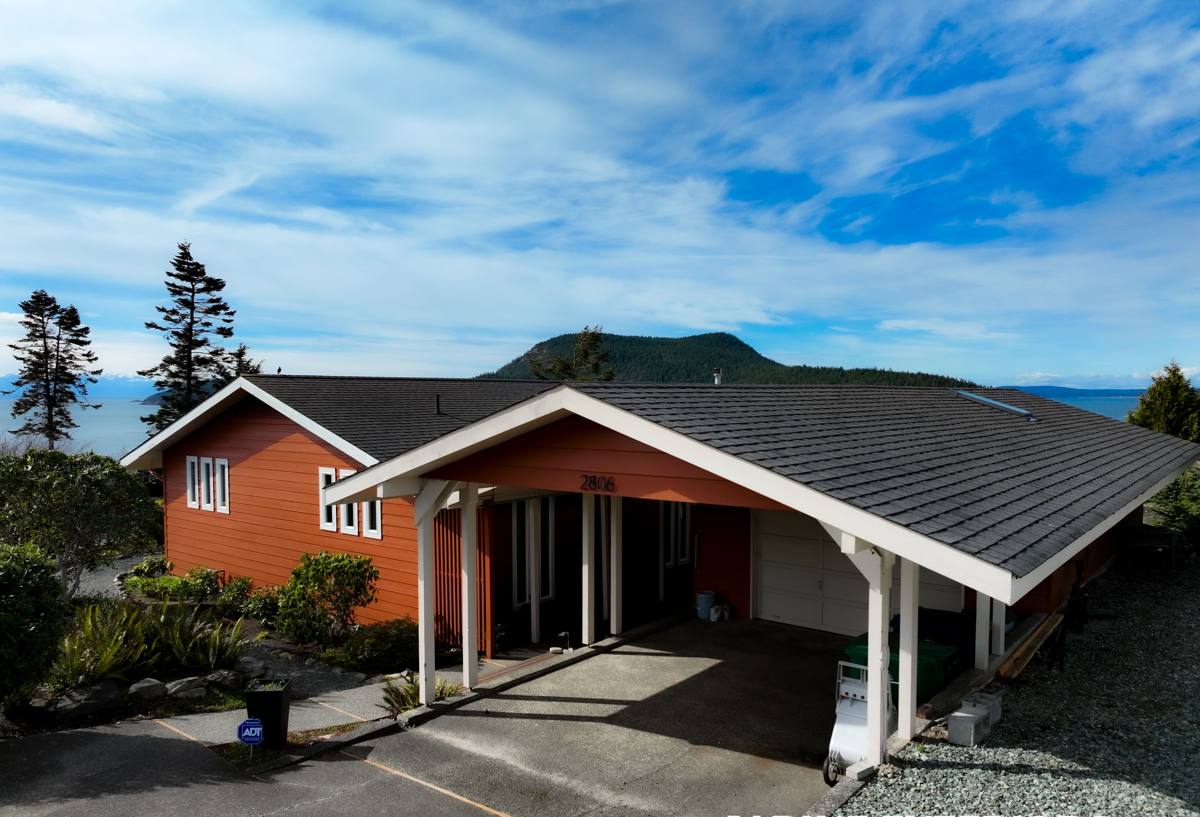
Siding: Why We Only Install James Hardie
Siding is the first line of defense against salt air and driving rain, and it's also the material homeowners are most often sold on price rather than performance. We install James Hardie fiber cement siding exclusively — not vinyl, not LP SmartSide, not Cemplank, not Allura, not primed spruce or cedar. That's a deliberate standard, not a default, and it's worth explaining why.
What Rules Out the Alternatives
Vinyl siding is inexpensive and low-maintenance in mild climates, but it's a thin plastic product that expands and contracts with temperature swings, can crack in cold snaps, and doesn't hold up well against sustained wind-driven rain finding its way behind panels over time. Wood-based composite sidings like LP SmartSide use engineered wood strand technology — it's a real improvement over old wood siding, but it's still wood at its core, meaning it depends on an intact factory coating and careful field sealing of every cut edge to keep moisture out. In a climate with this much sustained rainfall, that's a maintenance burden we don't think most homeowners want to sign up for. Primed spruce or cedar siding is a traditional look, but raw or primed wood needs a disciplined repainting schedule to survive salt air and rain, and skipped maintenance shows up fast as peeling, cupping, and rot.
Why Hardie Is What Goes On the Wall
James Hardie fiber cement is cement, sand, and cellulose fiber — it does not absorb water the way wood-based products do, and it is non-combustible, which matters given Washington's wildfire seasons. The ColorPlus factory finish is baked on in a controlled environment, which gives it better fade and moisture resistance than field-applied paint, and Hardie's HZ5 product line is engineered for cold, wet climates like ours. It carries a strong transferable warranty when installed to spec, which matters for resale in a market like Bellingham's. None of this means Hardie is maintenance-free forever — caulking, touch-up paint at cut edges, and periodic inspection still matter — but the baseline durability against salt air and rain is significantly better than the alternatives we chose not to carry.
Roofing for a Moss-Prone Climate
Roofs in this part of Whatcom County take a beating from moss more than from any single storm. Moss growth on asphalt shingles lifts granules, traps moisture against the roof deck, and shortens the life of a roof system that would otherwise last decades. Metal roofing sheds moss more easily and handles wind-driven rain well, but requires correct flashing and fastener details to perform near salt air. Whatever the material, the details that matter most in this climate are the same: proper underlayment, correctly lapped flashing at every valley and penetration, and ventilation that keeps the attic dry so condensation doesn't attack the deck from underneath.
Moss Management
We don't treat moss as cosmetic. On shaded or north-facing roof slopes, moss control is a maintenance item worth planning for, whether that's periodic treatment or, on older roofs, factoring moss damage into the decision to repair versus replace.
Windows: Sealing Out Driving Rain
Window replacement in a high-rainfall coastal climate lives or dies on flashing and sealant detail, not just the window unit itself. Wind-driven rain off the Bay pushes water sideways and upward against window openings in ways drier climates never test. A window that's simply swapped into an old opening without proper flashing tape, drainage planes, and sill pans will eventually leak, no matter how good the window itself is. We treat window installation as an envelope detail, not a standalone product swap — the goal is a fully integrated water path that sheds rain before it ever reaches the framing.
Decks: Built for Wet Winters
Decks in Bellingham face a different version of the same moisture problem: standing water on horizontal surfaces, freeze-thaw cycling in cold snaps, and ledger connections that are especially vulnerable to rot if flashed incorrectly. Composite decking has become a popular choice here because it doesn't require the same repainting or resealing cycle wood does, but composite still needs correct joist spacing, ventilation underneath, and proper ledger flashing where the deck meets the house — the failure points aren't the decking boards, they're the structural connections underneath.
- Ledger board flashed and sealed where it attaches to the house, not just caulked
- Joist spacing and blocking rated for the decking material and local snow load
- Gaps and drainage that let water off the deck surface instead of pooling
- Ventilation underneath the deck so trapped moisture can dry out between rain events
- Fasteners rated for coastal, high-moisture exposure to resist corrosion
Comparing Siding Options for This Climate
| Material | Moisture Performance Near Salt Air | Maintenance | Our Position |
|---|---|---|---|
| James Hardie Fiber Cement | Does not absorb water; non-combustible | Periodic caulk/paint touch-up | What we install |
| Vinyl | Can allow moisture behind panels over time; prone to temperature-related cracking | Low, but limited repairability | Not installed |
| Wood-Strand Composite (e.g. LP SmartSide) | Depends on intact coating and sealed cut edges | Moderate to high in wet climates | Not installed |
| Primed Spruce / Cedar | Absorbs moisture without disciplined maintenance | High — regular repainting required | Not installed |
What a Local Crew Means for This Job
Whatcom County's microclimates vary more than people expect — a home a few miles inland can dry out faster than one closer to the water, and shaded lots hold moisture far longer than open ones. A crew that works this area regularly knows which details actually matter on a given lot: where moss builds up fastest, which roof slopes need extra attention, and how much drainage a given deck or siding job really needs. That local judgment shows up in the small decisions — flashing laps, fastener choice, drainage gaps — that determine whether an exterior lasts 10 years or 40.
Ferndale Exterior Company is based in Ferndale and works Whatcom County day in and day out, including Bellingham. That means a crew that's already seen how this specific coastline and rainfall pattern treats different materials, not one learning the climate on your project.
Cost Factors to Expect
Every home is different, but a few things consistently move the price on siding, roofing, window, and deck projects in this area:
| Factor | Why It Matters Here |
|---|---|
| Existing moisture damage | Rot behind old siding or roofing has to be repaired before new material goes on, which isn't always visible until removal |
| Roof/wall complexity | More valleys, dormers, and penetrations mean more flashing detail and labor |
| Product line and color | Hardie's ColorPlus finishes and HZ5 profiles vary in cost by style and coverage |
| Accessibility | Tree cover, tight lots, and multi-story homes affect staging and labor time |
| Scope bundling | Combining siding, windows, and trim in one project often reduces total labor versus doing them separately |
A Practical Checklist Before You Replace an Exterior Surface
- Look for moss buildup on north-facing roof slopes and siding — it signals a moisture-retention problem, not just an appearance issue
- Check for soft spots, staining, or bubbling paint near ground level and around window trim
- Ask any contractor how they flash deck ledgers, window openings, and roof valleys — the answer tells you a lot about long-term performance
- Confirm what siding material is being proposed and why, not just the price per square foot
- Ask whether the crew works in this specific climate regularly, or is applying general practices to a coastal, high-rainfall condition
If you're weighing a siding, roofing, window, or deck project on a Bellingham home, we're happy to take a look and talk through what your home actually needs for this climate — no pressure, no obligation. Use the form below to request a free estimate.