 Ferndale Exterior
 Marietta's Exterior Challenges: Living Close to the Water
Marietta sits along the edge of Whatcom County where Bellingham Bay meets the flats north of Ferndale, close enough to the water that salt-laden air is simply part of daily life. Homes here don't face the same conditions as houses ten miles inland. The combination of marine air, near-constant winter moisture, and heavy shade from mature evergreens puts real, measurable stress on siding, roofing, trim, and decking. If you've owned a home in this pocket of the county for more than a few years, you've probably already seen it: chalky paint, soft trim boards, streaked roofing, or a north wall that never seems to fully dry out between storms.
We work on homes throughout Ferndale and the surrounding Whatcom County communities, and Marietta comes with its own particular set of demands. This page walks through what we actually see on exteriors out here, how we approach siding, roofing, windows, and decks for this specific environment, and why we've made some deliberate choices about the materials we will and won't install.
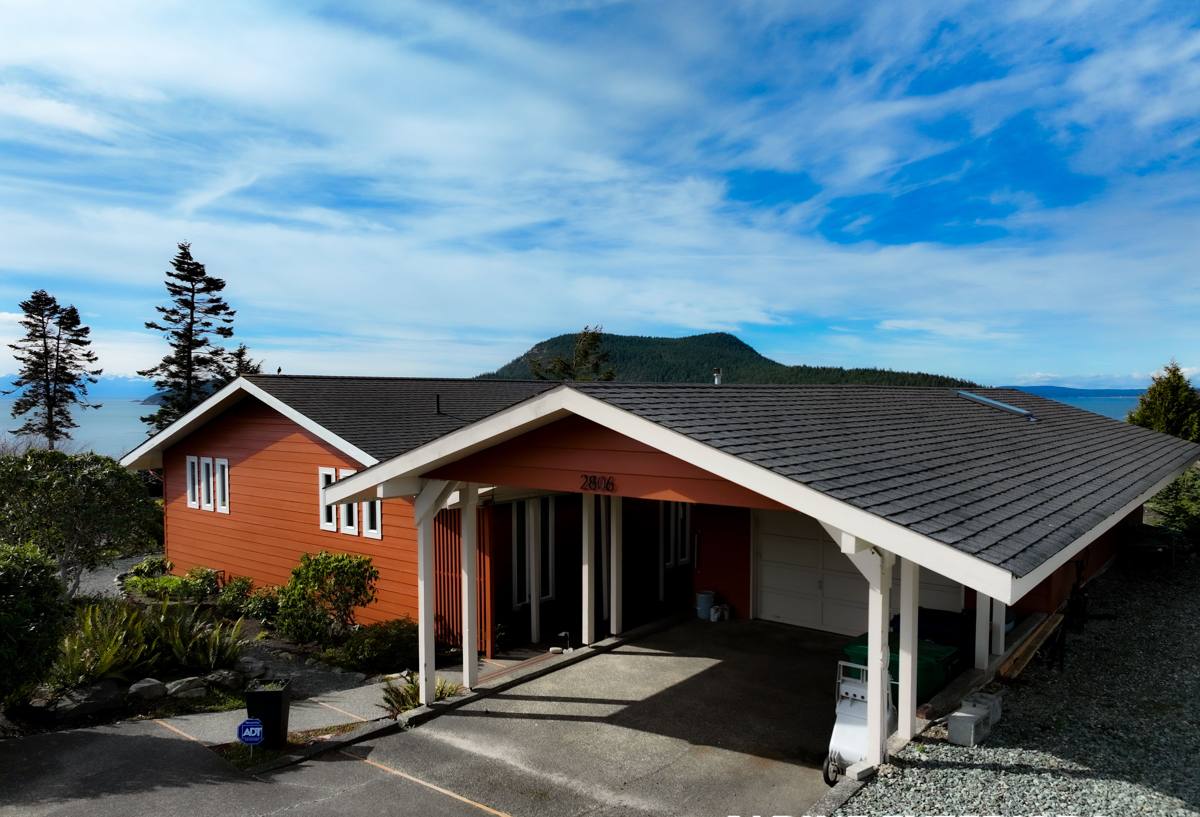
Salt Air: The Quiet Damage Most Homeowners Underestimate
Salt air doesn't announce itself the way a wind storm or a roof leak does. It works slowly, in the background, for years. Airborne salt is hygroscopic — it pulls moisture out of the air and holds it against whatever surface it lands on. On a home near Bellingham Bay, that means fasteners, flashing, and exposed wood are staying damp longer than they would even a short distance inland, and that extra dwell time is where deterioration starts.
The parts of a house most exposed to this are usually:
- Fascia, trim, and any exposed wood-to-wood joints, especially on the weather side of the home
- Fasteners and flashing at siding laps, window heads, and roof penetrations
- Lower courses of siding near grade, where salt spray and splash-back concentrate
- Deck ledgers, joist hangers, and any hardware that isn't rated for a marine or coastal environment
None of this means a home in Marietta is doomed to fail early — it means the materials and installation details matter more here than they do in a drier, more sheltered part of the county. That's the lens we use on every job in this area.
Moss, Shade, and Whatcom County's Long Wet Season
The second big factor is moisture duration, not just moisture amount. Whatcom County gets a long stretch of gray, drizzly weather from fall through spring, and in Marietta that's compounded by tree cover and lower afternoon sun angles on many lots. Surfaces that don't get direct sun and airflow can stay damp for days after a storm passes, and that's exactly the environment moss, algae, and mildew need to take hold.
On roofs, moss growth isn't just cosmetic. As it establishes itself under shingle tabs and along ridge lines, it lifts material, holds water against the roof deck, and accelerates granule loss. On siding, sustained dampness is what breaks down paint film, swells wood fiber, and — on products that aren't engineered for it — leads to soft spots, delamination, or visible streaking within a handful of years. A driving rain event, common in this area during fall and winter storms, also pushes water sideways into laps, seams, and trim joints in a way that straight-down rain never tests.
Why This Matters for Material Choice, Not Just Maintenance
A lot of homeowners assume this is purely a maintenance problem — wash the roof, repaint the trim, and move on. Maintenance helps, but it can't fully offset a material that isn't built for sustained coastal moisture. That's the core reason our material decisions on Marietta homes are more conservative than what you'll see recommended for exterior work in a drier climate.
Why We Install Only James Hardie Fiber Cement Siding
We made a deliberate decision as a company to install James Hardie fiber cement exclusively — not vinyl, not LP SmartSide, not Cemplank, Allura, primed spruce, or cedar. That's not a marketing position; it's a response to what we've watched coastal Whatcom County weather do to siding over time.
Fiber cement is non-combustible and dimensionally stable — it doesn't expand and contract with moisture the way wood-based products do, which matters directly in an environment where surfaces stay damp for extended stretches. James Hardie's ColorPlus factory finish is baked on under controlled conditions, which gives it better adhesion and UV resistance than field-applied paint, and it's backed by a real, transferable finish warranty rather than a general "may fade" disclaimer.
We're not going to pretend every alternative is a poor product across the board — several of them perform well in the right climate. But "the right climate" is the operative phrase, and a shaded, salt-air, high-rainfall pocket like Marietta is not the environment where wood-based or engineered-wood siding shows its best long-term behavior.
How Common Siding Materials Hold Up in a Marietta-Type Environment
| Material | Moisture behavior near salt air | Typical maintenance | Our stance |
|---|---|---|---|
| James Hardie fiber cement | Dimensionally stable, doesn't rot or swell, factory finish resists salt-air fading | Periodic rinse; repaint only if not ColorPlus | What we install |
| Vinyl | Won't rot, but can warp/fade and seams open with thermal and wind stress; trapped moisture behind it goes unnoticed | Low, but hides problems underneath | Not installed |
| LP SmartSide / engineered wood | Treated wood strand product; edge swelling and delamination risk increases with sustained dampness | Caulking, edge sealing, repainting | Not installed |
| Cedar / primed spruce | Natural wood; absorbs moisture, prone to cupping, checking, and rot without diligent upkeep | Frequent refinishing, high labor | Not installed |
This table is a general guide, not a verdict on every installation of every product — quality of install and upkeep always matter. It's simply the reasoning behind why we standardized on one material for the climate we build in.
Roofing for a Coastal, Moss-Prone Climate
On the roofing side, our approach in Marietta centers on three things: ventilation, moss resistance, and flashing detail. Proper attic and roof ventilation reduces the amount of time the underside of the roof deck stays damp, which matters as much as what's happening on top. We pay close attention to valley, chimney, and penetration flashing, since driving rain off the bay tends to find any weak point in these transitions before it finds a weak point in open field shingle.
Moss prevention is part of the conversation on every roof we look at in this area — whether that means product selection, zinc or copper strip installation, or simply setting a realistic maintenance schedule with the homeowner so growth gets addressed before it lifts material.
Windows That Actually Perform in Driving Rain
Wind-driven rain is a different test than vertical rain, and it's common here during winter storms coming off the water. Water gets pushed sideways and upward into gaps that would never see moisture in calmer weather. Window performance in this environment comes down to a few specific things:
- Correct flashing and integration with the water-resistive barrier behind the siding, not just a bead of caulk around the frame
- Sill pan flashing that gives any water that does get past the seal somewhere to drain, rather than pooling against the rough opening
- Weatherstripping and glazing rated for the wind exposure typical of this stretch of Whatcom County
- Proper head flashing so water is directed out and away rather than trapped above the window
Window replacement is also a natural point to correct old flashing mistakes that may be part of why a home has had moisture issues in the first place — it's not just a glass and frame upgrade.
Decks in a Marine Climate
Decks take a different kind of abuse near the bay: sustained ground moisture, salt exposure on hardware, and, depending on the lot, heavy shade that keeps boards from drying out between rain events. The details that matter most on a Marietta deck build or rebuild are usually below the surface — corrosion-resistant fasteners and connectors, proper ledger flashing where the deck meets the house, and enough airflow and drainage underneath that the structure isn't sitting in standing moisture through the winter. Decking material choice (wood versus composite) is a real conversation worth having based on your specific site conditions, sun exposure, and how much upkeep you want to take on.
Why a Local Crew Matters Here
Exterior work in Marietta isn't identical to exterior work in Bellingham, Lynden, or the drier parts of the county, and it's definitely not identical to exterior work in a different climate region entirely. A crew that works this specific area regularly knows which walls take the worst of the weather, how local permitting and inspection tend to go, and what detailing actually holds up here versus what looks fine on paper. That local knowledge shows up in the small decisions — flashing laps, fastener spacing, ventilation choices — that determine whether an exterior performs for fifteen years or needs attention in five.
What to Expect When You Work With Us
- An on-site assessment that looks at your specific exposure — sun, shade, wind direction, and proximity to the water
- Straight talk about what's actually wrong (or not wrong) with your current siding, roofing, windows, or deck
- A written estimate with no pressure to decide on the spot
- James Hardie fiber cement as our siding recommendation, with the reasoning explained, not just asserted
- Attention to the flashing, ventilation, and fastening details that matter most in a coastal, high-moisture climate
- Cleanup and a final walkthrough before we consider the job done
Getting Started
If you're noticing early signs of wear on your Marietta home — moss creeping across the roof, soft or streaked trim, drafty windows, or a deck that's starting to feel spongy underfoot — it's worth having a local crew take a look before those issues get more expensive to fix. We'd be glad to walk your property, answer questions honestly, and put together a free, no-pressure estimate for whatever combination of siding, roofing, windows, or deck work makes sense for your home.