 Ferndale Exterior
 Exterior Work Built for Life on the Water
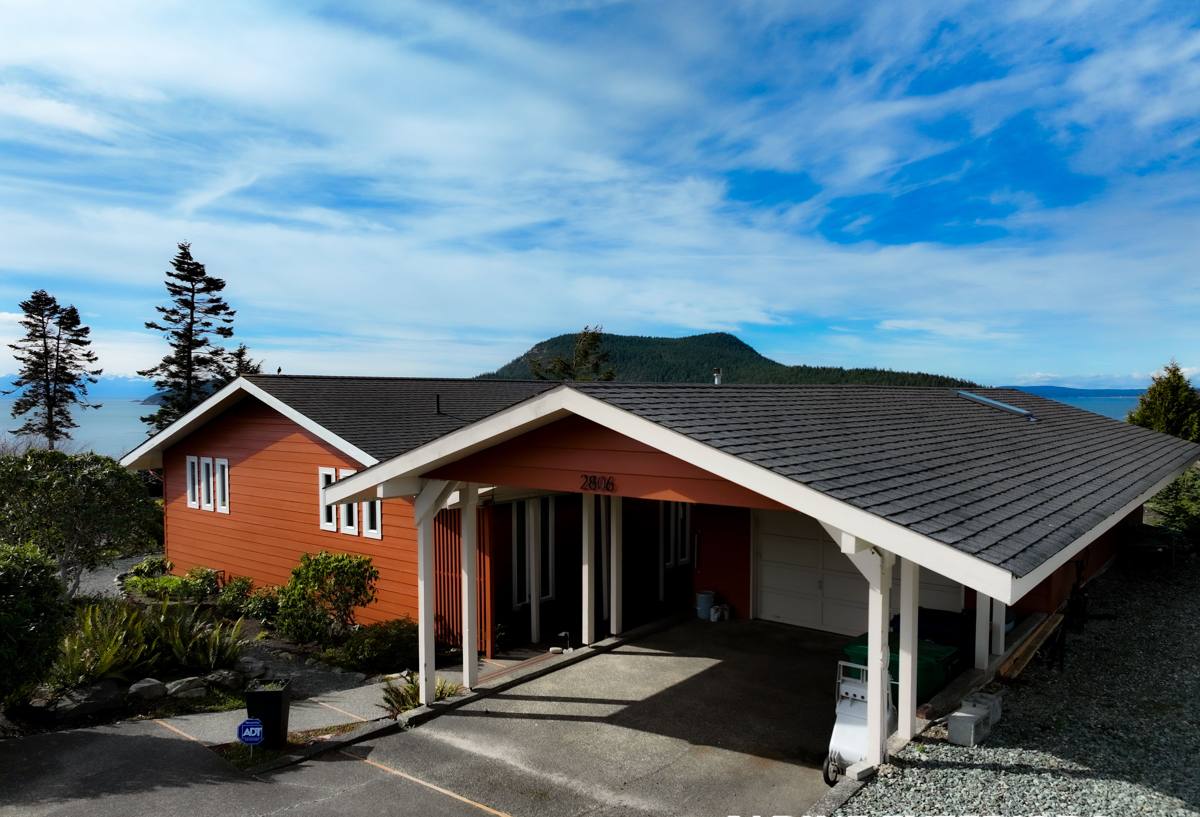
Sandy Point sits right up against the Strait of Georgia, and that location shapes everything about how a house ages here. Homes just a few miles inland in Ferndale deal with plenty of moisture themselves, but Sandy Point properties take it a step further: salt-laden air off the water, wind-driven rain that hits siding sideways instead of falling straight down, and a moss season that seems to start earlier and last longer than almost anywhere else in Whatcom County. None of that is unusual for this stretch of coastline. It's just the reality of owning a home this close to saltwater, and it means the exterior systems on a Sandy Point house have to work harder than the same systems would on a house set back from the shoreline.
We work throughout Whatcom County, and Sandy Point is one of the areas where we spend the most time talking through material choices with homeowners before any work starts, because the wrong choice here shows its age fast.
What Salt Air and Coastal Wind Actually Do to a House
Salt air isn't just an inconvenience — it's chemically active. Airborne salt settles on every exterior surface, and combined with the near-constant humidity off the water, it accelerates corrosion on fasteners, flashing, and hardware, and it breaks down paint and coatings faster than inland exposure does. Add in wind that regularly drives rain horizontally against west- and south-facing walls, and you get water intrusion at joints and seams that would stay dry on a more sheltered lot.
Moss and algae growth is the other constant. Persistent dampness, filtered sun through tree cover in places, and mild winter temperatures give moss everything it needs to take hold on roofs, siding, decking, and anything with texture for it to grip. Left alone, moss holds moisture against the surface underneath it, which is where real damage — rot, coating failure, granule loss on roofing — actually starts.
- Fasteners and metal hardware corrode faster near saltwater than a few miles inland
- Paint and coatings break down sooner under salt exposure and UV combined
- Wind-driven rain finds gaps at trim, seams, and penetrations that calmer sites never test
- Moss and algae hold moisture against roofing, siding, and decking long after a rain event ends
- North and west exposures typically show wear first due to prevailing wind and shade patterns
Siding: Why Material Choice Matters More Here Than Almost Anywhere
Siding is the single biggest factor in how well a Sandy Point home holds up over time, because it's the material taking the brunt of salt air and driving rain every single day. We install James Hardie fiber cement siding exclusively, and this is exactly the kind of location where that decision matters most.
Why We Don't Install Vinyl, Wood, or Engineered Wood Siding Here
Vinyl siding softens, warps, and becomes brittle under UV and temperature swings, and in coastal wind it's prone to rattling loose or cracking at fastener points over time — not a great match for a site that already sees more wind stress than average. Cedar and other wood siding look great going up, but they need consistent, disciplined maintenance — recoating, caulking, inspection — to hold back moisture, and a coastal environment shortens the window between maintenance cycles considerably. Engineered wood products like LP SmartSide use wood-strand cores that are more moisture-resistant than raw wood but still rely on factory coatings and sealed edges staying intact; any breach lets moisture into the substrate, and that's a harder risk to accept on a shoreline lot than inland. None of these products are poorly made — they're just not the products we're willing to put our name behind in an environment this demanding.
Why James Hardie Fiber Cement Fits This Coastline
Hardie siding is cement-based, not wood-based, so it doesn't rot, and it isn't a food source for the moss and algae that thrive on organic materials. It holds up under sustained UV and salt exposure far better than vinyl, and it doesn't require the recoating discipline that wood siding demands. Hardie's ColorPlus factory-applied finish is baked on under controlled conditions and backed by its own finish warranty, which matters in a spot where field-applied paint gets tested hard by sun, salt, and moisture in the same season. Hardie also builds HZ5 product lines specifically engineered for harsher climate zones, which is the right specification for an exposed coastal property like this rather than a standard inland climate zone product.
Siding Material Comparison for a Coastal Site
| Material | Moisture Behavior | Maintenance | Coastal Fit |
|---|---|---|---|
| Vinyl | Doesn't absorb water, but seams and fasteners are wind-vulnerable | Low, but repairs are common after wind events | Fair — wind exposure is a real weak point |
| Cedar / wood | Absorbs moisture readily without consistent coating upkeep | High — recoating and caulking on a tight cycle | Poor without dedicated ongoing maintenance |
| Engineered wood (LP SmartSide, etc.) | Resistant while coatings and sealed edges stay intact | Moderate — edge sealing and coating checks matter | Fair — depends on installation discipline |
| James Hardie fiber cement | Non-combustible, doesn't rot, engineered for high-moisture zones (HZ5) | Low — factory finish, no recoating cycle | Strong — built for this kind of exposure |
Roofing for a Salt-Air, Heavy-Moss Environment
Roofs at Sandy Point take on two jobs most inland roofs don't have to handle at the same intensity: shedding wind-driven rain at every flashing point, and resisting moss colonization on shaded or north-facing slopes. We pay close attention to flashing details around chimneys, vents, and valleys, since that's where wind-driven rain finds its way in first. We also talk with homeowners honestly about moss — no roofing material is moss-proof forever, but proper ventilation, the right underlayment, and periodic light cleaning go a long way toward keeping a roof performing for its full service life instead of failing early to moisture trapped under moss growth.
Windows: Sealing Out Wind-Driven Rain and Salt Corrosion
Older or poorly installed windows are one of the most common water-entry points we find on coastal homes. Wind-driven rain doesn't just test the glass — it tests every seal, sill, and flashing detail around the frame. Salt air also accelerates corrosion on window hardware and metal components faster than it would a few miles inland. When we replace windows here, correct flashing and sealing at the rough opening matters as much as the window unit itself — a good window installed poorly will leak long before the glass or frame ever fails on its own.
Decks: Built to Handle Weather, Not Just Sit on It
A deck at Sandy Point spends its life exposed to the same salt air, rain, and moss pressure as the siding and roof above it, often with less overhang protection since decks are frequently on the water-facing side of the house. Fastener corrosion resistance, proper board spacing for drainage and airflow, and material choice that resists moss and moisture all matter more here than on a sheltered inland deck. We build decks with those coastal conditions in mind from the framing up, not as an afterthought.
Why a Local Crew Matters for This Kind of Site
Whatcom County's coastline isn't uniform — a crew that mostly works inland Ferndale or Bellingham lots doesn't necessarily have a feel for what a shoreline property like Sandy Point demands in terms of flashing detail, fastener selection, and material spec. We work this county regularly, which means we know which details need extra attention on an exposed coastal lot and which corners genuinely can't be cut here even if they'd be fine somewhere else. That local familiarity shapes how we bid, sequence, and detail every job in this area.
A Practical Checklist for Sandy Point Homeowners
- Walk the exterior after major windstorms and check for loose or lifted siding, trim, or flashing
- Keep an eye on moss buildup on north- and west-facing roof slopes and siding sections
- Check deck fasteners and hardware periodically for corrosion, especially on water-facing sides
- Inspect window seals and sills for water staining or soft spots after heavy rain events
- Have gutters and downspouts cleared regularly — clogged systems push water back toward siding and fascia
- Address small moisture issues early; coastal conditions turn minor problems into bigger ones quickly
Getting Started
Every Sandy Point property faces this climate a little differently depending on how exposed the lot is, which direction it faces, and how much tree cover surrounds it. We'd rather look at the actual conditions on your home than make assumptions from a distance. If you're dealing with siding, roofing, window, or deck concerns — or just want an honest read on how your exterior is holding up against the salt air and moss — we're happy to come out for a free, no-pressure estimate and walk the property with you.