 Ferndale Exterior
 Living in Nooksack: What Your Exterior Is Up Against
Nooksack sits in the agricultural lowlands of Whatcom County, close to the river the community takes its name from, and surrounded by the kind of tree cover and open farmland that shape a very specific kind of weather exposure. Homes here don't get battered by ocean surf the way some coastal Whatcom properties do, but they deal with something arguably harder on a house over time: long stretches of damp, shaded, slow-drying air. Rain moves through steadily for months at a stretch, humidity lingers under tree canopy and near the river bottomland, and surfaces that don't get direct sun for days at a time turn into breeding ground for moss, algae, and mildew.
Add in the broader marine-influenced climate that moves across this part of Whatcom County — the same weather system that carries salt-tinged air off the Salish Sea into inland communities during storm events — and you get a combination that's tough on paint, tough on wood, and unforgiving of any gap in a home's building envelope. It's not dramatic weather. It's persistent weather, and persistent is what wears exteriors down.
Ferndale Exterior Company works throughout Whatcom County, and Nooksack is regularly part of our route. We know what siding, roofing, windows, and decks have to hold up against out here, and we build and repair accordingly — not with generic products picked for a national market, but with materials and methods suited to this specific climate.
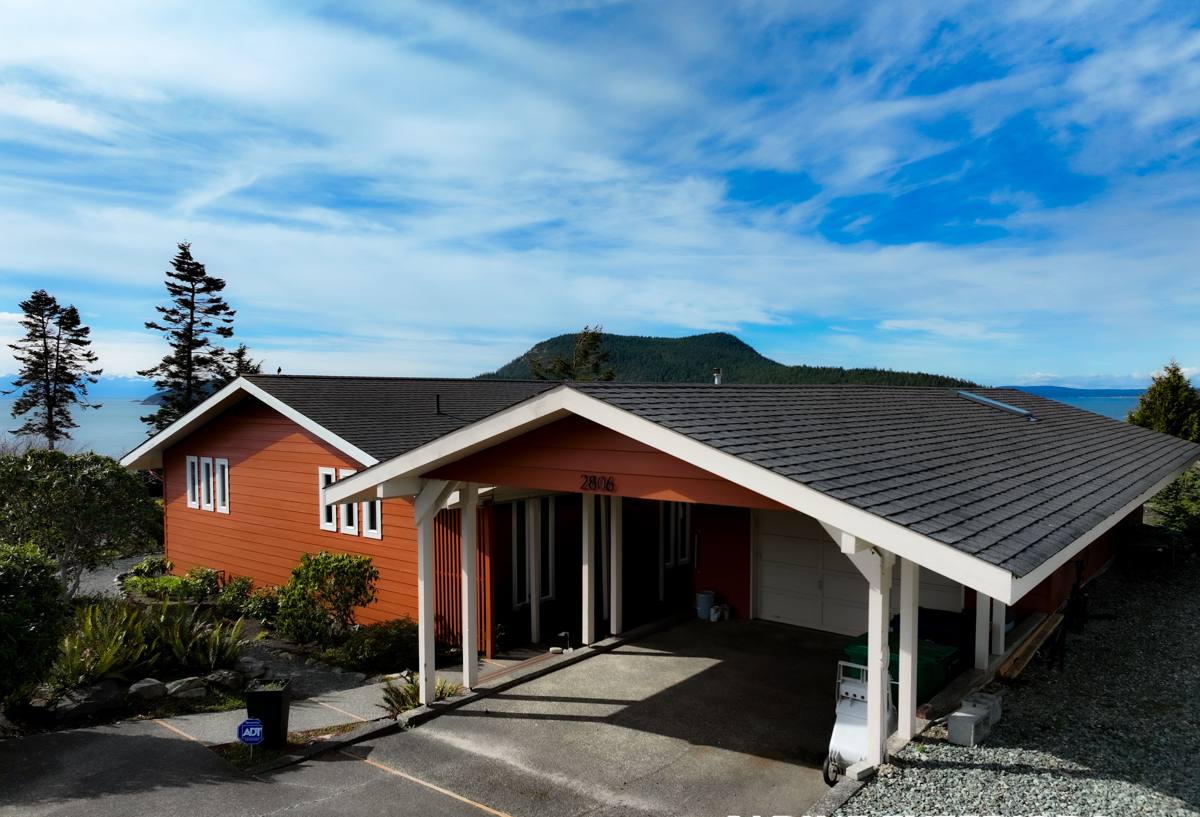
Siding for Nooksack Homes: Why We Only Install James Hardie
Siding is the single biggest factor in how well a Nooksack home ages. It's the layer standing between constant moisture and your wall framing, and in a climate where things rarely get a chance to fully dry out, the material matters more than the color or the price tag.
We install James Hardie fiber cement siding exclusively. We don't offer LP SmartSide, vinyl, Cemplank, Allura, or primed wood siding like cedar or spruce as alternatives, and that's a deliberate professional standard, not a lack of options. Here's the reasoning:
- Vinyl expands and contracts with temperature swings, can warp or crack in cold snaps, and its seams give moisture a path inward over years of freeze-thaw cycling.
- LP SmartSide and other engineered wood products use wood strand cores that are vulnerable at cut edges and fastener penetrations — exactly the spots where a wet, shaded climate finds a way in.
- Primed cedar or spruce siding looks great on day one but demands a repainting and caulking schedule that most homeowners underestimate; skip a cycle in a climate like this and rot sets in fast.
- Cemplank and Allura are also fiber cement, and reasonable products in their own right — we simply standardized on Hardie because of the depth of its regional product engineering, factory finish process, and warranty backing, and we'd rather install one system extremely well than several systems adequately.
James Hardie fiber cement is non-combustible, doesn't absorb water the way wood-based products do, and holds paint and factory finish far longer than wood siding because the substrate itself isn't feeding moisture back into the coating. Hardie's ColorPlus finish is baked on at the factory under controlled conditions, which gives it better fade and moisture resistance than field-applied paint — a real advantage in a region where a fresh paint job barely gets a dry summer to cure before the rain returns.
HardiePlank Vs. HZ10 for This Region
James Hardie makes climate-specific product lines, and for Whatcom County we generally recommend the HZ10 formulation, engineered for regions with sustained moisture exposure and freeze-thaw winters, over the HZ5 line built for hot, dry climates. It's a small distinction on paper but it reflects the same principle behind everything we do here: match the product to the actual weather, not the average national weather.
Roofing in a Wet, Shaded Climate
Roofs in Nooksack fight two separate battles: shedding a high volume of rainfall, and resisting the moss and organic growth that thrives wherever tree cover keeps shingles shaded and damp. Moss isn't just cosmetic — its root structure works into shingle granules and seams, lifting materials and creating channels for water to travel under the roof surface instead of off of it.
A properly installed roofing system in this climate depends on more than the shingle brand. Underlayment quality, ice-and-water shield at eaves and valleys, ventilation that lets the attic dry between rain events, and correctly integrated flashing around penetrations all matter as much as the visible shingle layer. We also pay close attention to gutter and drip edge detailing on Nooksack homes specifically, since properties near the river bottomland or under heavy tree cover often deal with a higher volume of debris and runoff than more open sites.
Windows: Keeping Moisture and Drafts Out
Older windows in this area are a common source of two related problems: energy loss and slow water intrusion around the frame. In a climate that stays damp for most of the year, a window that isn't sealed correctly doesn't just waste heat — it gives moisture a steady path into the wall cavity, where it can sit unnoticed until trim or sheathing starts to show damage.
When we replace windows, we're not just swapping glass. We're addressing flashing and weatherproofing at the rough opening, making sure the new unit ties properly into the siding and building wrap around it, and confirming the whole assembly sheds water the way it's supposed to. That integration work is where most window failures actually originate, not in the window unit itself.
Decks: Built for Rain, Not Just Sun
A lot of deck design assumes sunny weather is the main use case. In Whatcom County, a deck spends more of the year shedding rain and resisting moisture than it does hosting summer barbecues, and it should be built with that reality in mind. Ledger board flashing, proper spacing between deck boards for drainage and air circulation, joist protection, and material selection all matter more here than in drier climates where a deck can dry out between rain events.
We build and repair decks with attention to the details that fail first in a wet climate — the ledger connection to the house, fastener corrosion resistance, and framing that's protected rather than just painted. A deck that's built right for this region should shed water instead of holding it, and stay structurally sound well past the point where a poorly detailed deck starts to soften underfoot.
Comparing Siding Materials for This Climate
| Material | Moisture Behavior | Maintenance Burden | Typical Lifespan Here |
|---|---|---|---|
| James Hardie fiber cement | Doesn't absorb water into the substrate; factory finish resists moisture cycling | Low — occasional wash, no repainting on ColorPlus finish for years | Decades, with proper installation and warranty backing |
| Vinyl | Seams and panel edges allow moisture behind the surface over time | Low labor, but limited repair options once cracked or warped | Moderate; degrades faster with UV and temperature cycling |
| LP SmartSide / engineered wood | Vulnerable at cut edges and fastener points in sustained damp conditions | Moderate — requires vigilant caulking and coating upkeep | Shorter if moisture reaches the wood strand core |
| Primed cedar / spruce | Absorbs and releases moisture readily; needs to dry fully between rain events | High — repainting and caulking on a strict cycle | Shorter without disciplined maintenance |
Signs Your Nooksack Home's Exterior Needs Attention
Most exterior failures don't show up overnight. They build slowly, and the earlier they're caught, the cheaper and less invasive the fix. Walk your property periodically and look for:
- Moss or dark streaking on the roof, especially on north-facing or shaded slopes
- Soft or spongy decking, or gaps opening up around the ledger board where the deck meets the house
- Peeling or bubbling paint on siding, particularly near trim, corners, and window openings
- Visible warping, swelling, or delamination on wood-based siding
- Condensation building up between window panes, or drafts felt near frames on windy days
- Gutters overflowing or pulling away from the fascia during heavy rain
- Any soft spots in exterior trim or discoloration on interior walls near exterior corners
Any one of these on its own might be minor. Several together, or any of them left unaddressed for more than a season, usually means moisture has found a way past the exterior's first line of defense.
Why a Local Whatcom County Crew Matters
Exterior work in Nooksack isn't the same job as exterior work in a dry inland climate, and it isn't quite the same as work on the immediate coastline either. It sits in its own niche — river-adjacent, tree-shaded, humid for long stretches, with real winter freeze-thaw cycling layered on top. A crew that works this specific region regularly develops a feel for which details matter most here: flashing choices, ventilation strategy, moss-prone rooflines, and the sequencing that keeps a job protected from rain mid-installation instead of exposed to it.
Ferndale Exterior Company is based locally and works this climate year-round, which means our crews aren't guessing at regional conditions or applying a one-size-fits-all national approach. We show up knowing what a Whatcom County winter does to an unfinished job site and plan around it, and we install James Hardie siding specifically because we've seen how it performs against this exact weather over time, not just on a spec sheet.
What Working With Us Looks Like
We start with an honest look at your home's current exterior condition, not a sales pitch. If your siding, roof, windows, or deck have years of good service left in them, we'll tell you that. If something's past the point of patching, we'll explain why and walk through what a proper fix involves, including the parts of the job — flashing, ventilation, drainage — that don't show up in a quote line item but determine whether the work actually lasts in this climate.
If you're in Nooksack and dealing with moss buildup, a drafty window, a soft deck board, or siding that's showing its age, we're glad to take a look and give you a straightforward assessment. Reach out for a free, no-pressure estimate using the form below.