 Ferndale Exterior
 Point Roberts Puts a Different Kind of Wear on a House
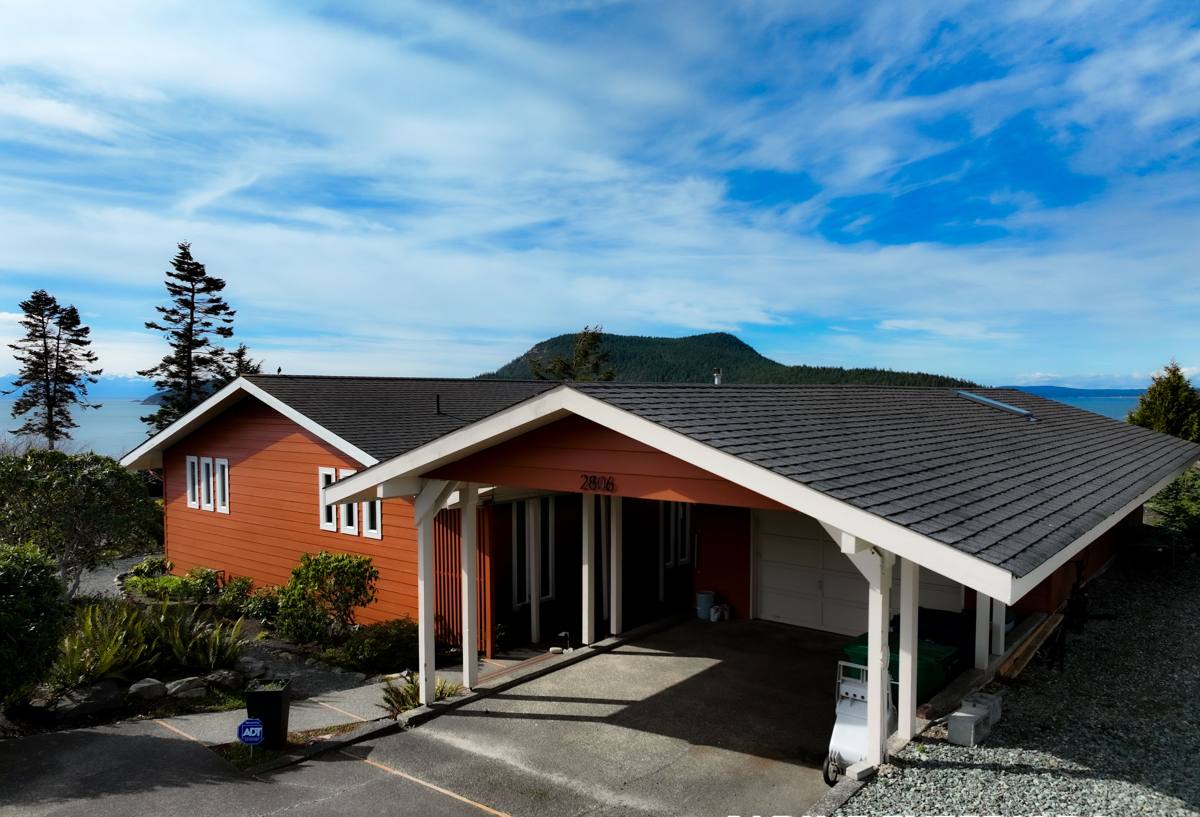
Point Roberts sits out on its own — a piece of Whatcom County separated from the rest of the county and the rest of Washington by water and by the Canadian border. That geography isn't just a quirk of the map. It shapes the weather a home out there actually experiences: near-constant marine exposure, wind coming straight off the water with nothing to slow it down, and a damp, low-light stretch of the year that can run for months. Homes here age differently than homes twenty miles inland, and an exterior contractor who hasn't worked in that kind of exposure will often underestimate what the siding, roof, windows, and deck are actually up against.
We work throughout Ferndale and Whatcom County, and Point Roberts is part of that service area. The approach we bring out there is the same one we use everywhere: install materials that are actually built for Pacific Northwest coastal exposure, and install them correctly the first time, because a callback on a job that requires a border crossing is a lot more expensive than a callback across town.
Salt Air and What It Does to a Building Envelope
Being surrounded by water means salt-laden air is a constant, not an occasional weather event. Salt air accelerates corrosion of exposed metal fasteners, flashing, and hardware, and it degrades a lot of standard paint and coating systems faster than manufacturers' published timelines assume, because those timelines are usually written for a general climate, not a peninsula.
What this means for siding
Untreated or thinly-coated wood and wood-composite siding products tend to show their limits fastest in salt air: paint chalks and fails early, edges swell, and the substrate underneath starts to soften once moisture gets past a compromised finish. Vinyl siding doesn't corrode, but it does become brittle with UV and temperature cycling faster near open water, and its seams and fastening slots were never designed to be a long-term barrier against driven salt spray.
What this means for hardware and trim
Fasteners, flashing metal, and hardware need to be corrosion-resistant by spec, not by hope. This is a detail that's easy to cut on inland jobs without immediate consequence, and one of the first things that shows up as a problem on a coastal exclave like Point Roberts if it's skipped.
Driving Rain and Wind-Driven Moisture
Rain here rarely falls straight down. Wind off the water pushes it sideways into wall assemblies, under laps and trim, and into any gap in flashing or caulk that wouldn't matter much in a calmer location. Over years, that's the difference between a wall system that sheds water and one that slowly wicks it into the sheathing.
Siding laps and butt joints
Every horizontal lap and vertical butt joint in a siding system is a place water can find its way behind the cladding if it's not installed with the right overlap, the right gap, and the right sealant at the joint. In wind-driven rain, undersized laps and skipped caulking at butt joints are where problems start — usually invisibly, behind the siding, long before there's a visible stain.
Roofing and flashing
Roof penetrations, valleys, and the transitions where a roof meets a wall or a dormer are the highest-risk spots for wind-driven rain intrusion. Step flashing, kick-out flashing at wall-roof intersections, and properly lapped underlayment matter more here than in a climate where rain mostly falls vertically.
Windows
A window that's watertight in a light rain can still leak under sideways-driven rain if the flashing pan, head flashing, and sealant weren't detailed for that condition. We flash window openings assuming wind-driven rain will hit them directly, because on this stretch of coast it will.
The Long Moss Season
Whatcom County's wet season already runs long by national standards, and the extra humidity and shade near the water can stretch it further on north-facing walls and roof slopes. Moss and algae don't just look bad — moss holds moisture against a roof or wall surface for extended periods, which is exactly the condition that shortens the life of most exterior materials.
Roofs
Moss growth on a roof traps moisture under and between shingles, and over time that moisture retention degrades shingle granules and the mat underneath faster than sun and normal weathering alone would. North-facing slopes and shaded valleys are usually the first places moss takes hold.
Siding and decks
Shaded, north-facing siding and deck boards see the same effect — persistent surface moisture that invites moss and algae growth, which in turn holds even more moisture against the material. On wood and wood-composite products, this is one of the more common paths to rot. On a factory-finished fiber cement product, it's mostly a cosmetic issue that a periodic wash resolves, because the underlying material doesn't feed off that moisture the way wood does.
Why We Only Install James Hardie Fiber Cement Siding Out Here
We don't install LP SmartSide, vinyl, Cemplank, Allura, primed spruce, or cedar siding, on any job — including Point Roberts. That's a standard we hold everywhere we work, but it matters even more in a marine exposure like this one, where the trade-offs of other materials show up faster and more visibly.
James Hardie fiber cement is non-combustible, engineered specifically for climate zones like the Pacific Northwest through Hardie's HZ10 product line, and it comes from the factory with a baked-on ColorPlus finish rather than a field-applied paint job. That matters directly here: a factory finish is far more consistent and far more resistant to the kind of early chalking and fading that salt air and UV cause on field-painted wood and composite products. Fiber cement also doesn't swell, rot, or feed moss the way wood-based siding can, and it holds up to wind-driven rain at the lap and joint level better than vinyl, which relies on loose-fitting interlocking panels rather than a sealed, engineered joint.
None of this means other products are junk — it means we've made a professional decision, based on what we see happen to siding in this exact climate over time, that fiber cement is the material we're willing to put our name behind. Hardie also backs the product with a long, transferable non-prorated warranty on the substrate and a separate finish warranty on ColorPlus, which matters to homeowners who want a warranty that still means something in fifteen or twenty years of salt air and rain.
Roofing, Windows, and Decks Built for This Exposure
Roofing
Roof replacement and repair work here focuses on the details that matter most in wind-driven rain and long wet seasons: proper underlayment coverage, correctly lapped and sealed flashing at every penetration and transition, and ventilation that keeps the attic dry enough to resist moss-friendly moisture buildup from the inside as well as the outside.
Windows
Window replacement is as much about the installation as the unit itself. We flash and seal every opening for wind-driven rain, and we pay particular attention to sill pans and drainage paths so that any water that does get past the outer seal has somewhere to go besides the wall cavity.
Decks
Decks on the water side of a property take the most direct beating from salt air and standing moisture. Fastener selection, proper board spacing for drainage, and ledger flashing where the deck meets the house are the details that determine whether a deck holds up for decades or starts showing rot and corrosion within a few seasons.
A Quick Look at How Common Siding Choices Hold Up Here
| Material | Salt air / corrosion resistance | Wind-driven rain performance | Moss and moisture behavior |
|---|---|---|---|
| James Hardie fiber cement | Non-combustible, factory ColorPlus finish resists chalking | Engineered laps, holds up well when installed to spec | Doesn't rot; moss is a surface issue, cleans off |
| Vinyl siding | Doesn't corrode, but becomes brittle faster near open water | Loose-fit panels, more reliant on gaps and drainage than a sealed joint | Doesn't feed moss, but traps moisture behind it if warped |
| LP SmartSide / wood composite | Field-applied finishes chalk and fail faster in salt air | Edge and joint swelling if moisture gets past the coating | Wood-based substrate can feed rot if moss holds moisture long-term |
| Cedar / primed spruce | Natural material, needs ongoing coating maintenance to resist salt exposure | Performs well only with diligent joint and finish maintenance | Most susceptible to rot under sustained moss and moisture |
Working With a Crew That Understands the Logistics
Point Roberts is only reachable by land through Canada, which means scheduling, material delivery, and crew logistics all need to be planned differently than a job in Ferndale proper or elsewhere in Whatcom County. A contractor who hasn't thought through border-crossing logistics, customs timing for material deliveries, and realistic scheduling windows will either underbid the job or show up unprepared. We plan Point Roberts projects around those realities up front — consolidating trips, scheduling deliveries with the crossing in mind, and being upfront about timelines — so there aren't surprises partway through the job.
Permitting for exterior work in Point Roberts still runs through Whatcom County, and we handle that coordination as part of the job rather than leaving it to the homeowner to sort out.
A Practical Checklist for Point Roberts Homeowners
If you're trying to figure out whether your home's exterior needs attention before it becomes a bigger problem, these are the signs worth checking for, especially on the water-facing and north-facing sides of the house:
- Moss buildup on roof slopes, especially in shaded valleys or north-facing sections
- Chalky, faded, or peeling paint on siding, particularly on walls that face open water
- Soft spots, swelling, or dark staining at siding butt joints and corners
- Corroded or rust-streaked fasteners, flashing, or gutter hardware
- Water staining on interior walls or ceilings near windows or roof penetrations
- Deck boards that feel spongy, or fasteners showing rust around the deck ledger
- Gaps or separation at window trim and flashing after a windy, rainy season
Catching these early is almost always cheaper than waiting until they become structural. If you're not sure whether what you're seeing is cosmetic or something more serious, that's exactly the kind of thing worth having a local crew take a look at.
What to Expect From an Estimate
Whether you're dealing with an aging roof, siding that's showing its age faster than it should, windows that let in drafts and moisture, or a deck that needs attention, we walk the property, look at the specific exposure your home has to wind and water, and give you a straightforward assessment — no pressure, no inflated urgency. If siding replacement is on the table, we'll explain why we recommend James Hardie for this climate and what that would actually look like on your home.
If you own property in Point Roberts and want an honest look at your exterior, request a free estimate below. We'll talk through what your home is facing and what makes sense to address now versus later.