 Ferndale Exterior
 Exterior Work Built for a Wooded, Lakeside Setting
Sudden Valley sits in a different microclimate than a lot of the neighborhoods we work in around Whatcom County. Between the tree canopy, the proximity to water, and the terrain that keeps parts of the community shaded for long stretches of the day, exteriors here take on moisture in a way that flat, open lots simply don't. We've worked on homes throughout the Ferndale and greater Whatcom County area long enough to know that a siding, roofing, window, or deck job that holds up fine in a sunny, wind-exposed spot can fail years early in a shaded, damp one — and Sudden Valley leans hard toward the damp end of that spectrum.
This page walks through what we see on Sudden Valley homes, how we approach each part of the exterior differently because of it, and why we think a crew that actually understands the local conditions matters more here than in most places.
What the Local Climate Does to a House
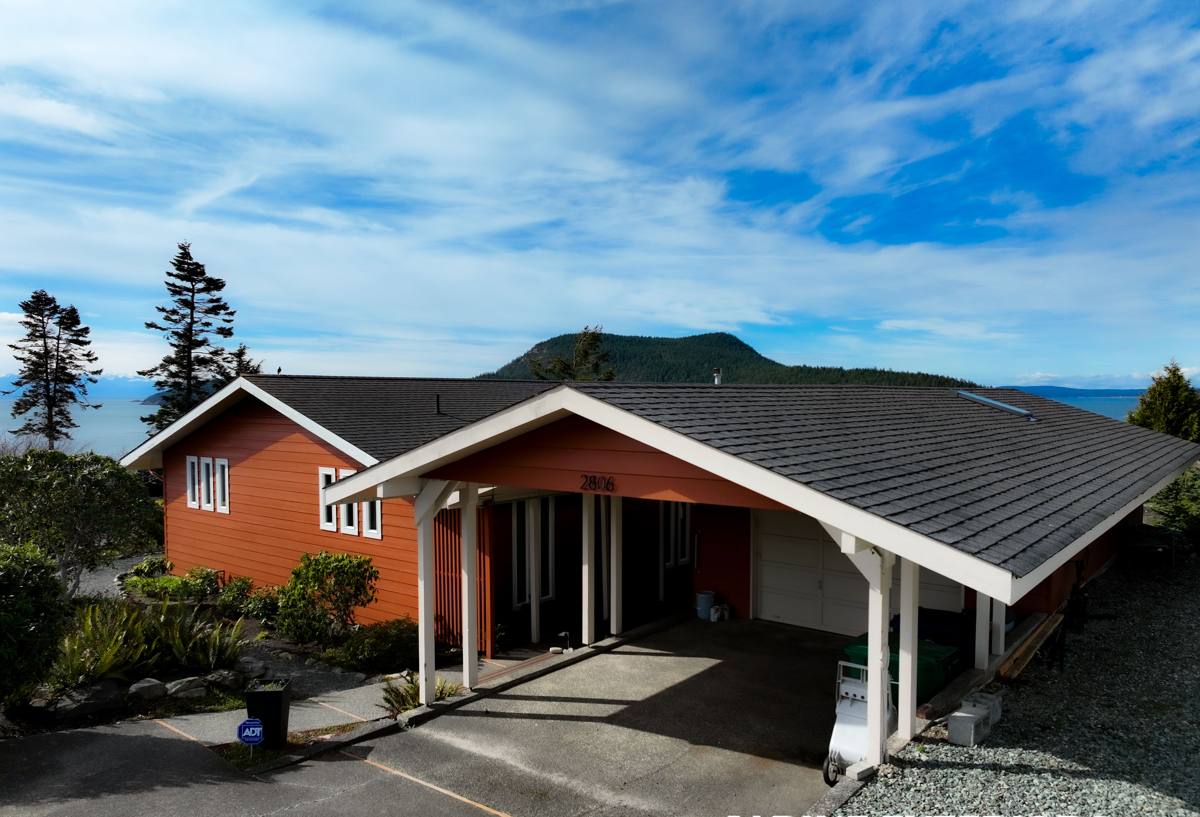
Whatcom County as a whole deals with a marine climate: driving rain that comes in sideways during winter storms, salt-tinged air moving in off the water, and long gray stretches where surfaces just don't dry out. Sudden Valley adds its own layer on top of that. Homes tucked under fir and cedar canopy, or sitting close to the lake, get less direct sun and more standing humidity around the exterior envelope than homes on open, exposed lots a few miles away.
Moss and Algae Season Runs Long
In a shaded, moist setting, moss and algae don't just show up seasonally — they can hang around most of the year. On roofing, that means granule wear and moisture retention under moss mats. On siding, it means green-black streaking and, on the wrong materials, actual surface degradation where moisture sits against the substrate.
Driving Rain Finds Every Weak Point
Wind-driven rain doesn't fall straight down — it gets pushed sideways into laps, joints, window flashing, and butt seams. A house that's shielded from direct sun by trees also tends to stay wetter longer after a storm, which gives water more time to find any gap in flashing, caulking, or siding installation.
Salt Air and Corrosion
Whatcom County's proximity to Puget Sound and the Strait of Georgia means airborne salt is part of life here, even inland. Salt-laden moisture accelerates corrosion on fasteners, flashing, and any exposed metal trim, and it's part of why we're picky about the hardware and flashing details we use, not just the siding or roofing material itself.
Siding in Sudden Valley
We install James Hardie fiber cement siding exclusively. We don't install vinyl, LP SmartSide, Cemplank, Allura, or unprimed wood siding like cedar or spruce — and in a setting like Sudden Valley, that standard matters more than it does on a dry, sun-exposed lot.
Why We Won't Install Wood or Wood-Composite Products Here
Cedar and other raw wood sidings can look great, but they're organic material in a climate that keeps them wet for extended periods. In shaded, high-moisture settings like much of Sudden Valley, wood siding needs aggressive, consistent maintenance — re-staining, re-sealing, and constant vigilance for rot at seams and end cuts — to hold up. Engineered wood products like LP SmartSide use resin-treated wood strand substrates that resist moisture better than raw lumber, but they're still wood-based, and any breach in the factory coating (a nail pop, a scuff, an unsealed cut edge) gives moisture a path into a material that swells and deteriorates once it's wet. In a shaded, damp lot, those breaches take longer to dry out between rain events, which shortens the margin for error.
Why Not Vinyl
Vinyl siding is inexpensive and low-maintenance in the sense that it doesn't need painting, but it's a thin plastic product that expands and contracts significantly with temperature swings, can crack in impact, and isn't rated for the kind of fire resistance that matters more each year as wildfire smoke and ember exposure become part of the conversation in Western Washington. It also doesn't offer the dimensional, high-end look that a lot of Sudden Valley's wooded, custom-home aesthetic calls for.
Why Hardie
James Hardie fiber cement is non-combustible, dimensionally stable, and doesn't rot, swell, or feed moss and mildew the way wood-based products can. The ColorPlus factory finish is baked on and warrantied against fading and peeling far beyond what field-applied paint typically holds up to, which matters in a climate that keeps siding damp for long stretches and puts UV and moisture cycling to work on any coating. Hardie's HZ5 product line is engineered specifically for climates like ours — freeze-thaw cycling, sustained moisture exposure, and coastal-adjacent conditions. It's also backed by a long transferable warranty, which carries real value on a home in a desirable community like Sudden Valley where resale matters.
Roofing for a Shaded, Damp Lot
Roofing in Sudden Valley has to deal with moss more than almost anything else. A roof that sits under tree cover holds onto moisture and organic debris — needles, cones, leaf litter — that a roof in an open, wind-exposed spot sheds naturally. That debris traps moisture against the roofing material and accelerates moss growth, which in turn lifts shingles, holds water against the deck, and shortens the life of the whole system if it's not managed.
What We Look At
- Whether the existing roof has algae-resistant granules or copper/zinc strips, and whether those are still doing their job
- Valley and flashing condition, since that's where driving rain and debris both concentrate
- Ventilation — a poorly ventilated attic under a shaded roof holds moisture on both sides of the deck
- Gutter and downspout capacity, since a shaded lot often means more debris load, not just more rain
We're honest with Sudden Valley homeowners about the tradeoff: a heavily treed lot is beautiful, but it means roof maintenance and moss management need to happen more often than they would on an open lot, regardless of which roofing material is on the house.
Windows: Sealing Out Driving Rain
Window failures we see in this kind of setting are almost never about the glass — they're about flashing and sealant. Wind-driven rain gets pushed up under sills and into corners where the original flashing wasn't installed to modern standards, or where old caulking has failed. On a shaded lot that stays wet longer, that slow leak has more time to do damage before anyone notices it, often showing up as soft trim or interior staining well after the water intrusion started.
When we replace windows, we treat the flashing and water management around the opening as equally important as the window unit itself. A high-end window installed with poor flashing will leak; a mid-grade window installed correctly, with proper house-wrap integration and sealant details, generally won't.
Decks in a Wet, Shaded Climate
Decks in Sudden Valley take a beating from the same conditions as the roof: shade keeps them damp, and damp wood grows moss and mildew, which makes decking slick and speeds up rot at fastener points and board ends. We build and repair decks with attention to drainage underneath the structure, proper flashing where the deck ledger meets the house (a common rot point on older decks), and material choices suited to a low-sun, high-moisture setting.
Cost Factors: What Actually Drives Price Here
Every home and lot in Sudden Valley is a little different, but a few local factors tend to move the price more than they would on a typical open-lot job:
| Factor | Why It Matters in Sudden Valley |
|---|---|
| Tree cover / access | Dense canopy can complicate staging, scaffolding, and material delivery on some lots |
| Moss and moisture damage found during tear-off | Hidden rot under old siding or roofing is more common on shaded, long-damp walls and decks |
| Slope and site drainage | Many lots have grade changes that affect deck framing and water routing off the house |
| Existing flashing quality | Older homes often need flashing upgrades at windows and rooflines, not just new material on top |
| Material choice | Fiber cement, quality roofing, and treated or composite decking cost more upfront than lower-grade alternatives but hold up far better against sustained moisture |
Why a Local Crew Matters Here
A crew that mostly works dry, open sites will size up a job in Sudden Valley the same way they'd size up a job anywhere else — and that's how you end up with flashing details, ventilation choices, or material picks that aren't suited to a shaded, moisture-heavy lot. We're based in Ferndale and work throughout Whatcom County, so we've seen firsthand how differently a house ages here compared to a few miles down the road. That's less about local pride and more about knowing which failure points to check first, and which details actually need to be tightened up before new siding, roofing, windows, or a deck go on.
A Simple Homeowner Checklist for Shaded, Moist Lots
- Check roof valleys and gutters for moss and debris buildup at least twice a year
- Look at deck ledger boards and fastener points for softness or dark staining
- Watch for green or black streaking on siding, especially on north-facing or heavily shaded walls
- Inspect window sills and interior trim for soft spots or discoloration after heavy storms
- Keep branches and vegetation trimmed back from the roofline and siding to improve airflow and drying
If you own a home in Sudden Valley and you're dealing with moss, moisture damage, or exterior materials that just aren't holding up to the conditions here, we're happy to take a look and walk you through what we're seeing — no pressure, no sales pitch. Fill out the form below for a free estimate.