 Ferndale Exterior
 Asphalt Shingle Roofing Built for Cordata's Climate
Cordata sits close enough to the water and the marine weather patterns that move through Whatcom County that a roof here works harder than the sales brochures assume. Salt-laden air off the Sound accelerates the breakdown of cheap granules and exposed metal fasteners. Driving, wind-pushed rain finds its way sideways into laps and valleys that would stay dry in a calmer climate. And the long, damp moss season — often eight or nine months of the year in this part of Washington — means organic growth is working on your shingles almost year-round, not just in a short "moss season" like drier regions experience.
None of that means asphalt shingles are the wrong choice for Cordata. They remain one of the most cost-effective, proven roofing systems available, and the vast majority of homes in this neighborhood are built to carry them well. What matters is that the installation accounts for these specific stressors from the start, instead of treating this job the same way a contractor would in a dry inland climate.
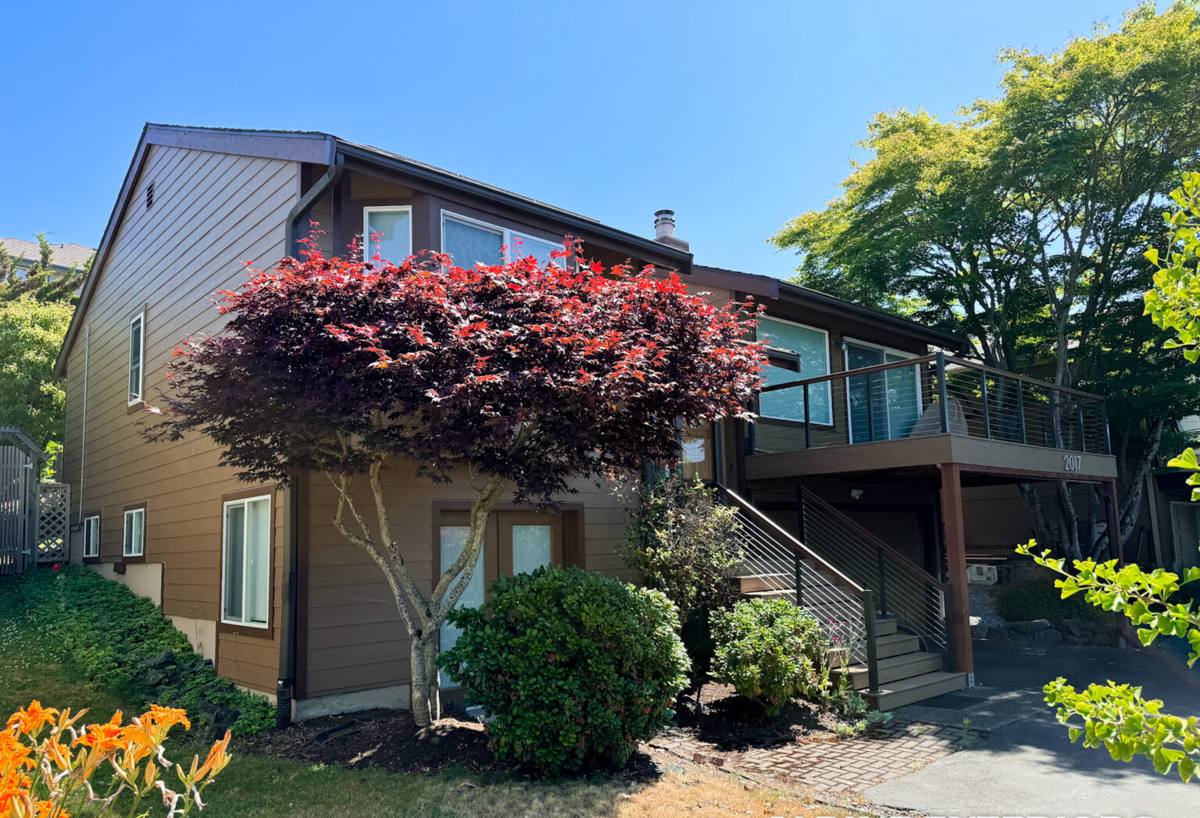
What Salt Air, Rain, and Moss Actually Do to a Roof
Salt Air
Airborne salt doesn't just sit on the surface. Over years it works into exposed fasteners, flashing seams, and any metal that isn't rated for coastal exposure, speeding up corrosion. On a shingle roof, the bigger risk is usually at the metal details — drip edge, step flashing, vent boots, and valley metal — rather than the shingles themselves.
Driving Rain
Whatcom County storms frequently come in sideways, not straight down. That matters because a roof that only sheds water well when it falls vertically can still leak during a wind-driven event if the underlayment, valleys, and laps weren't detailed for lateral water movement.
Moss and Algae
Moss holds moisture against the shingle surface, works its root structure under tab edges, and lifts shingles enough to let wind and water underneath. Algae staining is mostly cosmetic, but heavy moss growth is a genuine cause of premature shingle failure — it's a maintenance issue, not just an appearance issue.
What a Correct Installation Looks Like in This Climate
A shingle roof that's going to hold up in Cordata needs more than shingles nailed to plywood. The components underneath and around the shingles do most of the real work of keeping water out.
- Ice-and-water shield at eaves, valleys, and around penetrations — not just where code minimums require it, but wherever wind-driven rain is likely to push water uphill under the shingles.
- Synthetic underlayment across the full deck, properly lapped, as a second line of defense beneath the shingles.
- Balanced ventilation (intake at the eaves, exhaust at the ridge) so moisture from inside the attic doesn't condense against the underside of the deck during our cool, damp winters.
- Corrosion-appropriate metal for drip edge, flashing, and vent boots, given the salt exposure this area sees.
- Algae-resistant shingles with copper- or zinc-infused granules, which slow biological growth far better than standard granules.
- Correct nailing pattern — hand-driven or gun-set to the manufacturer's exact pattern and pressure, since over- or under-driven nails are one of the most common causes of early shingle failure and voided warranties.
Skipping any one of these doesn't necessarily cause an immediate problem. It shows up three, five, or eight years later as a leak, a lifted shingle, or premature granule loss — usually right around the time a homeowner assumes the roof still has a decade of life left.
Signs Your Cordata Roof Needs Attention
Most roof failures don't happen suddenly. They give warning signs first, and catching them early is almost always cheaper than waiting for a leak to show up on a ceiling.
- Granules collecting in gutters or at downspout outlets
- Dark streaking or green-black staining across the shingle field
- Visible moss growth, especially on the north-facing or shaded slopes
- Curling, cupping, or lifted shingle edges
- Soft or spongy spots when walked, or visible sagging from the ground
- Daylight visible through the attic decking
- Water stains on interior ceilings or in the attic near penetrations
- Missing or damaged flashing around chimneys, skylights, or vent pipes
If you're seeing two or more of these, it's worth having someone look at the roof before the next major storm rather than after.
Choosing the Right Shingle for a Cordata Roof
Not every asphalt shingle is built the same, and the differences matter more in a wet, mossy, salt-exposed climate than they would somewhere dry.
| Shingle Type | Typical Lifespan Here | Best Fit For |
|---|---|---|
| 3-tab standard | 12-18 years | Budget-driven projects, rentals, secondary structures |
| Architectural (laminated) | 20-30 years | Most Cordata homes — better wind rating, thicker profile, better moss resistance |
| Algae-resistant architectural | 20-30+ years | North-facing roofs, tree-covered lots, homes with a prior moss problem |
| Premium/designer laminate | 25-30+ years | Homeowners prioritizing appearance and top-tier wind/impact rating |
For most homes in Cordata, we steer people toward algae-resistant architectural shingles. The upfront cost difference over a basic 3-tab is modest, but the reduction in moss and algae staining over the life of the roof is significant — and it directly reduces how often the roof needs professional cleaning.
What Drives Cost on a Cordata Re-Roof
Every roof is different, but the same handful of factors tend to move the price up or down on jobs in this area.
| Factor | Why It Matters |
|---|---|
| Roof pitch and complexity | Steeper roofs and multiple valleys/dormers take longer and require more safety setup |
| Number of layers to remove | Tear-off of old layers adds labor and disposal cost versus a clean deck |
| Deck condition | Rotten or soft sheathing found during tear-off needs replacement before shingles go down |
| Shingle grade selected | Material cost scales with wind rating, algae resistance, and warranty tier |
| Ventilation upgrades needed | Adding proper intake/exhaust venting where none exists adds scope but prevents future moisture issues |
| Access and site conditions | Steep lots, limited driveway access, or landscaping to protect can affect logistics |
We walk every roof and give a written estimate that breaks these out, so you know exactly what you're paying for and why — not a single lump number with no explanation.
Our Process, Start to Finish
We keep the process straightforward because a re-roof is disruptive enough without added confusion.
- On-site inspection. We walk the roof, check the attic for ventilation and moisture issues, and note the condition of flashing, valleys, and penetrations.
- Written estimate. A clear scope of work and price, including material options, so you can compare choices without pressure.
- Scheduling around weather. Roofing in this climate means watching forecasts closely and planning tear-off in windows that keep your home protected.
- Tear-off and deck inspection. Old roofing comes off, the deck is inspected, and any soft or damaged sheathing is replaced before anything new goes down.
- Underlayment and flashing. Ice-and-water shield, synthetic underlayment, and new flashing are installed to current best practice, not just code minimums.
- Shingle installation. Installed to manufacturer spec for nailing pattern, exposure, and fastening — the details that actually determine whether the warranty holds up.
- Cleanup and magnetic sweep. Job site cleared of debris and swept for stray nails before we call it done.
- Final walkthrough. We go over the finished roof with you and answer any remaining questions.
Maintenance That Actually Extends Roof Life Here
A new roof still needs periodic attention in a climate like this. Gutters should be cleared at least twice a year so water isn't backing up under the eave line. Overhanging branches should be trimmed back to reduce shade and debris buildup, since both encourage moss. Moss that does establish should be treated gently — soft washing or an appropriate treatment rather than aggressive pressure washing, which can strip granules and shorten shingle life faster than the moss itself would. A quick visual check after major windstorms, looking for lifted or missing shingles, catches small problems before they become water damage.
Why Local Experience in Cordata Matters
A roofing crew that works this specific area regularly knows things a traveling or out-of-region contractor doesn't: which slopes in the neighborhood tend to hold moss longest, how the local wind patterns during winter storms tend to drive rain, and which flashing and ventilation details actually hold up over years in this exposure rather than just passing inspection on day one. That local pattern recognition is part of what you're paying for when you hire a crew based in Whatcom County instead of a company that only shows up for a single job.
It also means accountability. If something needs a warranty check or a follow-up visit five years down the road, you're calling a company that's still working in your neighborhood, not tracking down someone who came through once and moved on.
Get a Straight Answer on Your Cordata Roof
If your roof is showing moss, granule loss, or you just want an honest read on how much life is left in it, we're happy to take a look. We offer free, no-pressure estimates for asphalt shingle roofing in Cordata and the surrounding Ferndale area — use the form below to get started.