 Ferndale Exterior
 Windows Built for Everson's Weather, Not Just Its Views
Homes in and around Everson deal with a specific combination of weather stress that a lot of window products simply aren't designed for. You've got salt-laden air drifting in off the Sound, long stretches of driving rain that push water sideways into wall assemblies, and a moss season that seems to run longer every year. None of that is dramatic on its own, but stacked together over a decade or two, it's exactly the kind of slow, steady exposure that finds every weak point in a window's seal, frame, and flashing.
Energy-efficient windows aren't just about lower heating bills, though that matters here too. In Whatcom County's marine climate, a window's job is really about managing moisture and air movement first, and comfort second. A window that's rated efficient on paper but installed poorly will still let in cold drafts, fog up between panes within a few years, or feed slow leaks into your wall cavity long before you ever see a stain on the drywall. This page focuses on what actually matters for Everson-area homes specifically — not a generic list of window benefits.
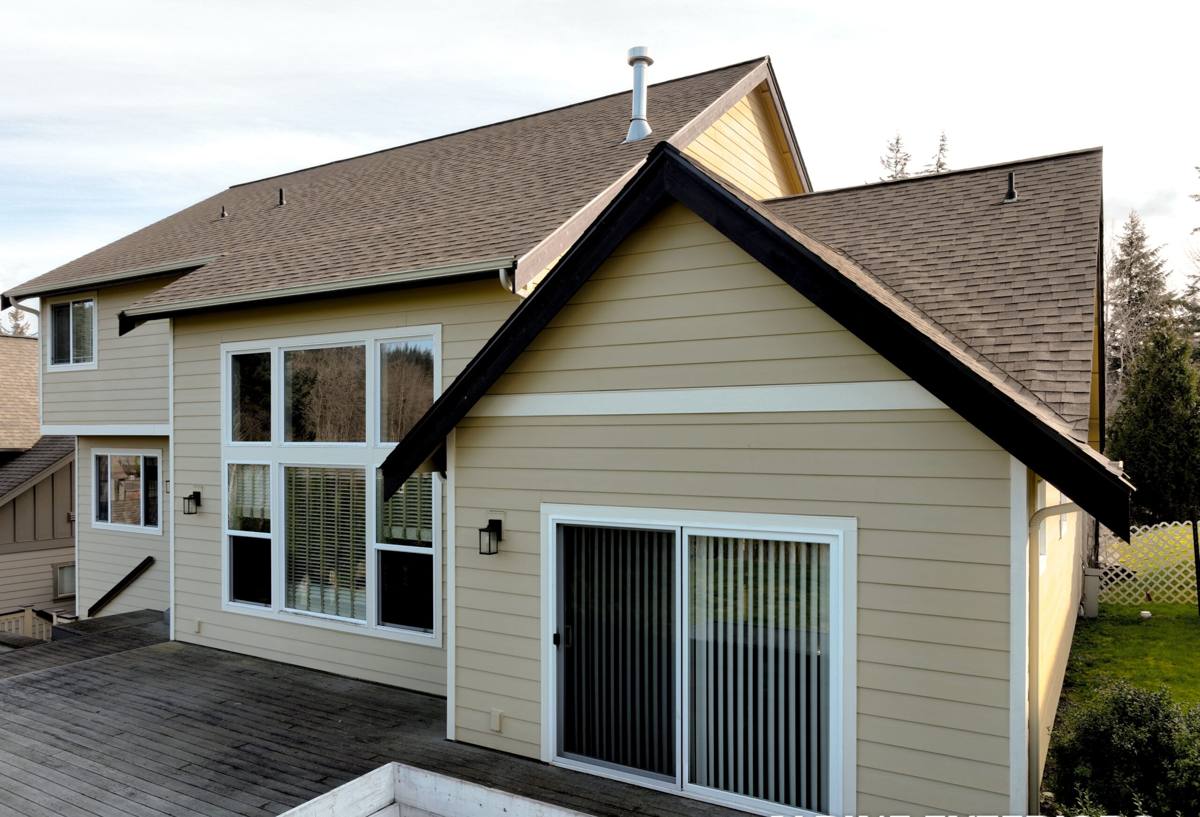
What "Energy-Efficient" Actually Means for This Climate
Efficiency ratings are written for the whole country, so it helps to know which numbers actually matter for a house sitting a short drive from Ferndale and the Nooksack River valley.
U-Factor Over SHGC
In our climate, U-factor (how well the window resists heat loss) matters more day-to-day than solar heat gain coefficient (how much solar heat it lets in). We don't get the brutal summer sun load that homes in the Southwest deal with, so the priority here is keeping the heat you generate inside the house — not blocking heat from getting in. Look for a U-factor in the 0.27–0.30 range or better for standard replacement windows in this area.
Glass Packages
Double-pane, low-E, argon-filled glass is the practical baseline for this region. Triple-pane windows exist and do provide a slightly better U-factor, but the marginal gain often doesn't justify the added weight and cost for most Everson homes unless you're dealing with a north-facing wall that never sees sun or a room with a persistent cold-draft complaint.
Air Infiltration
This is the number homeowners overlook most, and it's arguably the most important one here. A window with a low air infiltration rating resists wind-driven rain and gusty weather pushing air (and moisture) around the sash, not just through the glass. Given how often wind and rain arrive together in this part of Whatcom County, this rating deserves as much attention as the U-factor.
Signs Your Current Windows Are Working Against You
Most homeowners don't call about windows until something's visibly wrong, but by then the frame or the surrounding wall may already be affected. Watch for:
- Fogging or a hazy film between the panes — the seal has failed and the gas fill is gone
- Visible moss or dark streaking building up on the sill or exterior trim
- A noticeable draft near the frame even when the window is fully latched
- Wood trim that feels soft, spongy, or shows paint bubbling near the corners
- Difficulty opening or closing — often a sign the frame has swelled or shifted from moisture
- Rooms that feel noticeably colder than the rest of the house in winter
Any one of these on its own might just mean routine maintenance. Two or three together, especially on a wall that takes direct weather, usually means it's time to look at replacement rather than another round of caulk and paint.
Frame Materials: What Holds Up in Salt Air and Wet Winters
The frame material matters as much as the glass package when your home is exposed to salt air and near-constant moisture cycles for months at a time.
| Material | How It Handles This Climate | Trade-offs |
|---|---|---|
| Vinyl | Won't rot or corrode from salt exposure; low maintenance | Can expand/contract with temperature swings; quality varies widely by manufacturer |
| Fiberglass | Very stable in wet, variable climates; strong resistance to warping | Higher upfront cost than vinyl |
| Wood-clad | Classic look, good insulator | Cladding must be detailed correctly or moisture gets trapped against the wood core |
| Aluminum | Very durable structurally | Poor insulator unless thermally broken; can be prone to condensation in our damp winters |
We don't push one material as universally "best" — the right choice depends on your home's exposure, your budget, and how the existing wall assembly is built. What we won't do is install a frame system into a wall detail where it's a poor moisture match, even if it's the cheaper option up front. That's a callback waiting to happen, and it's not worth it for either of us.
What a Correct Installation Actually Involves
The window unit itself is maybe half the job. The other half — the part you don't see once it's finished — is what determines whether that window performs for twenty years or starts leaking in five.
Removing the Old Unit Without Damaging the Opening
Old windows, especially in older Everson-area homes, are often set into openings that have shifted slightly over decades. A careful removal protects the rough opening and lets us actually assess what's underneath — sometimes that's when hidden moisture damage from a failed old seal shows up, and it's better to find it now than after the new window is in.
Flashing and Water Management
This is the step that matters most in a driving-rain climate. Proper flashing directs any water that gets behind the siding back out and away from the wall cavity, rather than letting it pool at the sill. Skipping or shortcutting flashing is the single most common cause of hidden rot behind replacement windows — and it's invisible until the damage is already done.
Sealing and Insulating the Gap
The gap between the window frame and the rough opening needs to be insulated and air-sealed correctly — not overpacked with expanding foam, which can bow the frame, and not left with gaps that undercut the window's efficiency rating entirely.
Exterior Trim and Weatherproofing
The final exterior detailing — caulking, trim, and drip caps — is what sheds moss growth and driving rain over time. Done right, it also gives the window a clean, finished look that matches the rest of the house.
Our Process for Everson-Area Window Projects
- On-site assessment — we look at each window opening individually, not just the house as a whole. Sun exposure, wind direction, and wall condition can vary window to window.
- Honest product recommendation — based on your budget, the wall's condition, and what that specific opening actually needs.
- Accurate measurement and ordering — precise measurements matter more in older homes where openings are rarely perfectly square.
- Installation with proper flashing and sealing — done to hold up against wind-driven rain, not just pass a quick visual check.
- Final walkthrough — we check operation, seals, and exterior finish work with you before we call the job done.
What Affects the Cost of a Window Project
| Factor | Why It Matters |
|---|---|
| Number of windows | Per-unit cost typically drops on larger, whole-house projects |
| Frame material | Vinyl, fiberglass, and wood-clad carry different material costs |
| Wall condition | Hidden rot or moisture damage found during removal adds repair scope |
| Window size and type | Larger units, custom shapes, or specialty operation (casement, sliding) affect labor and material |
| Trim and exterior detailing | Matching existing trim profiles or upgrading exterior finish adds time |
We won't quote a firm number without seeing the actual openings — anyone who does is guessing, and that guess tends to grow once the real condition of the wall shows up. What we can promise is a straightforward estimate that breaks down exactly what you're paying for and why.
Why It Matters That We Already Work in This Area
A crew that regularly works Ferndale and the surrounding Whatcom County communities, including Everson, has already seen how the local weather patterns actually behave against real houses — not just how a manufacturer's spec sheet describes them. That means knowing which wall orientations tend to take the worst of the driving rain, how quickly moss and moisture reassert themselves on north-facing trim, and which installation shortcuts simply don't survive a full winter here.
It also means we're not guessing at permitting, typical construction styles in the area, or what a reasonable timeline looks like given local weather windows for exterior work. That local familiarity translates into fewer surprises during the project and a better chance the finished work actually performs the way it's supposed to.
Keeping New Windows Performing Long-Term
Even a correctly installed window benefits from a little seasonal attention in this climate. A short annual routine goes a long way:
- Clear moss and debris from sills and exterior trim before it holds moisture against the frame
- Check and re-caulk any exterior sealant that's cracked or pulled away
- Wipe down and lightly lubricate hardware and tracks so they keep operating smoothly
- Inspect interior sills after heavy storms for any sign of moisture intrusion
- Keep gutters and downspouts clear so runoff isn't sheeting directly down over window heads
None of this is complicated, but skipping it is how small issues turn into bigger repairs a few years down the line.
Get a Straightforward Estimate
If your windows in the Everson area are showing their age, fogging, drafting, or just costing you more to heat than they should, we're happy to take a look and give you an honest read on what's going on — no pressure, no upsell. Use the form below to request a free estimate and we'll go from there.