 Ferndale Exterior
 Roofing in Fairhaven Has to Answer to the Water
Fairhaven sits close enough to Bellingham Bay that salt air is part of daily life, and that changes what a roof needs to survive. Add in the driving rain that comes off the Strait of Juan de Fuca through fall and winter, plus the long, damp moss season that Whatcom County is known for, and you have a roofing environment that punishes shortcuts. A roof that would hold up fine in a dry inland climate can fail early here if it wasn't built with this specific combination of salt, wind-driven rain, and moisture in mind.
When we install a new roof for a Fairhaven home, we're not just matching a look or hitting a price point. We're building an assembly — decking, underlayment, flashing, ventilation, and the finish material itself — that's suited to a marine-influenced microclimate. That's a different job than a standard reroof, and it shows in the details.
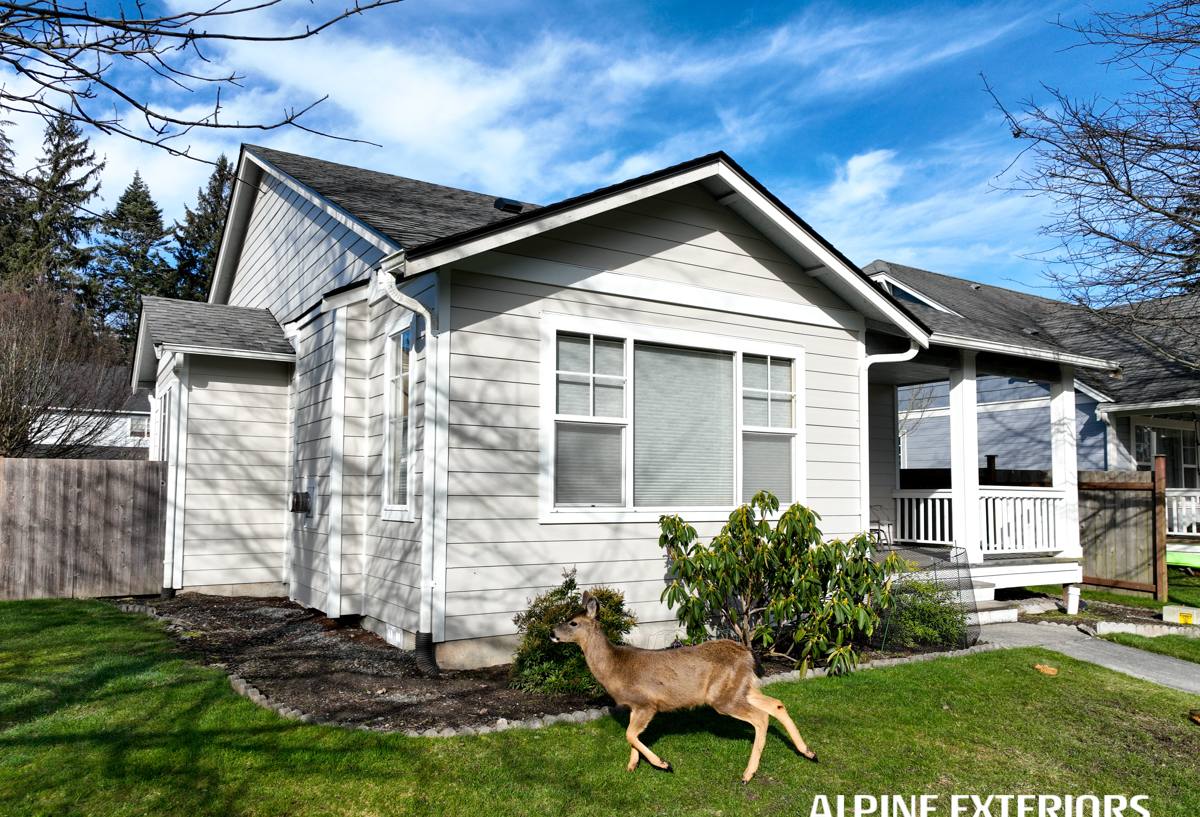
What Salt Air and Coastal Exposure Do to a Roof
Homes closer to the water deal with airborne salt that settles on roofing surfaces and metal components. Over years, that accelerates corrosion on unprotected fasteners, flashing, and any exposed metal trim. It's not dramatic — it's slow, cumulative wear that shows up as rust streaks, deteriorating seals, and premature failure at the metal-to-roof connection points long before the field of the roof itself is due for replacement.
For a Fairhaven installation, that means paying close attention to what metal we use and how it's protected:
- Corrosion-resistant fasteners rated for coastal or marine exposure, not standard interior-grade hardware
- Flashing metals chosen for how they hold up against salt exposure over time, not just upfront cost
- Sealed, properly lapped connections at every penetration so moisture and salt spray can't work into the assembly from the edges
- Careful attention to any exposed fastener heads, which are the first thing salt air attacks
None of this is exotic. It's standard practice for anyone who roofs near Puget Sound or Bellingham Bay regularly — but it does mean the material and hardware choices are different than they'd be for a home twenty miles inland.
Driving Rain Changes How Water Has to Be Shed
Wind-driven rain is a different problem than rain falling straight down. When storms push moisture sideways and upward under roofing material, a roof that relies purely on gravity to shed water is at risk. This matters most at the vulnerable points: valleys, eaves, ridges, and anywhere the roof plane changes direction or meets a wall, chimney, or vent.
Where Wind-Driven Rain Finds Weaknesses
The eave and valley are the two spots we see fail most often on homes that weren't built for this climate. Ice and water shield membrane at eaves and valleys — not just felt paper — gives the roof a self-sealing barrier that can handle wind-driven moisture and any wind-driven snow or ice that occasionally hits Whatcom County in winter. Proper valley construction, with either woven or metal-lined detailing done correctly, keeps water moving off the roof instead of finding a seam to exploit.
Underlayment quality matters more here than in drier climates. A synthetic, high-quality underlayment provides a second line of defense if wind ever drives moisture past the primary roofing material — which does happen during the region's harder storms. This isn't an upsell; it's a practical response to how weather actually behaves in this part of Washington.
Moss: The Slow Damage Nobody Notices Until It's Expensive
Whatcom County's moss season is long, and Fairhaven's tree cover and coastal humidity make it worse than average. Moss isn't just cosmetic. As it grows, it holds moisture against the roofing surface, lifts shingle edges, and creates a constant damp layer that accelerates material breakdown and can work its way under flashing over time.
A correctly installed roof reduces moss risk from the start:
- Proper ventilation so the roof deck isn't holding extra moisture from the underside
- Material choice and installation that doesn't trap organic debris in valleys or against fasteners
- Zinc or copper strips at the ridge on request, which discourage moss growth as rainwater carries trace metal down the roof plane
- Clean tie-ins around chimneys, skylights, and vents where debris tends to collect and moss gets its first foothold
We'll also talk honestly about tree cover during the estimate. If a home has heavy shade from surrounding trees, that's a factor in how often the roof will need moss treatment or cleaning regardless of how well it's installed — no roofing assembly eliminates that maintenance need entirely, but a well-built one makes it manageable instead of a recurring crisis.
What a Correct New Roof Installation Actually Involves
A new roof isn't just laying new material over what's there. Done right, it's a sequence, and skipping steps is where most premature roof failures come from — coastal or not.
The Core Steps
- Tear-off and deck inspection — removing the old roofing down to the deck so we can actually see the condition of the sheathing, not guess at it
- Deck repair — replacing any rotted, delaminated, or soft sheathing before anything new goes down; roofing over a compromised deck just hides a bigger problem
- Underlayment — synthetic underlayment across the field, ice and water shield at eaves, valleys, and other vulnerable transitions
- Flashing — new flashing at every penetration, valley, and wall intersection, using metals suited to coastal exposure
- Ventilation check — confirming intake and exhaust venting is balanced, which affects both moisture control and how long the roofing material lasts
- Field installation — the roofing material itself, installed to manufacturer spec and local wind/rain conditions
- Final detailing — ridge caps, exposed fastener sealing, and a full walk-through
Each of these steps matters more in a coastal, high-moisture climate than it would somewhere drier, because the margin for error is smaller. A ventilation mistake that might take a decade to show up inland can show up in a few years in Fairhaven's conditions.
Choosing Roofing Material for This Climate
There's no single "best" roofing material for every home — it depends on budget, roof pitch, home style, and how much maintenance a homeowner wants to take on. What we can offer is an honest comparison of how common options perform specifically in a salt-air, high-moss climate like Fairhaven's.
| Material | Coastal / Salt Air Performance | Moss Resistance | Maintenance Considerations |
|---|---|---|---|
| Asphalt composition shingle | Good with corrosion-resistant fasteners and proper flashing | Moderate — benefits from zinc strips and periodic cleaning | Lower upfront cost, standard lifespan expectations, widely serviceable |
| Standing seam metal | Very good when finish and fasteners are coastal-rated | Good — smooth surface sheds moss more easily | Higher upfront cost, less prone to moisture retention issues |
| Composite / synthetic shake | Good, consistent performance in wet climates | Moderate to good depending on product | Mid-range cost, designed for moisture-heavy regions |
| Cedar shake | Requires more upkeep near salt air and moisture | Lower — organic material is more moss-prone without regular treatment | Higher maintenance commitment, natural appearance trade-off |
We'll walk through these trade-offs honestly during your estimate rather than steering you toward whatever's easiest for us to install. The right call depends on how the home is used, how much shade and tree cover it has, and what the homeowner wants to manage long-term.
Why Local Experience in Fairhaven Matters
A roofing crew that only occasionally works this close to the water can miss the details that matter most here — the extra attention flashing needs, the reality of how fast moss builds up under specific tree cover, or how wind actually moves across a given roof plane near the bay. Crews that work Fairhaven and the surrounding Ferndale area regularly develop a feel for which details actually matter versus which are just good general practice elsewhere.
That local familiarity also means knowing what permitting and inspection expectations look like in Whatcom County, and being realistic with homeowners about scheduling around the region's wetter months, when roofing work needs drier weather windows to be done properly.
Signs Your Fairhaven Home May Need a New Roof
Not every roofing issue means full replacement — sometimes a repair is the right call. But certain signs point toward a roof that's past the point where patching makes sense:
- Shingles that are curling, cupping, or losing granules in large patches
- Persistent moss growth that returns quickly after cleaning
- Soft spots or sagging visible in the roof deck
- Rust staining or deteriorating flashing around chimneys, vents, and valleys
- Daylight visible through the roof deck from inside the attic
- A roof approaching or past its expected service life, especially if it wasn't built with coastal-grade materials originally
If you're seeing more than one of these, it's worth having the roof looked at before the next storm season rather than after a leak forces the issue.
What to Expect From Our Process
We start with an on-site inspection and an honest conversation about condition, options, and cost — not a generic sales pitch. From there, you get a clear written estimate that spells out material choices, the scope of tear-off and deck work, and a realistic timeline. We handle permitting where required and keep you informed as work progresses, especially around weather-dependent scheduling that's just a reality of roofing in this part of Washington.
If you're a Fairhaven homeowner thinking about a new roof, we're happy to come take a look and give you a straightforward, no-pressure estimate — just fill out the form below to get started.