 Ferndale Exterior
 Roofing in Semiahmoo Isn't the Same Job as Roofing Inland
Semiahmoo sits close enough to the water that its roofs live a different life than a roof ten miles inland in Whatcom County. The combination of salt-laden air, wind-driven rain off the water, and a moss season that can stretch from October well into spring puts a specific kind of stress on shingles, flashing, and fasteners. A roof replacement here has to account for all three, not just the first two people usually think about.
We work throughout Ferndale and the surrounding Whatcom County coastline, and Semiahmoo is one of the areas where we see roofs age faster than their paperwork says they should. That's not because the materials were bad — it's because they weren't matched to the exposure. A correct replacement fixes that mismatch instead of just repeating it with new shingles.
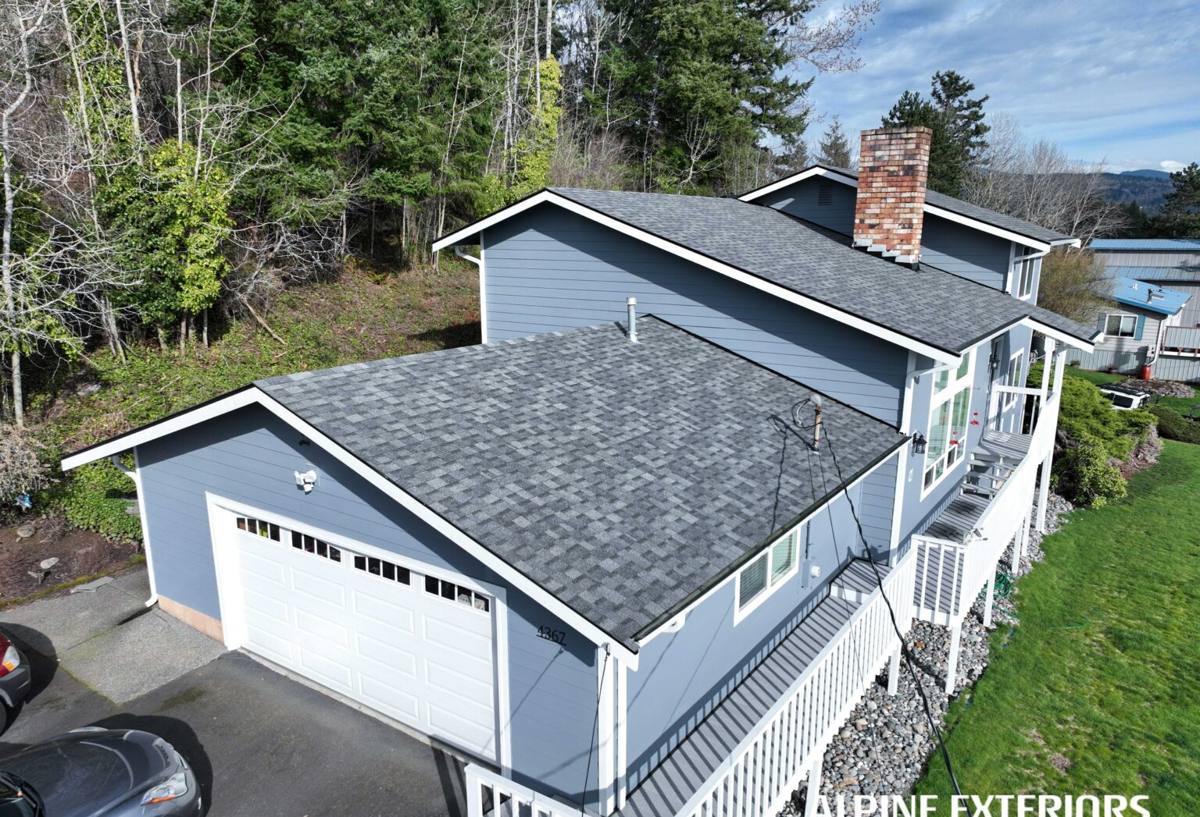
What Salt Air, Driving Rain, and Moss Actually Do to a Roof
Salt Air
Airborne salt is corrosive to exposed metal. Nail heads, flashing seams, vent stacks, and gutter hardware all take a slow hit over the years. On a lot of roofs the shingles themselves still look fine while the metal underneath and around them has already started to fail — which is exactly the kind of problem that shows up as an interior leak with no obvious cause from the ground.
Driving Rain
Storms coming off the water don't just fall straight down — they push rain sideways under shingle tabs, around vent boots, and into any seam that isn't properly lapped or sealed. A roofing detail that would hold up fine in a calmer inland location can leak in Semiahmoo simply because the wind direction and rain angle are more aggressive here.
Moss
Shade, moisture, and mild temperatures are moss's favorite combination, and Whatcom County's long wet season delivers all three for months at a time. Moss doesn't just look bad — its root structure holds water against the roofing material and can lift shingle edges over time, which is how a moss problem quietly turns into a leak problem.
Signs a Semiahmoo Roof Needs Replacement, Not Another Repair
- Granule loss heavy enough that you can see bare asphalt on multiple shingles, not just one or two
- Moss growth that keeps coming back within a season or two of cleaning, even after treatment
- Curling, cupping, or cracked shingles concentrated on the sides of the roof that face prevailing storms
- Rust staining or visible corrosion at flashing, vent boots, or gutter fasteners
- Soft spots in the decking when walked, or daylight visible from the attic at seams and penetrations
- A roof already past 18–20 years old with asphalt shingles, given the accelerated wear coastal exposure causes
One or two of these on their own might still be repairable. Several at once, especially combined with age, usually means a repair is a short-term patch on a roof that's already past the point where patching makes financial sense.
Material Choices for a Coastal Whatcom County Home
There's no single "best" roofing material for Semiahmoo — the right choice depends on your home's exposure, roofline, and budget. What matters is picking a system honestly, understanding the trade-offs, and installing it correctly. Here's how the common options compare against the conditions this area actually deals with.
| Material | Performance in Salt Air & Driving Rain | Moss Resistance | Maintenance |
|---|---|---|---|
| Standard 3-tab asphalt | Adequate but shows wear faster near the water; budget-friendly | Low without added protection | Regular cleaning recommended |
| Architectural (laminate) asphalt | Better wind and rain resistance than 3-tab, thicker mat | Moderate; improved with algae-resistant granules | Periodic cleaning |
| Metal roofing (standing seam) | Excellent once properly coated/sealed against salt corrosion | High — moss struggles to hold on smooth metal | Low |
| Synthetic/composite shingle | Good, resists moisture absorption well | Moderate to high depending on product | Low to moderate |
We're straightforward with homeowners about trade-offs: metal costs more up front but shrugs off moss and holds up well against salt exposure over decades. A well-made architectural asphalt roof with the right underlayment and flashing can still perform very well near the water for a fraction of the cost — it just asks for a bit more attention over its life. We'll walk through what fits your roof and your budget rather than pushing one system as the answer for every house.
What a Correct Roof Replacement Actually Involves
A roof replacement is only as good as what's underneath the shingles. In an exposure like Semiahmoo's, the details below matter more than they would on a sheltered inland roof.
- Full tear-off to bare decking — never a layover — so we can actually inspect and address what's underneath
- Decking inspection and replacement of any sections showing rot, delamination, or water damage
- Ice-and-water shield or comparable moisture barrier at eaves, valleys, and any low-slope transitions where wind-driven rain is most likely to intrude
- Corrosion-resistant flashing and fasteners around chimneys, skylights, and vent penetrations — the spots where salt air does the most damage
- Proper starter strip and shingle nailing pattern rated for higher wind exposure, not just standard fastening
- Balanced intake and exhaust ventilation, so moisture doesn't get trapped in the attic and accelerate decking or insulation problems
- Gutter and drip edge details that actually shed water away from fascia and siding instead of letting it wick back in
Skip any one of these and the new roof inherits the same weak points that shortened the life of the old one.
Our Process, Start to Finish
1. On-Site Assessment
We look at the whole system — shingles, decking, flashing, ventilation, gutters — not just the surface. For a Semiahmoo property, we're specifically checking exposure direction, moss history, and any corrosion around existing metal.
2. Honest Estimate
You get a written estimate that spells out material options, what's included, and why. No pressure to upgrade beyond what your roof and budget actually call for.
3. Scheduling Around the Weather
We plan tear-off and dry-in around the forecast, not the calendar, so your home isn't left exposed to a Whatcom County rain system mid-project.
4. Tear-Off and Install
Full removal, decking repair as needed, moisture barrier, flashing, shingles or metal, and ventilation — installed in the sequence that actually keeps water out, not just the sequence that's fastest.
5. Cleanup and Walkthrough
Magnetic sweep for stray fasteners, full site cleanup, and a walkthrough so you know what was done and what to watch for going forward.
Flashing and Ventilation: The Details That Decide How Long a Roof Lasts Here
Most roof failures we see in coastal Whatcom County aren't shingle failures — they're flashing or ventilation failures wearing a shingle problem as a disguise. Flashing that isn't properly lapped or sealed lets driving rain in at exactly the points a roof is most vulnerable: chimneys, skylights, valleys, and wall-to-roof transitions. Ventilation that's undersized or unbalanced traps moisture in the attic, which speeds up decking rot from the inside even while the shingles up top still look fine.
Getting both right isn't a premium upgrade — it's what a correct installation looks like. We treat it as standard, not optional, on every replacement.
Timing a Replacement Around Local Weather
Whatcom County's wet season runs long, and Semiahmoo's exposure to the water means storms can roll in with less warning than they do further inland. Late spring through early fall generally gives the most predictable install window, but a roof that's actively failing shouldn't wait for ideal weather — a properly sequenced project can still be done responsibly outside that window with the right dry-in precautions. If your roof is showing multiple warning signs, the bigger risk is usually waiting, not the season.
Why Hiring a Crew That Already Works Semiahmoo Matters
A roofing crew that mostly works inland can still do competent work, but they may not default to salt-air-rated fasteners, they may underestimate how far wind-driven rain travels under a shingle edge here, or they may not flag moss regrowth patterns that are specific to this stretch of coastline. None of that is incompetence — it's just unfamiliarity with the exposure.
We work in and around Ferndale and the coastal parts of Whatcom County regularly, which means we're not guessing at how a roof here needs to be built. We've seen what wears out first, what holds up, and what's worth spending on versus what's a marketing upgrade with no real benefit for this climate.
Get a Straight Answer About Your Roof
If your Semiahmoo roof is showing granule loss, recurring moss, or you're just not sure whether it's a repair or a replacement, we're glad to take a look. We'll give you a clear, no-pressure estimate and an honest read on where your roof actually stands — use the form below to get started.