 Ferndale Exterior
 Storm Damage Roof Repair for Sudden Valley Homes
Sudden Valley sits on the south shore of Lake Whatcom, wrapped in dense second-growth forest with homes spread across hilly terrain at a range of elevations and exposures. It's one of the most heavily wooded residential communities in Whatcom County, and that setting changes what "storm damage" actually means here. In a lot of neighborhoods, a windstorm mostly means checking for lifted shingle tabs. In Sudden Valley, it also means checking for what came down out of the canopy overhead. We repair storm-damaged roofs throughout Sudden Valley, and the approach we bring reflects the specific mix of tree cover, terrain, and moisture this community deals with year-round.
This page covers storm damage roof repair specifically — what causes it here, what a correct repair actually involves, and how our process works when you call us after a bad night of wind or rain.
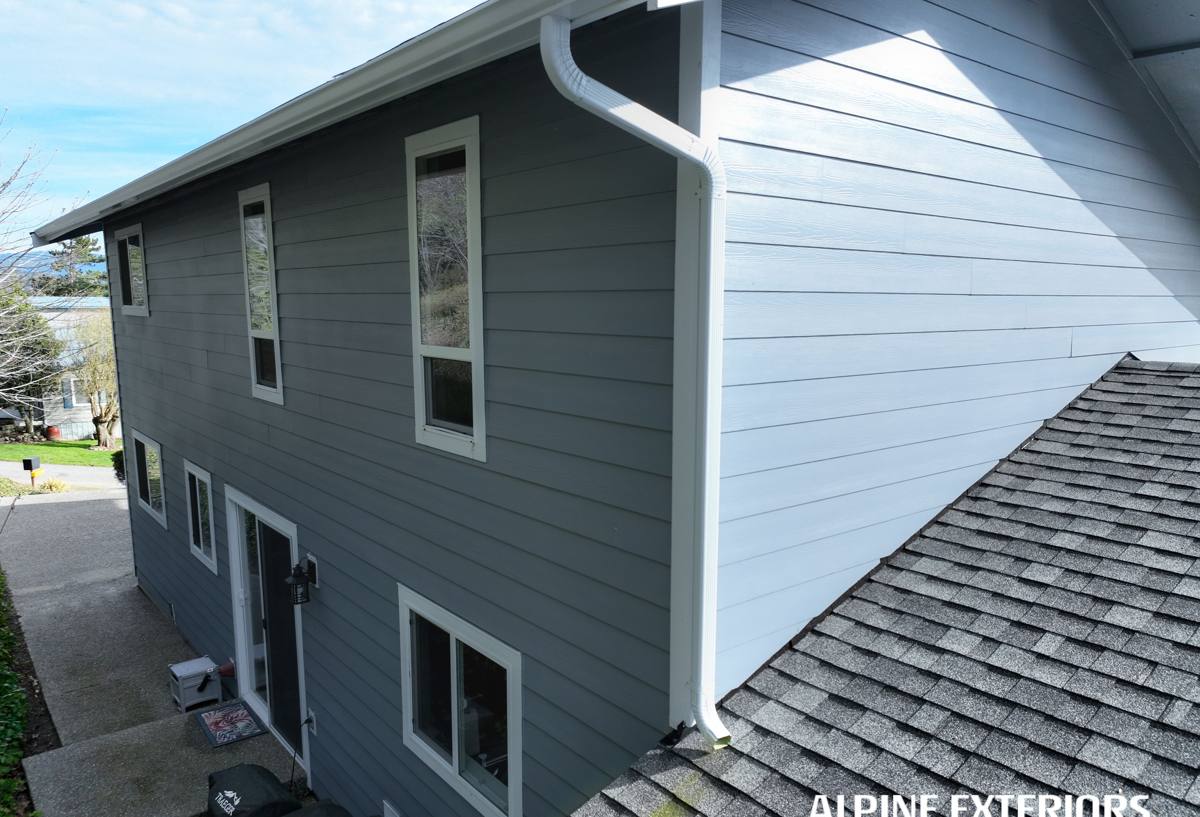
What Storms Actually Do to a Sudden Valley Roof
Falling Limbs and Debris From Heavy Tree Cover
The single biggest difference between storm damage in Sudden Valley and storm damage on an open lot elsewhere in the county is direct impact from trees. Wind events that would barely stress a bare roof can bring down limbs, and sometimes whole trees, onto a home surrounded by mature forest. Impact damage isn't always obvious from the ground — a limb strike can crack a shingle, punch through underlayment, or knock a section of flashing loose without leaving a hole you can see from the yard. On a wooded lot, every storm inspection has to include a real look at the roof surface itself, not just a glance up from below.
Wind-Driven Rain on Hilly, Uneven Terrain
Sudden Valley's hilly layout means homes face the lake, the ridgelines, and prevailing wind from a lot of different angles depending on where they sit. Wind-driven rain doesn't hit every roof the same way here — a slope that stays relatively sheltered on one property can take a direct hit on the next lot over, depending on elevation and how the surrounding trees break or funnel the wind. After a storm, water intrusion often shows up first at valleys, ridge caps, and any place two roof planes meet, because that's where wind-driven rain gets pushed hardest against a seam.
A Long Moss Season That Hides Damage
Between the tree canopy and the lake's added humidity, Sudden Valley roofs carry moss and organic growth longer into the year than roofs on open, sun-exposed lots. That matters after a storm because a moss-covered roof surface makes it harder to spot cracked shingles, lifted tabs, or granule loss just by looking. Moss also holds moisture directly against the roof surface, so a storm-damaged spot that isn't caught quickly has a head start on turning into a slow leak rather than staying a simple repair.
Salt-Tinged Regional Air on Top of Local Exposure
Like the rest of Whatcom County's coastal-influenced weather, the broader region deals with salt-tinged marine air that speeds up corrosion on exposed fasteners and metal flashing. Sudden Valley's forest cover and distance from open water soften that effect somewhat compared to homes right on Bellingham Bay, but it's still part of the regional picture, and it's one more reason fastener and flashing quality matters on any repair here.
Signs Your Roof Has Storm Damage
Some storm damage is obvious. A lot of it isn't, especially under moss or tree litter. After any significant wind or rain event, it's worth checking for the following:
- Shingles that look lifted, curled, or out of alignment compared to the rest of the roof
- Granules collecting in gutters or at the base of downspouts, which signal shingle surface wear or impact
- Visible cracks, punctures, or bruising on shingles, particularly under or near overhanging branches
- Bent, lifted, or missing flashing at valleys, chimneys, skylights, or wall intersections
- New or worsening moss growth concentrated in one area, which can indicate a spot holding water it shouldn't
- Water stains, discoloration, or sagging on interior ceilings, especially after a storm
- Debris — limbs, needles, or branches — resting directly on the roof surface rather than having slid or blown off
- Daylight visible through the attic roof deck, which points to a puncture or gap large enough to need prompt attention
Any one of these on its own doesn't necessarily mean a major problem, but it's worth a real inspection rather than waiting to see if it gets worse over the next few storms.
What a Correct Storm Damage Repair Involves
Inspection Before Anything Else
A proper storm damage repair starts with someone physically on the roof, not a drive-by look from the driveway. Impact damage from a falling limb, wind uplift at a ridge, and a flashing seal that's failed all look different up close, and they need different repairs. On a shaded, moss-prone roof, a careful inspection also means checking under growth, not just around it, since that's often where hidden cracking shows up first.
Emergency Mitigation When Needed
If a storm has left an active leak or an exposed section of roof deck, the first priority is stopping water intrusion — usually with a properly secured tarp — before any permanent repair work begins. This matters more on a heavily treed lot, where a follow-up storm bringing more wind or falling debris is a real possibility, not a rare edge case.
Matching the Repair to the Damage
Not every storm-damaged roof needs full replacement, and a contractor who tells you otherwise before doing a real inspection isn't giving you an honest assessment. A localized limb strike or a section of lifted shingles from wind can often be repaired directly, provided the surrounding material and the roof deck underneath are still sound. A repair only makes sense long-term if the shingles or materials being matched are reasonably close in age and type to what's already on the roof — patching a ten-year-old roof with mismatched material rarely holds up as well as it should.
Flashing and Underlayment Get Checked, Not Just Shingles
Most roof leaks in this climate start at flashing and seams, not out in the open field of the roof. A storm damage repair that only replaces visibly broken shingles and skips a real check of the surrounding flashing and underlayment is leaving the actual weak point in place. On a Sudden Valley roof, that's especially true at valleys and around any chimney or skylight, since those are the spots wind-driven rain and debris tend to concentrate.
Deck Inspection Where Damage Is Significant
If a limb strike or prolonged leak has reached the roof deck itself, the repair needs to include an honest look at whether that decking is still sound or has started to soften from trapped moisture. Covering over a compromised deck with new shingles is a shortcut that costs more to fix properly later.
Repair or Replacement: What Actually Drives That Decision
| Factor | Leans Toward Repair | Leans Toward Replacement |
|---|---|---|
| Extent of damage | Localized — one section or a few shingles | Widespread across multiple slopes |
| Age of existing roof | Roof is relatively young, materials still in good shape elsewhere | Roof is near or past its expected service life |
| Roof deck condition | Deck is dry and structurally sound | Deck shows rot or soft spots from long-term moisture |
| Material availability | A close match to existing shingles is available | Original material is discontinued or badly weathered by comparison |
| Underlying moss or moisture history | First real issue on an otherwise well-maintained roof | Repeated leaks or chronic moss problems in the same area |
| Insurance scope | Adjuster approves a defined repair scope | Adjuster's assessment supports full slope or full roof replacement |
We'll walk you through where your roof actually falls on this table before recommending either option — not push a full replacement when a solid repair will genuinely hold up.
Working With Insurance After Storm Damage
Most homeowner policies cover sudden storm damage — wind, falling limbs, impact — differently than they cover gradual wear like an aging roof simply reaching the end of its life. That distinction matters, because it affects whether a claim gets approved and for what scope of work. A few things worth knowing going in:
- Document damage with photos as soon as it's safe to do so, before any tarping or temporary repairs change what's visible
- An independent inspection from your contractor, separate from the insurance adjuster's own assessment, gives you a second set of eyes on the full scope of damage
- Adjusters sometimes miss damage that isn't visible from the ground or that's hidden under moss or debris — a thorough roof-level inspection can catch what a drive-by adjustment misses
- Get any repair scope and estimate in writing before work begins, so it's clear what's being claimed and what's being paid out of pocket
We're glad to provide a written inspection report and estimate that you can bring to your insurance company, whether or not we end up doing the repair work.
Our Process
- A roof-level inspection, not a ground-level guess, to identify the actual scope and location of storm damage
- Emergency tarping or mitigation if there's an active leak or exposed decking that can't wait
- A written estimate that lays out repair scope, material, and cost — or an honest recommendation for replacement if that's what the damage actually calls for
- A check of flashing, underlayment, and roof deck condition alongside any visible shingle damage, not just a surface patch
- Completed repair work with cleanup, including a check for debris and dropped fasteners around the property
Why a Crew That Already Works Sudden Valley Matters
Sudden Valley's private road network, hilly lots, and heavy tree cover make it a different job site than a flat, open-street neighborhood closer to town. A crew that already works this community knows what staging and access typically look like on these properties, understands how tree cover changes where damage tends to concentrate on a roof, and has seen firsthand how moss and shade here can mask a problem that would be obvious on a sunnier lot. That local familiarity shortens the guesswork on inspection day and helps make sure a repair addresses the actual cause of the damage, not just the visible symptom.
It also matters after the job is done. Storm damage repair isn't a one-and-done transaction for most homes in a heavily wooded community — it's part of an ongoing relationship with a roof that will keep dealing with falling debris and a long wet season for as long as you own the house. A local crew that's still around and reachable a year or two later, for a warranty question or a follow-up storm, is worth more than a lower bid from a crew that showed up once after a storm and moved on.
Get a Free, No-Pressure Estimate
If a recent storm has left your Sudden Valley roof with missing shingles, a leak, or damage from a falling limb, we're glad to come take a look. Reach out using the form below to schedule a free, no-pressure inspection and written estimate.