 Ferndale Exterior
 Why Birch Bay's Climate Is Hard on an Asphalt Shingle Roof
Birch Bay sits right on the water, and that changes what a roof has to deal with compared to a home even a few miles inland. Salt-laden air, wind-driven rain off the Strait, and long stretches of gray, damp weather all put extra stress on roofing materials. None of this means asphalt shingles are a bad choice for the area — they're still one of the most practical, cost-effective roofing systems available — but it does mean the installation details matter more here than they would in a drier climate.
Salt Air and Metal Components
Asphalt shingles themselves aren't particularly bothered by salt air, but the metal parts of a roofing system are. Flashing, drip edge, nails, and vent components can corrode faster near the shoreline if the wrong grade of material is used or if fasteners are left exposed to the weather. A roof built for Birch Bay should use corrosion-resistant flashing and fastener specs, not whatever happens to be standard for an inland job.
Wind-Driven Rain
Storms coming off the water don't just drop rain straight down — they push it sideways, under shingle tabs and into any gap in the underlayment or flashing that a calmer climate might tolerate. This is where a lot of "mystery leaks" come from on coastal homes: not a torn shingle, but rain that got pushed uphill into a seam that was never sealed properly in the first place.
Moss and Extended Moisture
Whatcom County's long wet season, combined with the tree cover common around Birch Bay, gives moss plenty of time to take hold on north-facing slopes and shaded valleys. Moss holds moisture against the shingle surface, which shortens the life of the granule layer and can work its way under tabs over time. A roof that's shaded most of the year needs a plan for this from day one, not just a scrub-down after the fact.
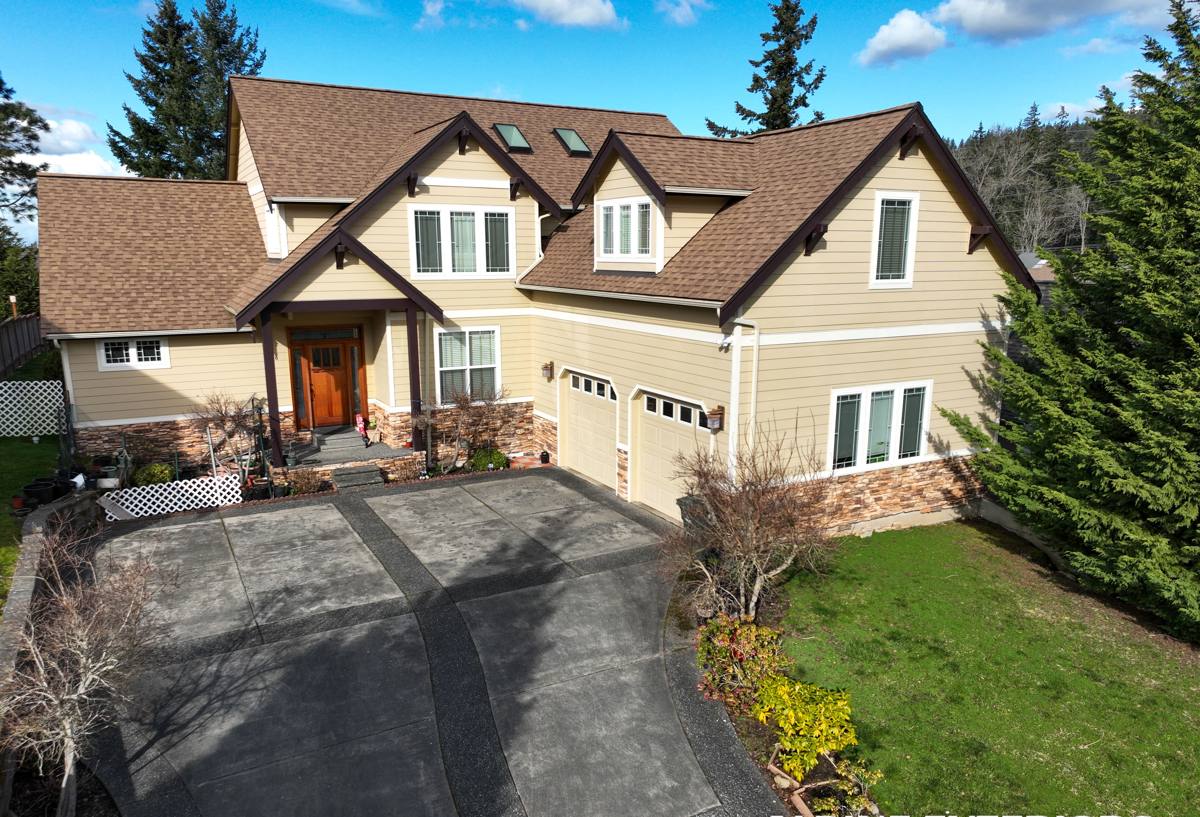
What a Correctly Built Shingle Roof Needs in This Area
A roof that will actually hold up in Birch Bay's conditions is built in layers, and every layer has a job. Cutting a corner on any one of them is usually invisible on installation day and only shows up as a leak or premature wear years later.
Underlayment and Ice-and-Water Barrier
A synthetic underlayment across the whole roof is the baseline, but the valleys, eaves, and any low-slope transitions need a self-adhering ice-and-water membrane underneath. In a wind-driven rain event, this is the layer that actually keeps water out if it gets past the shingles — it shouldn't be treated as optional just because Whatcom County doesn't see much true ice.
Ventilation
Balanced intake and exhaust ventilation keeps the attic dry and the roof deck at a stable temperature, which matters for shingle lifespan and for keeping condensation from forming under the deck during our damp winters. A roof that looks fine from the ground can still be cooking itself from underneath if the ventilation was never sized correctly.
Fastening and Wind Rating
Shingles are rated for wind resistance, but that rating only holds if they're nailed correctly — right number of fasteners, right placement, right pattern at rakes and ridges. Coastal wind exposure is exactly the situation where proper fastening separates a roof that survives a windstorm from one that loses shingles off the first exposed slope.
Quick Checklist: Signs Your Roof Wasn't Built for This Climate
- Rust streaks below flashing or exposed nail heads
- Dark or green staining concentrated on shaded, north-facing slopes
- Leaks that only show up during wind-driven storms, not steady rain
- Curling or lifted shingle tabs near valleys and eaves
- Granules collecting in gutters faster than the roof's age would suggest
Choosing the Right Shingle for a Coastal Whatcom County Home
Not every asphalt shingle product is built the same way, and the right choice depends on your roof's exposure, slope, and how much shade it gets. Here's how the common tiers compare for a home in this kind of setting.
| Shingle Type | Wind Performance | Moss/Algae Resistance | Typical Cost Position |
|---|---|---|---|
| 3-Tab (economy) | Lower wind rating, lighter weight | Standard granules only | Lowest upfront cost |
| Architectural (laminated) | Higher wind rating, better mat construction | Often available with algae-resistant granules | Mid-range; best overall value for most homes |
| Impact-resistant / premium | Highest wind rating, reinforced construction | Algae-resistant granules standard | Higher upfront cost, longer service life |
For most Birch Bay homes, an architectural shingle with algae-resistant granules is the sweet spot — it costs more than 3-tab but handles wind and moss pressure noticeably better, without jumping to premium pricing. Homes with heavy shade or a lot of exposed roof facing the water are often worth the upgrade to a higher wind rating regardless of tier.
Our Birch Bay Asphalt Shingle Roofing Process
Inspection and Estimate
We start by actually getting on the roof, not just looking at it from the driveway. We check the deck condition, existing ventilation, flashing details around chimneys and valleys, and how much moss or moisture damage is present. You get a written estimate that spells out materials, scope, and price — no vague allowances that turn into surprise add-ons later.
Tear-Off and Deck Inspection
We remove the old roofing down to the deck rather than layering over it. This lets us actually see the plywood or plank sheathing underneath and replace any sections that have gone soft from long-term moisture — a real risk on shaded, moss-prone roofs where trapped water has had years to work on the wood.
Installation Details We Don't Skip
Ice-and-water membrane in valleys and eaves, correctly lapped underlayment, corrosion-resistant flashing and fasteners, proper nailing pattern for the shingle's rated wind speed, and ventilation that's checked against the attic's actual size — not just installed by habit. These aren't upgrades; they're what "done right" means for a roof in this location.
Cleanup and Walkthrough
We run a magnetic sweep for stray nails, clear debris, and walk the finished roof with you so you know what was done and what to watch for going forward.
Roof Replacement vs. Repair: What to Weigh
Not every roofing problem in Birch Bay means a full replacement. Age, the extent of the damage, and how much of the roof is affected all factor in.
- Repair is usually enough when the issue is isolated — a section of storm damage, a failed flashing detail, or moss buildup on an otherwise sound roof
- Replacement makes more sense when the shingles are past their expected service life across the whole roof, when there's widespread granule loss, or when repeated leaks point to underlayment failure rather than a single bad spot
- Deck condition matters — if tear-off reveals soft or rotted sheathing in multiple areas, that's often a sign the whole system needs attention, not just a patch
- Age plus upcoming storm season is worth weighing together — a roof near the end of its life is a bigger risk to ride out through another wet Whatcom County winter
Maintenance That Actually Extends Shingle Life Here
A little regular attention goes further in Birch Bay's climate than in drier parts of the state. Keeping gutters clear so water isn't backing up under the eaves, trimming back tree limbs that keep shaded slopes damp, and having moss treated before it spreads rather than after it's established all add real years to a shingle roof. A yearly look at flashing and fastener points — especially after a hard windstorm — catches small problems while they're still small.
Why Hiring a Crew That Already Works Birch Bay Matters
A lot of roofing problems in this area aren't caused by bad shingles — they're caused by a roof that was built to a generic spec instead of the conditions it actually faces. A crew that regularly works this stretch of Whatcom County coastline already knows which details can't be skipped: the flashing grade, the underlayment coverage, the ventilation math, where moss tends to take hold first. That's not something you can fully judge from a brochure or a shingle warranty — it comes from having done the work here, on homes with the same salt air and driving rain your roof deals with every year.
If you're weighing a repair, a full replacement, or just want an honest read on where your roof stands, we're glad to take a look. Use the form below to request a free, no-pressure estimate.