 Ferndale Exterior
 Why a Lynden Roof Has to Work Harder Than the Brochure Says
Lynden sits out in the open farmland of Whatcom County, a few miles south of the Canadian border and close enough to the Salish Sea that salt-laden air still finds its way inland on a west wind. That combination — open exposure, moisture-heavy Pacific storms, and long stretches of gray, wet weather — is harder on a roof than most manufacturer warranties assume. A roof system installed here needs to shed driving, wind-blown rain instead of just sitting under it, resist moss and algae through months of low sun and high humidity, and hold its seal through repeated wet-dry cycles rather than one big storm event. When we install a new roof in Lynden, we're not installing "a roof" — we're installing a roof for this specific climate.
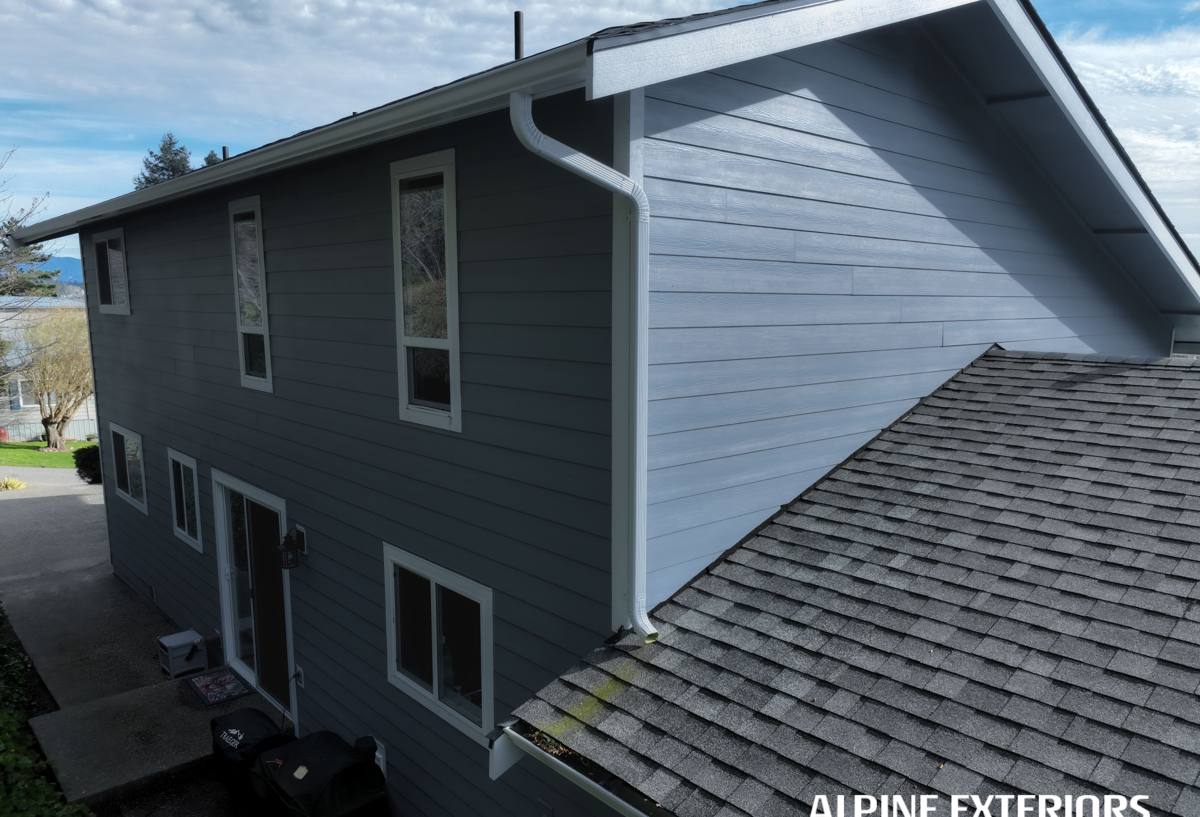
What Driving Rain, Salt Air, and Moss Season Actually Do to a Roof
Each of these regional conditions attacks a roof in a different way, and a correct installation has to account for all three at once.
Driving Rain
Wind-driven rain doesn't just run downhill off a roof — it can push sideways and even slightly uphill under shingle tabs, into nail lines, and around poorly lapped flashing. This is the single biggest reason so many "leaks" in this area trace back to flashing details and underlayment gaps rather than the shingles themselves.
Salt Air
Even well inland, coastal-influenced air carries fine salt particulate that accelerates corrosion on exposed metal — nails, flashing, vent stacks, and gutter hardware. Fasteners and flashing rated for coastal or marine exposure last measurably longer here than standard-grade hardware.
Moss Season
Whatcom County's shaded, damp stretches from fall through spring are close to ideal moss and algae growing conditions, especially on north-facing slopes and anywhere tree cover blocks the sun. Moss doesn't just look bad — its root structure lifts shingle edges, holds standing moisture against the roof deck, and shortens the life of the roofing material underneath it.
What a Correct New Roof Installation Includes
A new roof isn't just new shingles nailed over the old ones. Done right, it's a full system, and skipping any piece of it is where premature failures start.
- Full tear-off down to the roof deck, so hidden rot, soft spots, or old damage aren't sealed under a new layer
- Deck inspection and repair — replacing any plywood or sheathing that's delaminated or soft before anything new goes down
- Ice-and-water shield or high-quality underlayment at eaves, valleys, and roof penetrations, where wind-driven rain is most likely to get pushed under the surface layer
- Properly lapped synthetic underlayment across the full field of the roof, not just the vulnerable spots
- Corrosion-resistant flashing at every chimney, wall intersection, skylight, and vent penetration
- Balanced intake and exhaust ventilation so the attic can actually dry out between storms instead of trapping moisture
- Correct fastening — nail placement and pattern matter more to wind resistance than most homeowners realize
Choosing the Right Roofing Material for Lynden
There's no single "best" roofing material — the right choice depends on your home's exposure, roof pitch, budget, and how much long-term maintenance you're willing to stay on top of. Here's how the common options actually compare under our conditions.
| Material | Performance in Rain/Wind | Moss & Algae Resistance | Maintenance | Typical Lifespan |
|---|---|---|---|---|
| Architectural Asphalt Shingle | Good, when properly nailed and flashed | Better with algae-resistant granules; still needs periodic cleaning | Low to moderate | 25–30 years |
| 3-Tab Asphalt Shingle | Fair — lighter weight, more wind-sensitive | Moderate; ages faster in shaded areas | Moderate | 15–20 years |
| Standing Seam Metal | Excellent — sheds wind-driven rain very well | Very good — moss struggles to root on smooth metal | Low | 40–60 years |
| Composite/Synthetic Shake | Good | Good with proper ventilation underneath | Moderate | 30–50 years |
We steer most Lynden homeowners away from wood shake and low-end 3-tab shingles for the same reason: both hold moisture longer than this climate is kind to, and both demand more upkeep than most people realize when they buy. That's a maintenance and moisture-behavior tradeoff, not a knock on any manufacturer — it's simply about matching the product to how much rain and shade your roof will see year after year.
Cost Factors Worth Understanding Before You Get Quotes
| Factor | Why It Moves the Price |
|---|---|
| Roof pitch and complexity | Steep or multi-plane roofs take longer and require more safety setup |
| Number of layers to remove | Tear-off labor and disposal cost scale with how many old layers are underneath |
| Deck condition | Rotten or soft sheathing found during tear-off adds material and labor |
| Material choice | Metal and premium shingles cost more upfront but less over the roof's life |
| Ventilation upgrades | Older homes often need intake or exhaust vents added to meet current standards |
| Flashing and penetrations | Chimneys, skylights, and multiple roof valleys add detail work |
We give a broad range at the first walkthrough and a firm number once we've actually seen your deck condition and roof layout — anything quoted sight unseen is a guess, and guesses are how homeowners end up with surprise change orders mid-project.
Our Installation Process
1. On-Site Inspection and Estimate
We walk the roof, check the attic for ventilation and moisture signs, and look at flashing, gutters, and any problem areas you've already noticed. You get a written scope and a real number, not a rough guess.
2. Material Selection
We talk through the tradeoffs in plain language — cost, lifespan, moss resistance, and how the material handles wind and rain on your specific roof pitch and exposure.
3. Tear-Off and Deck Repair
Old roofing comes off down to the deck. Any damaged sheathing gets replaced before anything new is installed — this step is non-negotiable, because a new roof over a bad deck fails early no matter how good the shingles are.
4. Underlayment, Flashing, and Installation
We install underlayment and flashing to current best practice, then the roofing material itself, following manufacturer nailing and exposure specs exactly — the specs exist for wind and water resistance, not just warranty paperwork.
5. Ventilation Check
We confirm intake and exhaust airflow is balanced so your attic can dry out between storms instead of trapping the moisture that feeds mold, rot, and moss.
6. Final Walkthrough and Cleanup
We walk the finished roof with you, cover care and maintenance basics, and do a full magnetic sweep and debris cleanup of the property before we call the job done.
Signs Your Lynden Home May Need a New Roof, Not a Repair
- Shingles that are cupping, curling, or missing granules across large sections rather than one isolated spot
- Daylight visible through the roof deck from inside the attic
- Soft or spongy spots when walking the roof
- Recurring leaks in the same area even after past repairs
- Heavy moss growth that keeps returning within a season or two of cleaning
- Roof is at or past 20–25 years old with asphalt shingles, or showing widespread wear
- Rising energy bills tied to poor attic ventilation or insulation gaps at the roofline
If you're only seeing one or two of these and the roof is otherwise sound, a repair may still make sense — we'll tell you that honestly rather than pushing a full replacement you don't need yet.
Why Local Experience in Whatcom County Matters
A crew that regularly works Lynden and the surrounding Ferndale area already knows how open farmland exposure changes wind loading on a roof, which north-facing slopes will fight moss hardest, and which flashing details tend to get overlooked by installers used to milder or drier regions. That experience shows up in small decisions — nailing patterns, underlayment choices, ventilation balance — that don't show up on a spec sheet but do show up in how long the roof lasts. It also means we're not learning the local permitting process or weather patterns on your project; we already know them.
After the Install: Keeping a New Roof Performing
A new roof still needs basic upkeep to hit its full lifespan in this climate:
- Keep gutters clear so water isn't backing up under the roof edge during heavy rain
- Have moss treated or removed before it establishes a heavy root mat, not after
- Trim back tree limbs that shade the roof and keep it damp longer than it needs to be
- Schedule a walk-through inspection every couple of years, especially after any major windstorm
None of this is intensive, but skipping it is the most common reason a well-installed roof underperforms its expected lifespan.
Get a Straight Answer About Your Roof
If you're weighing a repair against full replacement, or just want an honest read on how much life is left in your current roof, we're happy to take a look. Use the form below to request a free, no-pressure estimate for your Lynden property.