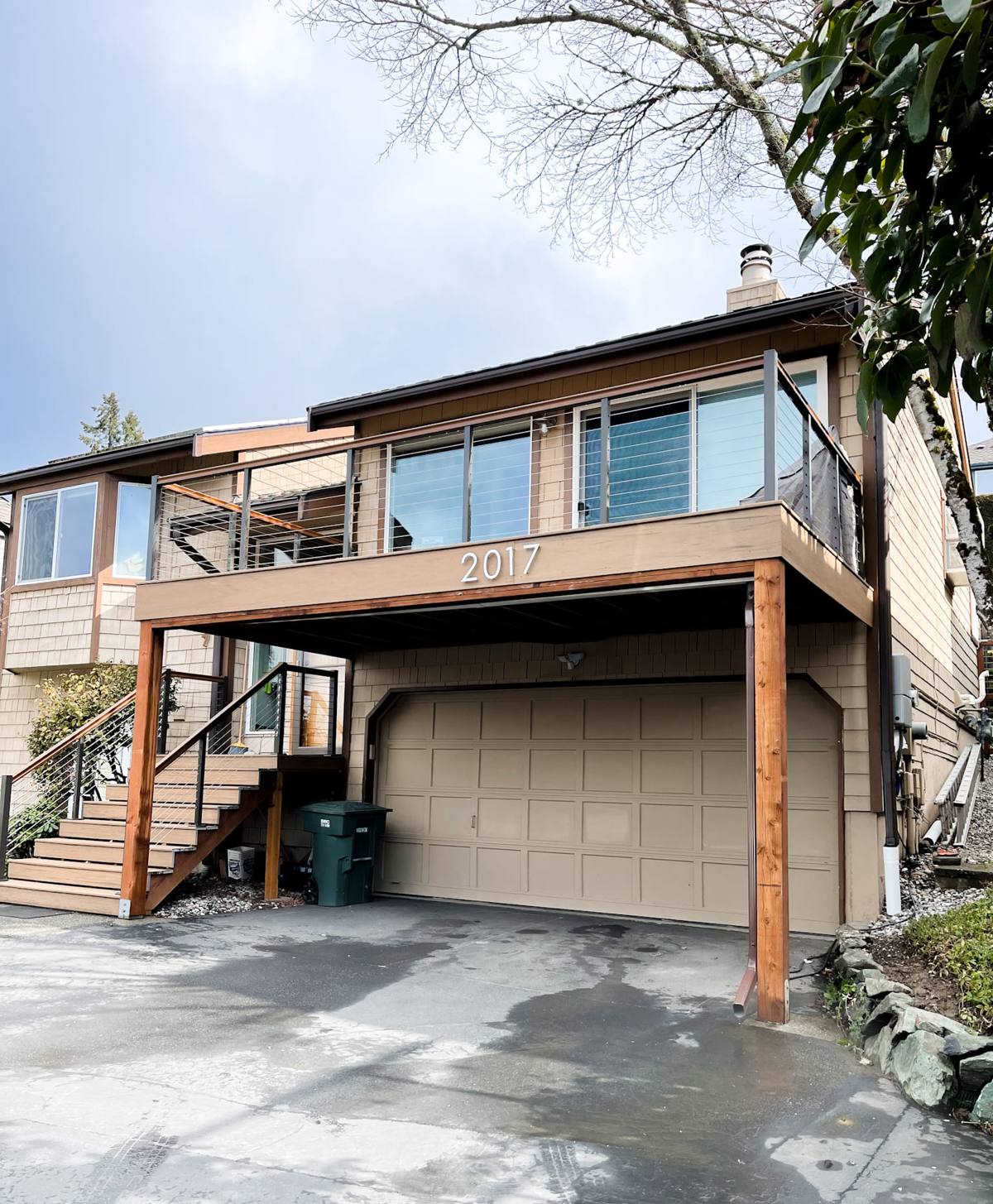
 Ferndale Exterior
 Energy-Efficient Windows in Bellingham: Built for Whatcom County's Marine Climate
Bellingham sits right on the water, and that has a bigger effect on window performance than most homeowners realize. It's not just about keeping heat in during the cold months — it's about how salt-tinged air, near-constant moisture, and long stretches of driving rain wear down window seals, frames, and hardware faster here than they would in a drier inland climate. When a window's seals or frame start to fail, energy efficiency is usually the first thing to go, well before the failure becomes visible as a draft you can feel with your hand.
We're based in Ferndale and work throughout the Bellingham area regularly, so this isn't a one-time job for us — it's the climate we plan around on every window we spec and every install we schedule. An energy-efficient window in this part of Whatcom County has to do two jobs at once: hold a tight thermal seal through a wet, mild winter, and physically shed wind-driven rain and salt air without breaking down over the years. A window that only does the first job well usually doesn't stay efficient for long.
What This Climate Actually Does to Window Efficiency
Driving Rain and Seal Wear
Storms off the Salish Sea don't fall straight down — wind pushes rain sideways into the wall assembly, which puts sustained pressure on window seals and the flashing around the frame. Over time, that pressure works weatherstripping and gasket seals loose faster than a still, dry climate would. Once a seal compresses unevenly or starts to gap, the window loses its air-tight fit, and that shows up directly on a heating bill.
Salt Air and Hardware Corrosion
Bellingham's proximity to the water means homes here get more marine-influenced air than towns further inland, even a short distance from the shoreline. That air is harder on lower-grade window hardware, fasteners, and frame components — corrosion and pitting show up sooner, and once hardware stiffens or a lock doesn't seat fully, the window isn't closing as tightly as it was designed to, which quietly erodes its efficiency.
A Long Moss and Mildew Season
Mild temperatures combined with near-constant dampness give moss and mildew a long growing season across Whatcom County, and window sills, trim, and the framing around older units are common places it takes hold. Trapped moisture doesn't just look bad — it can soften wood trim and framing over several seasons, which compromises the seal around the window even when the glass itself is fine.
Condensation From Temperature Swings
The gap between a heated interior and a cold, wet exterior during a Whatcom County winter puts real condensation pressure on glass and frames. Fogging between panes, water pooling on interior sills, or persistent moisture on the glass are usually signs that a seal has already failed — not just a cosmetic nuisance, but a direct loss of the insulating gas or air space that made the window efficient in the first place.
What "Energy-Efficient" Actually Means
The term gets used loosely, but for windows it comes down to a handful of measurable numbers and physical features. We walk every homeowner through what these actually mean for a Bellingham home instead of just pointing at a sticker.
- U-factor: Measures how well the window resists heat loss — lower numbers mean better insulation, which matters through a long damp Whatcom County winter.
- Solar Heat Gain Coefficient (SHGC): Measures how much solar heat passes through the glass — this matters more on south- and west-facing windows that get direct sun.
- Low-E coatings: A microscopically thin coating that reflects heat back to its source, improving both winter heat retention and summer heat rejection without darkening the glass noticeably.
- Gas fill and pane count: Double- and triple-pane units with argon or krypton gas between the panes insulate significantly better than single-pane or older double-pane units without gas fill.
- Frame material and construction: The frame is a large percentage of a window's total surface area, and a poorly insulating or leak-prone frame undercuts even excellent glass.
Frame Materials: What Actually Holds Up Here
Frame choice matters as much as glass choice in a marine climate, because the frame is what has to survive years of driving rain and salt air without warping, rotting, or losing its seal.
| Frame Material | Energy Performance | How It Holds Up in Whatcom County |
|---|---|---|
| Vinyl | Good insulator, multi-chamber designs improve further | Resists rot and corrosion well; generally the most budget-friendly option |
| Fiberglass | Excellent insulator, very stable dimensionally | Holds up well through temperature swings; can be painted for a custom look later |
| Aluminum (uncladded) | Weakest insulator of the common options | Conducts cold readily and can corrode faster near the water without a quality finish |
| Wood (unclad) | Good insulator when dry | High maintenance burden in this climate; prone to rot without diligent upkeep |
| Clad wood | Good insulator | Performs well if the cladding and flashing are installed correctly; more installation-sensitive |
We install vinyl and fiberglass systems on most Bellingham-area jobs because both resist rot in a way uncladded wood doesn't, and both hold up to sustained marine air exposure without the maintenance burden that comes with painted or unclad wood frames. Neither is automatically the "better" choice for every home — it usually comes down to budget, whether frame color flexibility matters, and the specific exposure of the house.
Signs a Bellingham Home Is Losing Energy Through Its Windows
- Noticeable drafts or cold spots near the frame even with the window fully closed and locked
- Fogging or visible moisture trapped between the panes of a double-pane window
- Rooms near older windows that feel colder or harder to heat evenly than the rest of the house
- Condensation forming on the interior glass regularly through fall and winter
- Sills or trim that feel soft, look discolored, or show visible rot
- Windows that stick, won't stay open, or don't lock as tightly as they used to
- A heating bill that's climbed noticeably without a clear reason elsewhere in the house
Why Flashing and Installation Matter More Than the Window Brand
A premium, high-efficiency window installed with sloppy flashing will lose both its energy performance and its weather-tightness within a few wet seasons in this climate. A solid, mid-grade window installed correctly — with flashing that laps properly into the surrounding wall and siding — will typically outperform it and last much longer. On repair and replacement calls around Bellingham, the moisture and efficiency problems we find rarely trace back to the window unit itself failing; they trace back to flashing that was never lapped correctly, or caulk used as a substitute for flashing instead of a supplement to it. Caulk alone cracks and breaks down over time — it isn't designed to be the only barrier against wind-driven rain, and once water gets behind the trim, both the wall assembly and the window's seal are at risk.
Air sealing around the rough opening matters just as much for efficiency as the glass package itself. A window can carry an excellent U-factor rating on paper and still leak air around a gap-filled rough opening, which is why we treat spray foam or low-expansion foam sealing at the perimeter — done correctly, without over-packing the gap — as standard practice, not an upgrade.
Our Process for a Bellingham-Area Window Job
We start with an on-site look at the existing windows — checking frame condition, seal integrity, hardware function, and how the current flashing ties into the siding around each opening. From there we give a straightforward read on which windows are worth repairing and which make more sense to replace, along with a written scope before any work begins.
- On-site assessment of each window's frame, seals, hardware, and surrounding flashing
- Written scope and glazing/frame recommendation based on that specific home's exposure
- Accurate measurement and ordering — custom-sized units typically take several weeks to arrive
- Removal of the old unit with attention to what the opening and existing flashing reveal underneath
- Installation with proper flashing integration, air sealing at the rough opening, and correct shimming so the sash operates and seals the way it's designed to
- Final check of operation, seal, and trim finish before we call the job done
Flashing and air-sealing detail are handled as standard practice on every window we install, not offered as an optional add-on. That's a big part of why efficiency numbers on paper actually translate into a lower heating bill in practice.
Cost Factors for Energy-Efficient Windows in This Area
| Factor | Why It Affects Cost |
|---|---|
| Frame material | Vinyl is typically the most affordable; fiberglass and clad wood run higher |
| Glazing package | Triple-pane and upgraded Low-E coatings cost more than standard double-pane |
| Full-frame vs. insert replacement | Full-frame replaces down to the rough opening and typically costs more but corrects underlying flashing issues; insert replacement reuses the existing frame where it's still sound |
| Window size and configuration | Larger units, custom shapes, and multi-panel configurations cost more than standard sizes |
| Condition behind the old window | Rotted framing or damaged sheathing discovered during removal adds repair scope |
| Number of windows in one project | Doing several windows in one visit is generally more cost-effective per unit than one-off replacements |
We don't publish blanket per-window pricing because the honest answer depends on the factors above, but we'll always walk through exactly what's driving the number on your specific home before any work is scheduled.
A Practical Checklist Before Hiring for Window Work in Bellingham
- Ask specifically how they handle flashing integration with the existing siding, not just which window brand they sell
- Confirm current Washington contractor licensing and active liability insurance
- Get a written scope that separates the manufacturer's product warranty from the contractor's installation warranty
- Ask for a repair-or-replace recommendation on each affected window individually, not a blanket answer for the whole house
- Ask about lead times — custom-sized window orders for this region commonly run several weeks
- Ask how air sealing at the rough opening is handled, since that affects real-world efficiency as much as the glass package
Why a Local Crew Matters for This Job
A contractor who works the Bellingham area regularly already knows how wind-driven rain and marine air behave here compared to a drier, more sheltered climate inland. That shows up in the specific decisions that determine whether a window installation holds up for one wet winter or several decades — how much lap a flashing detail gets, whether caulk is treated as a real seal or just a backup, which hardware grade makes sense for a given exposure. We're a Ferndale-based crew that works Whatcom County day in and day out, which means fewer surprises about permitting, realistic scheduling around the wetter months, and a clearer read on what a given home's specific exposure actually calls for.
If your windows are drafty, fogging, or just not pulling their weight on your energy bill, we're happy to take a look and give you a straightforward, no-pressure read on repair versus replacement. Reach out below for a free estimate.