 Ferndale Exterior
 Why Decks Wear Out Faster Near the Semiahmoo Waterfront
A deck built the same way in Spokane or Boise will not survive nearly as long out here. In the Semiahmoo area, decks sit in a mix of salt-laden air, near-constant winter rain, and long stretches of shade and moisture that keep wood damp for days at a time. That combination is hard on fasteners, hard on framing lumber, and hard on the finish of almost any decking material. A deck that would need attention every ten or fifteen years inland can start showing real structural problems in half that time this close to the water.
Ferndale Exterior Company works decks in Ferndale and the surrounding Whatcom County waterfront communities, including Semiahmoo, regularly enough that we don't have to guess at how a deck will age here. We've seen where the rot starts, which hardware corrodes first, and which shortcuts from a builder's first pass come back to bite a homeowner years later. This page is about what a proper deck replacement looks like for a home in this specific environment — not a generic checklist copied from a warmer, drier region.
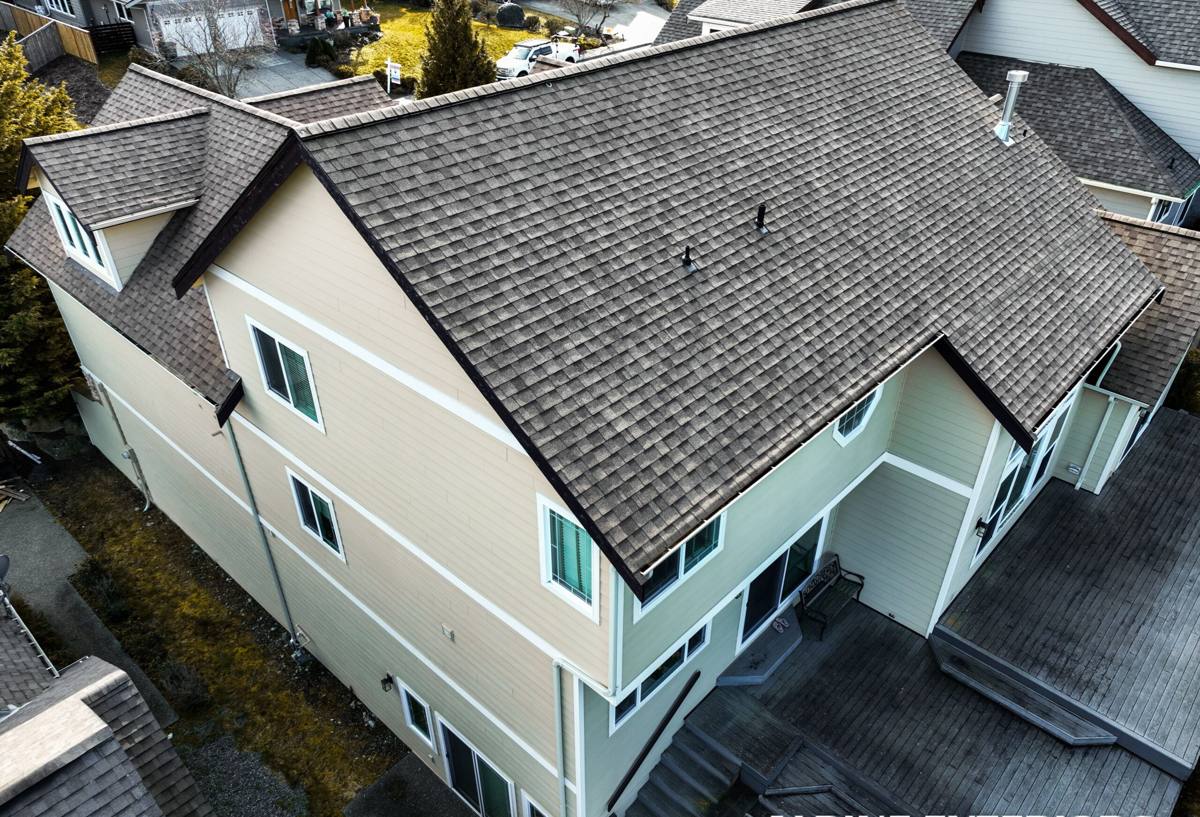
Signs a Deck Needs Replacement, Not Another Repair
Homeowners often ask us to patch a board or two, only to find the real problem is underneath. Repair makes sense when the damage is isolated and the structure is sound. Replacement is the honest recommendation when the underlying frame, ledger, or footings are compromised — patching the surface just delays a bigger failure.
- Boards that feel spongy, spring back slowly, or flex noticeably when you walk on them
- Rust streaking around fastener heads or brackets, which usually means the hardware underneath is failing too
- A ledger board (where the deck attaches to the house) that shows gaps, dark staining, or soft wood when probed
- Railings or posts that wobble at the base — often a sign of post rot or a footing that's shifted
- Persistent moss or algae film that keeps returning within weeks of cleaning, even in summer
- Visible daylight or splitting where joists meet the ledger or beam
- A deck more than 20–25 years old that has never had its structural connections inspected
If you're only seeing one or two of these, a repair may still be reasonable. If you're seeing several at once, that's usually a sign the whole system has been absorbing moisture for years and a full replacement will save money over repeated patch jobs.
What a Correct Deck Replacement Actually Involves
A deck replacement done right is a structural project, not a cosmetic one. The decking boards are the part everyone sees, but the parts that determine how long the deck lasts are underneath.
Ledger Board and Flashing
The ledger — the board that bolts the deck to your house — is the single most common failure point on decks in wet climates. If it isn't flashed correctly, water works its way behind it and rots both the ledger and the house framing behind it. We remove old ledger boards entirely rather than reuse them when there's any sign of past water intrusion, and we install proper flashing and a water-resistant barrier so rain running down the house siding is directed away from the connection, not into it.
Framing, Posts, and Footings
Joists, beams, and posts get inspected and, where needed, replaced with lumber rated for ground contact and exterior exposure. Footings that are undersized, frost-heaved, or sitting in standing water get corrected — this is often invisible from the surface but is exactly what determines whether a deck stays solid or starts to lean over the next decade.
Fasteners and Hardware
Salt air accelerates corrosion in standard fasteners noticeably faster than an inland job would see. We use stainless steel or high-grade coated fasteners and structural connectors rated for coastal exposure, and we make sure joist hangers, post bases, and hold-down hardware are all matched to the same corrosion standard — mixing a good fastener with a cheap bracket just moves the failure point somewhere else.
Choosing Decking Material for This Climate
There's no single "best" decking material — there's a best fit for your budget, your maintenance appetite, and how much direct weather exposure the deck gets. Here's how the common options actually compare in a salt-air, high-rainfall environment:
| Material | Upfront Cost | Maintenance | How It Handles This Climate |
|---|---|---|---|
| Pressure-treated lumber | Lowest | Annual cleaning, periodic re-staining/sealing | Reliable if sealed regularly; neglect leads to graying, splitting, and moss buildup faster than in drier climates |
| Cedar | Moderate | Regular sealing to hold color and resist moisture | Naturally rot-resistant but still needs upkeep near salt air; looks great when maintained, disappoints when it isn't |
| Composite decking | Higher | Occasional washing, no staining or sealing | Handles moisture and moss growth well; still needs to be washed to prevent algae film, and quality varies a lot by brand |
| Tropical hardwoods | Highest | Periodic oiling to prevent graying | Very durable structurally, but cost and limited installer familiarity make it a smaller-volume choice here |
Our default recommendation for most Semiahmoo-area homeowners is either a well-sealed pressure-treated frame with a composite or cedar surface, or a full composite system where low maintenance matters more than upfront cost. We'll walk through the honest trade-offs for your specific deck rather than pushing one product line.
Railings, Stairs, and Code Requirements
Washington's building code sets minimum requirements for guardrail height, baluster spacing, and stair rise/run — these aren't optional details, they're what keeps a deck safe and what an inspector will check. A full replacement is also the right time to correct anything on the old deck that predates current code, since you're already opening up the structure. We build railings and stairs to current code as a baseline, not as an upgrade you have to ask for.
Our Deck Replacement Process
- On-site assessment — we inspect the ledger, framing, posts, and footings, not just the visible decking, and explain what we find in plain terms
- Written scope and estimate — materials, structural repairs, and timeline laid out before any work starts
- Permit handling — we pull the required permit and coordinate inspections so you're not managing paperwork
- Tear-off and disposal — old decking, railings, and any compromised framing removed and hauled away
- Structural rebuild — ledger flashing, framing, posts, and footings corrected or replaced as needed
- Decking, railing, and stair installation — installed to manufacturer spec and current code
- Final walkthrough — we go over the finished deck with you and flag any maintenance you'll want to stay on top of
Cost Factors for a Semiahmoo-Area Deck Replacement
Every deck is different, but the same handful of factors drive most of the cost difference between a straightforward job and an expensive one:
| Factor | Why It Matters Here |
|---|---|
| Size and shape | Multi-level decks or those with curves and cutouts take more labor and material than a simple rectangle |
| Decking material chosen | Composite and hardwood run higher upfront than pressure-treated lumber, but shift long-term maintenance costs |
| Extent of structural damage | Hidden ledger or footing rot found during tear-off is common near the water and can add scope once uncovered |
| Height and railing complexity | Taller decks and elaborate railing designs require more structural bracing and labor |
| Access to the site | Waterfront lots with limited equipment access can add time for material staging and debris removal |
| Permit and inspection scope | Larger or taller decks may trigger additional engineering or inspection requirements |
We give a firm, itemized estimate after the on-site assessment — not a phone quote — because the framing condition underneath is often the biggest variable, and we'd rather tell you honestly what we find than guess.
Why a Local Crew That Already Works Semiahmoo Matters
A deck replacement isn't just carpentry — it's a set of decisions about materials, fasteners, and flashing details that need to match the specific conditions of where the home sits. A crew that works this stretch of Whatcom County regularly already knows which fastener grades hold up, which decking products perform well against moss and salt exposure, and how local permitting and inspection typically go. That familiarity shortens the guesswork and reduces the odds of a callback a few years down the road for a detail that wasn't suited to the environment in the first place.
It also means a crew that shows up prepared for the weather window that's actually available — coordinating tear-off and rebuild around driving rain rather than losing days improvising around it, and knowing when moss and moisture make certain steps, like sealing or staining, worth timing carefully rather than rushing.
After Your Deck Is Replaced: Keeping It That Way
A new deck's lifespan depends heavily on upkeep in this climate, regardless of material. Keep gutters and downspouts clear so runoff isn't dumping onto or under the deck. Sweep debris out of gaps between boards so moisture and organic material don't sit and feed moss growth. If you chose wood, plan on resealing on the schedule the product calls for rather than waiting until it visibly needs it. If you chose composite, an occasional wash will keep algae film from building up during the wetter months. None of this is difficult, but skipping it is exactly how a well-built deck ends up needing early attention anyway.
If your deck is showing wear, or you're just not sure whether it needs repair or full replacement, we're happy to take a look and give you a straightforward, no-pressure estimate — use the form below to get started.