 Ferndale Exterior
 Bellingham Roofs Wear Differently Than Roofs Inland
A roof in Bellingham does not fail the same way a roof does in a dry climate. It fails from the top down and from the inside out, worn away by moisture that never really stops. Between the salt-laden air off Bellingham Bay, the driving rain that comes sideways off Puget Sound during winter storms, and a moss season that can run eight months out of the year under the region's fir and cedar canopy, roofing materials here are under a kind of constant, low-grade attack that a roof forty miles inland simply doesn't face.
Ferndale Exterior Company works roofs throughout Whatcom County, and Bellingham jobs come with their own patterns: shingles that granulate and streak faster on shaded, north-facing slopes; fasteners and flashing that corrode sooner near the water; and moss that returns within a season or two if it wasn't addressed correctly the first time. A roof replacement done right here accounts for all of that from the start, not as an afterthought.
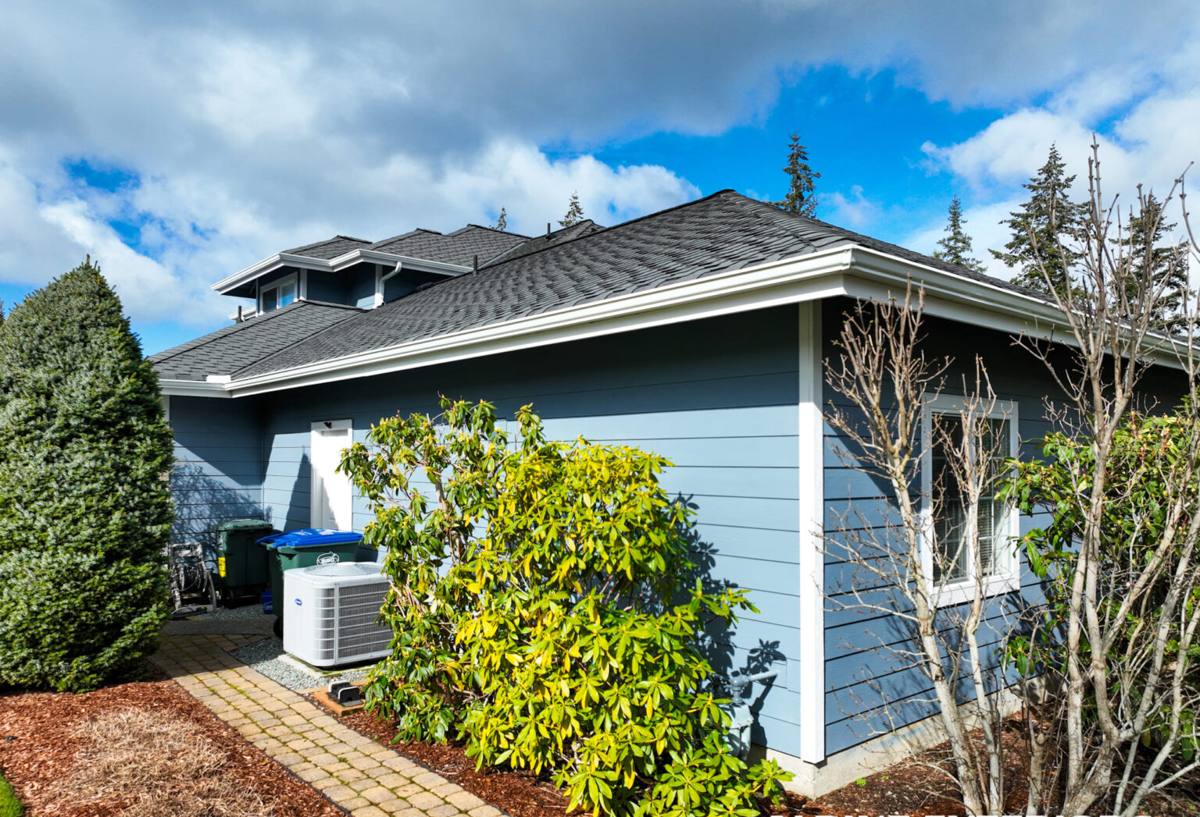
Signs a Bellingham Roof Needs Replacement, Not Another Repair
Not every roof problem means a full tear-off. But there's a point where patching starts costing more than it saves, and in this climate that point tends to arrive earlier than homeowners expect. Some signs we look for on Bellingham homes:
- Granule loss heavy enough that you can see bare, shiny patches on the shingle mat, especially on the north or west-facing slopes that stay damp longest
- Moss that has worked its way under shingle tabs rather than just sitting on the surface — this lifts shingles and lets water track underneath
- Dark streaking or algae staining that keeps coming back within months of cleaning
- Soft spots or sagging in the roof deck, usually found from the attic side as darkened, spongy sheathing
- Rusting nail heads or corroded flashing around chimneys, vents, and valleys — more common close to the water
- A roof approaching or past the manufacturer's expected service life for our climate, which runs shorter here than in drier parts of the state
If you're only seeing one or two of these and the deck underneath is sound, a repair may still be the right call. Once several show up together, or once we find deck damage during inspection, replacement is usually the more honest recommendation — both for your budget over the next decade and for what's actually protecting your home.
What a Correct Roof Replacement Involves Here
Tear-Off and Deck Inspection
We remove the old roofing down to the deck rather than layering over it. Layering over an old roof hides problems and shortens the life of the new one — it's a shortcut we don't take. With the deck exposed, we check every sheet of sheathing for soft spots, delamination, or rot, which is common to find around older flashing points on homes that have sat through a lot of Whatcom County winters. Damaged sections get replaced before anything new goes down.
Underlayment Built for Wind-Driven Rain
Standard felt underlayment is not enough for a roof that regularly takes rain coming in sideways. We use synthetic underlayment across the field of the roof for better water resistance and tear strength, and we install self-adhering ice-and-water membrane at the eaves, valleys, and around every roof penetration — chimneys, vents, skylights — where wind-driven rain is most likely to find a way in. This isn't an upgrade we push as an add-on; for a Bellingham roof it's the baseline.
Ventilation That Actually Dries the Attic Out
A roof spends most of the year wet on the outside in this region, which makes what happens on the inside — the attic — just as important. Poor ventilation traps moisture, which shortens shingle life from underneath and invites the same moss and algae growth you're trying to keep off the top of the roof. We balance intake at the eaves with exhaust at the ridge so the deck can actually dry between rain events instead of staying damp for months straight.
Flashing and Fasteners Suited to Salt Air
Anywhere the roof plane is interrupted — chimneys, sidewalls, valleys, plumbing stacks — is a place water can get in if the flashing is wrong or reused when it shouldn't be. Given Bellingham's proximity to the bay, we pay closer attention to corrosion resistance on flashing and fasteners than we would on an inland job. Cutting corners here is one of the most common causes of the "mystery leak" we get called out to diagnose on other contractors' work.
Material Options for Bellingham's Climate
There's no single right material for every home — it depends on your roof's exposure, slope, budget, and how much maintenance you want to take on. Here's how the common options actually perform under Whatcom County conditions:
| Material | Moss & Moisture Resistance | Typical Lifespan Here | Trade-Offs |
|---|---|---|---|
| Architectural asphalt shingle | Good with proper ventilation; algae-resistant granules help on shaded slopes | 20-25 years | Most economical upfront; needs periodic moss treatment on shaded roofs |
| Standing seam metal | Excellent — moss and algae struggle to gain a foothold on smooth metal panels | 40-50+ years | Higher upfront cost; requires a crew experienced with metal detailing at valleys and penetrations |
| Cedar shake | Poor without diligent upkeep — end grain holds moisture and feeds moss growth | 15-20 years with heavy maintenance | We're honest with clients that shake is a difficult fit for this climate unless maintenance is a firm commitment |
| Synthetic composite shake/slate | Very good — engineered to resist moisture absorption that real wood can't avoid | 30-40 years | Higher material cost than asphalt; gives the look of shake without the moisture liability |
Most Bellingham homeowners land on architectural asphalt or standing seam metal. Asphalt gives strong value and a wide range of colors; metal costs more up front but essentially removes moss as a recurring problem and holds up better against corrosion near the water. We'll walk through which fits your roof during the estimate rather than pushing one option across every job.
Our Roof Replacement Process
- On-site assessment — we get on the roof (and in the attic) to check deck condition, ventilation, flashing points, and moss/moisture history before quoting anything
- Written estimate — clear scope, materials, and price, with the reasoning behind any recommendations spelled out so you're not guessing
- Scheduling around weather — we plan tear-off days against the forecast; an open deck sitting under a Whatcom County rain system is not a risk we take with your home
- Tear-off and deck repair — full removal of the old roofing, sheathing inspection, and replacement of any compromised deck sections
- Underlayment, ventilation, and flashing installation — the moisture-management layer that does the real work over the life of the roof
- Roofing material installation — installed to manufacturer spec so your warranty is valid, not just installed to look finished
- Site cleanup and magnetic sweep — debris, old material, and stray fasteners cleared from the yard and driveway
- Final walkthrough — we go over the finished roof with you before calling the job done
Why Local Bellingham Experience Matters
Roofing crews from outside the region tend to treat wind, rain, and moss as edge cases. Around here, they're the default conditions the roof has to be built for. A few ways that shows up in the actual work:
- Knowing which Bellingham neighborhoods sit under heavier tree canopy and need extra attention to ventilation and moss-resistant materials
- Understanding how close-to-the-water exposure accelerates corrosion on fasteners and flashing, and specifying materials accordingly
- Timing tear-off and installation around the realistic rain windows in a Pacific Northwest winter, not an idealized dry-season schedule
- Familiarity with local permitting and inspection expectations in Whatcom County jurisdictions
- A track record you can actually check — ask any Bellingham-area roofer for local references and see what comes back
We're not commuting in from out of the area to bid your job and then disappear if something needs a warranty visit. Ferndale Exterior Company works this county, and a roof we install in Bellingham is one we expect to be back to service, inspect, or stand behind for years afterward.
What Drives the Cost of a Bellingham Roof Replacement
Every roof is priced individually after inspection, but the main variables that move the number are consistent from job to job:
| Factor | Why It Matters |
|---|---|
| Roof size and number of planes | More square footage and more valleys/hips mean more material and more labor-intensive flashing work |
| Existing deck condition | Rotted or delaminated sheathing found during tear-off adds material and labor to replace it properly |
| Material choice | Asphalt, metal, and synthetic composites carry very different material costs per square |
| Roof pitch and access | Steeper or harder-to-access roofs take longer and require more safety equipment |
| Ventilation and flashing upgrades | Bringing older ventilation up to a standard that actually dries the attic can add scope, but it protects the investment |
| Layers of existing roofing | Removing multiple old layers takes more labor and disposal than a single-layer tear-off |
We give straightforward, itemized estimates so you can see exactly where the cost is going — no vague lump sums, no pressure to decide on the spot.
Protecting the Investment After Installation
A correctly installed roof still benefits from some basic upkeep in this climate, especially around moss:
- Keep gutters clear so water isn't backing up under the roof edge during heavy rain
- Have moss treated or gently removed before it works under shingle tabs, rather than waiting until it's visibly thick
- Trim back overhanging branches where practical to cut down on shade and debris buildup
- Schedule a roof check after major windstorms to catch lifted shingles or flashing early
None of this is intensive, but skipping it is how a well-installed roof still ends up with an early moss problem or a slow leak nobody caught in time.
Get a Straight Answer About Your Roof
If your roof is showing its age, we'll give you a straightforward, no-pressure assessment of what's actually going on and what it would take to fix it right — whether that's a repair or a full replacement. Reach out below for a free estimate on your Bellingham home.