 Ferndale Exterior
 Custer's Climate Is Hard on Siding
Custer sits in northern Whatcom County, close enough to open saltwater and the Strait of Georgia that homes here take on a specific kind of weathering you don't see as much further inland. Salt-laden air, wind-driven rain that comes in sideways during winter storms, and a moss season that can run eight or nine months out of the year all work on siding at the same time. None of it happens fast. It happens slowly, behind caulk lines and lap joints, until a homeowner notices a soft spot, a stain, or a section that just doesn't look right anymore.
Siding repair in this part of the county isn't the same job as siding repair in a dry, sheltered neighborhood. The moisture load is higher, the exposure is longer, and the materials that were used originally matter more than people expect. We work Custer regularly, which means we're not guessing at what the climate does here — we're repairing the same failure patterns on a regular basis and know what to look for before it becomes a bigger problem.
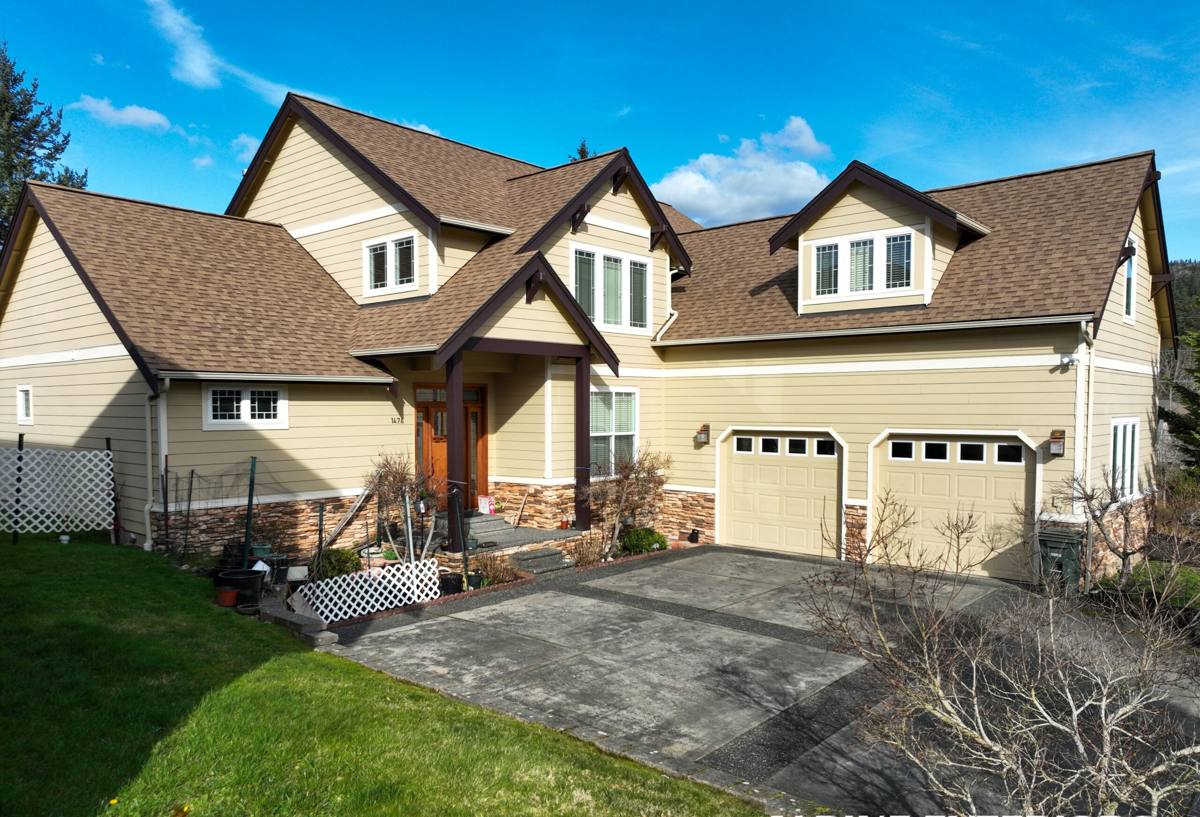
What Salt Air, Driving Rain, and Moss Actually Do
Salt Air
Salt in the air accelerates corrosion on fasteners, flashing, and any exposed metal trim. When nails or staples holding siding in place start to corrode, they lose their grip, and panels or boards work loose. Salt exposure also breaks down some paint and coating systems faster than manufacturers rate them for, which shows up as chalking, fading, or peeling well ahead of schedule.
Driving Rain
Wind-driven rain doesn't just wet the surface of siding — it gets pushed sideways and upward into laps, seams, and any gap around windows, doors, or trim. Siding systems are designed to shed water downward, not to resist water forced in at an angle. Repeated wind-driven rain finds the weak points: unsealed butt joints, nail heads that were never caulked, or trim that was installed tight against siding instead of with a gap for drainage.
Moss and Shade
Whatcom County's tree cover and long damp season mean moss and algae get a real foothold on north-facing and shaded walls. Beyond the cosmetic issue, moss holds moisture directly against the siding surface for extended periods. On materials that aren't built to handle sustained dampness, that constant contact is what starts rot, delamination, or coating failure underneath the growth — not the moss itself, but what it traps against the wall.
| Siding Material | How It Handles Salt Air & Rain | How It Handles Moss/Shade |
|---|---|---|
| James Hardie fiber cement | Non-combustible, dimensionally stable; factory ColorPlus finish resists fading and doesn't rely on field-applied paint for its primary protection | Doesn't absorb and swell like wood; surface can be cleaned without damaging the substrate |
| Vinyl | Can warp or become brittle with prolonged UV and temperature swings; seams and fasteners are the main leak points | Sheds moss reasonably well but traps moisture behind panels if house wrap or flashing details are poor |
| Cedar / primed spruce | Natural wood absorbs moisture; repeated wetting and drying cycles lead to cupping, checking, and rot at joints | Prone to rot where moss holds moisture against the grain, especially at end cuts and fastener points |
| LP SmartSide | Engineered wood strand product; performs acceptably when coatings are maintained, but edges and cut ends are moisture-sensitive | Requires diligent maintenance of factory coating to keep moisture from reaching the wood-strand core |
Signs a Custer Home Needs Siding Repair Now
Most siding problems we get called out for in this area started small and got put off for a season or two. Catching them earlier keeps the repair a repair, instead of turning it into a full re-side.
- Soft or spongy spots when you press on the siding near the bottom of walls or under windows
- Visible gaps, cracks, or separation at butt joints and corners
- Persistent staining, streaking, or dark patches that don't wash off
- Bubbling, peeling, or chalking paint that reappears soon after repainting
- Moss or algae buildup that keeps coming back on the same wall section
- Warped, bowed, or visibly wavy panels or boards
- Rust streaks running down from nail heads or metal trim
- A musty smell or interior wall staining near an exterior wall
What a Correct Siding Repair Actually Involves
Diagnosing the real problem first
A siding repair that only addresses what's visible on the surface tends to fail again within a season or two. Before we touch a single board, we check what's happening underneath — whether the sheathing has softened, whether house wrap or building paper is torn or missing at the damaged area, and whether flashing at windows, doors, and penetrations is doing its job. Replacing damaged siding over a compromised water barrier just hides the problem for a while.
Repairing what's underneath, not just what's visible
If sheathing has gone soft from sustained moisture exposure, it gets cut back to solid material and replaced before any new siding goes on. Damaged house wrap gets patched or replaced with proper shingle-lap technique so water sheds correctly. Flashing gets corrected, not just caulked over — caulk is a backup to good flashing, never a substitute for it.
Matching the material correctly
A repair section that doesn't match the surrounding siding in profile, reveal, and finish stands out and can also create a mismatched moisture-management system. Where the existing siding is James Hardie product, we match it directly. Where a home has a different material and the damage is limited to a repairable section, we'll tell you honestly whether a like-for-like patch makes sense or whether that section is a good candidate to transition to fiber cement instead.
Repair or Replace? How We Decide
Not every siding problem in Custer needs a full re-side, and we're not going to tell a homeowner they need one when a targeted repair will hold up fine. The decision usually comes down to a few practical factors.
| Factor | Leans Toward Repair | Leans Toward Replacement |
|---|---|---|
| Extent of damage | Isolated to one or two wall sections | Spread across multiple elevations |
| Sheathing condition | Solid, dry, sound underneath | Widespread softness or rot |
| Age and condition of remaining siding | Still structurally sound with years of life left | Near end of service life across the whole house |
| Material match | Matching material or profile is readily available | Original material is inconsistent, discontinued, or already failing broadly |
When a repair is the right call, we'll say so — it's the more affordable, less disruptive option, and there's no reason to push a full replacement when it isn't needed. When the underlying problem is bigger than the visible damage suggests, we'll explain exactly why before recommending anything more involved.
Our Process for Custer Jobs
- On-site inspection of the damaged area and a check of surrounding sections for related issues
- Assessment of sheathing, house wrap, and flashing condition, not just the siding surface
- A clear, written explanation of what's actually wrong and what fixing it correctly requires
- An honest repair-vs-replace recommendation, with the reasoning behind it
- Correction of the water-management details — sheathing, wrap, flashing — before any new siding goes on
- Installation matched to existing siding profile and finish, installed to manufacturer spec
- Final walkthrough so you know exactly what was done and why
Why We Repair — and Rebuild — With James Hardie Only
We install and repair with James Hardie fiber cement exclusively. We don't work with vinyl, LP SmartSide, Cemplank, Allura, primed spruce, or cedar, and that's a standard we hold to on repair work too, not just full installs. It's worth explaining why.
Fiber cement doesn't absorb water into its structure the way wood-based products do, which matters directly in a climate where wind-driven rain and prolonged dampness from moss and shade are constant. It's non-combustible, which matters for long-term risk regardless of climate. Hardie's ColorPlus factory finish is baked on under controlled conditions and backed by its own warranty, which takes a lot of the guesswork and maintenance burden off a homeowner compared to field-applied paint on wood or engineered wood products. And because Hardie's HZ product lines are engineered specifically for climate zones like ours, we're not fighting the material — we're using something built for the conditions it's going into.
None of this means other products are junk. Vinyl, LP SmartSide, and cedar all have legitimate uses and plenty of homes wearing them without issue elsewhere. But for the way Custer's salt air, driving rain, and moss season stack up on a home over the years, we've made a professional call: Hardie is what we stand behind, and it's what we use on every repair and every full install we do.
Why a Crew That Already Works Custer Matters
Siding repair done right depends on understanding the specific way a climate attacks a wall assembly, not just knowing how to nail up a board. A crew that already works Whatcom County's coastal communities has seen the failure patterns before — where water actually gets in, which details fail first, and which shortcuts from an original install tend to cause trouble years later. That local pattern recognition is what keeps a repair from becoming a callback.
It also means practical things for you as a homeowner: someone who can get to your property without a long drive, who understands the permitting and inspection norms in this part of the county, and who isn't learning the region's weather behavior on your home for the first time.
If you're seeing soft spots, staining, moss buildup, or damage on your Custer home's siding, we'll come take a look and give you a straight answer on what's actually going on — no pressure, no upsell, just an honest assessment and a free estimate.