 Ferndale Exterior
 Windows Built for the Nooksack Area's Weather, Not Just Its Style
Homes in the Nooksack area near Ferndale sit in a stretch of Whatcom County where the weather doesn't take a season off. Wind off Bellingham Bay carries a fine mist of salt inland, driving rain comes in sideways more often than straight down, and the deep shade and damp ground cover common in this area keep moss and algae active nearly year-round. Windows here aren't just an architectural feature — they're one of the hardest-working parts of the building envelope. A window that looks fine from the driveway can still be letting moisture into the wall cavity around its frame, and by the time that shows up as a soft spot on the interior sill, the damage has usually been building for a while.
Custom windows, done correctly for this climate, are about more than picking a size and a color. It's matching frame material, glazing, and flashing detail to how water actually moves across this specific kind of siding, in this specific kind of weather, on this specific style of home. That's the job we focus on for homeowners in and around Nooksack.
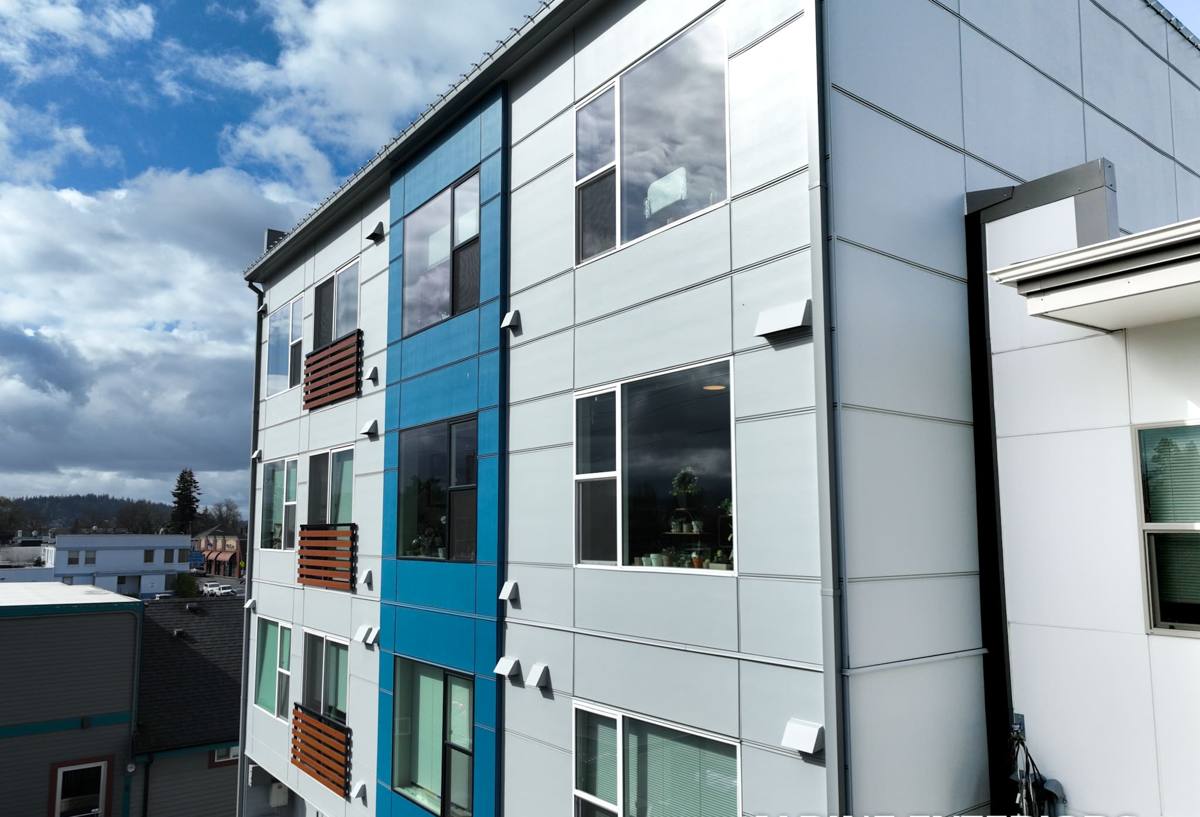
What "Custom" Actually Means in a Window Job
"Custom windows" gets used loosely in this industry, so it's worth being specific about what it means when we say it. It's not a marketing word for "we'll order whatever's in the catalog." It means:
- Exact measurements taken for each individual opening — older homes in this area rarely have perfectly square, uniform openings, and forcing a stock size into an out-of-square frame is one of the most common causes of early leaks.
- Frame material and profile chosen to match the specific exposure of that wall — a window on the weather side of the house facing prevailing wind and rain needs different detailing than one tucked under an eave on a protected wall.
- Glass and gas-fill packages matched to how that room is used and which direction it faces, not a single default spec applied to the whole house.
- Flashing and drainage built around the wall assembly that's actually there, whether that's original wood siding, a later re-side, or fiber cement.
None of that shows up in a photo of the finished window. It shows up five and ten years later, in whether the wall behind it stayed dry.
Frame and Glass Options We Work With
There's no single "best" window material — each option is a set of trade-offs in cost, upkeep, and how it handles a wet, salt-influenced climate. Part of a custom windows job is picking the right one for the specific wall and budget, not defaulting to whatever's easiest to install.
| Frame Type | How It Handles This Climate | Maintenance Load | Typical Fit |
|---|---|---|---|
| Vinyl | Won't rot or corrode from salt air; expands and contracts with temperature swings, so installation sensitivity around the frame matters | Low — occasional cleaning | Budget-conscious full-home replacement |
| Fiberglass | Very stable dimensionally, holds paint well, resists moisture-driven warping better than most alternatives | Low | Weather-exposed walls, long-term ownership |
| Wood-clad | Warm interior look, but the exterior cladding and every joint need to be genuinely watertight — this is where installation quality matters most | Moderate to high — interior wood finish upkeep, exterior seals need periodic inspection | Homes prioritizing a traditional interior look, willing to maintain it |
| Aluminum | Strong and slim-profile, but conducts cold and can be prone to condensation without a thermal break | Low, but condensation issues need monitoring | Modern styling, larger glass openings |
We don't push one material as the answer for every home. We'll walk the specific openings with you, point out which walls take the worst weather, and explain honestly what each option means for upkeep down the road — including where a lower-maintenance material might save you more in the long run than the cheaper upfront option.
A Note on Glazing
Double-pane, low-E, argon-filled glass is the standard baseline we recommend for this area — it's not an upsell, it's what actually performs against the temperature swings and driving rain typical here. Triple-pane can make sense on north-facing or particularly exposed walls, but it adds weight and cost that isn't always worth it on a protected elevation.
Signs Your Current Windows Are Past Repair
Not every window problem means full replacement. But in a climate like this, waiting too long to address the early signs almost always costs more than acting on them. Watch for:
- Fogging or a visible haze between panes — the seal has failed and the insulating gas is gone; this can't be fixed, only replaced.
- Soft or discolored wood on the interior sill or exterior trim, especially on walls that take direct wind-driven rain.
- Windows that are difficult to open, close, or lock — frames can shift slightly as moisture works into surrounding framing.
- Visible moss or persistent green staining building up in the corners of the frame or sill, a sign that water is sitting there rather than draining away.
- A noticeable draft or cold spot near the window even when it's fully closed and latched.
- Condensation forming on the inside of the glass regularly, not just on the coldest mornings.
Any one of these on its own might just need attention. Several at once on the same window, or the same symptom repeating across multiple windows on one wall, usually points to a bigger issue with that wall's water management — which is worth diagnosing before ordering replacement windows, not after.
How We Approach a Custom Windows Project
The process matters as much as the product. A well-made window installed poorly will leak; a mid-grade window installed correctly will outlast it. Here's how we handle a project for a Nooksack-area home:
- On-site assessment. We look at every opening individually — not just the window itself, but the condition of the framing, siding, and existing flashing around it. This tells us whether it's a straight window swap or whether there's water damage to address first.
- Exact measurement and material selection. Each opening gets measured on its own. We talk through frame material, glazing, and finish options based on that wall's actual exposure, not a one-size answer for the whole house.
- Removal with attention to the surrounding wall. Old windows come out carefully so we can inspect the sheathing and framing underneath before anything new goes in. If there's hidden rot or a flashing problem, we deal with it now — sealing a new window into a wall with an existing moisture problem just hides it for another few years.
- Proper flashing and drainage detail. This is the step that determines whether the window performs in driving rain. Flashing tape, sill pans, and weep paths are installed to shed water outward, not just caulked and hoped for.
- Installation, insulation, and air-sealing. The window is set square and level, shimmed correctly, and the gap around it is insulated and air-sealed properly — a gap that's just caulked over without insulation is a common source of drafts and condensation later.
- Interior and exterior trim finish. Trim is finished to match the home, and every exterior joint is checked for a clean, sealed line.
- Final walkthrough. We go over operation, locking, and basic care with you before we consider the job done.
What Affects the Cost of Custom Windows
Costs for custom window projects vary widely based on scope, and we'd rather explain the real factors than throw out a number that doesn't apply to your home. Broadly, a single custom-fit replacement window on a typical single-family home in this area tends to run from the low thousands per opening up into higher figures for large or specialty units — full-home projects scale from there. Here's what actually moves that number:
| Factor | Why It Matters |
|---|---|
| Frame material | Vinyl is typically the most budget-friendly; fiberglass and wood-clad cost more upfront but shift the maintenance and lifespan equation |
| Window size and configuration | Large picture windows, bays, or custom shapes require more material and more careful fabrication than a standard double-hung |
| Existing wall condition | Hidden rot or a failed flashing system found during removal adds repair scope before the new window can go in correctly |
| Glazing package | Upgraded low-E coatings or triple-pane glass on high-exposure walls add cost but reduce long-term energy loss |
| Number of openings | Full-home replacement typically brings a better per-window rate than doing a handful at a time |
| Access and second-story work | Upper-floor windows or difficult access add labor time |
We'll give you a clear, itemized estimate that breaks these out, so you know exactly what you're paying for and where — not a single bundled number.
Living With New Windows in a Damp, Mossy Climate
Even the best windows benefit from a little seasonal attention here. A few habits go a long way toward protecting your investment:
- Rinse frames and sills periodically to keep organic buildup — pollen, algae film, early moss growth — from taking hold in corners and tracks.
- Check weep holes at the base of the frame each fall to make sure they're clear; a blocked weep hole means water pools instead of draining.
- Keep nearby vegetation trimmed back so foliage isn't holding moisture directly against the frame or glass.
- Inspect exterior caulk lines once a year, ideally before the wet season ramps up — small gaps are cheap to reseal and expensive to ignore.
None of this is heavy maintenance, but skipping it in a climate that stays damp for months at a stretch is how small issues turn into bigger ones.
Why a Crew That Already Works in Nooksack Makes a Difference
A window contractor who mostly works in drier inland climates, or who treats every job the same regardless of exposure, is going to make different assumptions than one who works this specific stretch of Whatcom County regularly. We've seen how homes around Nooksack and greater Ferndale actually hold up over time — which walls tend to take the worst of the weather, what kind of flashing failures show up years after a rushed install, and which materials genuinely hold up against salt air and a long wet season versus which ones just look good on day one.
That local pattern recognition doesn't replace careful, individual assessment of your home — every house is different — but it means we're not guessing at how this climate behaves. We're building around what we already know it does.
Questions Worth Asking Any Window Contractor
- Do you measure and quote each opening individually, or work off a standard package?
- What's your flashing and drainage detail, specifically — not just "we seal it well"?
- What happens if you find rot or moisture damage once the old window is out?
- What warranty covers labor and installation, separate from the manufacturer's product warranty?
- Can you explain, in plain terms, why you're recommending a specific frame material for this wall?
If a contractor can't answer those clearly, that's worth knowing before they're on your roofline.
If you're weighing window replacement for a home in the Nooksack area or elsewhere around Ferndale, we're glad to come take a look and walk the openings with you. The estimate is free, there's no pressure attached to it, and you'll get a straight answer about what your windows actually need — use the form below to get started.