 Ferndale Exterior
 Semiahmoo's Waterfront Setting Puts Extra Stress on a Shingle Roof
Homes on or near the Semiahmoo shoreline deal with a different set of conditions than most inland Whatcom County properties. The combination of open water exposure, salt-carrying air, and wind that has nothing to slow it down before it reaches a roofline adds up to faster wear on materials that weren't installed with that exposure in mind. Add in a moss and algae season that runs long on this side of the state, and it's easy to see why a shingle roof that would coast through two decades inland can start showing real trouble years earlier out here if the installation cut corners.
None of this means asphalt shingles are the wrong material for a Semiahmoo home. They're still one of the most practical, cost-effective roofing options available, and they perform well in this climate when the details are handled correctly. It just means those details matter more here than they would somewhere drier and further from the water, and it's worth understanding what they are before you sign a contract with anyone.
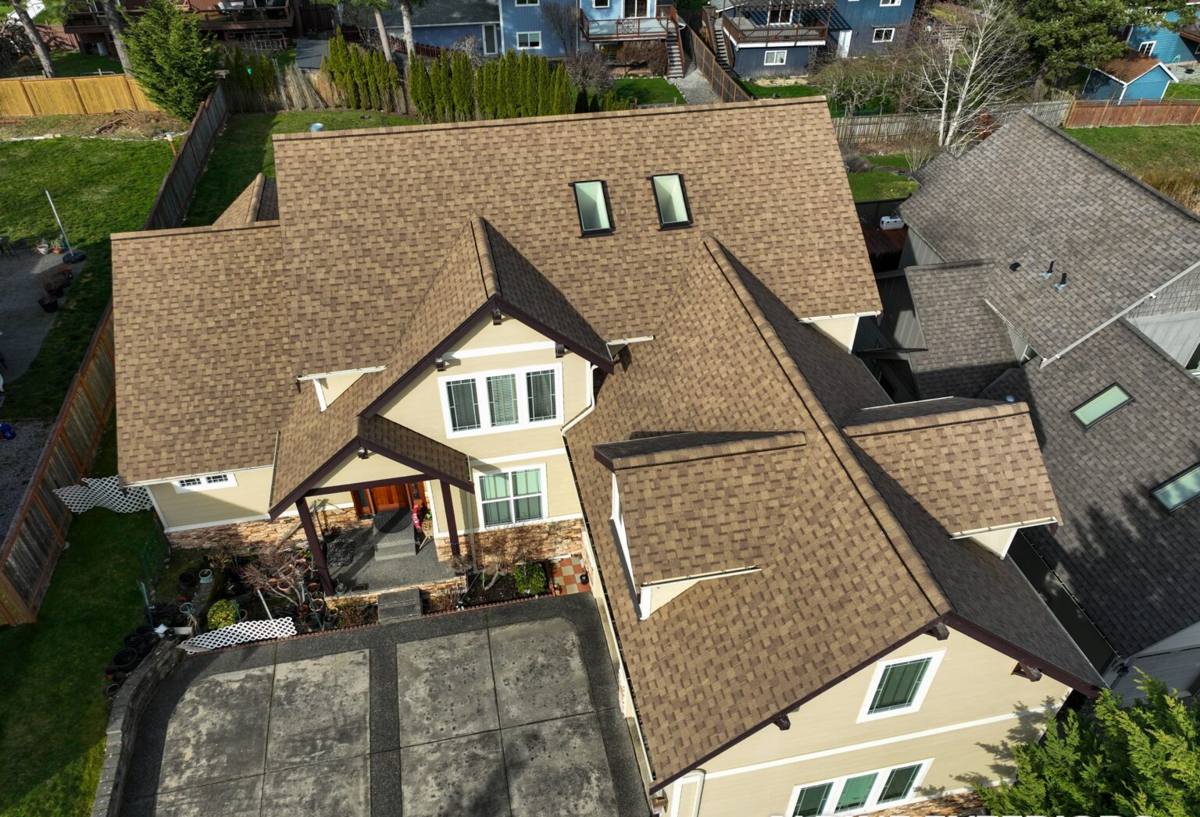
What Salt Air, Driving Rain, and Moss Actually Do to a Roof
Salt-Carrying Air
Salt in the air accelerates corrosion on anything metal — flashing, drip edge, nail heads, roof vents. Standard-grade fasteners and flashing that would last decades in a dry inland climate can start pitting and weakening years sooner this close to the water. Once corrosion sets in at a flashing joint or a nail head, that's a direct path for water to get under the shingle layer.
Wind-Driven Rain
Rain that gets pushed sideways and even upward by wind behaves very differently than rain falling straight down. It can work its way under shingle edges, up and under improperly lapped underlayment, and into gaps around chimneys, skylights, and wall intersections that would stay dry in calmer weather. A roof system built for straight-down rain isn't automatically built for this.
Moss and Algae
Shaded slopes and north-facing sections of a roof hold moisture longer through the wet months, and that moisture feeds moss and algae growth. Left alone, moss doesn't just look bad — it lifts shingle edges as it grows, holds water against the roof surface, and shortens the life of the shingles underneath it. In this climate, moss isn't a rare nuisance; it's a predictable, recurring condition every roof here has to be designed to resist.
What a Correctly Installed Asphalt Shingle Roof Needs Here
A roof that's going to hold up on a Semiahmoo property needs more than shingles nailed to a deck. The system underneath and around the shingles is what actually determines whether the roof performs for its expected lifespan or starts leaking early.
- Ice-and-water shield at eaves, valleys, and low-slope transitions — a self-adhered membrane that seals around fastener penetrations, providing a backup layer where wind-driven rain is most likely to intrude
- Synthetic underlayment across the full deck — more tear-resistant and water-resistant than older felt products, and it holds up better during the tear-off-to-dry-in window on a rainy job day
- Corrosion-resistant flashing and fasteners — metal components suited to salt air exposure, not generic hardware selected for lowest cost
- Proper shingle nailing pattern and sealant activation — shingles rely on sun-activated adhesive strips to seal down; nailing pattern and placement affect wind resistance directly
- Balanced attic ventilation — intake at the eaves and exhaust at or near the ridge, so moisture escapes instead of condensing under the deck and accelerating rot and moss growth from underneath
- Algae-resistant granules on the shingle itself — copper-containing granules built into the shingle that slow the black streaking and biological growth this climate produces
Skip any one of these and the roof can still look fine on installation day. The problems show up years later, which is exactly why installation quality matters more than it seems to at the time.
Choosing the Right Shingle for a Semiahmoo Home
Not every asphalt shingle product is a good fit for this exposure. The table below covers the main categories homeowners are choosing between.
| Shingle Type | Typical Lifespan | How It Handles Semiahmoo Conditions |
|---|---|---|
| 3-tab shingles | 15–20 years | Lower upfront cost, but thinner profile and lower wind rating; moss and algae resistance is limited unless specifically treated |
| Architectural (laminated) shingles | 25–30 years | Heavier, higher wind rating, better sealant contact area — generally the better baseline choice for open, exposed sites |
| Algae-resistant architectural shingles | 25–30 years | Same durability as standard architectural shingles plus copper-containing granules that slow moss and algae staining — worth the modest upcharge given the length of the local moss season |
| Premium/designer shingles | 30+ years | Best wind and impact ratings available in asphalt, higher cost, best fit for owners planning to stay long-term or wanting the longest possible service life |
For most Semiahmoo homes, an algae-resistant architectural shingle rated for high wind exposure is the sensible middle ground — durable enough for the site conditions without paying for a premium tier that isn't necessary for every roof.
Our Installation Process
The process itself is where the difference between a roof that lasts and one that doesn't actually gets decided. Here's how we approach it:
- In-person inspection and written estimate — we walk the roof, check the deck condition where accessible, and note any ventilation or flashing issues before quoting anything
- Full tear-off — removing the old roofing down to the deck so we can inspect for hidden moisture damage or soft decking, rather than layering over unknown problems
- Deck repair as needed — replacing any damaged or rotted sheathing found during tear-off before anything new goes down
- Ice-and-water shield and synthetic underlayment installation — applied at eaves, valleys, and penetrations first, then across the full deck
- Flashing installation — new, corrosion-resistant flashing at all valleys, chimneys, skylights, and wall intersections
- Shingle installation — following manufacturer nailing specifications for the wind exposure at your specific site
- Ventilation check and adjustment — confirming intake and exhaust airflow is balanced for the attic space
- Final walkthrough and cleanup — magnetic nail sweep of the property and a walkthrough before we consider the job finished
Moss Prevention Isn't a One-Time Job
Even a well-installed, algae-resistant roof benefits from periodic attention in this climate. Moss and organic buildup develop gradually, and catching them early is far less work than dealing with an established growth that's already lifted shingle edges. A periodic soft wash or manual moss removal on shaded slopes, along with keeping gutters clear so water isn't sitting against the roof edge, goes a long way toward protecting the investment you've already made in the roof itself. This is maintenance, not a defect — every roof in this climate needs it eventually, regardless of who installed it.
Signs a Semiahmoo Roof Needs a Closer Look
Some warning signs are obvious. Others are easy to miss from the ground until they've turned into a larger repair. Worth checking for:
- Granules collecting in gutters or at downspout outlets, a sign shingles are wearing down
- Shingle edges curling, cracking, or lifting, especially on the side of the roof facing prevailing wind
- Visible moss or dark algae streaking on shaded or north-facing slopes
- Rust staining or visible corrosion around flashing, vents, or nail heads
- Water stains or discoloration on interior ceilings, especially near chimneys or skylights
- Daylight visible through the roof deck from inside the attic
- Sagging or uneven roof lines when viewed from the street
Any one of these on its own doesn't necessarily mean a full replacement is needed — some are repairable if caught early. But they're worth having a professional look at rather than waiting to see if they get worse.
What Affects the Cost of a Shingle Roof Here
Two estimates for what looks like the same job can differ by a meaningful amount, and the gap usually comes down to real differences in scope and material, not padding. Rather than quote a number that won't hold up for every roof, here's what actually drives the cost:
| Cost Factor | What It Affects |
|---|---|
| Roof size and pitch | More square footage and steeper pitches mean more material and labor time |
| Tear-off scope | Full tear-off costs more upfront than a layover but allows deck inspection and repair, which matters given local moisture exposure |
| Shingle grade selected | 3-tab, standard architectural, algae-resistant, and premium tiers each carry different material costs |
| Underlayment and ice-and-water shield coverage | Full-deck synthetic underlayment and expanded ice-and-water coverage cost more than minimum code requirements but perform better against wind-driven rain |
| Flashing and penetration count | Chimneys, skylights, multiple valleys, and roof-to-wall transitions all add labor and material |
| Deck repair needed | Rotted or soft sheathing found during tear-off adds cost but is far cheaper to fix now than after a new roof is already installed over it |
| Access and site conditions | Waterfront lots with limited staging area or steep site access can add labor time |
A written estimate should break these out individually rather than handing you a single lump number. That's the only way to actually compare two bids on substance.
Why It Matters That We Already Work This Area
A roofing crew that hasn't worked exposed, waterfront sites before can still do competent general roofing work and still miss the specific things that matter on a property like this — the fastener grade that resists salt air, the extra underlayment coverage that accounts for wind-driven rain, the ventilation balance that keeps moss from taking hold from underneath. None of that shows up on a sample board or a generic bid template. It shows up ten years later, in whether the roof is still doing its job.
We work roofs across Whatcom County, including homes right along the Semiahmoo shoreline, and we build every roof out here to the same standard: the one that accounts for the actual conditions the roof has to survive, not just the conditions a generic installation guide assumes. That's the difference between a roof that needs attention again in twelve years and one that goes the full distance.
If you'd like a straightforward look at your roof and a written estimate with no pressure to sign anything on the spot, we're glad to come take a look and walk you through exactly what your roof needs.