 Ferndale Exterior
 Why Siding Behaves Differently in Lynden's Climate
Homes in and around Lynden sit in a stretch of Whatcom County that takes a steady, low-grade beating from the weather most of the year. It isn't hurricane-force storms that wear siding out here — it's the combination of salt-tinged marine air drifting in off the Sound, driving rain that comes in sideways during fall and winter fronts, and a moss season that can run eight months or longer on shaded, north-facing walls. Individually, none of those are dramatic. Together, over 10 or 15 years, they expose every weak point in a siding system: bad caulk joints, missing flashing, gaps where water can get behind the cladding and just sit there.
Moisture That Doesn't Leave
The Pacific Northwest doesn't get hard freezes very often, but it does get long stretches of damp, cool weather where wood-based siding products never fully dry out between rain events. That's the real driver of rot, not any single storm. Fiber cement doesn't absorb and hold water the way wood-based products do, which matters enormously in a climate where "dry season" is a relative term.
Wind-Driven Rain and Salt Exposure
Even properties a few miles inland from the water pick up salt-laden air on windy days, and that salt accelerates corrosion on fasteners, trim, and any exposed metal flashing. Combined with wind-driven rain that pushes water sideways into laps and seams, this is exactly the kind of exposure that punishes shortcuts in the water-management details of a siding job — details that are invisible once the siding is up, which is why they matter so much during installation, not just at material selection.
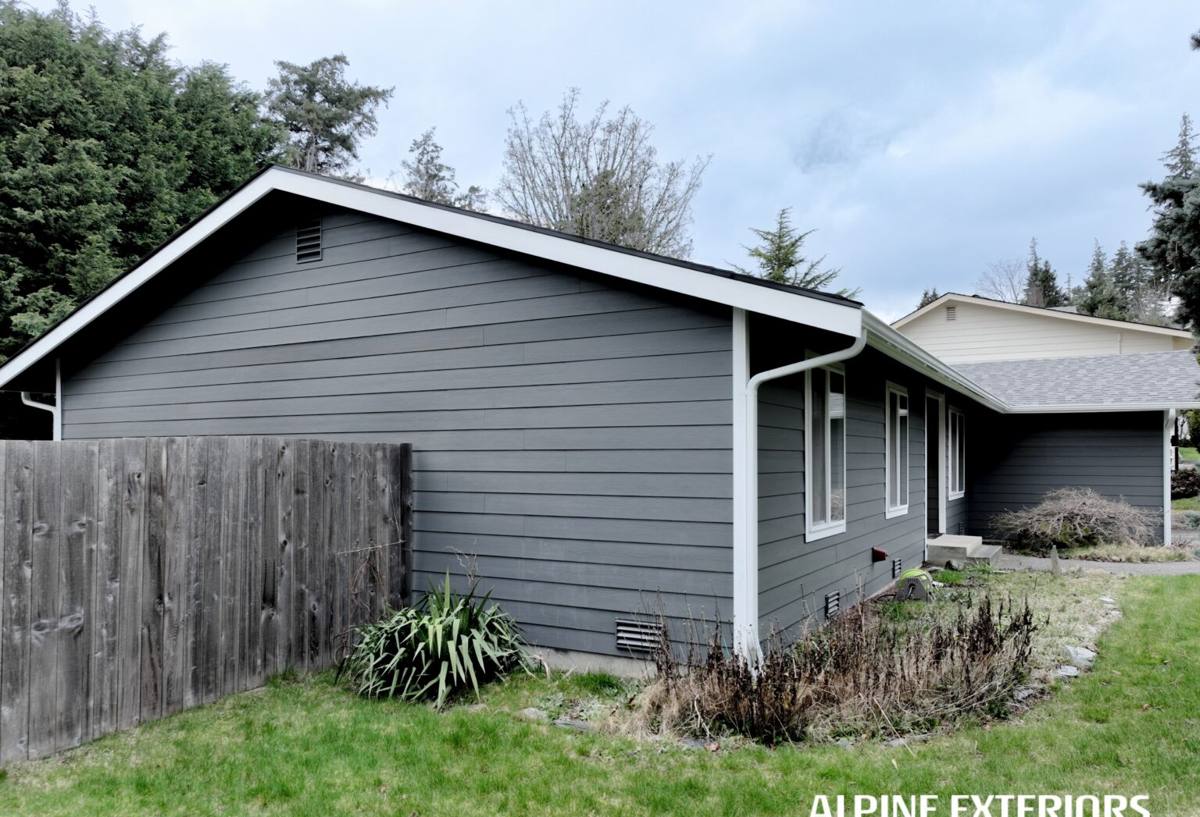
What a Correct Siding Installation Actually Involves
Siding is a system, not a product. The board itself is only one part of what keeps water out of a wall assembly. A correct installation in this climate includes several layers working together, and skipping any one of them shortens the life of everything else.
The Water-Resistive Barrier and Drainage Plane
Behind every board, there should be a continuous weather-resistive barrier, properly lapped shingle-style so water sheds downward and outward rather than working its way in at seams. In a climate with this much sustained rain, we also build in a drainage gap so any moisture that does get behind the cladding has somewhere to go instead of sitting against the sheathing.
Flashing at Every Penetration
Windows, doors, hose bibs, vents, light fixtures — every penetration through the siding is a place water wants to get in. Correct flashing, integrated with the water-resistive barrier in the right shingle-lap order, is what actually stops leaks. It's tedious, detail-heavy work, and it's also the single most common place where corners get cut on rushed jobs.
Fastening and Clearances
James Hardie publishes specific fastener types, spacing, and clearance requirements — including ground clearance, roofline clearance, and gaps at butt joints — and those specs exist because the manufacturer has tested how the product moves and sheds water under real weather conditions. Installing outside those specs doesn't just risk a cosmetic issue; it can void the product warranty.
Why We Install Only James Hardie Fiber Cement
We made a deliberate decision to install one siding system rather than offer a menu of products at different price points. That's not because other materials don't have a place in the market — it's because, weighing durability, moisture behavior, and long-term maintenance in a climate like this one, fiber cement is the product we're willing to stand behind with our own installation work.
| Consideration | What Matters in This Climate |
|---|---|
| Moisture absorption | Fiber cement doesn't swell, cup, or hold water the way wood-based products can during long damp stretches |
| Fire resistance | Non-combustible core, which matters increasingly for insurance underwriting in the region |
| Finish durability | Factory-applied ColorPlus finish is baked on under controlled conditions, resisting the fading and peeling that field-applied paint can suffer under repeated wet-dry cycles |
| Moss and mildew | Dense, engineered material resists the surface breakdown that lets organic growth take hold on softer materials |
| Warranty structure | A manufacturer-backed, transferable warranty when installed to spec — valuable if you sell the home |
We're not going to tell a homeowner that every other siding product on the market is a bad choice — plenty of them perform fine when installed and maintained correctly. What we will say is that we've standardized on one system so that every crew, every detail, and every warranty conversation is consistent, and so we're never installing a product we wouldn't put on our own house in this weather.
Our Process for Lynden-Area Homes
- On-site evaluation — we look at existing siding condition, moisture damage, trim, and how the home's exposure (shade, wind direction, roof overhangs) has affected wear
- Scope and product selection — choosing the right Hardie panel profile and HZ climate zone product for the home's exposure
- Tear-off and sheathing check — removing old siding and inspecting sheathing for rot before anything new goes on; hidden damage gets addressed, not covered up
- Water-resistive barrier and flashing — installed to manufacturer and code requirements at every penetration
- Installation to spec — correct fastening, clearances, and joint treatment
- Final walkthrough — reviewing the finished work with the homeowner before calling the job done
Because we work throughout Ferndale and communities like Lynden regularly, we're familiar with how homes in this part of Whatcom County are typically built and where they tend to show wear first — usually north- and west-facing walls that stay shaded and catch the prevailing weather.
Choosing the Right Hardie Line for This Climate
James Hardie's HZ product lines are engineered for different climate zones, and the Pacific Northwest's damp, moderate-temperature conditions call for a different specification than a hot, dry climate would. Beyond the technical product line, most homeowners are also choosing between lap siding, panel siding, and shingle-style accents — a decision that's as much about the home's architecture as it is about performance. ColorPlus color options matter here too: a factory finish that resists fading means fewer repaint cycles over the life of the siding, which adds up in a climate where exterior paint jobs don't always cure well during the wetter months.
Common Problems on Older Homes in This Area
When we're called out to look at older siding in this area, a few patterns show up repeatedly:
- Soft or delaminating siding near ground level, where splashback and poor clearance kept material wet for years
- Caulk failure at trim joints, letting water track behind the siding at exactly the spots hardest to inspect
- Moss and algae buildup on shaded walls that has started holding moisture against the surface
- Missing or undersized flashing above windows and doors, found only once the old siding comes off
- Fastener corrosion or staining, especially on walls with more direct exposure to wind-driven rain
None of these are unusual — they're the predictable result of decades of this climate acting on a wall system. The point of a proper replacement isn't just a new look, it's correcting the water-management details that let these problems start in the first place.
What to Ask Before Hiring a Siding Contractor
Siding is one of those projects where the quality of the work is largely invisible once it's finished — you're trusting that the flashing, barrier, and fastening were done correctly, because you won't see them again until there's a problem. A few questions help separate a careful contractor from a rushed one:
- Will you show me the water-resistive barrier and flashing details before they're covered?
- What happens if you find rotten sheathing once the old siding comes off?
- Are you installing to the manufacturer's published fastening and clearance specs, and will that keep the product warranty intact?
- How do you handle penetrations like hose bibs, vents, and light fixtures?
- Do you have experience with homes in this specific area and its exposure conditions?
Maintenance After Installation
Fiber cement siding is low-maintenance, not no-maintenance. An annual rinse-down to clear moss spores and organic buildup before they take hold, a periodic look at caulk joints for cracking, and prompt attention to anything that looks like it's holding water will keep a correctly installed system performing for decades. The upfront installation quality is what determines how little maintenance you'll actually need.
If your home's siding is showing its age or you're planning ahead for a replacement, we're happy to walk the property with you and talk through what we'd recommend — no pressure, no obligation. Use the form below to request a free estimate.