 Ferndale Exterior
 Decks in Blaine Take a Different Kind of Beating
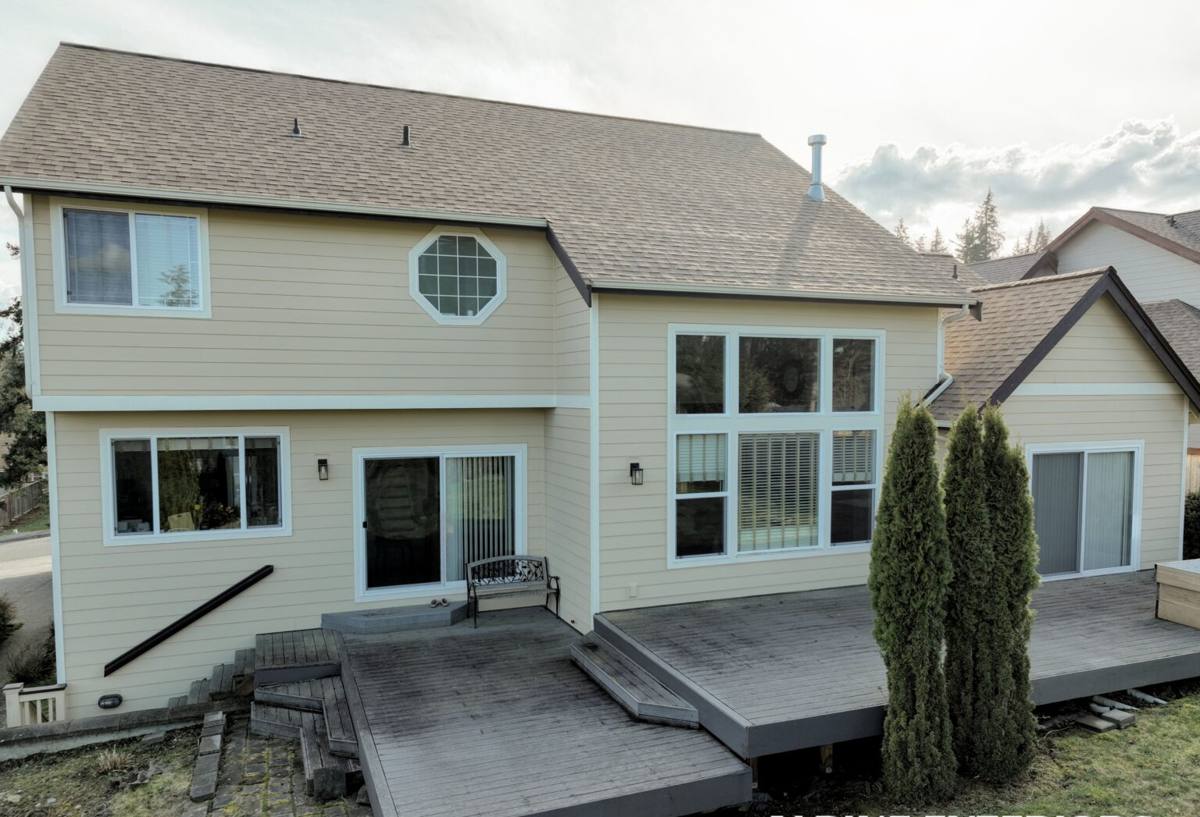
Blaine sits close enough to Semiahmoo Bay and the Strait of Georgia that salt-laden air is part of daily life, not an occasional weather event. Add Whatcom County's long wet season, frequent driving rain off the water, and the shade cover that a lot of Blaine lots have from mature evergreens, and you get a deck environment that's genuinely harder on wood and hardware than most inland neighborhoods around Ferndale. We've repaired decks all over this corridor, and the failure patterns we see in Blaine are consistent enough that we can usually tell where a deck is going to fail before we even climb under it.
This page covers deck repair specifically — not new deck builds — for homeowners in Blaine who have a deck that's aging, sagging, soft in spots, or just doesn't feel as solid as it used to. If your deck needs targeted fixes rather than a full teardown, this is what that process looks like and what it should include.
Why Salt Air, Rain, and Moss Change the Repair Approach
Salt Air and Metal Fasteners
Airborne salt accelerates corrosion on any exposed metal — nails, screws, joist hangers, structural connectors. In a lot of homes we inspect in Blaine, the wood decking itself still looks okay from the top, but the fasteners and hardware underneath are rusted, weakened, or already failing. A repair that just replaces boards without addressing corroded hardware underneath is a repair that fails again within a couple of years.
Driving Rain and Water Intrusion
Rain that comes in at an angle off the water finds its way into places vertical-only rain wouldn't reach — ledger board connections, stair stringers, the underside of rail posts, and any spot where flashing is missing or has failed. Once water gets behind or under a component, rot starts from the inside, which is why decks can look fine on the surface while the structure underneath is compromised.
Moss, Algae, and Trapped Moisture
Whatcom County's moss season runs long, and Blaine's tree cover and marine humidity make it worse than average. Moss and algae aren't just cosmetic — they hold moisture against the wood surface for extended periods, which softens fibers, feeds rot, and makes boards slick and unsafe underfoot. A deck that's green and slippery in the shaded corners is a deck that's losing structural integrity in those same spots, even if the homeowner hasn't noticed yet.
What a Correct Deck Repair Actually Involves
A lot of deck repairs we get called to fix were done by someone who addressed the visible symptom and skipped the cause. Here's what we consider a complete repair process, not a cosmetic patch.
1. Full Structural Inspection
Before we touch a single board, we get underneath the deck and check the framing: ledger board attachment, joist condition, post bases, beam connections, and any area where water has clearly been sitting. We also check railings and stairs, since those get the most direct stress and are the most common source of safety complaints.
2. Moisture and Rot Mapping
We probe suspect boards and framing members to find soft or spongy wood, not just visibly discolored wood. Rot often extends further than it looks from the surface, especially where boards overlap or where hardware has trapped water against the grain.
3. Hardware and Fastener Assessment
Given how hard salt air is on metal in this area, we check joist hangers, structural screws, and any exposed connectors for corrosion — not just rust staining, but actual loss of holding strength. Corroded hardware gets replaced with fasteners rated for coastal exposure, not standard-grade hardware that will just corrode again on the same timeline.
4. Targeted Replacement
We replace what's actually failed — individual boards, specific joists, a section of railing, a stair stringer — rather than defaulting to a full rebuild when the structure doesn't call for one. Repair should match the scope of the actual damage.
5. Drainage and Airflow Correction
Where the root cause is water pooling or poor airflow underneath the deck, we address that directly: adjusting board spacing, correcting flashing at the ledger, or opening up skirting that's trapping moisture against the framing. Fixing the symptom without fixing the drainage just buys a few extra years before the same repair is needed again.
Common Blaine Deck Problems We See
- Soft or spongy decking boards near the house, where driving rain collects against the siding
- Rusted joist hangers and fasteners on decks more than 8-10 years old
- Moss and algae buildup on shaded sections, especially north-facing decks under tree cover
- Loose or wobbly railings from corroded post connections
- Ledger board separation or water staining where the deck meets the house
- Stair stringers showing rot at the base where they contact grade
- Cupped or warped boards from repeated wet-dry cycling through the wet season
- Previous "repairs" that replaced boards but left corroded hardware underneath
Repair vs. Replace: How We Decide
Homeowners often assume a deck showing damage needs a full rebuild. That's sometimes true, but often it isn't. The table below outlines the general factors that push a deck toward repair versus full replacement — every deck is different, and this is a starting point for the conversation, not a substitute for an on-site look.
| Factor | Favors Repair | Favors Replacement |
|---|---|---|
| Framing condition | Joists and beams structurally sound | Widespread rot in primary structural members |
| Extent of damage | Isolated boards, one section, or specific hardware | Damage spread across most of the deck |
| Age of deck | Under 15-20 years with good bones | Original construction near or past typical service life |
| Ledger attachment | Solid, properly flashed connection to the house | Ledger failure or missing flashing causing ongoing water intrusion |
| Code compliance | Meets current railing and structural requirements | Undersized framing or non-compliant railings throughout |
Materials: What Holds Up Near the Water
Material choice matters more in Blaine than it does further inland, because everything is exposed to more moisture and more salt over the life of the deck. When we repair or replace sections, we talk through the real trade-offs with homeowners rather than pushing one product.
Pressure-Treated Lumber
Cost-effective and widely used, but it requires consistent maintenance — sealing and staining on a regular schedule — to perform well in a marine-influenced climate. Skipping maintenance is the single biggest reason we see pressure-treated decking fail early in this area.
Cedar
Naturally rot- and insect-resistant with a look a lot of homeowners prefer, but it's a softer wood that still needs periodic sealing to handle sustained wet exposure and won't hold up to neglect the way some other materials do.
Composite Decking
Lower long-term maintenance and generally better resistance to moisture and moss staining, though it comes at a higher upfront cost and installation has to be done correctly — composite is less forgiving of drainage and airflow mistakes than wood, since trapped moisture underneath can still cause problems with the substructure even if the boards themselves don't rot.
Fasteners and Hardware
Whatever decking material is chosen, we standardize on stainless steel or coated fasteners rated for coastal/marine exposure on repair work in Blaine. It costs more than standard hardware, but standard hardware is exactly what's failing on the decks we get called out to fix.
Our Repair Process, Step by Step
- On-site inspection — we walk the deck, get underneath it, and check framing, hardware, and any visible or suspected damage.
- Written assessment — we explain what we found, what's causing it, and what actually needs to happen, in plain terms.
- Honest scope and estimate — a clear range for the actual repair, not an upsell toward a full rebuild if the deck doesn't need one.
- Scheduled repair — work planned around Whatcom County's weather windows so materials aren't installed in the middle of a soaking rain.
- Structural and hardware correction first — framing and fasteners get addressed before cosmetic surfaces.
- Surface repair or replacement — boards, railings, and stairs brought back to solid, safe, code-appropriate condition.
- Final walkthrough — we go over what was done and what maintenance will keep it in good shape going forward.
Maintenance That Actually Extends the Life of a Repair
A good repair can be undone by neglect just as easily as a bad one. For Blaine's climate specifically, we recommend:
- Clearing leaves and debris from between boards regularly, especially under tree cover where moss takes hold fastest
- Scheduling a moss and algae cleaning before it builds up into a slick, moisture-trapping layer
- Re-sealing or re-staining wood decking on the schedule appropriate to the product — don't wait until it's visibly gray and dry
- Checking railings and stair connections annually for looseness, which is often the first sign of hardware corrosion
- Keeping gutters and downspouts near the deck clear so runoff isn't dumping extra water onto or under the structure
Why a Crew That Already Works Blaine Matters
Deck repair isn't uniform across Whatcom County. A crew that mostly works drier, inland properties can miss things that are obvious to a crew that repairs decks near the water regularly — the specific spots salt air attacks first, how far moss damage tends to spread before it's visible, and where driving rain off the Strait actually gets into a structure. We work this area consistently, which means we're not guessing about what's under the surface of a Blaine deck — we've usually seen the same failure pattern on a nearby property already.
We also don't default to "replace everything" as a way to simplify the job. A repair scoped correctly, with the right materials and hardware for this specific coastal environment, costs less than an unnecessary rebuild and holds up just as well when it's done right.
Get an Honest Look at Your Deck
If your deck in Blaine has soft spots, loose railings, persistent moss, or just doesn't feel as solid as it should, it's worth getting a straight assessment before the next wet season makes the damage worse. We offer free, no-pressure estimates — we'll tell you what we find, what it actually needs, and what it would cost, with no obligation to move forward. Use the form below to get started.