 Ferndale Exterior
 Window Replacement Built for a Lake Community, Not a Subdivision
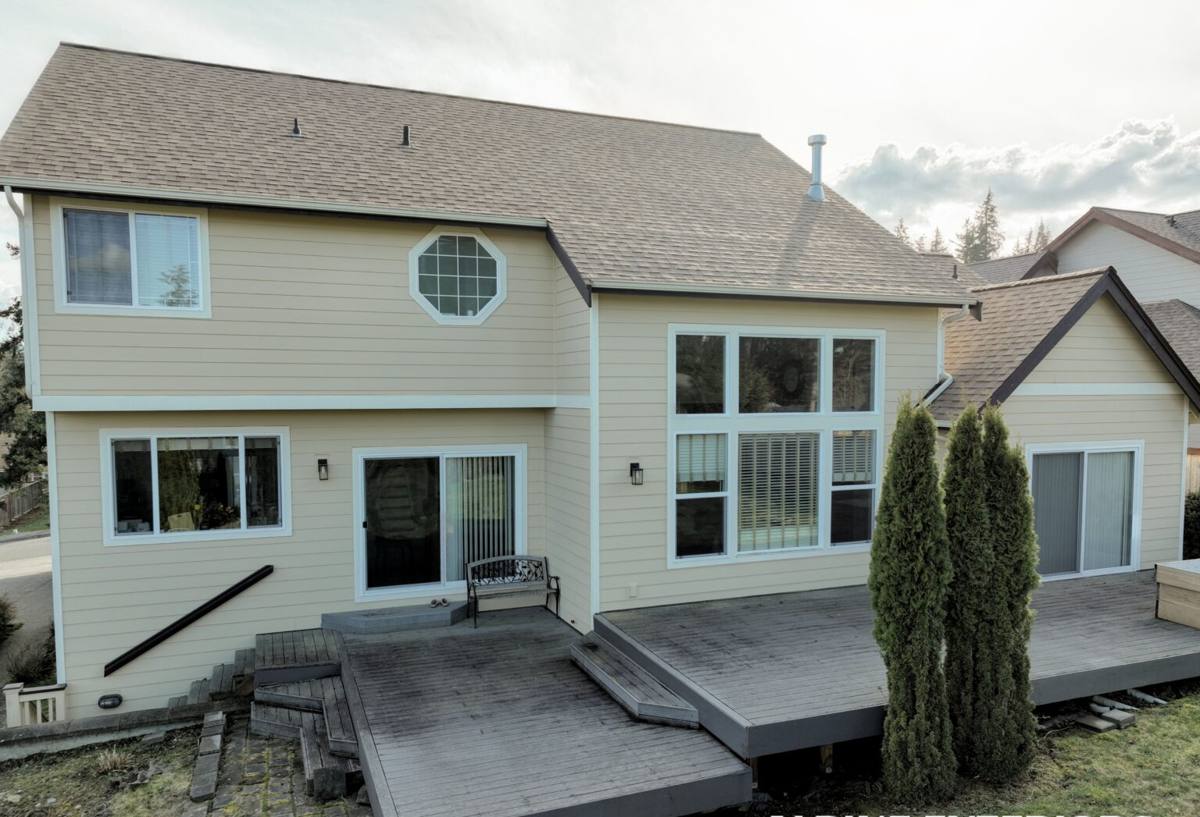
Sudden Valley sits differently than most neighborhoods we work in around Whatcom County. It's wooded, it's hilly, and a good share of the homes back up to trees or sit close to Lake Whatcom itself. That setting is a big part of why people live there, but it also means windows take a different kind of beating than they would on an open lot in town. Shade that never fully burns off, humidity coming up off the lake, and tree cover that keeps siding and trim damp long after a storm has passed — all of it adds up over the life of a window.
We're not going to pretend Sudden Valley faces the same salt air exposure as homes right on Bellingham Bay or out toward the coast. It doesn't. What it does face is near-constant shade on a lot of lots, driving rain that comes sideways off the hills surrounding the lake, and a moss and algae season that runs longer here than in a lot of the county because the sun just doesn't get to some of these homes the way it does elsewhere. That's a real, specific set of conditions, and it's why a window replacement job here should be planned around what actually happens to a window on a shaded lake lot, not a generic checklist.
What the Local Climate Actually Does to Windows Over Time
Windows don't usually fail all at once. They fail slowly, in ways that are easy to miss until the damage has already spread past the glass itself. In Sudden Valley, the pattern we see most often comes down to a few things working together.
Moisture that doesn't dry out
On a sunny, open lot, a window frame that gets rained on has a few hours of direct sun to dry back out. On a shaded lot under tree cover, that same frame can stay damp for days. Over years, that constant low-level moisture is what breaks down wood sashes, softens sill areas, and works its way into seals that were never built to stay wet this long.
Moss and algae on and around the window
A long moss season doesn't just affect the roof. It shows up on north-facing sills, in corner joints, and along exterior trim, and it holds moisture against the frame even longer than shade alone would. Once moss or algae gets a foothold on a wood sill or a poorly sealed frame edge, it accelerates rot instead of just sitting on the surface.
Driving rain and wind-driven water
Whatcom County storms don't always come straight down. Wind off the surrounding terrain can push rain sideways against a wall, and that's when weak flashing, old caulking, or a window that was never properly sealed to the wall assembly lets water in behind the frame — not through the glass, but around it. This is usually where we find the worst hidden damage, because it's invisible from inside the house until the drywall or sill finally shows it.
Signs a Sudden Valley Home Is Due for Window Replacement
Most homeowners call us after noticing one or two of these. If you're seeing several at once, it's worth having the windows looked at properly rather than patching one symptom at a time.
- Visible soft or spongy wood at the bottom corners of the frame or sill
- Persistent black or green staining on the sill that comes back after cleaning
- Fogging or moisture between panes of double-glazed glass — a sign the seal has failed
- Windows that are noticeably harder to open, close, or lock than they used to be
- Drafts or cold spots near the window even with it fully closed
- Paint that's peeling or bubbling specifically around the window frame, not the wall generally
- A musty smell near a window that doesn't go away with cleaning
Choosing the Right Window Material for This Setting
Material choice matters more in a shaded, damp lake setting than it does on a dry, open lot. We steer most Sudden Valley homeowners away from anything that depends on paint film or caulk alone to stay watertight over the long run, because that maintenance is hard to keep up with on a heavily shaded house. Here's how the common options actually compare for this specific setting.
| Material | How it handles constant shade & moisture | Maintenance burden | Where it fits |
|---|---|---|---|
| Vinyl | Doesn't absorb moisture or rot; performs consistently in damp, shaded conditions | Low — no repainting or resealing of the frame itself | Most Sudden Valley homes, especially rentals and everyday living spaces |
| Fiberglass | Very stable in temperature and moisture swings; holds up well long-term under tree cover | Low to moderate | Homes wanting a longer-term investment with minimal upkeep |
| Wood-clad | Attractive interior look, but the exterior cladding and any exposed wood joints need real upkeep in a shaded, damp lot | Higher — exterior finish and seals need regular attention | Homeowners who want a specific interior wood look and are committed to maintenance |
| Aluminum | Doesn't rot, but conducts cold and can condense more in a humid, shaded setting | Low | Less common here as a primary choice; usually not our first recommendation for this climate |
We're not against wood-clad windows as a category — they can be a good product. Our concern in a neighborhood like Sudden Valley is simply that a shaded, damp lot puts more demand on any exterior wood surface than most people expect, and the maintenance schedule needed to keep that warranty valid is easy to fall behind on. We'll walk through the honest trade-offs for your specific lot rather than pushing one material across the board.
What a Correct Installation Involves Here
The window itself is only part of the job. In a climate like this, how the window is sealed into the wall matters as much as what window you buy. A correct installation on a Sudden Valley home includes:
- Removing the old window and inspecting the framing and sill for hidden rot before anything new goes in
- Repairing or replacing any damaged framing rather than sealing a new window over a compromised opening
- Installing proper flashing that directs water away from the wall assembly, not just caulk over a gap
- Using a continuous moisture barrier around the opening, sealed to shed wind-driven rain
- Setting the window level and properly shimmed so it operates correctly and seals evenly for years
- Sealing and finishing the interior and exterior trim so there's no exposed gap for moisture to enter
Skipping the flashing and moisture barrier step is the single most common shortcut we see from past work in this neighborhood, and it's almost always why a homeowner ends up with rot around a "new" window within a few years. It doesn't show on the day the job is finished — it shows up later, which is exactly why it matters who does the work, not just what window they install.
How Our Process Works
We keep this straightforward, and we don't push anything before you're ready for it.
- Walkthrough and assessment. We look at each window from inside and outside, check for existing damage, and talk through what's actually needed versus what can wait.
- Honest recommendation. You get options with real trade-offs explained — material, features, and what fits your home and budget, not a single upsell path.
- Written estimate. Clear pricing before any work starts, no surprise add-ons once we're on site.
- Installation. Careful removal, framing repair where needed, proper flashing and sealing, and correct fitting — done by people who've done this on this kind of lot before.
- Walkthrough and cleanup. We show you the finished work, confirm everything operates correctly, and leave the site clean.
Why Local Experience in This Neighborhood Matters
A crew that mostly works dry, open lots elsewhere in Whatcom County will approach a Sudden Valley job the same way they approach any other job — and that's exactly how moisture problems get missed. We've seen what shaded lake-lot framing looks like after ten or fifteen years of this climate, we know which corners of a window opening tend to hide rot first, and we don't treat flashing and sealing as an afterthought because we've seen what happens when a previous installer did. That's not a marketing line — it's the difference between a window that looks fine on install day and one that's still sealed properly five years later.
What Affects the Cost
Every home is different, so we won't quote a number without seeing the job, but these are the main factors that move price up or down on a typical Sudden Valley window replacement.
| Factor | Why it matters |
|---|---|
| Window material and glass package | Vinyl, fiberglass, and wood-clad carry different base costs; upgraded glass for energy performance adds cost but pays back over time |
| Extent of framing repair needed | Hidden rot found during removal adds labor and material that can't be fully known until the old window is out |
| Number and size of windows | Doing multiple windows in one visit typically costs less per window than one-off jobs |
| Access and site conditions | Second-story windows, steep lots, or limited access around a heavily wooded property can add time |
| Trim and finish work | Matching existing interior or exterior trim, or upgrading it, is a separate line item from the window itself |
In general, expect window replacement to run from a few hundred dollars per window for straightforward vinyl replacements up to several times that for larger openings, premium materials, or jobs that turn up significant framing repair. We'll always tell you upfront if we find something during removal that changes the scope, before we proceed with it.
Get a Straight Answer for Your Home
If you're not sure whether your windows need full replacement or just some repair and better sealing, that's a fair question and one we're happy to answer honestly during a walkthrough. We'd rather tell you a window has a few good years left than sell you something you don't need yet. Reach out for a free, no-pressure estimate — we'll take a look, explain what we find in plain terms, and let you decide from there.