 Ferndale Exterior
 Storm Damage Roofing for Fairhaven Homes
Fairhaven sits close enough to the water that its roofs live a different life than roofs twenty miles inland. Salt-laden air off the Sound, driving rain that comes in sideways during winter storms, and a moss season that seems to stretch longer every year all put extra wear on shingles, flashing, and fasteners. When a windstorm or a heavy rain event finally finds the weak point in a roof, homeowners in this area need a repair done by someone who understands what got the roof to that point in the first place, not just a patch that covers the symptom.
Ferndale Exterior Company works roofs throughout Whatcom County, and storm damage repair near Fairhaven is a regular part of that work. We know what a wind-lifted shingle looks like after it's been through a season of salt exposure, and we know the difference between a roof that needs a targeted repair and one where the storm damage is really just the final straw on a roof that was already near the end of its service life.
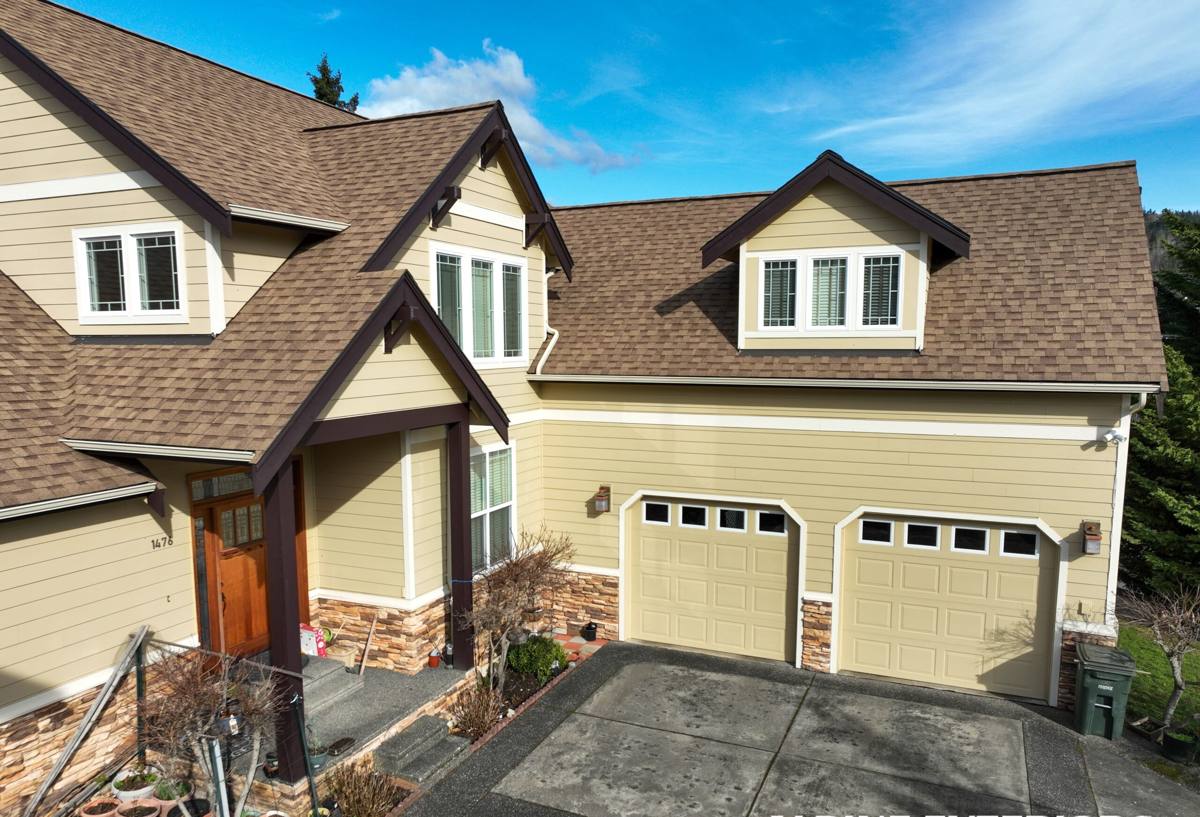
Why This Coastal-Adjacent Climate Is Hard on Roofs
A few things stack up against roofs in and around Fairhaven, and they compound each other over time:
- Salt air: Airborne salt accelerates corrosion on exposed metal fasteners, flashing, and gutter hardware, weakening the connections that hold a roof system together.
- Driving rain: Wind-driven rain doesn't just fall straight down — it gets pushed under shingle edges, around poorly sealed flashing, and into any gap that a calmer rain would never reach.
- Extended moss season: Cool, damp conditions for much of the year give moss and algae a long runway to establish on north-facing slopes and shaded areas, and moss holds moisture against the roofing material far longer than bare shingle would.
- Wind exposure: Proximity to open water means gusts can hit harder and more often than they do further inland, which is exactly the kind of stress that finds any shingle that's already lifting or any flashing that's already loose.
None of these factors cause damage on their own overnight. They work slowly, softening underlayment, loosening fastener grip, and lifting shingle edges just enough that the next storm turns a minor weakness into a real problem — a leak, a torn-off shingle run, or exposed decking.
What Storm Damage Actually Looks Like
Storm damage isn't always the obvious kind. Homeowners often expect to see missing shingles scattered across the yard, and sometimes that's exactly what happens. But a lot of the damage we find during a post-storm inspection is less dramatic and easier to miss from the ground.
Common Signs After a Storm
- Shingles that are lifted, curled, or creased but still technically in place
- Granule loss showing up in gutters or at downspout outlets
- Flashing pulled loose around chimneys, skylights, or roof-to-wall transitions
- Soft spots or discoloration on ceilings or in the attic after heavy rain
- Debris impact marks from branches or wind-blown material
- Gutters pulled away from the fascia or clogged with storm debris and moss buildup
The tricky part is that a roof can look fine from the driveway after a storm and still have a compromised seal or a lifted shingle edge that will leak the next time the wind blows from a different direction. That's why a proper storm damage repair starts with a real inspection, not a drive-by guess.
Our Inspection and Repair Process
1. On-Roof Inspection
We get up on the roof, not just on a ladder at the eave. Wind and rain damage often shows up mid-slope or at transitions — valleys, hips, penetrations — that you can't evaluate accurately from the ground. We check shingle seal, flashing condition, fastener grip, and the underlayment where it's exposed.
2. Attic and Interior Check
Where access allows, we look at the attic side too. Water staining, damp insulation, or daylight showing through the decking tells us things the exterior alone won't. This step matters most after wind-driven rain events, since that's exactly the kind of weather that pushes water past a roof's normal defenses.
3. Honest Damage Assessment
We separate storm damage from pre-existing wear. If a roof has moss-related deterioration or age-related granule loss on top of storm damage, we'll tell you plainly which is which. This matters for insurance conversations and for setting realistic expectations about whether a repair is the right call or whether the roof is close enough to end-of-life that a repair is just a short-term fix.
4. Targeted Repair
Once we know what's actually wrong, we fix that — replacing damaged shingles with matching material where possible, resealing or replacing compromised flashing, securing loose fasteners, and addressing any decking that got wet enough to need attention. We don't upsell a full re-roof when a repair will genuinely hold up.
5. Follow-Up Recommendations
If we see moss buildup, clogged gutters, or areas prone to wind-driven rain intrusion, we'll flag those as maintenance items so you're not back in the same spot after the next storm.
What a Correct Repair Involves
A storm damage repair that actually holds up in this climate isn't just about swapping out the shingles you can see are missing. It involves a few things that are easy to skip if a crew is moving fast:
- Matching replacement shingles as closely as possible in type, weight, and color so the repair doesn't create a new weak seam
- Re-sealing or replacing flashing rather than just caulking over a gap, since caulk alone doesn't hold up to years of salt air and rain cycling
- Checking fastener depth and placement — corrosion-prone or improperly set fasteners are a common hidden cause of repeat leaks
- Inspecting and repairing underlayment where it's been exposed, since a shingle repair over damaged underlayment just delays the next leak
- Clearing moss and debris from the repair area before closing it up, so trapped moisture isn't sealed in underneath new material
Skipping any of these steps is how a "repair" ends up needing a second repair a year later.
Repair Versus Replacement: How We Help You Decide
Not every storm-damaged roof needs a full replacement, and not every roof is a good candidate for another patch. The table below covers the general factors we weigh — every roof is different, so this is a starting point for the conversation, not a formula.
| Factor | Leans Toward Repair | Leans Toward Replacement |
|---|---|---|
| Age of roof | Under roughly 12-15 years | Nearing or past typical shingle lifespan |
| Extent of damage | Isolated area or a few shingle runs | Widespread lifting, cracking, or granule loss |
| Moss/algae history | Minor, addressable with cleaning | Long-term moss damage to multiple slopes |
| Underlayment condition | Dry and intact outside repair zone | Widespread moisture intrusion |
| Flashing condition | Localized fix needed | Corroded or failing throughout |
We'll walk you through where your roof lands on these points before recommending a direction, and we're not going to talk you into a replacement a repair can honestly handle.
Why a Crew That Already Works Fairhaven Matters
Roofing knowledge that's specific to this stretch of Whatcom County isn't something you get from a general repair checklist. Knowing how far salt air travels inland, which roof orientations take the worst of the driving rain, and how aggressively moss establishes on shaded north slopes in this particular climate comes from working roofs here season after season.
A crew already familiar with Fairhaven and the surrounding Ferndale area also tends to move faster after a storm, since local response matters when a compromised roof is actively letting water in. We're not driving in from out of the area trying to learn the local conditions on your dime — this is the climate we work in every week.
Preventing the Next Storm From Causing the Same Problem
Once a storm repair is done, a little maintenance goes a long way toward keeping the next windstorm or heavy rain event from causing a repeat visit.
Maintenance Checklist
- Clear moss from shaded and north-facing roof areas before it spreads across a full slope
- Keep gutters and downspouts clear so storm runoff has somewhere to go besides under your shingles
- Trim back tree limbs that could impact the roof during high wind
- Have flashing checked periodically, especially around chimneys and skylights, since these are common points of failure in wind-driven rain
- Schedule a roof check after any major storm, even if nothing looks obviously wrong from the ground
None of this is complicated, but it's the difference between a roof that ages gracefully in this climate and one that keeps generating surprise repairs.
What to Do Right After a Storm
If you suspect storm damage, the most useful thing you can do is get it looked at before the next rain event finds the weak spot. Delaying an inspection after visible damage, or after a leak shows up inside the house, usually just gives water more time to spread into decking, insulation, and interior finishes — turning a straightforward shingle and flashing repair into a bigger, more expensive job. If you're dealing with an active leak, contain what you can inside the house and get the roof looked at as soon as it's safe to do so.
If you're in Fairhaven or anywhere around Ferndale and dealing with storm damage, we're happy to come take an honest look and walk you through what we find. Reach out for a free, no-pressure estimate using the form below — we'll tell you straight what your roof needs and nothing it doesn't.