 Ferndale Exterior
 Window Replacement Built for Bellingham's Weather, Not Just Any Weather
Bellingham sits in a stretch of Whatcom County where the weather asks more of a window than most manufacturers' brochures account for. Salt air drifts in off Bellingham Bay, driving rain comes in sideways off Pacific storm systems for months at a stretch, and the long stretch of gray, damp weather each year gives moss and mildew plenty of time to take hold on anything that stays wet. Windows are one of the most exposed, most-used components on a house, and in this climate they take a steady beating year-round rather than the occasional extreme most window products are rated for. Replacing them correctly here means thinking past the showroom and toward what actually happens to a window on this side of the state over ten, twenty, thirty years.
This page covers what Bellingham homeowners specifically need to know about window replacement: what to watch for, what the climate demands from the product and the installation, and how our process is built around those realities rather than a one-size-fits-all approach.
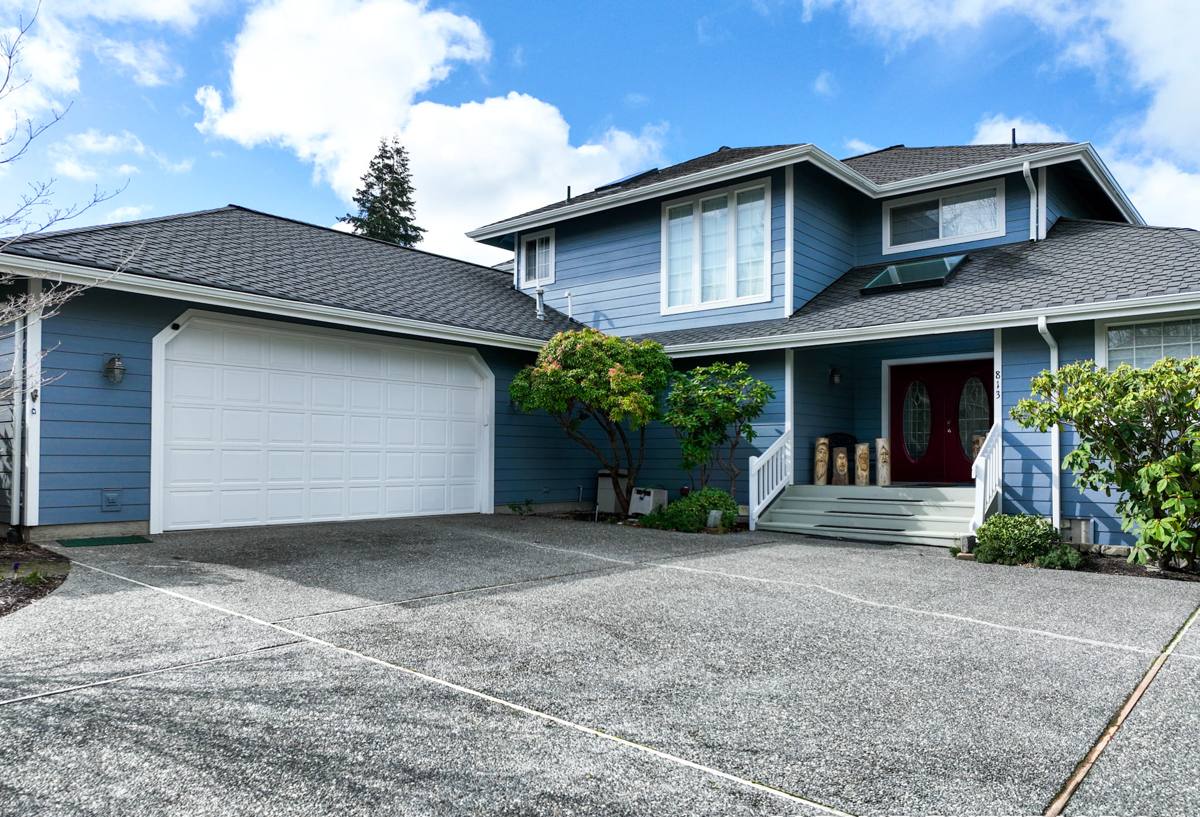
Signs It's Time to Replace, Not Just Repair
Not every window problem means a full replacement, but in a wet climate, small issues tend to compound quickly. Before assuming a repair will hold, look for these signs:
- Fogging or a hazy film between the panes of a double-pane window (a sign the seal has failed and moisture is trapped inside the glass)
- Persistent drafts you can feel near the frame even with the window fully closed and locked
- Sashes that stick, swell, or won't latch cleanly, especially after a stretch of rain
- Soft, spongy, or discolored wood at the sill or lower frame corners
- Moss, algae, or black staining building up on the exterior trim around the window
- Noticeably higher heating bills without another clear cause
- Visible daylight or gaps where the sash meets the frame
Any one of these can sometimes be addressed with a repair. Several together, or a window that's original to an older Whatcom County home, usually means the frame and seals have reached the point where replacement is the more honest recommendation.
What Bellingham's Climate Actually Does to a Window
Driving Rain and Wind-Driven Water
Storms coming off the Pacific don't just drop rain straight down — they push it sideways into siding, trim, and window openings. A window that isn't flashed and sealed correctly at the head, jambs, and sill will eventually take on water at exactly the points where it's hardest to see: behind the trim, inside the wall cavity, under the sill. By the time a homeowner notices a stain or soft spot, water has often been getting in for a while.
Salt Air and Corrosion
Homes closer to Bellingham Bay deal with an added factor: salt-laden air that accelerates corrosion on hardware, fasteners, and unprotected metal components. Over years, this can pit hinges, cranks, and locks, and it's part of why frame and hardware material choice matters more here than it would inland.
The Long Moss and Mildew Season
Whatcom County's damp season runs long, and shaded, north-facing walls in particular stay wet for extended stretches. Moss and mildew don't just look bad on a window sill or trim board — they hold moisture against the surface underneath, which is exactly the condition that breaks down wood, coatings, and sealant over time.
Choosing a Frame Material That Holds Up Here
Frame material is one of the biggest factors in how a window performs against Bellingham's specific conditions. Each option below has real tradeoffs — none is universally "best," and the right choice depends on the home, its exposure, and the homeowner's priorities.
| Frame Material | Moisture Resistance | Salt Air / Coastal Durability | Maintenance |
|---|---|---|---|
| Vinyl | Very good — won't rot or absorb water | Good; no metal corrosion concern | Low; occasional cleaning |
| Fiberglass | Excellent; dimensionally stable in wet-dry cycling | Excellent; highly resistant to corrosion | Low |
| Wood with aluminum/vinyl cladding | Good on exterior face; interior wood needs protection from any moisture intrusion | Fair to good depending on cladding quality and detailing | Moderate; more sensitive to installation quality |
| Bare wood | Requires diligent upkeep in a climate this wet | Fair; hardware and finish exposed to salt air | High; regular refinishing needed |
Our general standard for Bellingham homes is to steer toward vinyl or fiberglass for most replacements, simply because they hold up with the least maintenance burden in a climate that gives moisture this many chances to find a weak point. Where a homeowner wants the look of wood, clad options can work well, but they put more weight on getting the installation and detailing exactly right — which is a fair tradeoff to understand going in, not a reason to avoid the look if that's the priority.
Glass and Performance Options Worth Understanding
Glass package matters as much as frame material, and it's an area where it's worth understanding what you're paying for rather than taking a sales pitch at face value.
Double-Pane vs. Triple-Pane
Double-pane, Low-E glass with an argon fill is a solid, proven standard for this region and meets most Bellingham homes' needs for comfort and efficiency. Triple-pane adds another layer of insulation and can modestly reduce heat loss and sound transmission, at added cost and weight — it's worth considering for a north-facing wall, a home near a busier road, or a homeowner specifically prioritizing efficiency, but it isn't a requirement for every project here.
Condensation Resistance
In a climate with this much sustained humidity, condensation resistance deserves real attention — not just on the glass itself, but at the frame and sill, where trapped moisture does the most damage over time. A quality Low-E coating and properly sealed insulated glass unit go a long way toward keeping interior condensation, and the mildew it can feed, to a minimum.
U-Factor Over Solar Heat Gain
Because Bellingham's summers are mild and its wet, cool months are long, U-factor (how well the window holds heat in) generally matters more to comfort and energy bills here than solar heat gain coefficient (how much solar heat it lets in). That's a different priority than a hot, sunny climate would call for, and it's worth asking about specifically when comparing glass packages.
What a Correct Installation Actually Involves
In our experience, most window failures in this region trace back to installation, not the product itself. Getting it right isn't complicated, but it requires discipline and the right order of operations:
- Remove the old window and inspect the rough opening, sheathing, and framing underneath for any hidden rot or prior water damage before anything new goes in
- Install a proper sill pan to direct any water that does get past the window back outside, rather than into the wall
- Integrate flashing at the head, jambs, and sill with the home's existing weather-resistant barrier, in the correct shingle-lap order so water is always directed outward and downward
- Shim and square the window precisely so it operates smoothly and seals evenly for years, not just on installation day
- Insulate the gap between the frame and rough opening fully, without over-packing in a way that can bow the frame
- Seal the exterior with the right sealant in the right locations — not as a blanket bead of caulk over everything, which can trap moisture instead of shedding it
Skipping or rushing any one of these steps is exactly what leads to the drafts, staining, and rot that bring homeowners back to us a few years after a rushed job elsewhere.
Our Window Replacement Process
We keep the process straightforward and transparent from the first visit through cleanup:
- On-site assessment — we look at the existing windows, framing condition, and the specific exposure of your home (sun, wind, and rain direction, proximity to the bay) before recommending anything
- Product and measurement — we walk through frame material and glass options honestly, including tradeoffs, and take precise measurements for each opening
- Removal and inspection — old windows come out carefully, and we check the framing and sheathing underneath for any hidden moisture damage before installing anything new
- Installation — proper flashing, sill pans, sealing, and insulation, in the sequence that actually keeps water out
- Cleanup and walkthrough — we clear debris, test every window for smooth operation, and walk the job with you before we consider it finished
Why a Crew That Already Works in Bellingham Matters
Window replacement isn't just a product decision — it's a judgment call on exposure, detailing, and material that's specific to a given house and its microclimate. A crew that regularly works Bellingham and the surrounding Whatcom County area already has a feel for which walls take the worst of the driving rain, which neighborhoods deal with more salt air off the bay, and which older housing stock in the area tends to have hidden framing issues behind original windows. That local pattern recognition shows up in fewer surprises during the job and fewer callbacks after it. It also means we're a short drive away if a question comes up after the install, not a name from an out-of-area company that's hard to reach once the crew has moved on.
Keeping New Windows Performing Season After Season
A correctly installed window in a quality material should need very little from you, but a small amount of upkeep goes a long way in this climate:
- Keep weep holes at the bottom of the frame clear of dirt and debris so water can drain out as designed
- Do a quick visual check of exterior caulking and sealant once a year, particularly after the wettest months
- Clear moss, leaves, or debris off sills and surrounding trim before it has a chance to hold moisture against the surface
- Operate hardware (locks, cranks, latches) periodically so they don't seize up from disuse or corrosion
- Rinse salt residue off frames and hardware if your home is close to Bellingham Bay
If you're weighing whether it's time to replace your windows, or you just want a straight answer on what a correct installation would involve for your specific home, we're happy to take a look. Reach out for a free, no-pressure estimate using the form below.