 Ferndale Exterior
 Birch Bay sits close enough to the water that its roofs live a different life than roofs a few miles inland. Salt-laden air, wind-driven rain off the Strait, and a moss season that seems to run longer every year all work on a roof at the same time. A new roof installation out here isn't just about swapping old shingles for new ones — it's about building an assembly that's suited to this specific stretch of Whatcom County coastline.
Why Birch Bay's Coastal Climate Is Hard on Roofs
Three things define roofing conditions in Birch Bay: salt air, driving rain, and moss. Salt-laden coastal air accelerates corrosion on exposed metal — fasteners, flashing, and vent stacks take the brunt of it if they aren't rated for the exposure. Wind-driven rain doesn't just fall straight down; it gets pushed sideways under shingle edges and around penetrations, which means flashing details and underlayment quality matter more here than they would on a sheltered inland lot. And the long, damp moss season that Whatcom County is known for gives algae and moss a wide window to take hold on north-facing slopes and shaded valleys, holding moisture against the roof deck long after a storm has passed.
None of this means a roof in Birch Bay needs to be exotic or overbuilt. It means the ordinary details — fastener choice, flashing laps, ventilation balance — need to be done correctly and not rushed, because the margin for a sloppy detail is smaller this close to the water.
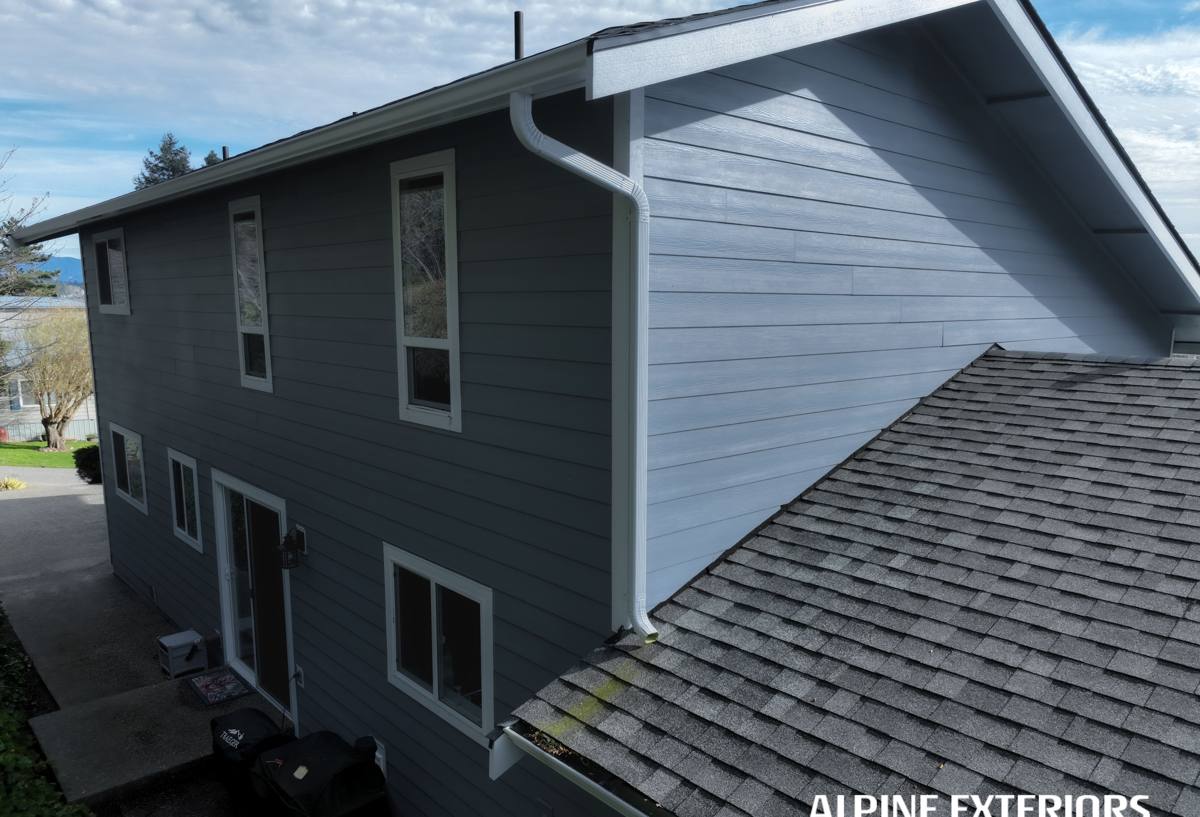
Signs a Birch Bay Roof Needs Replacing, Not Just Repairing
Homeowners often call us after noticing one obvious problem, but a roof usually tells you it's done through several smaller signs adding up:
- Shingles that are cupping, cracking, or losing granules in patches, especially on the west and south-facing slopes that take the most sun and wind
- Persistent moss growth that returns within a season or two of cleaning, particularly in shaded valleys or under overhanging trees
- Soft spots or sagging when walked on, which usually points to deck damage underneath
- Rusted or corroded flashing around chimneys, skylights, and vent pipes
- Daylight visible through the attic roof boards, or water staining on attic sheathing
- A roof that's simply reaching or past the manufacturer's rated lifespan for its material
One or two of these can often be repaired. When several show up together, or when the roof is old enough that repairs would just be patching a system that's failing as a whole, replacement is the more honest recommendation — and the more cost-effective one over the next decade.
What Goes Into a Correct Roof Replacement
Tear-Off and Deck Inspection
A proper installation starts with a full tear-off down to the deck, not a layover on top of old material. That's the only way to actually see the condition of the sheathing underneath. In a marine climate like Birch Bay's, it's common to find soft or delaminated plywood around old flashing points or valleys where water has been getting in slowly for years without an obvious leak inside the house. Any damaged decking gets replaced before anything new goes down — installing new roofing over a compromised deck just hides the problem for a while.
Underlayment and Flashing
Underlayment is the roof's backup layer if wind-driven rain gets past the shingles, which happens more often on an exposed coastal lot than people expect. Flashing — around chimneys, skylights, dormers, and roof-to-wall transitions — is where most leaks actually originate, not in the open field of shingles. Every flashing detail gets rebuilt as part of a full replacement, using corrosion-resistant materials suited to salt air exposure rather than reusing old flashing to save time.
Ventilation
Balanced intake and exhaust ventilation keeps the attic close to outdoor temperature and controls moisture buildup underneath the deck. Poor ventilation is one of the quieter causes of premature roof failure and moss growth — a deck that stays cool and damp on the underside gives algae and moss more to work with from below, even if the top surface looks fine.
Choosing Roofing Materials for Salt Air and Moss
There's no single "best" roofing material for every Birch Bay home — the right choice depends on the roof's slope, sun exposure, tree cover, and the homeowner's budget and maintenance preferences. Here's how the common options compare for this specific climate:
| Material | Salt Air & Moss Performance | Typical Lifespan | Considerations |
|---|---|---|---|
| Architectural asphalt shingle | Good; algae-resistant granule options help on shaded slopes | 25–30 years | Most common choice locally; wide color range; needs periodic moss removal on shaded roofs |
| 3-tab asphalt shingle | Fair; less wind resistance, more prone to lifting in gusty coastal wind | 15–20 years | Lower upfront cost but generally not our first recommendation for exposed Birch Bay lots |
| Standing seam metal | Very good when properly coated and fastened with corrosion-resistant hardware | 40–50+ years | Higher upfront cost; sheds moss and moisture well due to smooth, steep-shedding surface |
| Composite/synthetic shake | Good; resists moisture absorption better than wood shake | 30–40 years | Higher cost than asphalt; good option where a wood-shake look is wanted without the maintenance |
Fastener and flashing metal choice matters as much as the field material. Galvanized components can corrode faster in salt air than stainless or properly coated alternatives, so we match hardware to the exposure level of the specific roof, not a one-size-fits-all spec.
Our Installation Process, Start to Finish
- On-site inspection and estimate — we walk the roof, check the attic where accessible, and note slope, exposure, and existing damage before quoting anything
- Material selection — we go over the tradeoffs in plain terms so the choice fits the budget and the roof's actual exposure, not just what looks good in a brochure
- Scheduling around weather — installation is planned around dry windows where possible, since a roof deck should never sit exposed to driving rain overnight
- Tear-off and deck repair — full removal of old material, deck inspected and any damaged sections replaced
- Underlayment, flashing, and field installation — installed per manufacturer specification, with extra attention to laps and seams at every penetration
- Ventilation check — intake and exhaust balanced for the attic's actual size and layout
- Final walkthrough and cleanup — magnetic sweep for debris, full site cleanup, and a walkthrough so the homeowner can see the finished work and ask questions
Moss and Algae: Ongoing Prevention Built Into the Job
Because moss season runs long in this part of Whatcom County, we build prevention into the installation itself rather than treating it as an afterthought. That includes using algae-resistant shingle products on shaded or north-facing slopes, making sure ventilation is balanced so the deck isn't staying damp from underneath, and reviewing roof-to-tree clearance where overhanging branches keep a section of roof shaded and wet longer than the rest. None of this eliminates the need for occasional moss removal on a heavily shaded roof, but it significantly extends the time between cleanings and reduces the chance of moss working its way under shingle edges.
Why a Crew That Already Works Birch Bay Matters
Roofing crews who mostly work drier, inland areas can do fine work, but they aren't always thinking about the details that matter most a few blocks from the water — flashing metal that won't pit from salt exposure, fastener corrosion resistance, or how wind-driven rain behaves differently than a straight-down downpour. A crew that regularly works Birch Bay and the surrounding Ferndale coastline has already seen how roofs in this specific area age, what fails first, and which details are worth the extra time. That local pattern recognition is hard to replace with a generic spec sheet, and it's the difference between a roof that just meets code and one that's actually built for where it sits.
Questions to Ask Before You Sign
Before committing to any roof replacement, it's worth asking a few direct questions of any contractor you're considering:
- Will the job include a full tear-off, or is a layover being proposed?
- What underlayment and flashing materials are included, and are they rated for coastal salt exposure?
- How will attic ventilation be assessed and balanced as part of the job?
- What's the manufacturer's warranty, and does it require a certified installer to stay valid?
- Is the crew licensed and insured to work in Washington, and can they provide proof?
- How is the project scheduled around weather, and what happens if rain moves in mid-tear-off?
A contractor who answers these clearly and without hesitation is generally one who's done this enough times in this kind of climate to know exactly what's involved.
If your Birch Bay roof is showing its age or you just want a straight answer about whether repair or replacement makes more sense, we're happy to take a look. Use the form below to request a free, no-pressure estimate — we'll walk the roof, explain what we see, and give you options without any push to decide on the spot.