 Ferndale Exterior
 Windows on Birch Bay Take a Different Kind of Beating
Birch Bay sits close enough to the water that its houses deal with a combination of stresses most inland Whatcom County homes never see. Salt-laden air corrodes hardware and fasteners faster than dry-side climates. Wind-driven rain off the bay pushes water sideways into gaps that would stay dry on a more sheltered lot. And the long stretch of damp, low-sun months here keeps window sills, tracks, and trim wet for days at a time, which is exactly the environment moss and mildew need to get established. None of this means Birch Bay homes need exotic materials or a different kind of window. It means the installation has to be done correctly, with the right flashing, sealants, and attention to detail, because there's very little margin for shortcuts this close to salt water.
We install windows throughout Ferndale and the surrounding area, and Birch Bay is one of the neighborhoods where we see the clearest difference between a window that was installed correctly and one that wasn't. A poorly flashed window in a sheltered inland yard might leak in five or ten years. The same mistake on a bay-facing wall can show up in one bad winter.
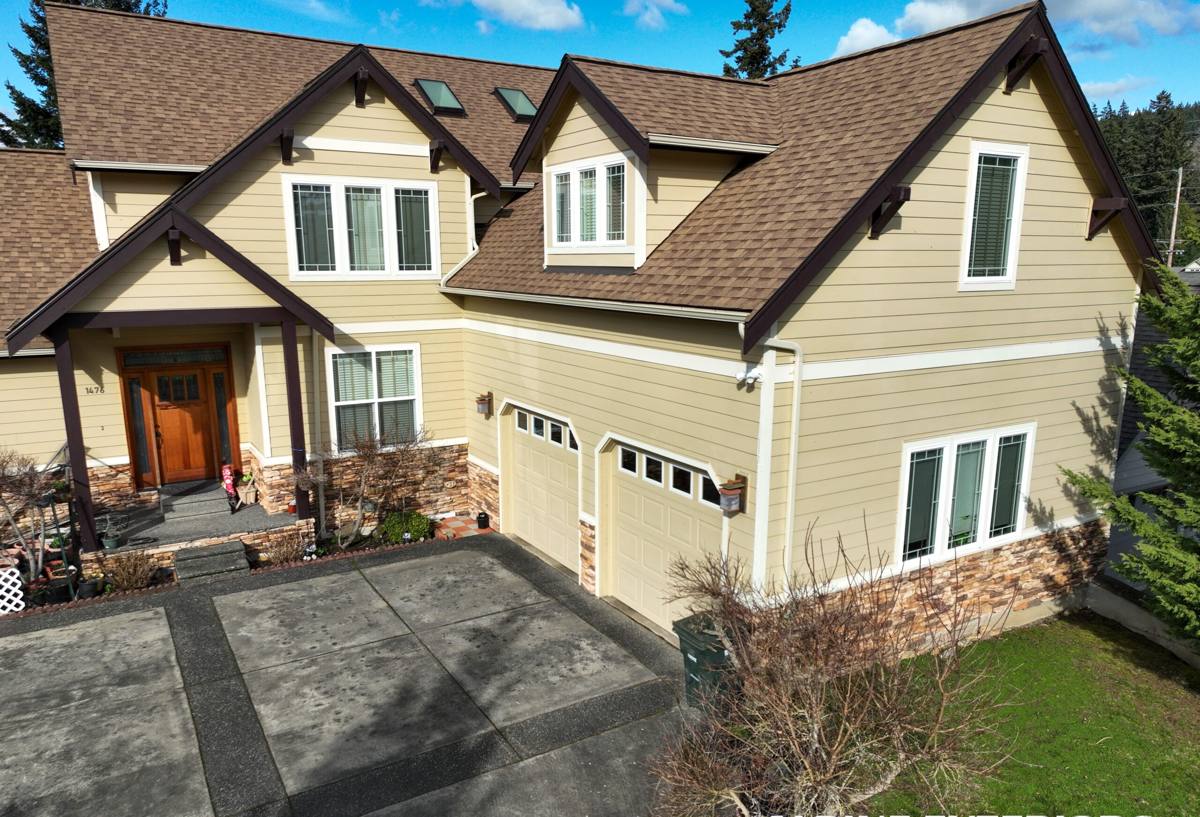
What Actually Goes Wrong With Windows Near the Water
Before talking about installation, it helps to understand what we're protecting against. These are the failure patterns we run into most often on coastal Whatcom County homes:
- Corroded hardware: Cheap or improperly rated fasteners, hinges, and locks pit and seize faster in salt air, sometimes within a few years.
- Wind-driven water intrusion: Rain that hits the glass sideways during a bay storm will find any gap in the flashing or sealant and push right through it.
- Sill and sash rot: Wood components that stay damp for extended periods, especially in the low-light winter months, are prone to rot if they aren't properly sealed or if drainage paths are blocked.
- Moss and organic buildup: On window sills, tracks, and nearby trim, moss holds moisture against the material and accelerates deterioration if it isn't kept clear.
- Condensation between panes: A failed seal on an insulated glass unit lets moisture in, fogging the glass permanently. Temperature swings between damp bay air and heated interiors can accelerate this in older units.
Most of these problems trace back to the installation itself, not the window product. A quality window installed with poor flashing or sealant will still fail early in this environment.
What a Correct Coastal Installation Involves
Flashing and Water Management
The single most important part of any window installation, and especially one near the water, is how water is directed away from the rough opening. That means properly lapped flashing tape, a sloped sill pan so any water that does get past the window drains back outside instead of into the wall cavity, and integration with the home's existing weather-resistive barrier. Skipping or rushing this step is the number one reason windows leak, and it's invisible once the trim goes back on, which is exactly why it matters who's doing the work.
Sealant Selection and Placement
Not all caulks and sealants perform the same in a marine environment. We use exterior-grade sealants rated for the temperature swings and constant moisture exposure this area sees, and we're deliberate about where sealant goes and where it doesn't. Sealing every gap solid sounds thorough, but window assemblies need specific weep points and drainage paths left open, or trapped water has nowhere to go.
Hardware and Fastener Selection
For homes within reach of salt spray, we pay attention to fastener and hardware ratings. Standard hardware that's fine twenty miles inland can start corroding within a few seasons on a bay-facing wall. It costs a little more up front to spec corrosion-resistant fasteners and hardware, but it's far cheaper than dealing with a seized lock or a rust-streaked sill down the road.
Insulation and Air Sealing
Beyond keeping water out, a correct install also seals the gap between the window frame and the rough opening with low-expansion foam or backer rod, so you're not paying to heat or cool air that's leaking straight through the wall.
Full-Frame Replacement vs. Insert Windows
One of the first decisions on any Birch Bay project is whether the job calls for a full-frame replacement or an insert (pocket) installation. This matters more here than in a lot of areas because it affects how well the new window resists water intrusion.
| Approach | What It Involves | Best For |
|---|---|---|
| Insert (pocket) window | New window fits inside the existing frame; original frame and exterior trim stay in place | Homes where the existing frame is sound, dry, and free of rot — faster, less disruptive, lower cost |
| Full-frame replacement | Old window and frame removed down to the rough opening; new flashing, sill pan, and frame installed | Homes with any sign of water damage, rot, or where flashing was never installed correctly to begin with |
On older Birch Bay cottages and beach homes that have taken decades of salt air and rain, we often find that the existing frame has hidden moisture damage even when the window itself looks fine from inside. In those cases, an insert installation just traps the problem behind a new window. We'll always tell you honestly which approach the specific opening needs rather than defaulting to whichever is faster.
Choosing Materials for a Salt Air Environment
There's no single "correct" window material for coastal homes, but there are real trade-offs worth understanding:
- Vinyl: Doesn't corrode or rot, handles moisture well, and is generally the most budget-friendly option. Quality varies significantly between manufacturers, so frame strength and weatherstripping quality matter more than the label.
- Fiberglass: More dimensionally stable through temperature swings than vinyl, holds paint well if you want a custom color, and tends to hold up very well long-term in marine climates. Typically costs more than vinyl.
- Wood and wood-clad: Offers a classic look many coastal and craftsman-style homes call for, but bare wood exposed to salt air and constant moisture needs diligent maintenance to avoid rot at the sill and joints. Clad versions (vinyl or aluminum exterior over a wood interior) reduce that maintenance burden while keeping the interior look.
- Aluminum: Strong and slim-profiled, but a poor insulator on its own and prone to condensation unless it has a proper thermal break — worth asking about specifically if you're considering it.
We don't push one material on every home. What we do insist on is matching the glass package and frame to how exposed the specific wall or elevation is, since a window facing the open bay is dealing with a lot more wind and salt than one tucked on a sheltered side of the house.
Glass Packages Worth Discussing
For this area, we generally recommend double-pane windows with a low-E coating and an argon or krypton gas fill as a baseline. Low-E coatings help control heat transfer and reduce fading from UV exposure, which matters given how much natural light bay-facing homes tend to have. If a specific wall takes a lot of direct wind and rain, upgrading to a higher-performance glass package or a heavier-duty frame on that elevation only is often a smarter use of budget than upgrading every window in the house equally.
Our Installation Process
- On-site assessment: We inspect existing frames, sills, and flashing for hidden moisture or rot before quoting anything, since that determines whether insert or full-frame replacement is the right call.
- Measurement and product selection: We take precise measurements and go over material, glass package, and hardware options based on the specific wall's sun and wind exposure.
- Removal: Old windows and, if needed, surrounding frame material are removed carefully to avoid damaging the rough opening or siding.
- Inspection of the rough opening: Any rot, damaged sheathing, or missing weather-resistive barrier is addressed before the new window goes in — this step gets skipped by rushed crews and it's where future leaks come from.
- Flashing and sill pan installation: Sloped sill pan and properly lapped flashing tape are installed to direct water back outside the wall assembly.
- Window installation and leveling: The window is set, shimmed, and leveled, then fastened according to the manufacturer's specifications for wind and structural load.
- Insulation and air sealing: The gap between frame and rough opening is sealed with appropriate low-expansion foam or backer rod.
- Exterior trim and sealant: Trim is reinstalled or replaced, and exterior-grade sealant is applied at the correct joints, leaving necessary weep points open.
- Final walkthrough: We check operation, seals, and finish with you before considering the job done.
Signs Your Birch Bay Home's Windows Need Attention
You don't need to wait for an obvious leak to have your windows looked at. Watch for these signs, especially heading into another wet Whatcom County winter:
- Fogging or condensation trapped between panes of glass
- Soft, discolored, or spongy wood at the sill or lower corners of the frame
- Visible rust or corrosion on hardware, hinges, or locks
- Drafts you can feel around the frame even when the window is fully closed
- Moss or persistent dark staining building up on sills or nearby trim
- Difficulty opening, closing, or locking the window smoothly
- Peeling paint or bubbling finish on the interior or exterior frame
Any one of these on its own might not mean much. A few of them together, especially on a bay-facing elevation, usually means water is getting somewhere it shouldn't.
Cost Factors to Understand
Every home and opening is different, so we won't quote a number without seeing the job, but these are the main factors that move the price up or down:
| Factor | Why It Matters |
|---|---|
| Insert vs. full-frame replacement | Full-frame work involves more labor and materials, especially when rot repair is needed first |
| Window material | Vinyl is typically the most affordable; fiberglass and wood-clad options cost more |
| Glass package | Upgraded low-E coatings and gas fills add cost but improve performance and comfort |
| Number and size of openings | Larger openings and specialty shapes (bays, arches) require more custom work |
| Existing damage | Rot or moisture damage found in the rough opening adds repair time before installation can proceed |
| Exposure level | Bay-facing walls with heavy wind and salt exposure sometimes warrant heavier-duty hardware or glass on that side only |
Why It Matters That We Already Work in Birch Bay
A crew that mostly works inland doesn't automatically know how differently a bay-facing wall behaves compared to a sheltered one two miles away. We've done enough work along this stretch of Whatcom County to know which elevations tend to take the worst of the weather, what condition older frames in this area are usually in once they're opened up, and which details actually matter here versus what's fine to standardize. That's not a marketing point — it changes real decisions on your job, like whether an insert window is actually appropriate for your specific opening or whether it's masking a bigger problem.
We also stand behind our own installation work, separate from manufacturer warranties on the windows themselves. If flashing or sealant work we did fails, that's on us to make right.
Ready to Talk About Your Windows?
If you're noticing drafts, fogged glass, or wear on your windows, or you're planning ahead for a wetter season, we're happy to take a look and give you an honest assessment. Reach out for a free, no-pressure estimate using the form below, and we'll walk you through exactly what your home needs and why.