 Ferndale Exterior
 Roof Repair for Nooksack-Area Homes
Homes in and around Nooksack sit inland from the coast but still take a beating from the same weather system that soaks the rest of Whatcom County. The roof over a house near Nooksack works through a long wet season, a real freeze now and then, and enough shade and moisture cycling to grow moss faster than a lot of homeowners expect. When something on that roof starts leaking, lifting, or shedding granules, the fix needs to match how this specific climate treats a roof — not a generic patch job.
Ferndale Exterior Company repairs roofs in the Nooksack area regularly enough to know which failure points show up here again and again: valleys that never fully dry out, moss working its way under shingle edges, and flashing that was fine for years until one hard windstorm loosened it just enough to let water in. This page covers what a correct repair looks like, how we decide between a patch and a bigger fix, and why local experience matters more than most homeowners realize until they've hired the wrong crew once.
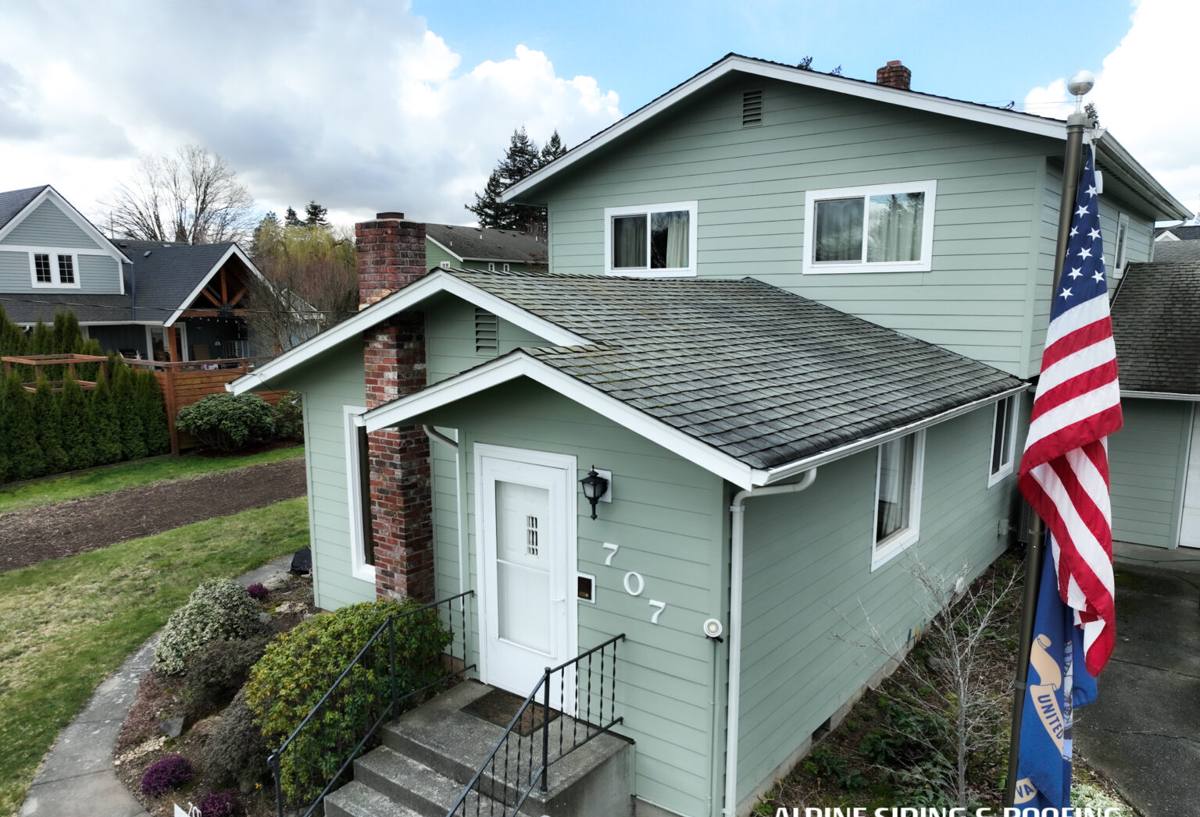
What Whatcom County Weather Does to a Roof
Three things drive most of the roof repair calls we get from the Nooksack area, and they compound each other over time.
Salt Air and Moisture-Driven Corrosion
Even away from the immediate shoreline, the marine air that moves through Whatcom County carries enough salt and humidity to accelerate corrosion on exposed metal — nail heads, flashing, gutter fasteners, and vent caps. A fastener that would last decades in a dry inland climate can start rusting and weeping stains within several years here. Once a fastener corrodes, it loses its grip, and that's often the actual root cause behind a "mystery" leak that seems to have no obvious source.
Driving Rain and Wind-Driven Water
Rain here doesn't always fall straight down. Wind-driven storms push water sideways and uphill under shingle edges, into laps that were never designed to handle water moving against the grain of the roof. This is why so many leaks trace back to flashing around chimneys, skylights, and roof-to-wall transitions rather than the field of the roof itself — those are the spots where water gets a fighting chance to find a gap.
A Long Moss Season
Shade, moisture, and mild temperatures are exactly what moss wants, and Whatcom County gives it most of the year to establish. Moss doesn't just look bad — it lifts shingle edges as it grows, holds water against the roof surface long after the rest of the neighborhood has dried out, and works its way into fastener lines and laps. A roof that's been carrying a moss colony for a season or two almost always has some amount of hidden moisture damage underneath it, even if there's no visible leak yet.
Signs a Nooksack-Area Roof Needs Repair
Most roof problems don't announce themselves with a dramatic leak. They show up as small, easy-to-dismiss signs first. If you're seeing any of these, it's worth having someone look before the next storm system rolls through:
- Dark streaking, green tinting, or visible moss patches, especially on north-facing or shaded slopes
- Granules collecting in gutters or at downspout outlets
- Soft or spongy spots underfoot on a walked roof, or sagging visible from the ground
- Water stains on interior ceilings, especially near chimneys, skylights, or where two roof planes meet
- Curling, cracked, or missing shingles after a windstorm
- Rust streaks below metal flashing or vent caps
- Daylight visible through the roof deck from inside an attic
- Higher-than-usual heating bills, which can point to a slow moisture problem affecting insulation
Any one of these on its own might be minor. Two or three together usually means water has been getting in longer than it looks like from the ground.
What a Correct Roof Repair Actually Involves
Finding the Real Source, Not Just the Symptom
Water travels before it shows up as a stain. A leak that appears over a bedroom might originate several feet away, at a flashing seam or a nail pop uphill from the visible damage. A correct repair starts with tracing the path, not patching the spot where the ceiling looks wet — patching the wrong spot means the same leak comes back after the next hard rain.
Flashing First
Given how much local leak activity traces back to flashing, we treat it as the priority on nearly every repair. That means checking the condition of the metal itself, the fasteners holding it, and the sealant or underlayment integration around it — not just eyeballing whether it's still in place.
Matching Materials and Technique
Repairs that use the wrong shingle profile, mismatched flashing metal, or the wrong underlayment for the surrounding roof create their own weak points. We match the existing roofing system as closely as possible so the repair integrates instead of becoming a new failure point down the line.
Addressing Moss and Debris, Not Just Painting Over It
If moss or organic debris contributed to the damage, removing it and treating the area is part of the repair — not an upsell. Leaving moss in place around a fresh repair just sets up the same problem to return.
Cleanup That Protects the Rest of the Property
Roof debris, old nails, and granules left in gutters or on the ground create their own problems. A repair isn't finished until the surrounding property — gutters, landscaping, driveway — is clear of debris from the work.
Repair or Replace? How We Help You Decide
Not every roof problem calls for a full replacement, and not every leak is fixable with a small patch. The honest answer depends on the roof's age, how widespread the damage is, and what's happening underneath the surface layer.
| Factor | Usually Points to Repair | Usually Points to Replacement |
|---|---|---|
| Roof age | Well within expected service life | At or past the material's typical lifespan |
| Damage location | Isolated to one area or component (flashing, one slope) | Spread across multiple slopes or systemic |
| Decking condition | Solid, dry decking beneath the damaged area | Soft, rotted, or repeatedly saturated decking |
| Moss/algae history | Recent or surface-level growth | Long-term growth with shingle lift across large areas |
| Prior repair history | First repair in this area | Same area repaired multiple times already |
We'll walk you through which column your roof falls into and why, with photos and a plain explanation — not a pressure pitch toward the more expensive option.
Our Roof Repair Process
- Inspection. We look at the roof from the ground and, where safe and useful, up close, tracing suspected leaks back to their actual source.
- Written estimate. You get a clear explanation of what's wrong, what we recommend, and what it costs — before any work starts.
- Repair. We replace damaged materials, correct flashing, and address any moss or debris contributing to the problem.
- Verification. We check the repair holds under normal conditions and confirm there's no remaining path for water to enter.
- Cleanup. Debris, old materials, and fasteners are cleared from the roof, gutters, and ground.
We keep the process straightforward on purpose. Homeowners in the Nooksack area are often dealing with a leak they've been worried about for a while by the time they call, and the last thing anyone needs is a confusing process on top of that.
Materials We Work With
Most homes in this part of Whatcom County are roofed in asphalt composition shingles, with a smaller number of metal and cedar roofs mixed in. Our repair approach adjusts to the material:
Asphalt Composition Shingles
The most common roofing material in the area, and generally the most straightforward to repair section-by-section when damage is localized. Matching shingle profile and color as closely as possible keeps the repair from standing out and keeps water shedding correctly at the seams.
Metal Roofing
Repairs on metal roofs are almost always about fastener condition and seam integrity rather than the panels themselves. Given how corrosion-prone standard fasteners are in this climate, we pay close attention to what's holding the panels down, not just their surface condition.
Cedar Shake
Cedar performs differently in a wet, mossy climate than asphalt does, and it needs more attentive maintenance to avoid the moisture retention that leads to rot. We're honest with homeowners about that maintenance burden when cedar repair or replacement comes up, so there are no surprises later.
Why Hire a Crew That Already Works in Nooksack
A roof repair is only as good as the person doing it understands the conditions it has to survive. A crew that mostly works drier inland regions or fair-weather climates isn't necessarily thinking about wind-driven rain angles, moss regrowth, or how fast salt-air corrosion works on fasteners here. That knowledge shows up in small decisions — which direction a flashing lap faces, how much overlap a repair gets, whether moss treatment is part of the job or an afterthought — that make the difference between a repair that lasts and one that fails again in a year or two.
We work roofs throughout Ferndale and the surrounding Whatcom County communities, including the Nooksack area, regularly enough that these conditions aren't a special case for us — they're just what a normal repair here has to account for.
Maintenance That Extends a Repair's Life
A good repair lasts longer with a little upkeep between visits. A few habits make a real difference in this climate:
- Keep gutters clear so water isn't backing up against roof edges
- Trim back overhanging branches that keep sections of roof shaded and damp
- Have moss treated before it spreads across a whole slope, not after
- Walk the roofline visually after major windstorms and note anything that looks different
- Schedule a roof check every year or two, even without an obvious problem
None of this replaces a professional inspection, but it does reduce how often you need one for an emergency instead of routine maintenance.
If you're dealing with a leak, storm damage, or a roof that's been collecting moss longer than it should, we're glad to take a look. Fill out the form below for a free, no-pressure estimate — we'll tell you honestly what your roof needs, whether that's a targeted repair or something more.