 Ferndale Exterior
 Sandy Point's Waterfront Exposure Is a Different Kind of Test for Siding
Sandy Point sits closer to open water than most of the neighborhoods we work in around Ferndale, and that proximity changes what a siding system has to withstand. Salt-laden air moves off Bellingham Bay and settles on exterior surfaces year-round, accelerating corrosion on exposed fasteners and trim, and breaking down finishes that weren't built to handle it. Add in the driving, wind-pushed rain that comes with waterfront exposure and the long, damp moss season that Whatcom County is known for, and you have three separate stressors working on a home's exterior at the same time, not just one.
Most siding products are engineered for an "average" climate. Sandy Point isn't average. A siding installation here needs to be planned around salt exposure, sustained moisture, and biological growth from day one, not patched after the fact when problems show up.
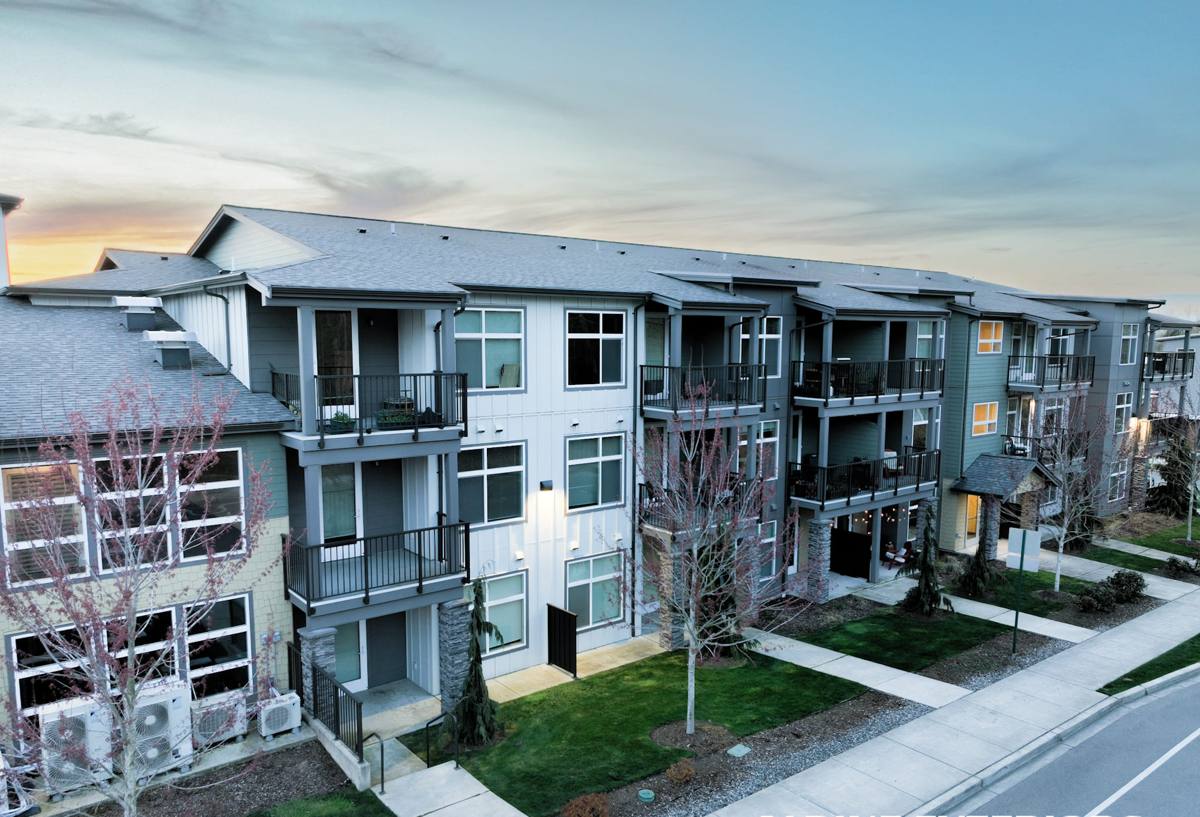
What Sandy Point Homes Actually Need From Their Siding
Resistance to Salt Air, Not Just Rain
Salt air is corrosive to metal fasteners, flashing, and trim in a way that plain rainwater isn't. Over years, that corrosion can telegraph through paint, stain siding, and eventually compromise the fastening itself. The material choice and the hardware used to install it both matter here — this isn't just about keeping water out, it's about keeping salt from slowly eating the details that hold the system together.
A Real Water-Management Plane, Not Just Caulk
Driving rain doesn't just wet the face of the siding — wind pushes it sideways and upward, testing every seam, lap, and penetration. Siding that relies on caulk and paint alone to stay watertight will eventually fail on a site like this. What actually works is a drainage plane behind the siding that lets any water that does get past the surface find its way back out, instead of sitting against the sheathing.
A Surface That Doesn't Feed Moss and Mildew
Whatcom County's moss season is long, and Sandy Point's moisture load makes it longer. Porous or wood-based siding surfaces give moss and mildew something to grip and feed on. A dense, factory-finished surface is far harder for organic growth to colonize, which means less scrubbing, less pressure washing, and less risk of trapped moisture under a growth layer that homeowners can't see.
Why We Install Only James Hardie Fiber Cement Here
We standardized on James Hardie fiber cement siding for every home we work on, and Sandy Point is exactly the kind of property that shows why. Hardie's HZ5 product line is engineered specifically for climates with heavy moisture exposure — it's rated for freeze-thaw cycling and sustained wet conditions, which describes this stretch of Whatcom County well. Fiber cement itself is dimensionally stable; it doesn't swell, cup, or rot the way wood-based products can when they stay damp for long stretches of the year.
The ColorPlus factory finish matters just as much as the substrate. It's baked on under controlled conditions rather than applied on site, which gives it better adhesion and UV resistance than field-applied paint — a real advantage against salt air and sun exposure working on the same surface. Hardie also backs the product with a strong transferable warranty, which carries real weight on a home this exposed, since it's the manufacturer standing behind performance in the conditions the product was actually built for.
We don't install vinyl, LP SmartSide, Cemplank, Allura, or unprimed wood siding, and on a site like Sandy Point that's not a marketing position — it's a practical one. Vinyl can warp and become brittle with UV and temperature swings near open water. Engineered wood products are more sensitive to sustained moisture than fiber cement. Other fiber cement brands may perform reasonably, but we've built our process, our crews' training, and our warranty backing around one system we trust completely, and we'd rather be excellent at installing one product correctly than average at installing several.
What Correct Installation Involves
Siding failures on waterfront homes are rarely about the siding material itself — they're almost always about installation details. The parts of the job that don't show up in a finished photo are the parts that determine whether the siding lasts 10 years or 40.
- Removal of existing siding down to the sheathing, so hidden rot or moisture damage can be found and repaired before anything new goes up
- A continuous weather-resistive barrier installed with proper shingle-lap sequencing, so water is always directed outward and down
- A drainage gap (rainscreen) behind the siding on exposures that need it, so any moisture that gets behind the cladding can escape instead of sitting against the wall
- Correct fastener type, spacing, and penetration depth — under-driven or over-driven fasteners are one of the most common causes of early siding problems
- Properly flashed windows, doors, and penetrations, since these transitions are where the large majority of leaks actually originate
- Manufacturer-specified clearances at the ground, roofline, and deck connections, so the siding isn't sitting in standing water or trapped moisture
- Caulking and sealant used only where the manufacturer calls for it — not as a substitute for correct flashing and lapping
Every one of these steps is more important on a home exposed to driving rain and salt air than it would be a few miles inland, because there's less margin for error before a shortcut turns into a callback.
Our Process for a Sandy Point Siding Project
1. On-Site Assessment
We walk the home in person before quoting anything. On waterfront properties we pay close attention to wind exposure by elevation, existing moisture damage, deck and roofline transitions, and how the site's microclimate compares to a typical Ferndale lot.
2. Removal and Substrate Inspection
Old siding comes off entirely. This is where we find the problems a homeowner usually can't see — soft sheathing, failed old flashing, or moisture that's been working behind the walls for years. Any repairs happen here, before new siding goes up over a compromised surface.
3. Water Management Installation
Weather-resistive barrier, flashing, and drainage components go in next, sequenced correctly at every seam and penetration. This layer is what actually protects the structure — the siding itself is largely a finish surface sitting in front of it.
4. James Hardie Installation to Manufacturer Spec
Fastening, clearances, and joint treatment follow James Hardie's published installation requirements, not shortcuts. This is also what keeps the manufacturer's warranty intact — installation errors are the most common reason a siding warranty ends up not covering a claim.
5. Final Walkthrough
We review the finished work with the homeowner, cover basic care, and make sure every trim and transition detail is sealed and finished correctly before we consider the job done.
What This Costs, and What Actually Drives the Number
Every Sandy Point home is different, so we don't quote a price without seeing the property, but the factors below are what typically move a project up or down in cost.
| Factor | Why It Affects Cost |
|---|---|
| Home size and wall complexity | More square footage and more corners, gables, and dormers mean more material and more labor-intensive detail work |
| Condition of existing sheathing | Hidden rot or moisture damage found during removal adds repair work before new siding can go on |
| Wind exposure of the site | Homes with more open exposure toward the water often need more robust flashing and drainage detailing |
| Trim and accent choices | Additional trim boards, batten details, or accent colors add material and installation time |
| Access and site conditions | Tight lots, decks, or landscaping close to the house can slow staging and installation |
We'll walk through all of this with you during the estimate so you understand exactly what you're paying for and why, rather than getting a single number with no explanation behind it.
Why Hiring a Crew That Already Works Sandy Point Matters
A contractor who mostly works inland projects can still do competent work, but they're often applying general practices to a site that doesn't behave like an average lot. Crews who regularly work Sandy Point and similar waterfront pockets of Whatcom County already know where wind-driven rain tends to concentrate on a given elevation, how much salt exposure to plan for at different distances from the water, and which older siding systems in this area tend to fail first and why. That familiarity shows up in fewer callbacks and a system that's actually built for the site it's on, not a generic installation dropped onto a demanding location.
Caring for Your Siding After Installation
James Hardie fiber cement is low-maintenance compared to wood or vinyl, but "low-maintenance" isn't "no-maintenance," especially in a moss-prone, salt-air environment. A little regular attention goes a long way toward protecting the investment.
- Rinse the exterior periodically to clear salt residue and organic buildup, especially on north-facing and shaded walls where moss takes hold fastest
- Keep gutters clear so water isn't overflowing directly onto siding and trim
- Trim back vegetation and landscaping that keeps siding shaded and damp
- Watch caulked joints and trim transitions for cracking and have them touched up before water gets behind them
- Address any impact damage promptly rather than letting it sit exposed
None of this is demanding work, but staying ahead of it is what lets a correctly installed Hardie system reach its full lifespan on a site like this.
Let's Look at Your Home
If you're planning a siding project on Sandy Point, we're glad to come take a look, walk the exterior with you, and give you a straightforward assessment of what your home needs. There's no pressure and no obligation — just a clear look at the work and an honest estimate using the form below.