 Ferndale Exterior
 Why Blaine's Waterfront Climate Is Hard on Siding
Blaine sits right on the water at the northern edge of Whatcom County, and that location comes with a specific set of siding problems most inland homes never deal with. Salt-laden air blows off the water almost year-round, driving rain comes in sideways during winter storms instead of falling straight down, and the long Pacific Northwest wet season keeps exterior surfaces damp for weeks at a time. Any siding material installed here has to handle all three at once, not just one or two. That combination is why we treat a Blaine siding job differently than a job twenty miles inland — the exposure is real, and the material and installation details that would be "good enough" elsewhere aren't good enough here.
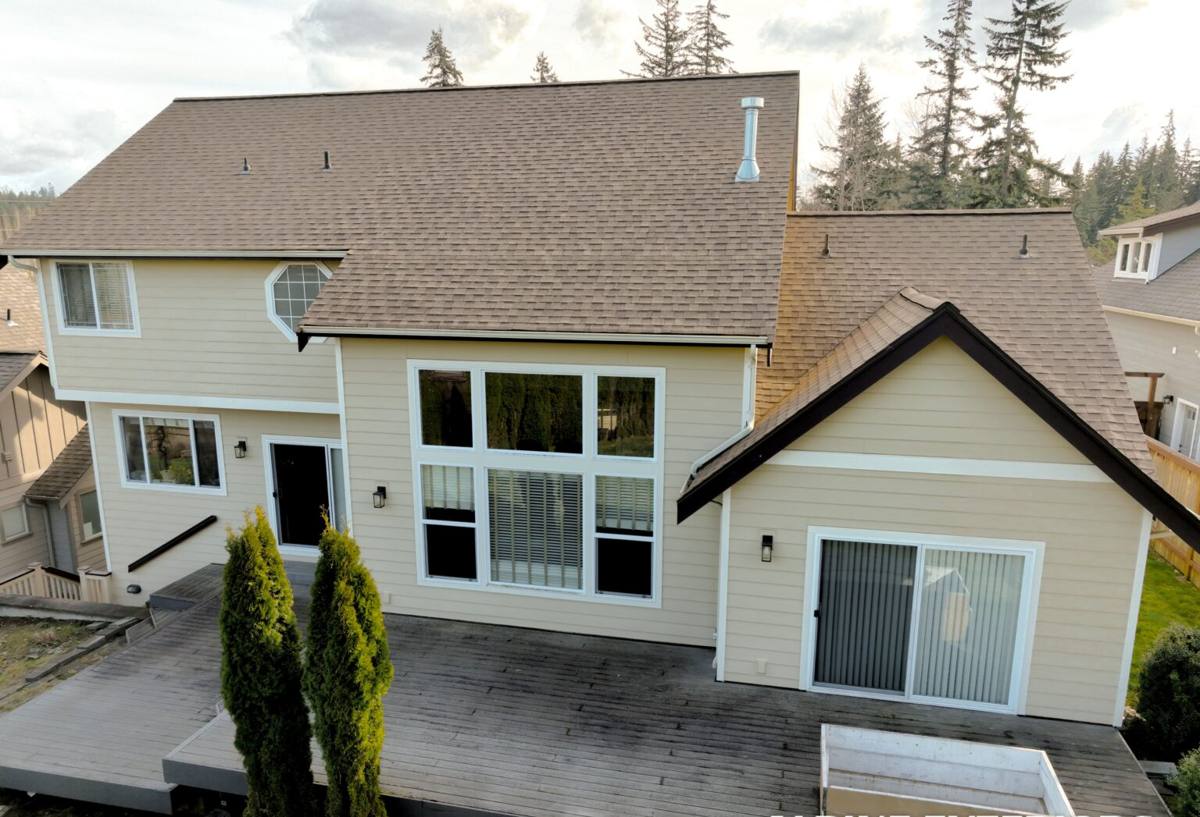
What Salt Air, Driving Rain, and Moss Season Actually Do to a House
Salt Air and Corrosion
Airborne salt doesn't just affect boats and dock hardware. It settles on siding, trim, and fasteners, and over years it accelerates corrosion in anything metal that isn't rated for coastal exposure — nail heads, flashing, and trim fasteners in particular. It also breaks down cheaper paint films faster than inland UV exposure alone would, which is why paint on some coastal homes chalks and fades noticeably sooner than the same product would a few miles inland.
Driving Rain and Wind-Driven Moisture
Wind off the water doesn't just add rainfall totals — it changes the direction water travels. Rain gets pushed sideways and upward under laps, around trim, and into any gap that a calmer climate might tolerate. That means flashing details, caulking joints, and lap overlaps have to be built for wind-driven water intrusion, not just gravity drainage. A siding job that would hold up fine on a sheltered inland lot can fail at a coastal one if those details are skipped.
Moss, Algae, and the Long Wet Season
Whatcom County's wet season runs long, and homes near the water tend to stay in shade and damp air even longer because of marine cloud cover. That's ideal growing conditions for moss and algae on any surface that holds moisture, including siding, trim, and the transitions between them. Left unaddressed, sustained moss growth traps water against the surface underneath it, which is a slow but real path to rot and finish failure over time.
Why We Install Only James Hardie Siding in This Climate
We made a deliberate decision not to install vinyl, LP SmartSide, primed wood, or other fiber cement brands. On a house facing salt air and sustained coastal moisture, the trade-offs of those materials — moisture-sensitive substrates, weaker factory finishes, or dimensional movement in temperature swings — show up faster than they would inland. James Hardie is the one product line we've found consistently holds up to this specific combination of exposures when it's installed correctly.
Engineered for Pacific Northwest Moisture
James Hardie's HZ5 product line is engineered specifically for climates like ours, with freeze-thaw cycling and sustained moisture exposure in mind. Fiber cement itself doesn't absorb and swell the way wood-based products can, and it doesn't provide the kind of surface that pests or fungal growth can easily take hold in.
ColorPlus Factory Finish
James Hardie's ColorPlus finish is baked on at the factory under controlled conditions, which gives it a more consistent, UV- and fade-resistant top coat than field-applied paint typically achieves. In a salt-air environment where field-applied finishes tend to break down faster, that factory-cured finish is a real advantage — it's also backed by its own finish warranty separate from the substrate warranty.
Non-Combustible and Dimensionally Stable
Fiber cement is non-combustible, which matters for wildfire-adjacent risk in the broader region, and it holds its dimensions through wet-dry and hot-cold cycles far better than wood or engineered wood siding. That stability is what keeps joints, laps, and caulking lines tight over the long term instead of opening up as the material expands and contracts.
What a Correct Installation Involves on a Coastal Home
The siding material is only half the equation. A large share of the moisture problems we see on coastal Whatcom County homes trace back to installation shortcuts, not the siding product itself. On a Blaine-area home, the details below aren't optional extras — they're what stands between the house and the wind-driven moisture we described above.
- A continuous, properly lapped weather-resistive barrier behind the siding, with all penetrations sealed
- A ventilated rainscreen gap between the barrier and the siding so any moisture that gets behind the cladding can drain and dry instead of sitting against the wall assembly
- Corrosion-resistant fasteners driven to Hardie's specified pattern and depth — not just "close enough"
- Correct flashing at every window, door, and roof-to-wall transition, lapped so water sheds outward at each layer
- Proper minimum clearance between the bottom of the siding and grade, decks, and roof lines to keep splash-back and standing moisture away from the cut edges
- Factory-primed or sealed cut edges on every field cut, since an unsealed cut edge is the fastest way for moisture to get into fiber cement
- Caulking only at the joints Hardie's install specs call for — over-caulking can trap moisture just as easily as under-caulking lets it in
Any one of these done wrong can undercut an otherwise correct siding job. This is also where we see the biggest gap between installers who understand coastal exposure and installers who are simply used to calmer, drier sites.
Our Process for a Blaine-Area Siding Project
We run the same disciplined process on every home, but a few steps get extra attention on coastal jobs specifically because of the exposure involved.
1. Site and Exposure Assessment
Before we quote anything, we look at which walls take the most direct wind and rain, where existing moss or algae growth is heaviest, and whether the current siding or sheathing shows signs of past moisture intrusion. That assessment shapes where we add extra flashing attention or rainscreen detailing.
2. Tear-Off and Substrate Check
Once the old siding comes off, we inspect the sheathing underneath for rot or water staining before anything new goes on. Covering a compromised substrate with new siding just hides the problem — we address what we find first.
3. Weather Barrier and Rainscreen Installation
This is the layer most homeowners never see and most inferior jobs skip corners on. We install a continuous weather-resistive barrier and a drainage gap behind the Hardie panels so the wall assembly can manage the wind-driven moisture common in this area.
4. James Hardie Installation to Spec
Siding, trim, and fasteners go in following James Hardie's published installation guidelines — fastener spacing, lap dimensions, clearances, and flashing integration included. This is also the manufacturer's requirement for the product warranty to remain valid.
5. Final Detailing and Walkthrough
We check caulking lines, touch up any cut edges, and walk the exterior with the homeowner before calling the job finished, pointing out anything worth knowing for long-term care.
James Hardie Compared to Other Siding Options in a Coastal Climate
| Factor | James Hardie Fiber Cement | Vinyl | LP SmartSide / Engineered Wood |
|---|---|---|---|
| Moisture sensitivity | Low — non-organic substrate | Low, but can warp/buckle with heat and wind stress | Higher — wood-based core is moisture-sensitive at cut edges and joints |
| Salt air resistance of finish | Factory ColorPlus finish resists UV and salt fading | Color is through-body but can chalk over time | Field or factory paint, more prone to early wear in salt air |
| Wind-driven rain performance | Strong when installed with proper flashing/rainscreen | Adequate, but seams and panel flex are a weak point | Dependent on sealed edges staying intact |
| Dimensional stability | High — minimal expansion/contraction | Expands/contracts noticeably with temperature | Moderate — more movement than fiber cement |
| Fire resistance | Non-combustible | Combustible | Combustible |
| Typical warranty structure | Long-term, transferable manufacturer warranty | Varies widely by manufacturer/grade | Typically shorter than fiber cement |
This isn't a knock on the other materials in every application — vinyl and engineered wood siding have their place. But for a home taking direct salt air and wind-driven rain, the trade-offs line up against them, which is the core reason our company standardized on James Hardie rather than offering multiple product lines.
Why Hiring a Crew That Already Works Blaine Matters
A siding crew that mostly works sheltered inland lots doesn't get regular, hands-on experience with wind-driven rain details, salt-air fastener selection, or the moss and algae patterns specific to a waterfront exposure. Those are things you learn by doing them repeatedly on homes in this exact kind of setting, not by reading a spec sheet once. A crew that already works Blaine and the surrounding Whatcom County coastline has already seen where the old siding on comparable homes failed first, and builds the new installation to avoid repeating it. That familiarity also tends to mean a smoother permitting and inspection process, since local requirements and typical wall assemblies for the area are already second nature.
Caring for James Hardie Siding in Blaine's Climate
James Hardie siding is low-maintenance compared to wood, but "low-maintenance" doesn't mean "no maintenance," especially in a salt-air, moss-prone environment. A little routine attention goes a long way toward protecting the investment.
- Rinse siding periodically with a garden hose to clear off accumulated salt residue, pollen, and grime — a soft wash, not a pressure washer aimed directly at joints
- Keep gutters clear so overflow doesn't run down the siding face and feed moss growth
- Trim back vegetation and tree cover that keeps any wall shaded and damp longer than necessary
- Address moss or algae growth early with a gentle cleaning approach rather than letting it build up over multiple seasons
- Inspect caulking at trim and penetrations every couple of years and have any cracked or separated joints resealed
- Watch for any soft spots, discoloration, or paint failure near ground level or roof transitions and have them looked at promptly
What Affects the Cost of a Blaine Siding Project
Every home is different, but a few factors consistently move the price on coastal siding projects: the condition of the existing wall assembly once old siding comes off, how much of the home's exposure faces prevailing wind and rain, the amount of trim and detail work involved, and whether the substrate needs repair before new siding can go on. We won't quote a number without seeing the house, but we're upfront about which of these factors are likely to apply once we've walked the property.
If you're weighing a siding replacement on a Blaine-area home, we're happy to take a look and walk you through what your specific exposure and existing siding condition call for. There's a free, no-pressure estimate form below — reach out and we'll get you scheduled.