 Ferndale Exterior
 Blaine sits at the northern edge of Whatcom County, right against the water, and that location shapes everything about how a roof ages and fails here. Wind off the water, salt-laden air, driving winter rain, and a moss season that barely lets up all put more stress on a roof than most manufacturers' warranties ever account for. When a storm damages a roof in Blaine, a correct repair has to account for that environment, not just patch the visible hole and call it done.
Why Blaine's Weather Is Harder on a Roof Than It Looks
Homes closer to the water take wind loads that inland parts of Whatcom County don't see as often, and that wind usually arrives with rain driven sideways rather than straight down. That combination finds weak points that a calm-weather inspection would never catch — a slightly lifted shingle tab, a hairline gap in flashing, a fastener that's started to back out. None of those show up as a leak until a storm pushes water sideways and up under the roofing material instead of letting it run off the way it's designed to.
Salt air adds a second, slower problem. It accelerates corrosion on exposed metal — fasteners, flashing, gutter hardware, vent stacks — well before the roofing material itself is worn out. A repair that ignores this and reuses corroded metal or standard-grade fasteners is a repair that fails again within a few years, often at the exact same spot.
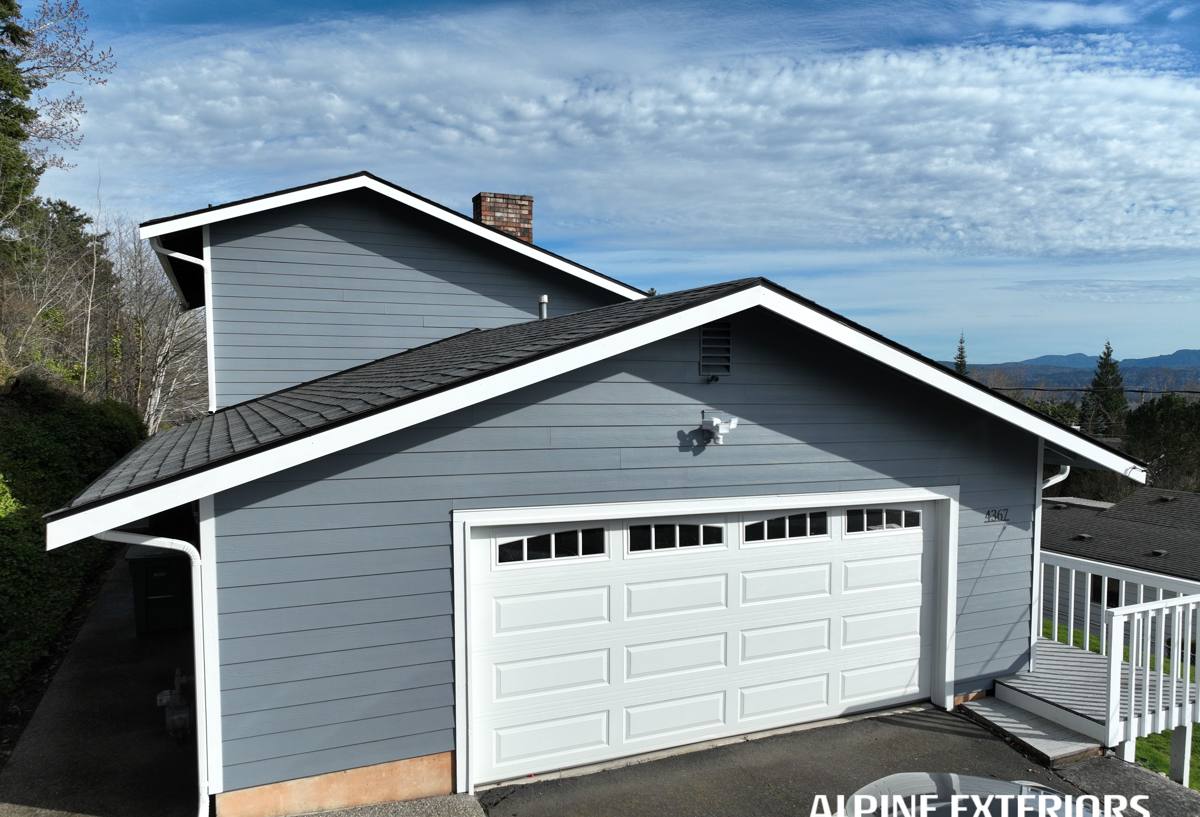
Signs of Storm Damage Worth Checking After Bad Weather
Not all storm damage is obvious from the ground. After any significant wind or rain event, it's worth walking the property and checking for the following before water finds its way inside:
- Shingles that are missing, cracked, curling, or visibly lifted at the edges
- Granules collecting in gutters or at downspout outlets — a sign of accelerated wear, not just age
- Dented or creased gutters, vents, or flashing from wind-blown debris
- Soft or spongy spots when walking the roof, which usually mean the deck underneath has taken on moisture
- Water stains, new drips, or musty smells appearing in the attic or around chimneys and skylights
- Ridge caps that look displaced, cracked, or loose along the roof's peak
- Standing water on any low-slope or flat sections more than a day or two after rain stops
- Branches, needles, or debris built up in valleys where water is supposed to channel off the roof
Any one of these is worth a call. Several together usually mean the storm did more damage than what's visible from the driveway.
What a Correct Storm Damage Repair Involves
Inspection Before Any Repair
A repair estimate that's written without someone actually getting on the roof isn't a real estimate — it's a guess. A proper inspection covers the roofing surface, the flashing around every penetration, the gutter system, and a look in the attic for moisture that hasn't shown up as a ceiling stain yet. Storm damage often extends beyond the spot where the leak appeared, and skipping this step is the most common reason repairs don't hold.
Emergency Mitigation First
If a storm has opened up the roof — a torn-off section, a fallen limb, exposed decking — the first job is stopping active water intrusion, usually with a tarp or temporary covering, before the permanent repair is scheduled. This isn't the fix itself; it's buying time so the interior of the home doesn't take on more damage while materials are sourced and the real repair is scheduled.
Matching Materials, Not Just Covering the Hole
A patch that doesn't match the surrounding roofing in material, weight, and color ages differently and often becomes the next failure point. For shingle roofs that means matching the shingle line as closely as possible; for metal roofing it means matching panel profile and fastener pattern. If an exact match isn't available because the roof is older, that gets discussed honestly upfront rather than discovered after the work is done.
Flashing, Fasteners, and Sealant — Where Repairs Actually Fail
Most roof leaks, storm-related or not, trace back to flashing and fasteners rather than the field of the roofing material itself. Near the water, this matters even more, because standard galvanized fasteners and sealants corrode or break down faster in salt air than they would ten or fifteen miles inland. A repair that reuses whatever was there before, instead of upgrading to hardware rated for coastal exposure, is a shortcut that shows up again in a few years.
Material and Fastener Choices That Matter This Close to the Water
Not every material choice needs to be the premium option, but a few decisions matter more in Blaine's environment than they would further inland. This is where we're honest about trade-offs rather than upselling everything available.
| Component | Standard Option | Better Fit Near Salt Air | Why It Matters |
|---|---|---|---|
| Roofing fasteners | Electro-galvanized | Hot-dip galvanized or stainless | Standard coating wears through faster with salt exposure, leading to rust streaks and loosened fasteners |
| Flashing metal | Mill-finish aluminum | Coated or heavier-gauge aluminum | Resists pitting and corrosion longer along roof-wall and chimney transitions |
| Shingle type | Standard 3-tab | Algae-resistant architectural shingle | Whatcom County's damp, shaded conditions favor moss and algae growth; resistant shingles slow it down |
| Gutter hardware | Standard steel screws | Stainless steel fasteners | Reduces streaking and early hardware failure on gutters exposed to wind-driven rain |
| Sealants | General-purpose roofing sealant | Marine-grade or high-movement sealant | Better flexibility and adhesion under temperature swings and salt exposure |
None of these upgrades are mandatory for every repair. On a roof that's otherwise in good shape and not directly exposed to wind off the water, standard materials may be perfectly reasonable. We'll tell you which situation applies to your roof rather than defaulting to the more expensive option automatically.
Storm Damage and Insurance Claims
Many storm repairs in this area involve an insurance claim, and the most useful thing a contractor can do is document damage clearly and honestly — photos of the damage, a written scope of the repair, and a clear distinction between storm damage and pre-existing wear. We won't tell a homeowner their roof has storm damage when what we're actually looking at is age-related deterioration; insurers can usually tell the difference too, and an inflated or inaccurate claim causes more problems than it solves. What we can do is give you a straight assessment and a detailed estimate you can hand to your adjuster or insurance company.
Our Process, Start to Finish
- You call or reach out describing what happened and what you're seeing — a leak, missing shingles, obvious storm damage.
- We schedule an on-site inspection, including the attic where access allows, not just a look from the ground.
- You get a written estimate that separates emergency mitigation (if needed) from the permanent repair, with material options explained.
- If the roof is actively leaking, we tarp or temporarily seal it first to stop further damage while the repair is scheduled.
- We complete the repair using materials matched to your existing roof, with hardware upgraded where the exposure calls for it.
- We walk the repair with you, clean up debris and old material, and check gutters and downspouts are clear before we leave.
Moss, Debris, and Roof Health After the Repair
A repair fixes the storm damage; it doesn't stop the conditions that made the roof vulnerable in the first place. Whatcom County's moss season runs long, and moss that's allowed to build up holds moisture against the roofing material, lifts shingle edges, and works its way under flashing over time — which is exactly how small storm damage becomes a bigger leak the next time driving rain hits it. Keeping gutters and valleys clear of needles and debris, and addressing moss growth before it gets established rather than after, does more for a roof's long-term health than any single repair can.
Why a Crew That Already Works in Blaine Matters
A contractor who works across Whatcom County regularly, rather than showing up once, has already seen how wind off the water behaves on different roof orientations, which fastener and flashing upgrades actually hold up in this air, and what permitting or code requirements apply locally. That familiarity shows up in small decisions — where to add extra fastening, which flashing details need reinforcing, how a roof in Blaine ages differently than one a few miles inland — that a crew working from a distance is more likely to miss. It also means a faster response when a regional storm hits and several homes need attention at once.
If a recent storm has left your roof with visible damage, or you're just not sure whether what you're seeing needs attention, we're happy to take a look. The form below gets you a free, no-pressure estimate — no obligation, just a straight assessment of what your roof actually needs.