 Ferndale Exterior
 Board & Batten Siding Built for Everson, Not Just Installed There
Board and batten siding has a clean, vertical-line look that suits farmhouse-style homes, craftsman remodels, and modern builds alike — it's one of the most requested siding profiles we see across Whatcom County. But a profile that looks right on a brochure and a profile that holds up on an Everson home through fall storms and a soggy spring are two different things. The vertical seams, the shadow lines from the battens, and the way the panels meet trim and grade all create more opportunities for water to find a way in than a standard horizontal lap job. Get those details right and board and batten is one of the most durable, attractive siding choices available. Get them wrong and it's one of the first styles to show problems.
This page is about that one job, done right, in this one area: what local homes actually need from board and batten siding, what correct installation looks like, and why we install it exclusively in James Hardie fiber cement rather than the wood, engineered wood, or vinyl versions of the same look.
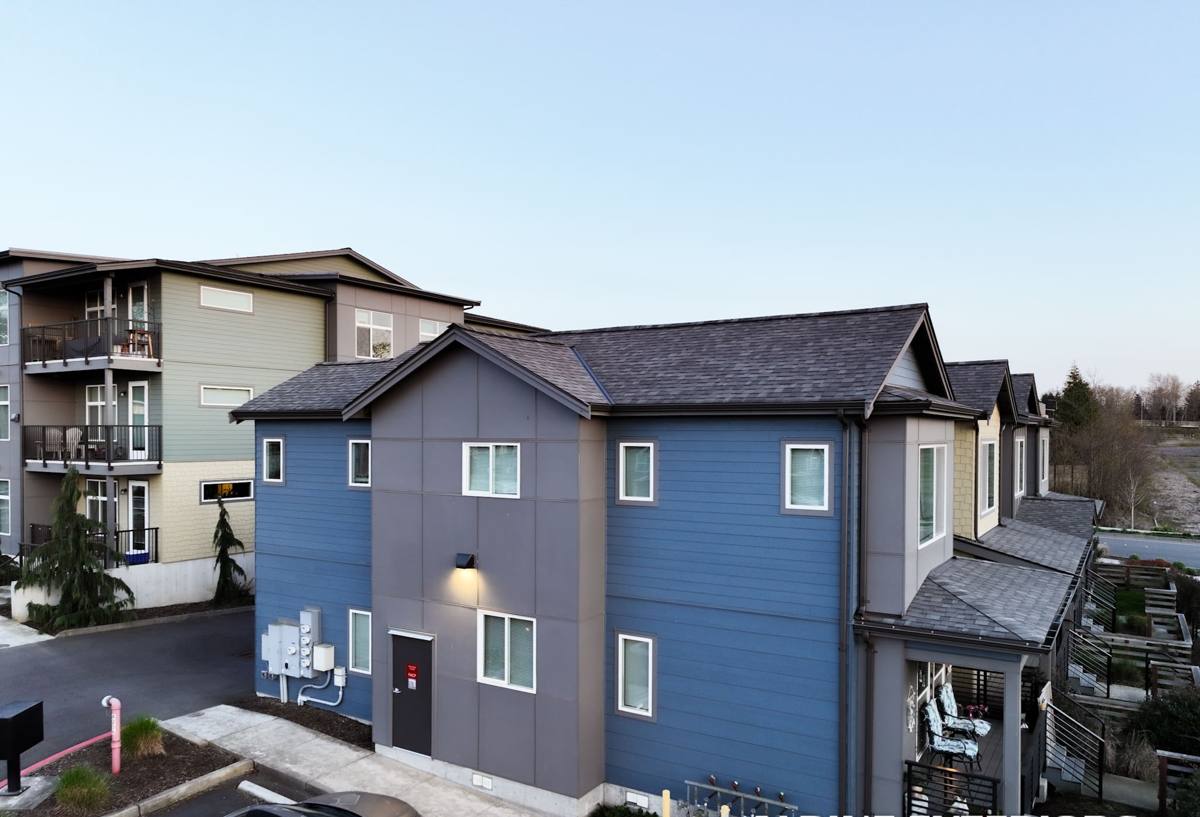
What the Local Climate Does to Vertical Siding Over Time
Everson sits within the broader Ferndale and Whatcom County weather pattern — salt-tinged marine air moving in off the water, long stretches of driving rain, and a moss season that runs far longer here than it does in drier parts of the country. None of that is unusual for homeowners in this region, but it matters a great deal for how a board and batten system is detailed, because vertical siding channels water differently than horizontal lap siding does.
Moss and Prolonged Surface Moisture
Shaded elevations, north-facing walls, and anything near mature trees or dense landscaping stay damp longer here than they would in a sunnier climate. Moss and algae don't just look bad — sitting moisture at the base of battens or in unsealed seams is what eventually leads to rot in wood-based products and staining or streaking on lower-quality finishes.
Wind-Driven Rain at Seams and Battens
Vertical board and batten has more linear seams per square foot than lap siding, and each one is a potential entry point during a hard, wind-driven rain event — which this area gets regularly in the fall and winter months. The battens themselves also create a horizontal ledge every few inches where wind can push water sideways instead of letting it run straight down. If the drainage plane behind the siding isn't installed correctly, that water has nowhere to go but into the wall assembly.
Why We Install Board & Batten Only in James Hardie Fiber Cement
Board and batten is available in several materials, and we've made a deliberate call about which one we put on homes in Everson and the rest of our service area.
Solid wood and primed spruce board and batten can look excellent when new, but wood is dimensional — it swells, shrinks, and cups with moisture cycling, which is exactly what this climate delivers on repeat. In a region with this much sustained dampness and moss growth, that movement shows up as cracked paint, open seams, and eventually rot at the battens and bottom edge. Vinyl board and batten avoids the rot problem but brings a different one: it's a thin material that has to fake the shadow lines and squared-off look of true board and batten, it expands and contracts noticeably with temperature swings, and it doesn't hold up to impact the way a fiber cement product does. Engineered wood products close some of those gaps but are still wood-fiber based at their core, which means correct installation and consistent maintenance become non-negotiable to avoid moisture-related failures at the edges.
James Hardie fiber cement is dimensionally stable, doesn't feed moss and mildew the way wood-based products can, and carries a factory-applied ColorPlus finish that's baked on rather than field-painted — a meaningful difference in a climate where damp weather already limits how many good painting days you get each year. It's also non-combustible, which matters more each year as regional wildfire smoke seasons stretch on and insurers pay closer attention to home exteriors. This is the entire reason we standardized on one product line instead of offering the cheaper alternatives: we'd rather install one thing correctly than several things with asterisks attached.
How Hardie Fiber Cement Compares for This Style
| Factor | James Hardie Fiber Cement | Vinyl Board & Batten | Wood / Engineered Wood |
|---|---|---|---|
| Moisture behavior | Dimensionally stable, does not swell or rot | Doesn't rot, but expands/contracts with temperature | Absorbs moisture; prone to swelling and rot without diligent upkeep |
| Moss & algae resistance | Factory finish resists staining better over time | Can stain and is hard to fully clean without damage | Feeds mildew and moss growth if surface stays damp |
| Fire performance | Non-combustible | Combustible | Combustible |
| Finish upkeep | Factory ColorPlus finish, long repaint interval | Color molded in, but fades and can't be easily refreshed | Needs regular repainting/staining to stay protected |
| Typical longevity when installed to spec | Decades, backed by a strong transferable warranty | Variable; brittle with age | Shorter without consistent, disciplined maintenance |
What Correct Board & Batten Installation Actually Involves
The material is only part of the equation. Most board and batten failures we get called out to inspect trace back to installation shortcuts, not the siding itself.
A Real Drainage Plane
Behind the panels, there needs to be a proper weather-resistive barrier and, ideally, a rainscreen gap that lets any water that gets past the surface drain out and air circulate to dry the wall assembly. Face-nailing panels directly against the sheathing with no drainage path is exactly the kind of shortcut that turns a minor seam leak into trapped moisture and rot.
Flashing at Every Transition
Windows, doors, roof-to-wall intersections, and the base of the wall all need proper flashing integrated with the weather barrier — not caulk used as a substitute for flashing. Caulk fails; flashing sheds water by design and keeps working long after the caulk has cracked.
Batten Spacing and Fastening
Battens need consistent, correct spacing over the field panel and fastening that follows the manufacturer's engineering — not just what looks even to the eye. Fasteners placed wrong, or panels hung without the correct gap at the bottom for drainage and ventilation, are common corner-cutting we see on homes that get "redone" within a few years of the original install.
Manufacturer-Specified Clearances
Board and batten siding needs proper clearance from grade, roofing, decks, and patios so the bottom edge isn't sitting in standing water or snowmelt runoff during the wetter months. This is a detail that's easy to skip during a remodel where existing grading or hardscape wasn't designed with siding clearance in mind — and it's one we always check on Everson properties before work starts.
Our Process for a Board & Batten Project in Everson
- On-site assessment — we look at wall orientation, shade patterns, existing moisture or moss issues, and grade clearance before quoting anything.
- Tear-off and sheathing check — old siding comes off and the sheathing underneath gets inspected for hidden rot or damage before anything new goes up.
- Weather barrier and drainage plane — a proper WRB and rainscreen system go on first, sized and installed for how this climate actually behaves.
- Flashing at all penetrations and transitions — windows, doors, roof lines, and the base of the wall.
- Hardie panel and batten install — installed to manufacturer fastening schedules and spacing, not eyeballed.
- Final walkthrough — trim, caulking lines, and clearances checked before we consider the job finished.
What to Watch For as an Everson Homeowner
Whether your board and batten siding is new or you're trying to figure out if existing siding needs attention, a few checks go a long way:
- Dark streaking or moss buildup concentrated at battens or panel bottoms, especially on shaded walls
- Visible gaps, cracking, or separation at seams and corner trim
- Soft spots or discoloration where siding meets a deck, patio, or grade
- Peeling or chalky paint on wood-based siding that used to look fine
- Caulk that's cracked or missing at window and door trim
- Any staining on interior walls near exterior corners, which can indicate moisture already working its way in
Why a Crew That Already Works in Everson Makes a Difference
Siding work in this part of Whatcom County isn't identical to siding work in a drier inland climate, and it isn't identical from one property to the next either — shade patterns, wall exposure, and local moisture patterns vary block to block. A crew that already does this work regularly in Everson and the surrounding Ferndale area knows what to check for before the tear-off even starts: where moss tends to collect, which orientations take the worst of the driving rain, and how to detail a rainscreen so it actually performs through a wet Whatcom County winter instead of just passing a quick visual inspection. That local familiarity, combined with installing one product system correctly rather than juggling several, is what keeps a board and batten job looking and performing the way it should for decades instead of years.
If you're weighing board and batten siding for a home in Everson, we're happy to take a look, walk the exterior with you, and give you a straightforward, no-pressure estimate — fill out the form below to get started.