 Ferndale Exterior
 Board & Batten Siding for Sudden Valley Homes
Sudden Valley homes carry a look that a lot of Whatcom County buyers ask for by name: wide, flat vertical panels separated by narrow battens, giving a home clean shadow lines and a modern-farmhouse or craftsman feel depending on the trim and color choices around it. It's a striking exterior style. It's also a style that punishes bad installation faster than plain lap siding does, because every vertical seam and every batten strip is a place water can get behind the cladding if it isn't detailed correctly. In a neighborhood that sees salt-laden air drifting in off the water, long stretches of driving rain, and a moss season that can run most of the year, that detail work is not optional — it's the whole job.
This page covers what board and batten siding actually needs to hold up in Sudden Valley's climate, what correct installation looks like, and why we install it in one material only: James Hardie fiber cement.
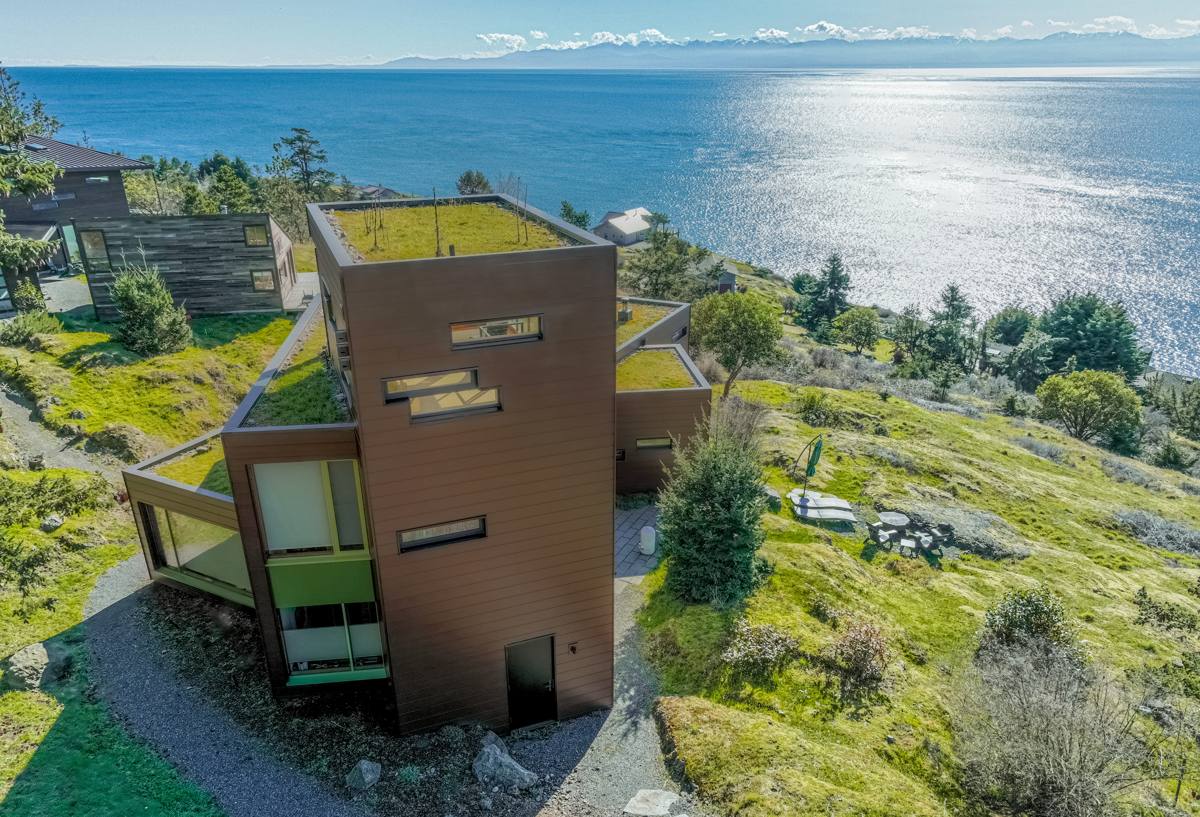
Why This Style Is Popular Here — and Why It's Riskier If Done Wrong
Board and batten reads as bold, simple, and architectural. It's a favorite for homes that want more visual texture than a flat lap wall but still want clean, straight lines rather than shakes or shingles. It also tends to show off well against the wooded, green backdrop common to Whatcom County properties.
The trade-off is in the physical construction. A board and batten wall has more vertical seams per square foot than horizontal lap siding, and every one of those seams is a potential water path if it's caulked instead of engineered to shed water. Add in the batten strips themselves, which are typically face-fastened over the wide panel joints — every batten fastener is a puncture point in the weather barrier unless it's placed and sealed correctly. In a dry climate, sloppy work might get away with it for years. In a marine climate with driving rain and long wet seasons, it won't.
What Sudden Valley's Climate Actually Does to Siding
- Salt air: corrodes exposed or lower-grade fasteners and accelerates finish breakdown on materials without a factory-cured, marine-durable coating.
- Driving rain: wind-driven rain doesn't just hit a wall, it can push water sideways and upward into seams, especially on gable ends and second-story walls that catch more wind.
- Long moss season: shaded, damp wall sections — common under mature trees — stay wet longer, and moss and algae hold moisture against whatever surface they colonize.
- Freeze-thaw swings: Whatcom County gets enough cold snaps that trapped moisture behind siding can freeze, expand, and work joints and fasteners loose over a few seasons.
None of this is unique to Sudden Valley, but it's a real, sustained combination — which is exactly why board and batten siding here needs to be built as a system, not just fastened up and caulked.
What a Correct Board & Batten Installation Involves
A board and batten wall that's going to perform for decades in this climate isn't just panel-plus-strip. It's a layered assembly, and skipping a layer is how homeowners end up with rot behind siding that still looks fine from the driveway.
The Layers That Actually Matter
- Weather-resistive barrier: a continuous, properly lapped house wrap or building paper behind everything, with no gaps at penetrations or corners.
- Rainscreen gap: a drainage space between the wrap and the panel so any moisture that does get past the face can drain and the wall can dry out, rather than staying trapped against the sheathing.
- Flashing at every horizontal transition: window and door heads, roof-to-wall intersections, and the base of the wall all need metal or self-adhered flashing, not just caulk.
- Correct fastening: panels and battens fastened per the manufacturer's pattern, into framing, with corrosion-resistant fasteners — critical in salt-influenced air.
- Sealed, not just caulked, joints: panel butt joints and trim intersections detailed so water sheds by design, with sealant as a backup, not the primary defense.
Any siding crew can staple panels to a wall. Getting the layers above right, in the right order, on every elevation of the house — including the shaded, moss-prone north and east walls that stay damp the longest — is what separates a board and batten job that lasts 30+ years from one that needs rework in five.
Why We Install Only James Hardie for This Style
Board and batten is available in several materials — engineered wood, primed wood, vinyl, and fiber cement among them — and we get asked regularly why we've standardized on one. The honest answer is that in a climate like this one, the material has to survive constant moisture cycling and salt exposure without the panel itself becoming the weak point, and fiber cement is the one that does that most consistently over the long run.
What James Hardie's Board & Batten System Offers
- Non-combustible fiber cement core — doesn't feed a fire and isn't a food source for the insects and organic decay that engineered wood products can be vulnerable to.
- Climate-engineered HZ formulation — Hardie's HZ5 product line is specifically formulated for wetter, harsher climates like ours, which matters more in a salt-and-rain environment than in a dry inland one.
- ColorPlus factory finish — a baked-on finish applied under controlled conditions, which holds up to UV and moisture better than field-applied paint and resists the fading and peeling that shows up first on shaded, damp walls.
- Dimensionally stable panels — fiber cement doesn't swell, cup, or shrink with moisture the way wood-based products can, which keeps butt joints and batten lines tight over time instead of opening gaps that let water in.
- Strong transferable warranty — backed by a manufacturer warranty that transfers to future owners, which matters for resale in a community like this one.
We don't install engineered wood siding, primed spruce, cedar, or vinyl board and batten systems. Each has real strengths — cedar looks good, vinyl is inexpensive, engineered wood is workable — but each also comes with a maintenance burden, moisture vulnerability, or long-term durability trade-off that we're not willing to put our name behind in this climate. Hardie's fiber cement system is the one we've found holds its line, its color, and its seal the longest with the least homeowner upkeep.
| Factor | James Hardie Fiber Cement | Wood-Based / Vinyl Alternatives |
|---|---|---|
| Moisture response | Dimensionally stable, resists swelling | Can swell, cup, or warp with sustained moisture |
| Salt-air durability | HZ5 formulation built for marine climates | Coatings and substrates vary widely in salt resistance |
| Fire behavior | Non-combustible core | Combustible (wood) or heat-sensitive (vinyl) |
| Finish longevity | Factory-baked ColorPlus finish | Field-applied paint or factory coatings that vary by brand |
| Warranty | Strong, transferable manufacturer warranty | Varies; often shorter or non-transferable |
Our Process for a Sudden Valley Board & Batten Job
Every board and batten project follows the same general sequence, adjusted for the specific house and lot.
1. On-Site Assessment
We walk the home, checking existing siding condition, trim details, window and door flashing, and any problem areas — shaded walls, low clearance near grade, or spots where trees keep a wall damp longer than the rest of the house.
2. Tear-Off and Sheathing Check
Old siding comes off and we inspect the sheathing underneath for hidden rot or moisture damage before anything new goes up — this is the point where problems from a previous installation usually surface.
3. Weather Barrier and Rainscreen Installation
A continuous, correctly lapped weather-resistive barrier goes on, followed by a rainscreen furring system to create the drainage gap behind the panels.
4. Flashing and Trim
All windows, doors, and horizontal transitions get flashed before panels go up around them — this step gets skipped more often than any other on rushed jobs, and it's the one that causes the most callbacks industry-wide.
5. Panel and Batten Installation
HardiePanel and matching trim battens go up per Hardie's fastening specifications, with attention to joint placement and correct fastener spacing and depth.
6. Final Walkthrough
We walk the finished job with the homeowner, checking sightlines, joints, and paint/caulk lines before calling it done.
Maintenance Checklist for Board & Batten Homes in This Area
- Rinse siding annually, especially shaded north- and east-facing walls where moss and algae take hold first.
- Trim back branches and shrubs that keep any wall section shaded and damp for extended periods.
- Inspect caulk lines at trim and window intersections yearly and re-seal if cracked or pulled away.
- Check for staining or discoloration at the base of walls near grade, which can signal splashback or drainage issues.
- After wind storms, look for any battens or panels that have come loose rather than waiting for the next inspection cycle.
Why Local Installation Experience Matters
Board and batten done right isn't a generic install — it's a system that has to be adapted to the specific exposure of each wall on each lot. A crew that already works residential exteriors in the Ferndale and greater Whatcom County area has already worked through the practical realities of building here: how much rainscreen clearance actually holds up against sustained driving rain, which fastener and flashing details actually resist salt-air corrosion over years rather than months, and which wall orientations need extra attention because they never fully dry out between storms. That's not something you get from a spec sheet — it's something you get from doing the work, on homes like this one, in this climate, repeatedly.
If you're considering board and batten siding for a home in Sudden Valley, we're happy to walk the property, look at your specific exposure and trim details, and put together a straightforward, no-pressure estimate — just fill out the form below.