 Ferndale Exterior
 Cordata's Climate Is Harder on Siding Than It Looks
Cordata sits in that stretch of Whatcom County where Pacific storm systems roll in off the water, drop their rain sideways for days at a time, and leave everything green and damp long after the sky clears. It's a beautiful place to live, but it is not an easy place to keep a house dry. Homes here deal with three things that wear siding out faster than almost anywhere else in the state: salt-laden air pulling moisture off the water, driving rain that hits walls at an angle instead of falling straight down, and a moss and algae season that can run most of the year on shaded or north-facing walls.
Most siding products are engineered for an "average" climate. Whatcom County is not average. If a siding system isn't built and installed to handle sustained moisture exposure, the failures show up as swelling, delamination, paint failure, soft trim, and rot — usually starting at the joints, corners, and butt seams where water finds a way in. That's the starting point for how we think about every siding job in Cordata: the product and the installation both have to be matched to what this climate actually does to a house, not what a spec sheet assumes.
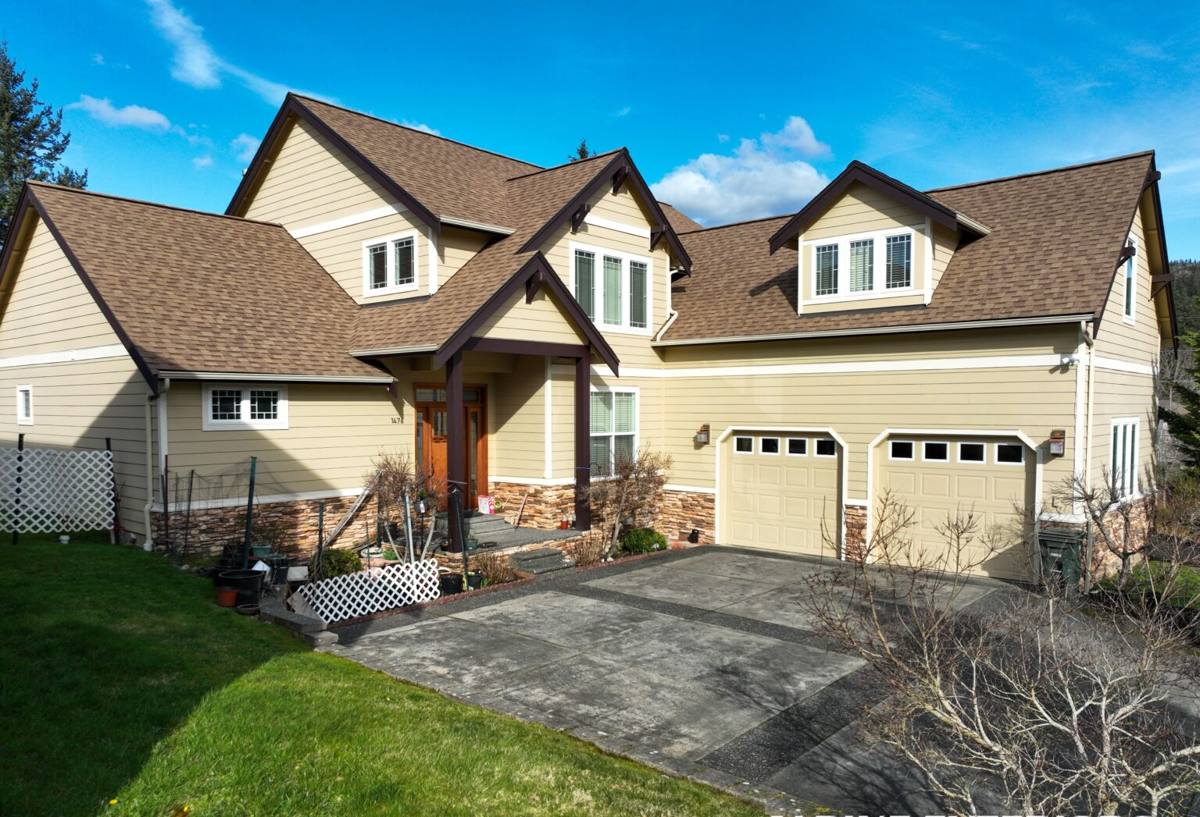
Why We Install James Hardie Here — And Nothing Else
We are a James Hardie–only siding contractor. We don't install vinyl, LP SmartSide, Cemplank, Allura, primed spruce, or cedar, and that's a deliberate standard, not a lack of options. Fiber cement from James Hardie is non-combustible, dimensionally stable, and factory-finished with ColorPlus technology, which bakes the color onto the board under controlled conditions rather than relying on a field-applied coat that has to cure correctly on a rainy job site. In a region where you might get three usable painting days in a stretch during install season, that matters.
James Hardie also builds climate-specific product lines. For the Pacific Northwest, that means HZ5-engineered siding, formulated to resist moisture-related damage in wet, moderate climates rather than the hot, humid Southern climates a generic fiber cement board might be tuned for. It's the same reasoning that leads us to skip cedar (beautiful, but a real maintenance commitment in a wet climate) and vinyl (cheap and low-maintenance, but it moves with temperature swings and can crack or bow over time, and it isn't fire-rated the way fiber cement is). We'd rather install one product correctly and stand behind it than offer five options and hope one of them holds up.
How the Main Siding Options Compare in This Climate
| Factor | James Hardie Fiber Cement | Vinyl | Cedar | LP SmartSide |
|---|---|---|---|---|
| Moisture resistance | Engineered for wet climates (HZ5) | Won't rot, but can trap moisture behind it | Absorbs water; needs sealing/staining upkeep | Wood-strand core; vulnerable if the finish fails |
| Moss/algae resistance | Factory finish resists staining better than field paint | Can stain; hard to fully clean without damage | Prone to moss and mildew without regular treatment | Prone to surface wear over time |
| Fire rating | Non-combustible | Combustible | Combustible | Combustible (engineered wood) |
| Finish durability | Factory-baked ColorPlus, long repaint intervals | Color molded in, can fade/chalk | Needs recurring stain or paint | Field or factory finish, seam sealing critical |
| Warranty | Long, transferable manufacturer warranty | Varies widely by manufacturer | No manufacturer warranty (natural material) | Manufacturer warranty, moisture-sensitive claims common |
What a Correct James Hardie Install Actually Requires
Buying the right siding is only half the equation. James Hardie itself will tell you that most siding failures aren't product failures — they're installation failures. In a climate like Cordata's, the installation details are what stand between a wall that lasts decades and one that's rotting behind the siding in five years while it still looks fine from the curb.
Water Management Comes Before the Siding
- A continuous weather-resistant barrier (WRB) installed over sound sheathing, lapped correctly top-over-bottom so water sheds outward instead of behind the plane
- Properly flashed windows, doors, and any wall penetrations — the majority of hidden rot starts at these transitions, not on open wall sections
- Kick-out flashing at every roof-to-wall intersection, directing runoff away from the wall instead of letting it wick down behind the siding
- Correct starter strip and a rainscreen gap where conditions call for it, so any moisture that does get behind the cladding can drain and dry
Installing the Panels to Manufacturer Spec
James Hardie publishes exact fastening patterns, minimum clearances from grade, roofing, and decks, and butt-joint treatment — and those specs exist because they're what the warranty is actually built on. Correct nailing depth matters (over-driven nails crack the board's water-resistant layer), gaps at joints need to be treated with the specified method rather than just caulked and hoped for, and clearance from soil, walkways, and roof lines has to be maintained so the bottom edge of the siding isn't sitting in standing moisture. Skipping any of these steps might not show up as a problem on install day — it shows up two or three wet seasons later.
Our Process for a Cordata Siding Project
We run the same disciplined process on every home, adjusted for the specific exposure of that lot — a shaded, moss-prone north wall gets treated differently than a wall that takes the brunt of driving rain off open ground.
- On-site assessment. We look at existing siding condition, sheathing condition where accessible, moisture staining, roof-wall intersections, and sun/shade exposure on each elevation before we ever talk product or price.
- Tear-off and inspection. Old siding comes off and we inspect the sheathing underneath. Soft or water-damaged sheathing gets addressed before anything new goes up — covering a rot problem is not an option we offer.
- Water barrier and flashing. WRB, window/door flashing, and kick-out flashing get installed to current best-practice detailing, not just "how it was done before."
- Hardie installation. Panels or planks installed to manufacturer fastening and clearance specs, in the HZ5 product line built for this climate.
- Trim, caulking, and finish detailing. Corners, trim boards, and joints finished per spec so the factory finish and warranty stay intact.
- Final walkthrough. We walk the whole exterior with you, flag anything that needs a closer look, and register the manufacturer warranty in your name.
Why Hiring a Crew That Already Works This Area Matters
A siding crew that's worked around Ferndale and the wider Whatcom County corridor understands things a crew from a drier region has to learn the hard way: which elevations on a given lot layout tend to stay damp longest, how much clearance actually matters when a wall backs up to landscaping that never fully dries out, and how to sequence a job around a weather window that can close fast. It also means we're not guessing at local permitting requirements or scheduling around the reality that you might get a five-day rain-free stretch and need to move fast within it.
Manufacturer training matters here too. James Hardie's installation guidelines are specific, and a crew that installs Hardie exclusively — rather than switching between three or four different siding systems — builds real repetition with those details instead of relying on general carpentry habits that don't account for fiber cement's particular requirements.
Maintenance and Longevity Once It's Installed
One of the practical advantages of correctly installed James Hardie in a wet, mossy climate is how little ongoing maintenance it asks for compared to wood siding. It doesn't need to be restained, it resists the swelling and cupping that wood siding can develop, and the factory finish holds up to washing without the same risk of stripping a field-applied coat. That said, no siding is maintenance-free:
- Rinse siding periodically to keep moss and algae from building up on shaded elevations
- Keep gutters clear so overflow doesn't run down the wall face repeatedly
- Trim back vegetation that's holding moisture against the siding or blocking airflow
- Have caulked joints and trim intersections checked every few years — caulk is the one component that ages faster than the siding itself
What Drives Cost on a Project Like This
Every home is different, but the same handful of factors move the price on most Cordata siding jobs:
| Cost Factor | Why It Matters |
|---|---|
| Sheathing condition | Rot repair found during tear-off adds scope that can't be known until the old siding is off |
| Home size and wall complexity | More corners, dormers, and trim details mean more labor per square foot |
| Siding profile chosen | Lap, shingle-style, and panel systems differ in material and labor cost |
| Trim and accessory scope | Fascia, soffit, and trim replacement alongside siding changes total project cost |
| Access and site conditions | Tight lots, landscaping, and multi-story walls affect staging and labor time |
We don't quote a job until we've actually looked at the house — broad ranges without an on-site assessment tend to be more misleading than helpful.
A Simple Checklist Before You Hire Anyone
- Are they a manufacturer-recognized James Hardie installer, or do they split time across multiple siding brands?
- Will they inspect and repair sheathing before installing, not just install over it?
- Do they detail flashing at windows, doors, and roof-wall intersections as a standard part of the job, not an upsell?
- Can they explain why they'd use HZ5 product in this climate specifically?
- Do they register the manufacturer warranty in your name at project completion?
If you're planning a siding project in Cordata or anywhere else in the Ferndale area, we're happy to take a look at your home and walk you through what it actually needs — no pressure, no obligation. Reach out for a free estimate using the form below.