 Ferndale Exterior
 Roof Repair Built for Cordata's Weather, Not Just Its Roofs
Cordata sits close enough to the water and low enough in Whatcom County's weather pattern that its roofs take a different kind of beating than roofs twenty miles inland. Homes here deal with salt-laden air moving off the Strait, long stretches of driving rain that comes in sideways more often than straight down, and a moss season that can run eight or nine months out of the year if a roof isn't maintained. A roof repair here isn't just patching a leak — it's addressing whatever let the water in during a climate that doesn't give a roof much of a break.
This page is specifically about repairing roofs in Cordata and the immediately surrounding area. We're not going to talk you into a full replacement if a repair will genuinely hold, and we're not going to sell a patch job on a roof that's past the point where patching makes sense. Both calls depend on what's actually happening under the shingles, and that's where a proper inspection matters more than a quick look from the ground.
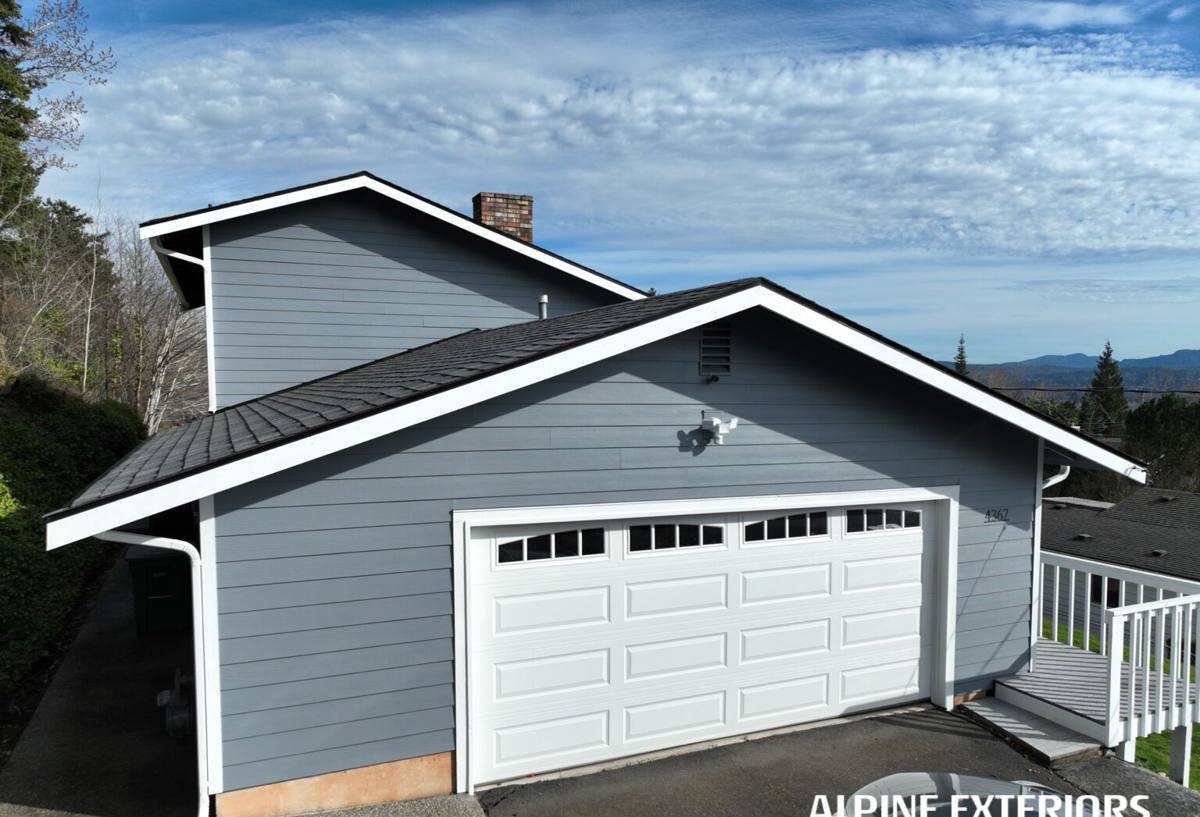
What Salt Air, Driving Rain, and Moss Season Do to a Roof
Salt Air
Salt-laden moisture doesn't just sit on a roof surface — it works into metal flashing, fasteners, and vents over time. Galvanized nails and untreated metal components corrode faster near the water than they would further inland, and once flashing starts to pit or thin out, it stops doing its job at seams, valleys, and penetrations long before the shingles around it look worn.
Driving Rain
Wind-driven rain doesn't behave like a normal downpour. It gets pushed sideways and upward under shingle edges, around chimney flashing, and into any gap that a straight-down rain would never reach. A roof that would be watertight in calmer weather can still leak during a Whatcom County storm if the underlayment, flashing laps, or shingle seal strips aren't installed with that wind direction in mind.
Moss Season
Moss doesn't just look bad — it holds moisture against the roofing material for months at a time, works its way under shingle tabs, and lifts edges as it grows. On north-facing slopes and anywhere shaded by trees, moss can establish itself in a single wet season and start causing granule loss and shingle lift within a year or two if it's never treated or removed.
Signs a Cordata Roof Needs Repair, Not Just a Look
- Water stains on interior ceilings or upper walls, especially after a windy rainstorm rather than a calm one
- Moss or dark streaking concentrated on north-facing or shaded slopes
- Shingles that look curled, lifted, or cupped at the edges
- Granules collecting in gutters or at downspout outlets
- Rusted, bent, or visibly separated flashing around chimneys, skylights, or vent pipes
- Soft or spongy spots when walking the roof (a sign of underlayment or decking already saturated)
- Daylight visible through the attic roof deck at seams or nail holes
Any one of these on its own might not mean much. Two or three together, especially after a storm with strong wind, usually means water has found a way past the surface layer and it's worth having someone look before the next system moves through.
What a Correct Roof Repair Actually Involves
A repair that actually holds up in this climate involves more than swapping a few shingles. It starts with figuring out how water is getting in, not just where it's showing up inside — those two points are often several feet apart because water travels along decking and rafters before it drips through a ceiling.
Diagnosis
We trace the leak path from the interior stain or attic evidence back to the actual entry point on the roof surface — usually a flashing failure, a worn seal strip, a cracked pipe boot, or wind-lifted shingles rather than a simple worn-out patch of material.
The Fix Itself
Depending on what we find, that might mean replacing a section of flashing, resealing and re-nailing lifted shingles, swapping a deteriorated pipe boot, or removing and replacing a section of decking if water has been sitting there long enough to soften the wood. We match materials to what's already on the roof where possible, and we don't cut corners on underlayment or flashing details just because it's "only a repair" — those details are exactly what fail first in driving rain.
Moss and Debris Treatment
If moss contributed to the problem, the repair includes removing it properly — not just scraping the surface, which can tear granules loose and shorten the life of the shingles further — along with a look at whether zinc or copper strips or a treatment plan makes sense to slow regrowth on that slope.
Common Repair Types and What They Involve
| Repair Type | Typical Cause | What's Involved |
|---|---|---|
| Flashing repair or replacement | Corrosion from salt air, or original flashing undersized for wind-driven rain | Remove old flashing, inspect decking underneath, install new flashing with proper laps and sealant |
| Shingle replacement (localized) | Wind lift, granule loss, or moss damage to a section | Remove damaged shingles, check underlayment condition, install matching replacement shingles |
| Pipe boot / vent seal replacement | Rubber boot cracking from age and UV exposure | Remove old boot, replace with new gasket, reseal around penetration |
| Decking repair | Prolonged moisture intrusion softening plywood or sheathing | Cut out and replace affected decking section, then reroof that area |
| Moss removal and treatment | Shaded, north-facing, or poorly ventilated roof sections | Manual removal, treatment application, and gutter/debris clearing |
Costs for these vary a lot depending on roof pitch, accessibility, how much decking (if any) needs replacing, and how well the existing roofing material matches what's available today. A single flashing or pipe boot repair is usually a modest job measured in a few hundred dollars; anything involving decking replacement or a larger moss-damaged section climbs from there. We'll give you an honest number after we've actually looked at the roof, not before.
Repair or Replace? How We Make That Call
We don't default to "replace it" just because a roof has a problem. The honest questions we ask on a Cordata roof are:
- How much of the roof's remaining service life is left based on material age and condition, not just the calendar
- Is the damage localized (a repair) or spread across multiple slopes (a sign the whole roof is aging out)
- Has water reached the decking in more than one isolated spot
- Would a repair now realistically buy several more years, or just delay a replacement that's coming regardless
If a roof is fundamentally sound and the problem is isolated, we repair it and tell you honestly. If the roof has multiple failure points or the decking is compromised in several areas, we'll say that too, along with why a patch there would just be a short-term fix on a roof that needs more.
Our Process for a Cordata Roof Repair
- Inspection: We walk the roof and the attic when accessible, looking for both the visible symptom and the actual water path behind it.
- Written estimate: You get a clear explanation of what we found, what we recommend, and why — with a real price, not a range that changes once work starts.
- Repair: We do the work with materials that match your roof and installation details built for wind-driven rain, not just calm-weather conditions.
- Cleanup and check: We clear debris, moss, and old material off the roof and out of the gutters before we call it done.
Why It Matters That We Work Cordata Regularly
A crew that works this part of Whatcom County routinely knows which slope orientations tend to hold moss longest, how far wind-driven rain typically pushes under a shingle edge here versus a calmer inland location, and which flashing and fastener choices actually hold up against salt air over years rather than looking fine for the first season. That's not a marketing point — it's the difference between a repair that's still holding in three years and one that opens back up at the first hard autumn storm.
We also know that access matters on real jobs — tree cover, roof pitch, and how close a property sits to shared driveways or fence lines all affect how a repair gets staged and cleaned up, and that's easier to plan for when it's not the first roof we've worked on in the area.
Maintaining a Repair Once It's Done
A repair holds longer with a little upkeep. Keep gutters clear so water isn't backing up under the roof edge, keep overhanging branches trimmed back so shaded areas dry out between rains, and have moss treated before it re-establishes rather than after it's visibly spread across a slope again. None of that is expensive or complicated, but skipping it is the most common reason a good repair needs revisiting sooner than it should.
If you're dealing with a leak, moss buildup, or damaged flashing on a Cordata-area roof, we're happy to come take a look and give you a straight answer — repair, monitor, or replace — along with a real, no-pressure estimate. Fill out the form below and we'll get you scheduled.