 Ferndale Exterior
 Siding Repair in Cordata: A Different Climate Problem Than Most Repair Guides Assume
Most siding repair advice online is written for a generic house in a generic climate. Cordata isn't that. Homes in this part of Whatcom County sit under a Pacific Northwest maritime pattern that stacks three stresses on top of each other: salt-laced marine air drifting in off the Salish Sea, long stretches of driving, wind-pushed rain rather than gentle vertical rainfall, and a moss and algae season that can run most of the year in shaded or north-facing exposures. Any one of these is manageable. All three, year after year, is what actually breaks siding down in this area.
That's the lens we bring to every repair call in Cordata. We're not patching siding in the abstract — we're patching siding that has been sitting in this specific climate, usually for a decade or more, and that context changes what "correct repair" actually means.
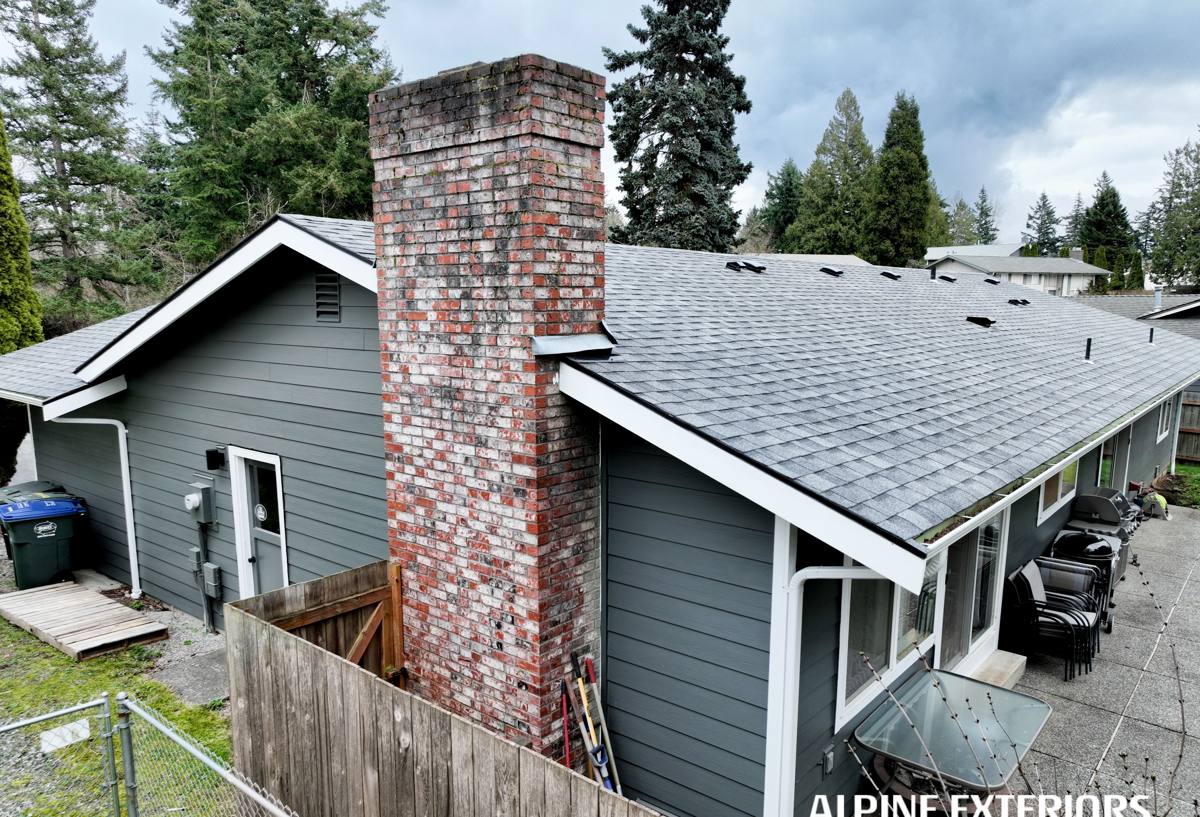
Why Siding Fails Faster Here Than the Manufacturer's Brochure Suggests
Siding manufacturers test products in controlled conditions. Real Whatcom County walls deal with a longer, wetter version of those conditions:
- Salt air accelerates corrosion of fasteners, flashing, and any exposed metal trim, and it breaks down lower-grade paint and caulk faster than inland climates.
- Driving rain — rain pushed sideways by wind rather than falling straight down — gets forced into seams, butt joints, and gaps that would stay dry in a calmer climate. This is the single biggest reason siding fails from behind rather than from the surface.
- A long moss season keeps siding surfaces damp for extended periods, especially on shaded walls, under eaves, and near landscaping that blocks airflow. Constant moisture at the surface eventually finds its way to any weak point in the cladding.
Individually, none of these is dramatic. Combined, they mean siding damage in Cordata tends to be further along than it looks from the ground — which is exactly why a proper inspection matters more here than in drier regions.
Signs Your Siding Needs Repair, Not Just Paint
Homeowners often call us wanting a repaint, and sometimes that's genuinely all that's needed. But paint can hide problems it can't fix. Before repainting or patching, check for these signs — if you see more than one or two, the damage is likely past a surface-level fix:
- Soft, spongy, or spongy-feeling spots when you press on the siding
- Visible buckling, warping, or bowing in individual boards or panels
- Peeling, bubbling, or cracking paint that keeps returning after repainting
- Dark staining or streaking, especially below seams or trim
- Persistent moss, algae, or black mildew growth that returns quickly after cleaning
- Gaps opening up at butt joints, corners, or where siding meets trim and windows
- Nail pops or fasteners backing out of the surface
- Cracked, split, or delaminating boards
- A musty smell or visible staining on the interior wall opposite a damaged exterior section
Any sign of softness or spongy material is the one we take most seriously — it almost always means moisture has already reached the sheathing or framing behind the siding, not just the siding itself.
What a Correct Siding Repair Actually Involves
A repair that only replaces what's visible from the street is a repair that will fail again. Done correctly, siding repair in a climate like ours is really a moisture investigation with a cosmetic fix at the end of it, not the other way around.
Step one: find out why the siding failed, not just where
Damaged siding is usually a symptom. Before replacing a single board, we want to know what let water in — a failed caulk joint, a flashing gap, a butt joint that was never sealed correctly, or a grading/drainage issue pushing moisture up from below. Replacing the visible board without addressing the entry point just buys a few more years before the same spot fails again.
Step two: open it up and check what's underneath
Once damaged sections are removed, we inspect the house wrap or weather-resistive barrier and the sheathing behind it. In our climate, it's common to find that damage has spread further behind the wall than it appeared from outside. Any soft or rotted sheathing gets replaced — patching new siding over compromised sheathing is not a repair, it's a delay.
Step three: rebuild the water management, not just the surface
Correct flashing at butt joints, corners, and window and door trim is what actually keeps driving rain out — the siding itself is the second line of defense, not the first. We rebuild this properly rather than relying on caulk alone, since caulk is a maintenance item, not a permanent seal.
Step four: match the repair to the existing material
Matching board profile, exposure width, and finish matters for both appearance and function — mismatched materials can trap moisture differently than the surrounding wall and create a new weak point right at the repair line.
Repair or Replace? How We Help You Decide
Not every damaged wall needs full replacement, and not every "small patch" request should end in one either. The honest answer depends on a few factors we walk through on site:
| Factor | Leans toward repair | Leans toward replacement |
|---|---|---|
| Extent of visible damage | Isolated to one or two areas | Spread across multiple walls or elevations |
| Sheathing condition | Sound and dry once opened up | Soft, rotted, or damaged in multiple spots |
| Siding material | Fiber cement or sound original material still available to match | Discontinued profile, or original material has known moisture issues |
| Age of siding | Under roughly 10-15 years, otherwise well maintained | Near or past expected service life |
| Cause of damage | One identifiable, fixable entry point | Multiple or systemic entry points across the wall system |
We'll always tell you honestly which side of that table your house falls on. A targeted repair is often the right call, and we'd rather do the smaller job correctly than upsell a full re-side that isn't needed yet.
Our Process for Cordata Repair Calls
- On-site assessment. We look at the damaged area, probe for hidden soft spots nearby, and check for a likely moisture source — not just the spot you called about.
- Straight explanation. You get a clear picture of what we found, whether it's a repair or a replacement conversation, and why — no pressure toward the bigger job if it isn't warranted.
- Scoped proposal. A written scope covering what gets removed, what gets inspected underneath, and what materials and finish will be used to match the rest of the house.
- Correct execution. Sheathing and moisture barrier repairs where needed, proper flashing, correctly matched material, and a finish that blends with the existing siding.
- Cleanup and walkthrough. We show you exactly what was done and why, including anything we found that's worth keeping an eye on down the road.
What Drives Cost on a Siding Repair
Every repair is different, but the same handful of factors determine most of the cost. This is meant to help you understand what you're paying for, not to promise a specific number:
| Cost factor | Why it matters |
|---|---|
| Size of the damaged area | More boards or panels to remove and replace means more material and labor |
| Sheathing damage discovered underneath | Rotted sheathing has to be cut out and replaced before new siding goes on — this is the most common reason a repair costs more than expected |
| Accessibility | Second-story walls, tight side yards, or areas requiring staging or lift access take more time |
| Material matching | Matching an existing profile and finish, or repainting an entire elevation for a seamless look, adds to the scope |
| Root cause repair | Fixing the flashing or moisture entry point that caused the damage, not just replacing boards |
What We Repair With
When a damaged section can be matched and repaired in place, we do that regardless of what the original siding is. But when damage points to a bigger, ongoing moisture problem — or when a wall's original material is the reason it's failing in the first place — we'll say so directly, and our recommendation for that replacement work is James Hardie fiber cement siding. It's the one product we install, because it holds up to the exact conditions that cause the failures we see most often here: it doesn't absorb water and swell the way wood-based products can, it's non-combustible, and its factory-applied ColorPlus finish is built to hold color and resist the fading and peeling that salt air and constant moisture cause faster than most homeowners expect. We won't push a full re-side on a house that just needs a targeted repair — but when replacement is the honest answer, this is why it's the material we stand behind.
Why a Local Cordata-Area Crew Is Worth Choosing
Siding repair is one of those jobs where local experience genuinely changes the outcome. A crew that works this part of Whatcom County regularly already knows which siding ages and products tend to show up in this area, what moisture patterns look like on north- and west-facing walls here, and how driving rain off the Salish Sea typically finds its way into a wall system. That's knowledge you can't get from a general contractor passing through once.
It also means faster response when you notice a problem, no long-distance travel surcharge built into your estimate, and a crew that's still around and reachable if you have a question a year later. For a repair job — where getting the diagnosis right matters as much as the labor — that local familiarity is worth more than it sounds.
Ready for a Straight Answer on Your Siding?
If you're seeing soft spots, staining, moss buildup, or open seams on your Cordata-area home, it's worth having someone look before it spreads further behind the wall. We offer a free, no-pressure estimate — we'll tell you honestly whether you're looking at a simple repair or something bigger, and why. Use the form below to get started.