 Ferndale Exterior
 Why Cordata Siding Wears Out Faster Than Homeowners Expect
Cordata sits inland from the coastline, but it doesn't escape the marine climate that defines Whatcom County. Salt-tinged air still moves through the area on prevailing winds, driving rain comes in sideways during fall and winter storm systems, and the tree cover and shade that make Cordata's streets pleasant in July also mean a long, damp moss season that can run from October through May. Siding here isn't decorative — it's the one layer standing between your framing and a climate that stays wet for months at a stretch.
Most siding failures we see in this area aren't dramatic. They're slow: a corner that stays damp two days longer than the rest of the wall, a seam that lets a trickle of water behind the cladding every heavy rain, a north-facing section that never fully dries and grows a film of moss that holds moisture against the material. Over a few seasons, that slow moisture cycle does more damage than any single storm.
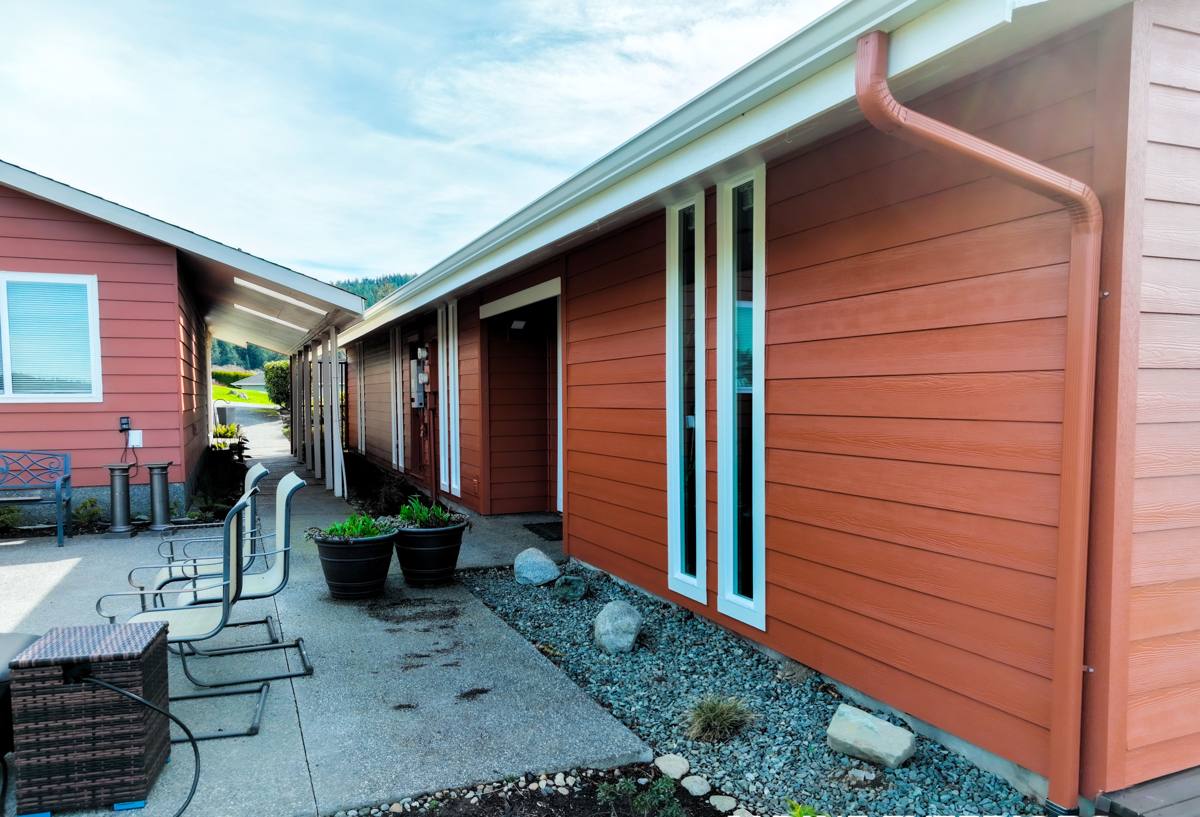
Signs Your Cordata Home's Siding Is Already Failing
Because the damage is gradual, homeowners often live with early warning signs for a year or two before calling anyone. Watch for these:
- Soft or spongy spots when you press on the siding, especially near the bottom courses and around window trim
- Paint that's peeling, bubbling, or needing repainting far more often than it used to
- Visible moss or dark green-black streaking that comes back within weeks of cleaning
- Warping, cupping, or boards that no longer sit flat against the wall
- Gaps opening up at seams, corners, or where siding meets trim and flashing
- A musty smell in an adjacent room, or a rise in interior humidity you can't otherwise explain
- Visible rot, delamination, or crumbling at cut ends and butt joints
Any one of these on its own might just mean a repair. Several at once, especially combined with a home's age or a history of wood or engineered wood siding, usually points to a replacement conversation rather than another round of caulk and paint.
What a Correct Siding Replacement Actually Involves
Siding replacement done right is not just swapping old boards for new ones. The visible cladding is the last step, not the whole job. A correct tear-off and reinstall covers:
Full Tear-Off and Inspection
Removing the old siding down to the sheathing lets us actually see what's been happening behind it — soft sheathing, rusted fasteners, compromised framing, or a moisture barrier that's torn, sagging, or missing in places. You can't diagnose this from the outside, and papering over hidden rot with new siding is one of the most common corners cut in this trade.
Repair Before Re-Cover
Any damaged sheathing or framing gets replaced before anything new goes back up. This is the step that gets skipped when a job is priced too low to be real — and it's the one that determines whether the new siding lasts fifteen years or fifty.
A New, Continuous Water-Resistive Barrier
A correctly lapped weather-resistive barrier, installed shingle-style so every seam sheds water downward, is what actually keeps driving rain out of the wall assembly. Siding sheds most of the water, but the barrier behind it is what handles what gets through — and in a climate with this much wind-driven rain, that barrier isn't optional.
Proper Flashing at Every Penetration
Windows, doors, hose bibs, vents, and any other penetration through the wall need flashing detailed to shed water outward and downward, not just caulked and hoped for. Caulk is maintenance; flashing is the actual defense.
Correct Fastening and Clearances
Manufacturer-specified fastener spacing, correct nailing patterns, and proper clearance from grade, roofing, and other surfaces all matter for how the finished wall performs in wet weather over decades, not just how it looks the day it's installed.
Why We Install Only James Hardie Fiber Cement
We don't offer vinyl, LP SmartSide, cedar, or primed spruce, and that's a deliberate standard, not a lack of options. Each of those products has real strengths, but each also has a trade-off that shows up specifically in a climate like Whatcom County's:
- Vinyl is inexpensive and low-maintenance, but it expands and contracts significantly with temperature swings, can crack in impact, and doesn't hold up structurally the way a rigid cladding does over a multi-decade lifespan in a wet climate.
- LP SmartSide and other engineered wood products perform well when detailing is perfect, but they're wood-based, and wood-based products are inherently more sensitive to sustained moisture exposure than fiber cement — a real concern in an area with this many wet months per year.
- Cedar and primed spruce look excellent and age beautifully when maintained relentlessly, but they demand a maintenance schedule — recoating, sealing, moisture monitoring — that most homeowners underestimate until the first sections start to fail.
James Hardie fiber cement is non-combustible, dimensionally stable across our temperature range, and doesn't feed moss and mildew growth the way wood-based products can. It's engineered specifically for climate zones like ours through Hardie's HZ10 product line, factory-finished with ColorPlus so the color coat is baked on rather than field-applied, and backed by a strong transferable warranty when installed to Hardie's specifications. That combination is why it's the only product we put on homes — not because everything else is bad, but because we've standardized on the one system that gives Cordata homeowners the best odds against this specific climate.
Comparing Siding Materials in a Marine Climate
| Material | Moisture Behavior | Maintenance Burden | Typical Lifespan |
|---|---|---|---|
| Vinyl | Doesn't absorb moisture, but can warp or crack with temperature swings | Low, but repairs are patch-and-replace, hard to color-match | 20–30 years |
| LP SmartSide / engineered wood | Performs well if perfectly detailed; sensitive to sustained wet exposure | Moderate — caulk and paint maintenance on a regular cycle | 20–30 years with diligent upkeep |
| Cedar / primed spruce | Absorbs and releases moisture; needs to breathe and dry fully between rains | High — recoating, sealing, and moss control on an ongoing basis | Highly variable, maintenance-dependent |
| James Hardie fiber cement | Dimensionally stable; resists moisture-driven warping and rot | Low — occasional wash, repaint on a much longer cycle | 30+ years with correct installation |
Cost per square foot installed varies by product line, home size, and site conditions, so we'd rather give you a real number after walking your home than a broad figure that doesn't reflect your actual project. What the table above does show is where each material's real trade-off lands — and why, in a climate that stays wet for so much of the year, moisture behavior and maintenance burden matter more here than they would in a drier region.
Our Siding Replacement Process, Start to Finish
- On-site assessment — we walk the full exterior, check problem areas you've flagged, and look for the ones you haven't noticed yet.
- Written scope and estimate — what's being torn off, what sheathing or framing repair is anticipated, which Hardie product and profile we recommend, and why.
- Tear-off and hidden-damage inspection — full removal down to the sheathing, with photos of anything we find so you can see it, not just hear about it.
- Repair — any compromised sheathing, framing, or trim gets replaced before the new assembly goes up.
- Water-resistive barrier and flashing — installed continuous, lapped correctly, flashed at every penetration.
- Hardie installation — to manufacturer fastening and clearance specifications, not shortcuts.
- Final walkthrough — we go over the finished job with you before we call it done.
Why a Crew That Already Works Cordata Matters
Siding installation quality depends heavily on details that are easy to get wrong if you're not used to building for this specific climate: how much overlap a weather barrier needs when driving rain comes from a particular direction, how aggressively moss and algae take hold on shaded elevations, and how local permitting and inspection processes work for exterior re-clad projects in Whatcom County and the City of Ferndale. A crew that works this area regularly isn't guessing at any of that — it's routine.
There's also a practical advantage to local proximity: scheduling around our actual weather windows, being reachable quickly if something needs a follow-up look after a storm, and having a crew whose reputation in the community depends on the job holding up long after the invoice is paid.
Living With Hardie Siding After Installation
One of the real advantages of switching to fiber cement is how little upkeep it asks for afterward. There's no annual sealing schedule, no recoating cycle, and no wood to feed rot or insects. Maintenance is mostly common sense:
- Rinse the exterior once or twice a year to keep moss and organic buildup from taking hold, especially on shaded or north-facing walls
- Keep gutters clear so overflow doesn't run down the siding face repeatedly
- Trim back vegetation that keeps a section of wall shaded and damp longer than the rest of the house
- Check caulking at trim and penetrations periodically, since caulk — not the siding itself — is usually the first thing to age out
That's a fundamentally lighter maintenance load than wood-based siding requires, and it's a big part of why the total cost of ownership over 20–30 years often favors Hardie even when the upfront installed cost is higher than vinyl or engineered wood.
Get a Straight Answer on Your Siding
If your Cordata home is showing any of the warning signs above, or you're just trying to plan ahead before the next wet season, we're glad to take a look and give you an honest read on what your siding actually needs — repair, partial replacement, or a full re-clad. There's no pressure and no sales script. Use the form below to request a free estimate, and we'll walk the house with you and tell you what we'd actually do if it were ours.