 Ferndale Exterior
 Board & Batten Siding for Custer's Open, Wind-Exposed Land
Custer sits in the flat agricultural country north of Ferndale, close enough to the Salish Sea to catch salt-laden air on winter storms even though most properties here aren't waterfront. Add driving, wind-pushed rain that has almost nothing on a lot of these open parcels to slow it down before it hits a wall, and a moss season that runs long on shaded and north-facing elevations, and you get a climate that tests every seam in a siding system harder than the same product would be tested twenty miles inland. Board and batten, with its vertical boards and narrow strips covering each seam, has more seams per square foot than almost any other siding profile. On the kind of farmhouse and rural-style homes common around Custer, that's often exactly the look homeowners want — but it also means installation details matter more here than they would on a calmer, more sheltered site.
We install James Hardie fiber cement board and batten exclusively in Custer, detailed around what this specific stretch of Whatcom County does to an exterior wall over decades, not around a generic installation guide written for a milder market.
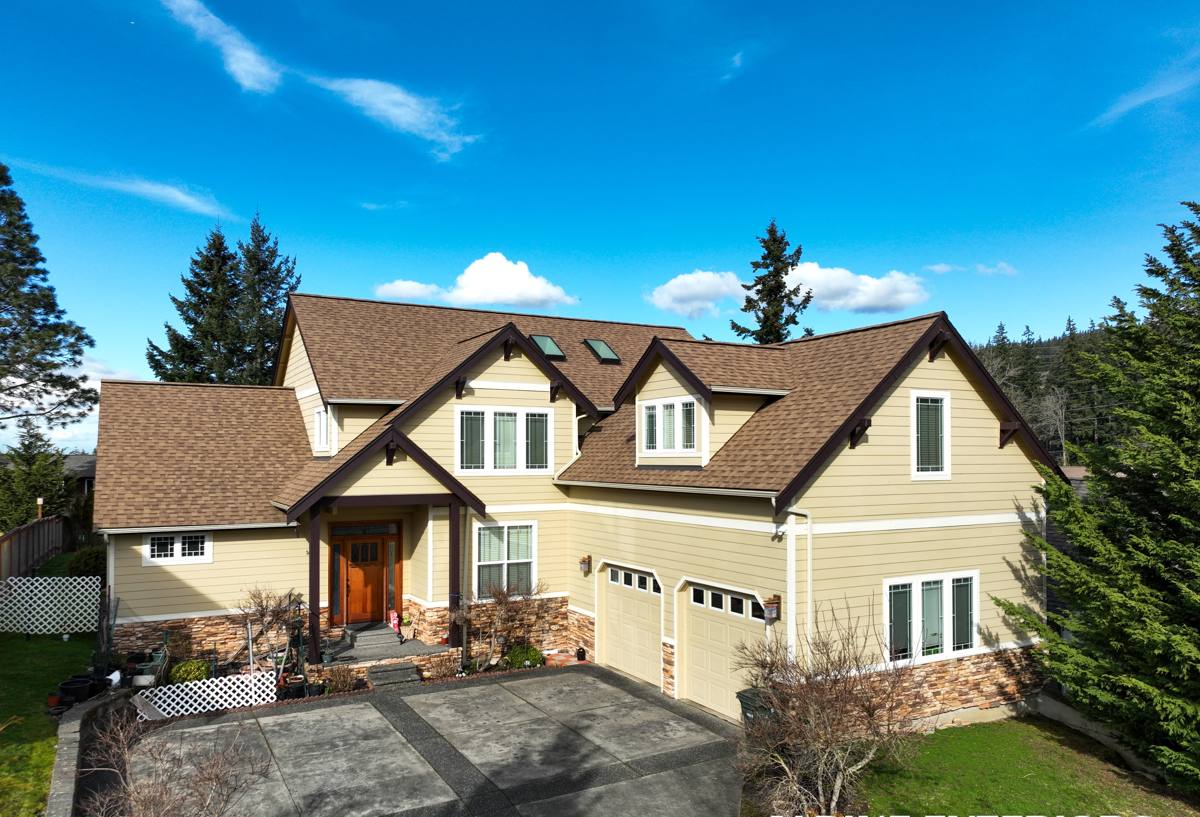
Why Board & Batten Fits Custer Homes
The Look
A lot of Custer properties sit on larger, more open lots than you'd typically find closer to Ferndale or Bellingham proper — working farms, converted farmhouses, and newer construction built to match that character. Board and batten's vertical lines read as classic farmhouse or modern agricultural, and it's a natural fit for that kind of property in a way some suburban siding profiles simply aren't.
The Practical Trade-Off
The same vertical run that makes the look work also means more fastening points and more vertical seams than a horizontal lap profile carries. On an open, wind-exposed lot where rain rarely falls straight down, every one of those seams is a spot wind-driven water can test. That doesn't rule board and batten out for Custer — it just means the wall assembly behind it has to be built for the exposure, not just for the appearance on install day.
What Custer's Exposure Does to a Board & Batten Wall
Wind With Nothing to Break It
Flat, open farmland doesn't offer the same wind protection a hillside lot or a tree-lined street provides elsewhere in the county. Rain gets pushed sideways into board and batten's vertical seams with more force here than it would on a more sheltered site, which raises the bar on how tight and how well-flashed those seams need to be.
Salt-Laden Air Carried Inland
Custer isn't waterfront, but it sits close enough to the Salish Sea that winter storms carry salt-laden air well inland across this flat terrain. That steady, low-grade salt exposure is hard on exposed fasteners and factory finishes over the years, even on a property that never sees a drop of direct spray.
Moss on Shaded, Slow-Drying Elevations
North-facing walls and anything shaded by a barn, outbuilding, or windbreak planting hold moisture longer, and that's exactly the setup moss and mildew need. A batten set too tight against its board, with no room for the wall to breathe, traps that moisture right at the seam instead of letting it dry out.
What a Correct Board & Batten Installation Involves
Board and batten looks simple from the curb — boards, then battens over the joints — but a correct installation has several things happening behind that surface:
- Weather-resistive barrier installed and correctly lapped before any siding goes up
- A drainage gap or rainscreen behind the siding so moisture that gets past the surface can dry out instead of sitting against the sheathing
- Corrosion-resistant fasteners at the spacing James Hardie's installation instructions call for, not just enough to hold the board in place
- Battens set with proper clearance rather than caulked tight, so wind-driven rain that reaches the seam can drain and dry instead of pooling
- Flashing correctly lapped at windows, doors, corners, and the base of the wall, where board and batten's vertical run meets a horizontal surface
- Cut edges primed before installation to protect the factory finish anywhere a field cut exposes raw material
Skip any one of these on an exposed Custer lot and the wall can still look fine through the first year or two. The seam staining, soft spots, and paint failure that follow a shortcut install take a few wet seasons to show up — which is exactly why they're easy to miss until the homeowner is the one dealing with the repair bill.
Why We Install Only James Hardie Board & Batten Here
Board and batten's higher seam count makes material choice matter more than it would on a simpler profile, which is part of why we don't offer LP SmartSide, vinyl, Cemplank, Allura, primed spruce, or cedar for this application. Those are legitimate products, and other contractors install them competently. On a profile with this many joints, in a climate this consistently exposed to wind, salt air, and moss, we settled on one fiber cement system we trust completely rather than offering alternatives that quietly shift long-term maintenance risk onto the homeowner.
James Hardie's fiber cement core doesn't expand and contract with moisture the way wood-based boards and battens do, which matters most exactly where board and batten has the most seams. The factory-applied ColorPlus finish also means the only field-painting our crews do is priming cut edges — the wall itself isn't depending on site-applied paint to hold up against this exposure for the next twenty years.
Comparing Board & Batten Materials for This Exposure
| Material | Behavior at Batten Seams | Maintenance in Custer's Exposure | Realistic Lifespan |
|---|---|---|---|
| James Hardie fiber cement | Dimensionally stable; doesn't swell or cup at the joint | Low; factory finish resists moss and salt-driven fading | 30+ years with proper install |
| LP SmartSide (engineered wood) | More sensitive to moisture at cut edges and fastener holes | Moderate; edge sealing needs regular attention | 15-25 years, exposure-dependent |
| Vinyl | Can warp or gap at battens under wind load and temperature swings | Low, but hidden moisture problems are hard to spot | 20-30 years, variable |
| Cedar | Absorbs moisture at every seam without a consistent sealing schedule | High; recurring staining or repainting | 15-25 years with steady upkeep |
Every material in that table can be installed reasonably well by somebody. The question we asked ourselves was which one could take Custer's specific combination of open-land wind exposure, inland salt air, and a long moss season without asking the homeowner to sign up for a maintenance schedule just to keep it looking and performing the way it did on install day.
Our Process for a Custer Board & Batten Project
- Walkthrough and assessment — we look at which walls take the direct wind and rain exposure, which are shaded and slow to dry, and whether the existing wall assembly has moisture issues that need addressing before new siding goes up.
- Detailing the plan — batten spacing, corner treatment, and how the siding meets windows, trim, and rooflines get worked out before crews start cutting material, not improvised in the field on install day.
- Installation to spec — every fastener, gap, and flashing lap follows James Hardie's published requirements for this climate zone, which keeps the manufacturer's warranty intact and the wall performing for decades.
- Final walkthrough — we cover what maintenance actually looks like, which is very little with this material, so you know what a healthy wall looks like if you ever want to check it yourself down the road.
Maintenance Checklist for Custer's Salt Air and Moss Season
James Hardie board and batten needs far less upkeep than wood-based alternatives, but a few simple habits keep it performing at its best in this exposure:
- Rinse accumulated salt film and airborne grime off the siding once or twice a year, especially after winter storm season
- Keep gutters and downspouts clear so runoff doesn't sheet down the wall face instead of draining away from it
- Check shaded and north-facing elevations for early moss or algae growth and address it before it spreads
- Inspect caulking and trim joints at windows and corners annually for cracking or gaps
- Touch up any nicks or scrapes in the factory finish promptly so bare material isn't left exposed to the weather
- Keep vegetation and windbreak plantings trimmed back from the wall so air can circulate and the wall can dry
Why Hire a Crew That Already Works in Custer
Board and batten rewards experience with this specific exposure in a way a lot of siding profiles don't, because the failure points here are slow and subtle rather than obvious. A crew that's installed this profile across Custer's open farmland through multiple wet seasons already knows which elevations need extra attention because of wind exposure rather than shade, how much batten clearance actually holds up against driving rain with nothing around to break it, and where a rainscreen gap is essential versus optional. That judgment doesn't show up on a spec sheet, and it's the difference between a board and batten wall that still looks and performs the same in fifteen years and one that's showing seam staining by year five.
If you're considering board and batten siding for a home in Custer, we're glad to walk the property, talk through what your specific walls need given their exposure and orientation, and put together a straightforward, no-pressure estimate. There's a form below — reach out and we'll set up a time to take a look.