 Ferndale Exterior
 Energy-Efficient Windows in Custer: A Climate That Doesn't Forgive Shortcuts
Custer sits out on the open, flat agricultural ground north of Ferndale, close enough to the Strait of Georgia and the Salish Sea to catch salt-laden marine air, and exposed enough that there's little in the way of hills or dense tree cover to slow down wind and driving rain before it hits a house. Add in a moss and mildew season that runs long across Whatcom County's mild, wet winters, and you've got a climate that's genuinely hard on window systems — not because any one factor is extreme, but because the combination is relentless and never really lets up.
Energy efficiency in a window isn't just about the glass package you pick. It's a function of the whole assembly — frame, glazing, seals, hardware, and installation — holding up to that combination year after year without drafts creeping in, seals failing early, or moisture finding its way into places it shouldn't be. A window that tests well on paper but isn't installed or maintained for this specific environment will lose efficiency faster here than it would in a calmer, drier part of the state.
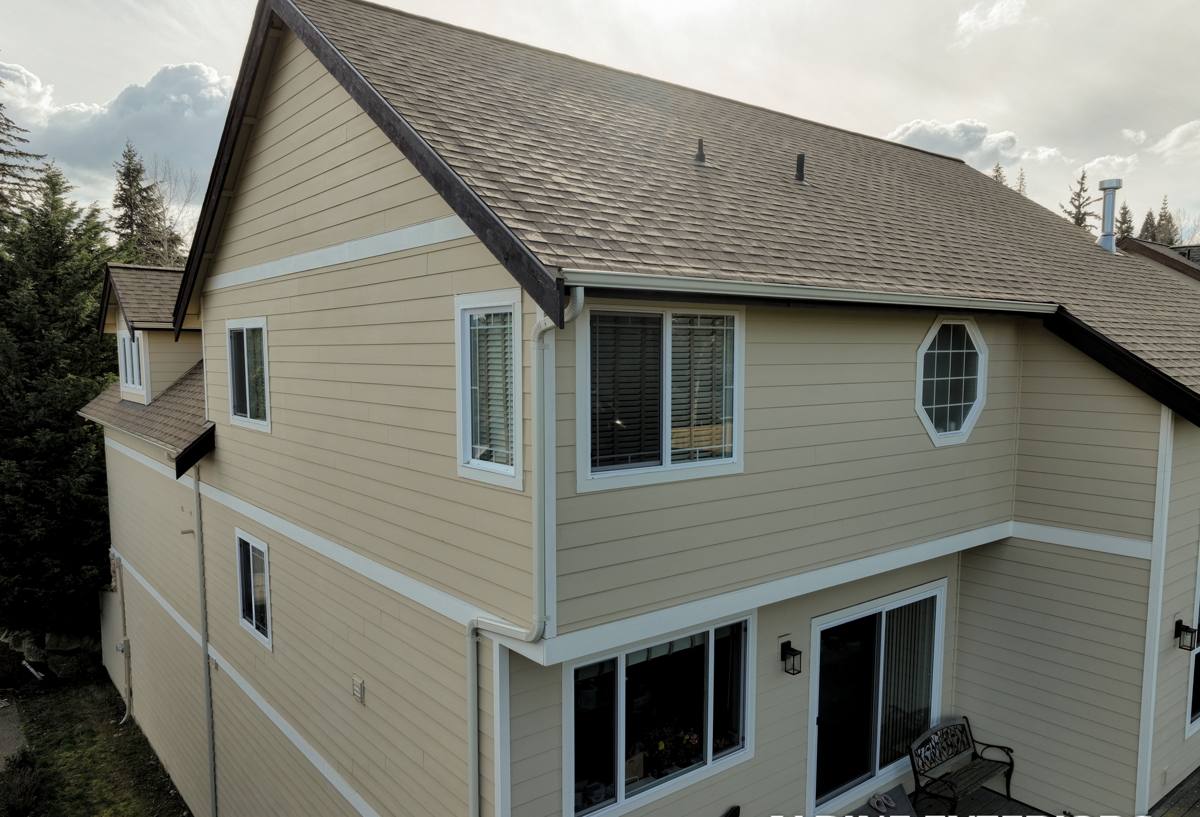
What "Energy-Efficient" Actually Means for a Window
The term gets used loosely, so it's worth being specific. A few measurable factors determine how much heat a window lets in or out, and they matter more in a marine climate than people usually expect:
| Factor | What It Measures | Why It Matters in Custer |
|---|---|---|
| U-factor | How much heat escapes through the window — lower is better | Keeps heating costs down through our long damp, cool season |
| SHGC (Solar Heat Gain Coefficient) | How much solar heat passes through the glass | Less critical here than in a sunnier climate, but still affects comfort on clear days |
| Air leakage rating | How much air passes through the assembly when closed | Directly tied to draft resistance under wind-driven rain conditions |
| Condensation resistance | How well the frame and glass resist interior moisture buildup | Relevant given our humidity and the indoor/outdoor temperature gap in winter |
| Glazing and gas fill | Number of panes, low-E coatings, and inert gas fill between panes | The core of the insulating performance itself |
Look for windows certified under the National Fenestration Rating Council (NFRC) label, and check that the ratings printed on it are appropriate for our Northern/marine climate zone rather than a generic national average. A window rated well for a hot, dry climate isn't automatically the right pick for a wet, mild one — the priorities shift toward air-leakage resistance and condensation performance more than solar gain control.
Double vs. Triple Pane in a Marine Climate
Triple-pane glass gets marketed heavily, and it does offer a real efficiency edge, but the gap between a quality double-pane low-E window and a triple-pane unit is smaller in our mild coastal climate than it would be somewhere with harsh winters. For most Custer homes, a well-built double-pane window with a good low-E coating and warm-edge spacer performs well and costs less. Triple pane earns its keep on north-facing walls, larger picture windows, or homes where comfort near the glass is a specific complaint — we'll walk through where it's worth it rather than defaulting to it across the board.
How Custer's Climate Specifically Drains Window Efficiency
Wind-Driven Rain and Air Leakage
The open, low terrain around Custer doesn't offer much of a windbreak, and storms coming off the water push rain sideways into wall and window assemblies rather than letting gravity handle it. That matters for efficiency, not just for water intrusion — the same gaps that let wind-driven rain in also let conditioned air out. A window can carry a great air-leakage rating on paper and still underperform if the flashing and sealant around it weren't detailed for this kind of exposure.
Marine Air and Seal Degradation
Salt-laden air carried inland from the coast accelerates corrosion on lower-grade hardware, weatherstripping, and fasteners faster than a dry inland climate would. Weatherstripping that stiffens or cracks early stops sealing properly, which shows up as a draft long before the glass itself has done anything wrong. Cheaper hardware and gaskets are usually the first thing to go in this environment.
Moss, Mildew, and Trapped Moisture
Whatcom County's mild, damp winters support a long growth season for moss and mildew, and window sills, trim, and the framing around older units are common places it takes hold — especially on shaded or north-facing elevations. Beyond the cosmetic issue, trapped moisture against wood trim or a poorly sealed frame can rot structural wood over time, which eventually compromises the seal around the whole unit and lets conditioned air leak past it.
Temperature Swings and Condensation
The gap between a heated interior and a cold, wet exterior creates real condensation pressure on glass and frames through our winters. Persistent condensation between panes on an older double-pane window is usually a sign the seal has already failed — at that point the insulating gas fill has likely escaped too, and the window's actual performance is well below its original rating even though it still looks intact from a distance.
Signs Your Custer Home's Windows Are Losing Efficiency
- Noticeably higher heating bills without a clear explanation elsewhere
- Cold drafts near the window frame even when it's fully closed and locked
- Fogging or visible moisture trapped between panes of a double-pane window
- Interior condensation on the glass or sill during cold, wet weather
- Rooms near large or older windows that feel noticeably colder than the rest of the house
- Stiff, cracked, or missing weatherstripping around the sash
- Visible daylight or gaps where the frame meets the siding or trim
Frame Material Choices That Hold Up Here
Frame material affects both insulating performance and how well the frame itself survives our climate long-term, and the two considerations don't always point the same direction. We'll walk through the honest trade-offs for your specific project rather than push one material as the automatic answer.
- Vinyl — good insulating value, low maintenance, resists corrosion and rot well in marine air, and is typically the most budget-friendly option; quality varies a lot between manufacturers
- Fiberglass — excellent dimensional stability and insulating performance, holds up very well to moisture and temperature swings, generally costs more than vinyl
- Wood — strong insulating value and classic appearance, but requires ongoing maintenance to keep finish and seals intact in a wet climate, and is more vulnerable to the moss and moisture issues common here if that upkeep lapses
- Wood-clad — wood interior with a low-maintenance exterior cladding, a reasonable middle ground when the interior look matters and the exterior needs to shed our weather without constant upkeep
- Aluminum — durable and low-maintenance, but conducts heat and cold more readily than the alternatives unless it has a thermal break, which matters more here than in a milder heating climate
Installation Is Where Efficiency Is Actually Won or Lost
A high-performance window installed poorly will underperform a mid-grade window installed correctly, especially in a climate that pushes wind-driven rain into every gap. Air sealing around the rough opening, correct flashing sequence tied into the surrounding wall and siding, and proper insulation of the gap between the frame and the framing all affect the finished draft resistance as much as the window unit's own rating does. This is also where a lot of energy loss on older Custer homes actually originates — not from the glass, but from an opening that was never properly air-sealed to begin with, window unit aside.
We treat flashing and air sealing as inseparable from the window itself, not an afterthought once the unit is set. That's especially true on this stretch of Whatcom County, where the exposure doesn't give a sloppy installation any room to hide.
Our Process for an Energy-Efficient Window Project
- On-site assessment — we look at existing window condition, air leakage, framing, and any moisture or rot issues around current openings
- Honest recommendation — glazing package, frame material, and double vs. triple pane, matched to your budget and the specific exposure of each elevation
- Ordering — sizing confirmed against actual field measurements, not assumptions from the old unit
- Careful removal — old units come out without unnecessary damage to surrounding siding or trim
- Air sealing and flashing — the rough opening is sealed and flashed to a sequence built for wind-driven rain, tied cleanly into the surrounding wall
- Installation and insulation — the new unit is set, shimmed, and the gap around the frame properly insulated, not just caulked over
- Trim and finish — exterior trim integrated to match the surrounding siding cleanly
Cost Factors for Energy-Efficient Window Replacement
| Factor | How It Affects Cost |
|---|---|
| Number of windows | Larger jobs typically bring a better per-window rate than one-off replacements |
| Frame material | Vinyl generally costs less than fiberglass or wood; wood-clad and fiberglass sit higher |
| Glazing package | Double-pane low-E costs less than triple-pane; upgraded coatings add cost |
| Window size and type | Larger units, bay windows, or non-standard shapes cost more than standard sizes |
| Condition of the existing opening | Rot or framing repair adds labor beyond a straightforward like-for-like swap |
| Access and site conditions | Second-story or hard-to-reach windows add labor time |
We won't quote a number without seeing the actual windows and openings in person, but we'll walk through which of these factors apply to your home before you commit to anything. It's also worth checking with your utility provider directly about any current rebate or incentive programs for efficient window replacement — those programs change from year to year, so we'd rather point you to the source than guess at numbers that might be out of date.
Why a Local Custer Crew Matters for This Kind of Work
Manufacturer installation instructions are written for average conditions, not for open agricultural ground exposed to wind-driven rain off the Salish Sea. A crew that already works this part of Whatcom County knows which parts of that generic guidance need to be treated as a bare minimum here rather than a finish line — extra time on flashing laps, weatherstripping selection that accounts for marine air, and air sealing details that don't get shortcut because the schedule's tight.
That local experience also means knowing what actually shows up on Custer homes: which elevations catch the worst of the wind-driven rain, where moss tends to establish first, and how older farmhouse-style windows in this area were typically framed. None of that replaces a proper on-site assessment, but it does mean fewer surprises once the work starts.
If your windows in Custer are drafty, fogged, or just costing more to heat around than they should, it's worth having someone look at the actual openings before you start pricing units. We offer free, no-pressure estimates for energy-efficient window projects in Custer and the surrounding area — use the form below to get a time on the schedule.