 Ferndale Exterior
 Decks Built for Cordata's Wet Side of Whatcom County
Cordata sits in one of the wetter corners of Whatcom County, close enough to the water and the coastal weather pattern that decks here take a different kind of beating than decks built inland or further south. Salt-tinged air, long stretches of driving rain off the Strait, and a moss season that can run from October well into spring all work against a deck that wasn't built with this specific climate in mind. We build and repair decks for homeowners in Cordata and the surrounding Ferndale area, and most of the problems we get called out to fix trace back to the same handful of decisions made during the original build — not bad luck, just choices that didn't account for what this weather actually does to wood, fasteners, and framing over time.
This page covers what a custom deck built for Cordata conditions should include, from the decking surface down to the footings, and how we approach the project from first visit to final walkthrough.
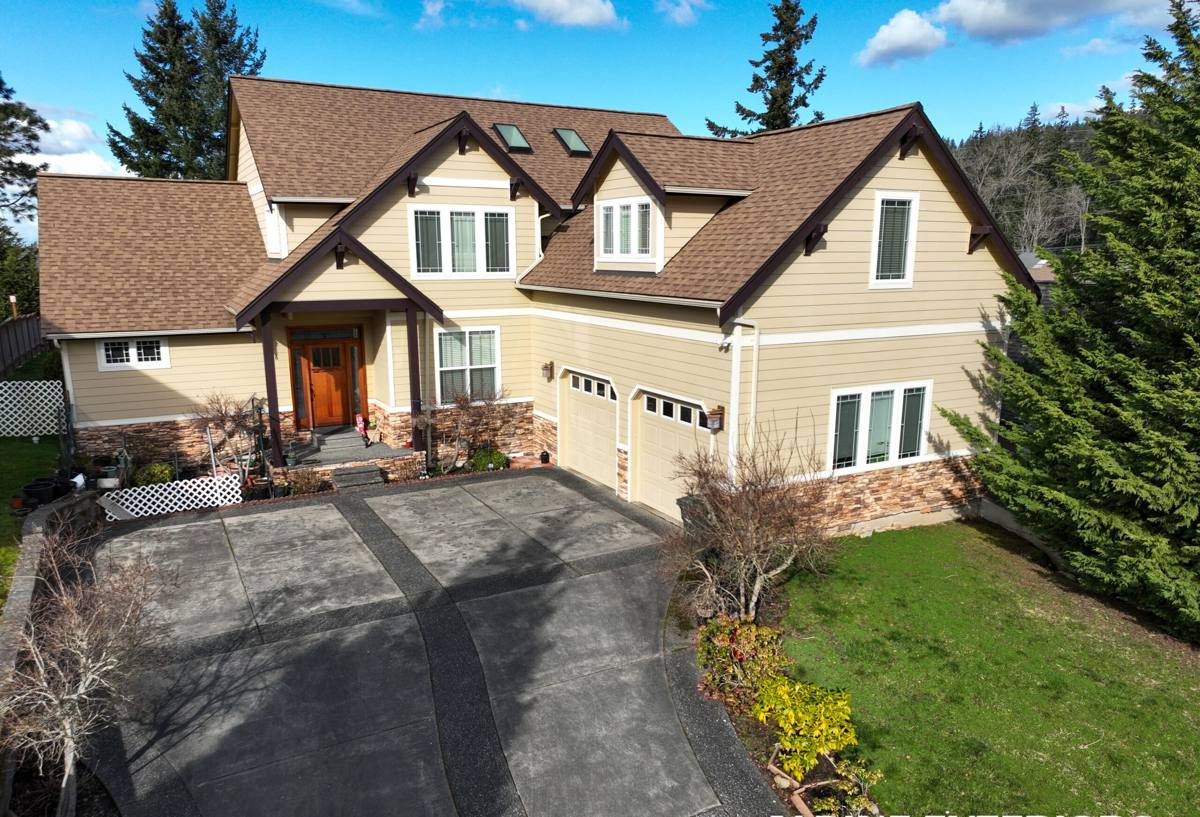
What Makes a Deck Last in This Neighborhood
Salt Air and Fasteners
Even a few miles inland from Bellingham Bay, airborne salt accelerates corrosion on anything less than fully rated hardware. Standard electro-galvanized screws and joist hangers will streak, weep rust stains into the decking, and eventually lose holding strength years before they should. We build with stainless steel or heavy hot-dip galvanized fasteners and connectors rated for coastal exposure, because replacing a rusted-out joist hanger means tearing into a finished deck.
Driving Rain and the Ledger Board
The single most common failure point on older decks in this climate is the ledger board — the piece that attaches the deck to the house. Wind-driven rain pushes water sideways and up under flashing that wasn't detailed correctly, and once moisture gets behind the ledger it rots the rim joist and, in bad cases, the wall framing behind it. A correct ledger connection uses proper flashing, a water-resistant barrier between the ledger and the house, and mechanical fasteners sized for the load — not just lag screws driven into siding.
Moss Season and Walking Surfaces
Shaded decks and north-facing decks in Cordata grow moss and algae fast, especially under mature trees or where fences and hedges block afternoon sun. Beyond looking bad, a mossy deck surface gets genuinely slick, which matters on stairs and landings. Material choice, board spacing, and surface texture all affect how much moss takes hold and how easy it is to keep clean.
Choosing a Decking Material for Cordata Conditions
There's no single "best" decking material — the right choice depends on how much maintenance you want to do, your budget, and how much shade and moisture the deck sits in. Here's how the common options actually perform in this climate:
| Material | Moisture Behavior | Maintenance | Typical Lifespan |
|---|---|---|---|
| Pressure-treated fir/hem-fir | Absorbs water readily; needs sealing to resist checking and warping | Annual cleaning and re-sealing recommended | 10-15 years before major boards need replacing |
| Cedar | Naturally rot-resistant, but still moves and grays without upkeep | Periodic oiling or staining to hold color and resist moss | 15-20 years with regular care |
| Composite (capped) | Won't rot or absorb water into the core; surface sheds moss easier when cleaned | Occasional washing; no sealing or staining | 25-30 years, per most manufacturer warranties |
| PVC | Fully synthetic, no organic material for moisture or moss to work into | Lowest upkeep of the group | Comparable to or longer than capped composite |
We install all four of these depending on what the homeowner wants. In a shaded, moss-prone Cordata yard, we'll usually steer people toward capped composite or PVC on the walking surface even if they want real wood tones elsewhere on the property, simply because the maintenance burden of bare wood in constant shade is a lot to keep up with. That's a judgment call based on trade-offs — moisture behavior and upkeep — not a knock on wood as a material.
What's Underneath Matters More Than What's On Top
A deck's surface gets all the attention, but the framing underneath is what determines whether it's still standing straight in fifteen years. In this climate, a few details are non-negotiable:
- Footings below frost depth and sized for the soil — Whatcum County soils vary from block to block; we check what we're building on rather than assuming.
- Joist spacing matched to the decking material — composite and PVC boards often require tighter joist spacing than wood to avoid flexing, and manufacturers will void warranties if spacing isn't followed.
- Proper joist tape or flashing on top of every joist — this keeps standing water from soaking into the top of the framing lumber, which is where rot usually starts, not the underside.
- Ventilation underneath low or ground-level decks — trapped moisture under a deck with poor airflow is a slow, invisible rot problem that doesn't show up until boards start feeling soft.
None of this is visible once the deck is finished, which is exactly why it's worth asking a contractor to walk you through it before the build starts, not after.
Drainage and Grading Around the Deck
Whatcom County's rainfall totals mean a deck rarely deals with water in isolation — it deals with water that's also trying to drain off the roof, the yard, and the house. Before we frame anything, we look at where water is actually going to go: whether the ground slopes away from the house, whether gutters dump near the deck's footings, and whether a low spot under the deck is going to turn into a standing pool every winter. On multi-level decks or decks built over patios and walkways, we'll often build in a proper under-deck drainage system so the space below stays usable and dry instead of collecting runoff. Getting grading and drainage right at the start is far cheaper than fixing a soggy foundation area after the deck is already built over it.
Our Process for a Cordata Deck Project
Site Visit and Design
We start by walking the property — sun and shade patterns, tree cover, existing drainage, and how the deck will connect to the house — before talking materials or layout. A design that ignores where the moss and moisture problems already are just inherits them.
Permitting
Most custom decks in Ferndale and unincorporated Whatcom County require a building permit, particularly for anything attached to the house, elevated more than a couple feet, or over a certain size. We handle the permit submission and inspections as part of the project so you're not the one navigating that process.
Construction
Framing goes in first, with footings, ledger flashing, and joist protection inspected before decking ever gets installed. We don't cover up framing work before it's been checked — on a coastal-climate build, that framing is the part most likely to cause problems down the road if it's rushed.
Final Walkthrough
Once decking, railing, and any stairs are finished, we walk the deck with you, cover basic care for whatever material you chose, and point out anything specific to your site — a shady corner that'll need more frequent cleaning, for example.
Why a Local Crew That Works Cordata Regularly Matters
A deck built by a crew that mostly works drier inland climates tends to under-detail the parts that matter most here — flashing, fastener grade, drainage — because those details simply don't cause problems where they're used to building. A crew that works Ferndale and the greater Whatcom County area regularly has already seen what five or ten Northwest winters do to a poorly flashed ledger or a composite deck installed with the wrong joist spacing. That's not a marketing point, it's just what repeat exposure to this specific climate teaches a builder. It also means we're familiar with the local permitting process and typical lot conditions in and around Cordata, which keeps the project moving instead of stalling on avoidable paperwork or site surprises.
What Affects the Cost of a Custom Deck
Every deck project is different, but the price generally moves with these factors:
| Factor | How It Affects Cost |
|---|---|
| Decking material | Pressure-treated wood costs least upfront; composite and PVC cost more initially but less over time in maintenance |
| Deck height and levels | Elevated and multi-level decks need more framing, railing, and stairs than a low, single-level deck |
| Ground conditions | Sloped lots or poor soil can require additional footing work or engineering |
| Railing and stair style | Cable rail, glass panels, and custom stair details add labor and material cost over standard railing |
| Drainage and under-deck systems | A dry-space system under an elevated deck adds cost but adds usable square footage below |
| Access to the site | Tight side yards or limited equipment access can add labor time |
We give a written estimate after seeing the site in person — broad ballpark numbers over the phone rarely hold up once we see the actual slope, soil, and access conditions.
Keeping Your New Deck in Good Shape
Whatever material you choose, a little seasonal attention goes a long way in this climate. A basic yearly routine:
- Clear leaves and debris out of gaps between boards before fall rains set in, so water and organic matter don't sit and feed moss growth
- Rinse or lightly scrub shaded areas and stair treads at the start of moss season to keep surfaces from getting slick
- Check that gutters and downspouts near the deck are directing water away, not onto the deck or its footings
- Inspect railing posts and stair connections once a year for any looseness
- Reseal or re-stain wood decking on the schedule recommended for that specific wood species — don't wait until it's visibly gray and dry
- Keep planters and hoses from sitting directly on composite or PVC boards long-term, which can trap moisture and cause uneven fading
If you're planning a new deck or replacing one that's showing its age, we're happy to come take a look at your property in Cordata and put together a straightforward, no-pressure estimate — just fill out the form below.