 Ferndale Exterior
 Windows Take a Different Kind of Beating in Bellingham
Bellingham sits close enough to the water and low enough in the Whatcom County cloud cover that its homes deal with a specific combination of stresses most window installers never have to think hard about: salt-laden air off the bay, long stretches of driving rain that hits siding and window frames sideways rather than straight down, and a moss and mildew season that can run eight months out of the year. None of that is dramatic on its own. It's the accumulation that causes problems — seals that fail two years early, frame corners that hold moisture long after a storm has passed, and hardware that corrodes quietly until a window won't latch anymore.
Custom windows done right in this climate aren't just about picking a style you like. They're about choosing materials, glass packages, and installation details that are matched to how much water and salt air a window will actually see here, and then installing them so the surrounding wall doesn't become the weak point instead.
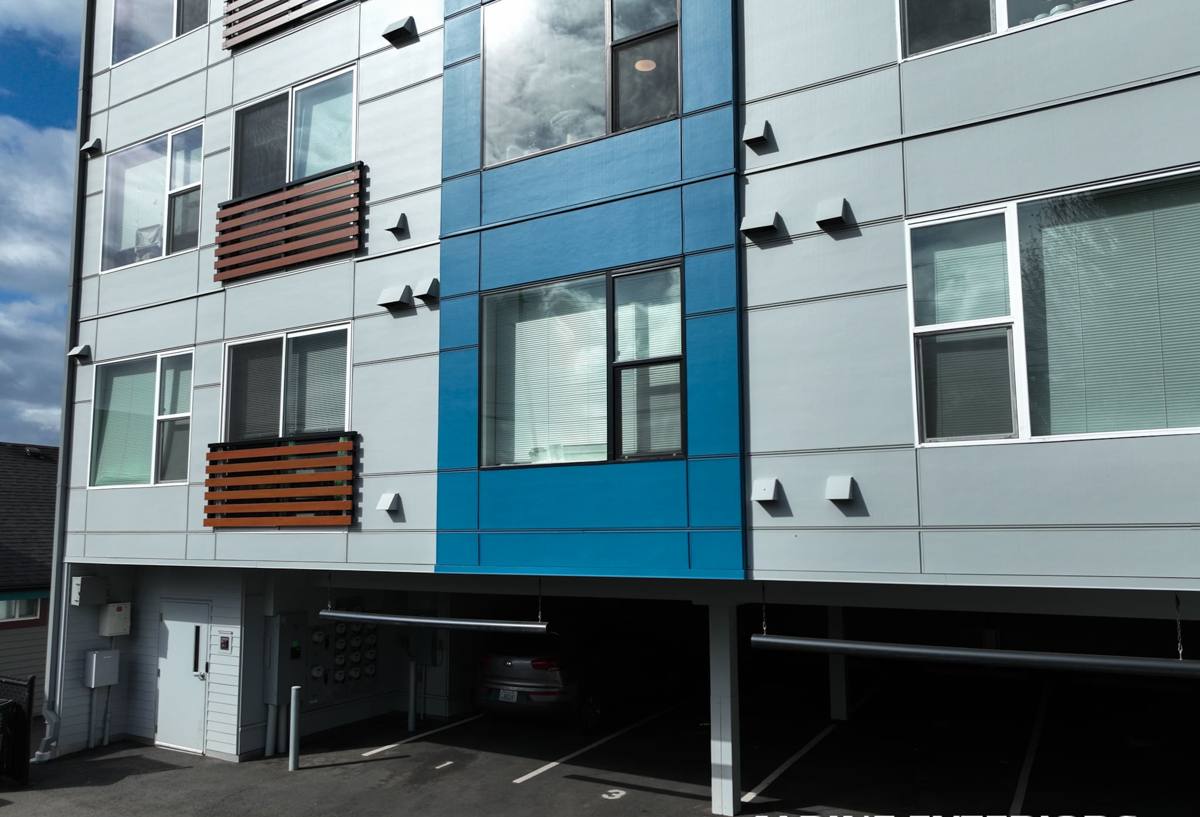
What "Custom" Actually Means for a Bellingham Home
Custom windows means the window is sized, shaped, and specified to fit your opening and your home — not squeezed into a standard size or forced to match a big-box catalog. That matters more in older Bellingham neighborhoods where original openings are rarely standard dimensions, and it matters on additions or remodels where you want the new windows to read as if they belong, not as an obvious retrofit.
Common Reasons Bellingham Homeowners Go Custom
- Original openings are out of square or non-standard size, common in older homes
- Replacing a single failed window without changing the look of matching windows nearby
- Upgrading glass and frame performance during a siding or exterior remodel
- Adding or enlarging windows to bring in more light during Whatcom County's darker months
- Matching a specific architectural style rather than accepting whatever fits off the shelf
Signs Your Current Windows Are Losing the Fight
Most window failures here don't show up as something dramatic and sudden. They show up as small, easy-to-ignore signs that get worse with each wet season.
- Fogging or a permanent haze between the panes — the seal has failed and the gas fill is gone
- Frames that feel soft, spongy, or discolored at the bottom corners
- A draft you can feel with your hand near the frame on a windy, rainy day
- Hardware that's stiff, corroded, or won't latch tightly anymore
- Visible moss or dark staining building up on the sill or exterior trim
- Paint or finish that's peeling specifically around the window, even where the rest of the wall looks fine
Any one of these is worth a look. Several at once usually means the window and the flashing behind it are both past their useful life.
What a Correct Custom Window Installation Involves
The window unit itself is maybe half the job. The other half is how it gets tied into the wall so water is directed out and down, never in and behind.
Before the New Window Goes In
We remove the old unit carefully and inspect the rough opening — sill, jambs, and header — for rot or water staining. In a climate this wet, it's common to find some degree of moisture damage around older windows that looked fine from the outside. Any soft or compromised framing gets addressed before anything new goes in, because a new window installed over a wet or rotting opening will fail again regardless of how good the window itself is.
Flashing and Water Management
This is the step that determines whether a window lasts fifteen years or thirty in Whatcom County weather. Proper flashing at the sill, jambs, and head — integrated correctly with the house wrap or building paper and the siding above — is what actually keeps driving rain out of the wall cavity. A window can be top-quality and still leak if this layer is rushed or skipped.
Setting, Sealing, and Insulating
The unit gets shimmed and set level and plumb, insulated around the frame without over-packing (which can bow the frame and cause operating problems), and sealed with the right sealant for the material — not just whatever's on the truck. Interior and exterior trim is reinstalled or replaced to match, and everything is tested for smooth operation before we consider the job done.
Choosing Frame Material and Glass for This Climate
There's no single "best" window material — there's a best fit for your home, your budget, and how exposed the opening is to wind-driven rain or salt air. Here's how the common options actually perform in this region.
| Material | How It Handles Salt Air & Moisture | Maintenance | Typical Use Case |
|---|---|---|---|
| Vinyl | Won't rot or corrode; performs well in coastal air | Low — occasional cleaning | Best value, most homes |
| Fiberglass | Very stable, resists warping and moisture over decades | Low | Higher-end replacement, larger openings |
| Wood-clad | Exterior clad protects wood, but any breach in the cladding invites rot | Higher — needs monitoring at joints and sills | Homes prioritizing a wood interior look |
| Aluminum | Prone to corrosion in salt air unless properly finished | Moderate | Limited use; we're selective about where we recommend it here |
On glass, a dual-pane unit with low-E coating and argon gas fill is the standard we recommend for this area — it manages condensation better in our damp winters and cuts down on heat loss during the long grey stretch of the year. For rooms facing prevailing weather, we'll sometimes discuss upgraded glass packages, but we'll always explain what you're actually paying for rather than upselling by default.
What Drives the Cost of a Custom Window Project
Every project is different, but the same handful of factors drive most of the price difference between a straightforward job and a more involved one.
| Factor | Why It Matters |
|---|---|
| Opening size and shape | Non-standard or oversized openings cost more to custom-build and install |
| Frame material | Vinyl, fiberglass, and wood-clad sit at different price points |
| Glass package | Low-E, gas fill, and upgraded coatings add cost but improve performance |
| Condition of the existing opening | Rot or water damage found during removal adds repair work before installation |
| Number of windows | Whole-house replacements typically bring a better per-window rate than single units |
| Access and second-story work | Harder-to-reach windows take more time and equipment |
We'll always walk you through which of these apply to your project before we give you a number, so you know what you're paying for and why.
Our Process for Bellingham Window Projects
1. On-Site Assessment
We look at every opening in question, check the condition of the surrounding wall and existing flashing, and talk through what you actually want out of the project — energy performance, appearance, easier operation, or all three.
2. Measuring and Ordering
Custom units are measured precisely for each opening rather than assumed to match. This is also when we finalize material, glass, and any style details.
3. Installation
Old units come out, openings get inspected and repaired as needed, new windows go in with proper flashing and sealing, and trim is finished to match the rest of the house.
4. Walkthrough and Cleanup
We test every window for smooth operation and a tight seal, clean up the work area, and walk you through anything you should know about care going forward.
Why Local Experience with Bellingham Homes Matters
A crew that already works this area knows which older Bellingham neighborhoods tend to have non-standard window openings, what kind of moisture damage shows up behind windows that have gone too long without attention, and how much of a difference correct flashing makes when the rain is coming sideways off the water instead of straight down. That's not something you can fully compensate for with a good product alone — installation quality and local judgment matter as much as the window brand.
We also know this climate doesn't forgive shortcuts. A window installed without proper water management might look fine for a season or two before problems start showing up inside the wall, by which point the fix is bigger and more expensive than it needed to be. Getting it right the first time is cheaper in the long run, and it's the standard we hold ourselves to on every job in Bellingham and the surrounding Whatcom County area.
Ready to Talk Windows?
If your windows are fogging, drafting, sticking, or just showing their age, we're happy to take a look and give you an honest read on what's going on — no pressure, no obligation. Request a free estimate below and we'll set up a time to assess your home's windows and talk through your options.