 Ferndale Exterior
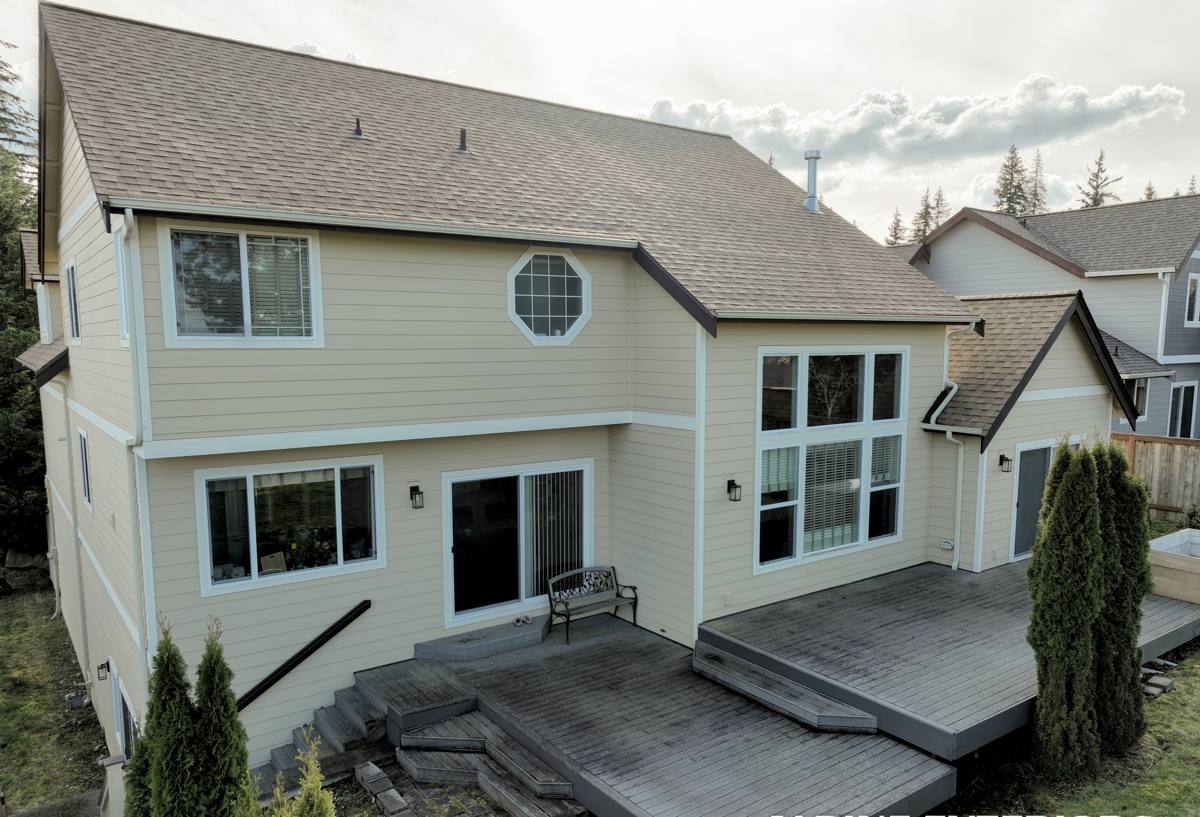
 Kendall sits back from the coast, tucked against the foothills near the Nooksack River, with more tree cover and more shade than you'll find closer to town. That changes what a deck has to deal with. Between the tall conifers, the amount of rain Whatcom County gets through the fall and winter, and stretches of the year where a shaded deck surface barely dries out, Kendall properties put decks through a slower, damper kind of wear than a more open, sun-exposed lot. A deck built without that in mind will grow moss, hold moisture where it shouldn't, and start showing soft spots years before it should.
This page is specifically about building decks for Kendall conditions — not a general overview of deck building. If you're planning a new deck or replacing one that didn't hold up, here's what actually matters for a property out this way.
What Kendall's Climate Does to a Deck
Whatcom County's marine-influenced climate touches the whole region, from salt-tinged air nearer the coast to the cooler, damp conditions under tree canopy up around Kendall. Out here, the bigger factors are shade and standing moisture rather than salt exposure. A few things happen consistently on wooded, shaded lots:
- Moss and algae take hold fast. Less direct sun means decking stays damp longer after rain, and moss spores that would dry out and die on a sunny deck instead get a foothold — especially on the north side of the house or under heavy canopy.
- Organic debris piles up. Needles, cones, and leaf litter collect between boards and in corners, holding moisture against the wood and clogging drainage gaps.
- Framing stays wetter, longer. Joists and beams that don't get airflow or sun exposure take longer to dry after a wet spell, which matters a lot for untreated or poorly protected lumber.
- Ground conditions vary. Lots near the river or on sloped, wooded ground can have soil that stays saturated longer into the spring, which affects footing depth and drainage planning.
None of this means a deck can't hold up in Kendall — it means it has to be built with these specific conditions in mind, not built the same way you'd build one on an open, sunny lot closer to the coast.
Choosing the Right Decking Material
There's no single "best" decking material for every property, but on a shaded, damp lot some choices make maintenance a lot easier than others. Here's how the common options actually perform under Kendall-type conditions:
| Material | Moss / Moisture Resistance | Maintenance | General Cost Tier |
|---|---|---|---|
| Pressure-treated lumber | Fair — resists rot with proper treatment, but surface still holds moss in shade | Needs regular cleaning, periodic sealing | Lowest |
| Cedar | Good natural rot resistance, but surface greys and can stay damp under canopy | Cleaning, occasional oil or stain to maintain color and protection | Mid |
| Capped composite | Very good — solid cap resists moisture absorption and staining | Periodic washing to clear moss/debris; no sealing or staining | Higher |
| PVC decking | Excellent — doesn't absorb moisture at all | Lowest — occasional rinse | Highest |
On a shaded, tree-covered lot, we lean toward capped composite or PVC for the decking surface itself, since the main enemy here is moisture sitting on the board, not fading from sun exposure. That said, plenty of homeowners want the look and feel of real wood, and cedar can absolutely work — it just needs a realistic maintenance plan, which we'll walk through honestly before you commit either way. We don't push one product because it's easier to sell; we tell you what a given lot's shade and drainage will actually do to each option.
A Note on Fasteners and Hardware
In damp, shaded conditions, hardware corrodes faster than it does on an open, dry lot. We use stainless steel or coated fasteners rated for ground contact and exterior exposure, and hidden fastener systems where the decking product supports them — both to keep water from pooling around fastener heads and to keep the surface looking clean as moss and algae get washed off over the years.
Framing and Footings Built for the Ground Here
The decking surface is what you see, but the framing underneath is what determines whether the deck is still solid in fifteen years. A few things we pay close attention to on Kendall builds:
- Footing depth. Footings are set below the local frost line and sized to the soil conditions on the specific lot — sloped or river-adjacent ground sometimes needs larger or additional footings to stay stable.
- Ledger flashing. Where the deck attaches to the house, proper flashing and waterproofing at the ledger board is one of the most common failure points we see on older decks — water gets behind the ledger and rots the rim joist or even the wall framing behind it. This gets done correctly the first time.
- Joist spacing and airflow. We space joists to code and leave enough clearance underneath for air to move, which helps framing dry out between wet stretches instead of staying damp for weeks.
- Post height on sloped lots. Wooded, hilly lots around Kendall often need taller support posts than a flat, coastal lot would, which changes the bracing and structural requirements — this gets engineered properly, not eyeballed.
A deck that looks fine on the surface but was framed without these details in mind is usually the one we get called out to fix five or ten years later.
Permits and Code: What's Different in Kendall
Kendall is unincorporated Whatcom County, not inside Ferndale city limits, which means deck permits and inspections go through Whatcom County Planning & Development Services rather than the city. The permitting process, setback rules, and inspection scheduling can differ from what you'd deal with on a project inside the city. Elevated decks, guardrail height and spacing requirements, and stair codes still apply the same way structurally, but knowing which agency to file with — and what that agency actually expects to see at inspection — saves real time.
We handle this permitting process as part of the job, not as an add-on, and we already know the county's inspection expectations from having done work out this way before.
Our Process for a Kendall Deck Build
- Site visit. We look at sun/shade exposure, tree canopy, slope, drainage, and the existing structure (if replacing a deck) before talking materials or price.
- Design and material selection. We walk through the honest trade-offs for your specific lot — not a generic pitch — so you land on a material and layout that fits your budget and how much upkeep you actually want to do.
- Permit filing. We prepare and submit the permit through Whatcom County, and schedule inspections around the build timeline.
- Demolition (if replacing). Old decking and framing removed and inspected for any hidden rot or damage before we build over it.
- Framing. Footings, posts, beams, ledger flashing, and joists built to plan and to code, with attention to the drainage and airflow details above.
- Decking, railing, and stairs. Installed to spec, with fasteners and hardware suited to the site's moisture exposure.
- Final walkthrough and county inspection. We go over the finished deck with you, including a realistic maintenance rundown for your specific material and shade conditions.
Maintenance for a Shaded, Wooded Lot
Whatever material you choose, a deck in a shaded, tree-covered spot needs a bit more attention than one out in the open. A simple seasonal routine goes a long way:
- Sweep needles, leaves, and cones off the surface and out from between boards regularly, especially in fall
- Clear debris from under the deck and around footings so water can drain instead of pooling
- Wash down the surface once or twice a year to remove moss and algae buildup before it gets established
- Check and re-seal or re-stain wood decking on the manufacturer's recommended schedule, not just when it looks bad
- Inspect ledger flashing and fasteners periodically for any sign of water intrusion or corrosion
- Trim back overhanging branches where possible to let more light and air reach the deck surface
Why Hiring a Crew That Already Works Kendall Matters
A deck builder who mostly works in-town projects can still do competent framing, but they may not have dealt with Whatcom County's permitting for unincorporated areas, rural driveway access for equipment and material delivery, or the specific drainage and shade challenges of a wooded, sloped lot. We've built and repaired decks under these exact conditions, so we're not guessing at footing depths for river-adjacent soil or figuring out the county's inspection process on your project. That familiarity shows up in fewer surprises during permitting, fewer callbacks after the build, and a deck that's designed for the lot it's actually sitting on.
Get a Straightforward Estimate
If you're planning a new deck or need to replace one that hasn't held up to Kendall's shade and rain, we're happy to come take a look and give you an honest read on materials, layout, and cost — no pressure, no upsell. Fill out the form below to get started.