 Ferndale Exterior
 Why Lummi Island Decks Wear Faster Than Inland Decks
A deck on Lummi Island lives a harder life than one ten miles inland. The salt-laden air coming off the surrounding water accelerates corrosion on anything metal — screw heads, joist hangers, railing brackets — long before it would rust on a typical Whatcom County lot. Add in driving rain that comes sideways off the water during fall and winter storms, and you get moisture forced into places a deck was never built to handle: end grain, fastener holes, and the seam where the deck meets the house.
Then there's the moss. Many island lots sit shaded by fir and cedar, and the combination of shade, marine humidity, and a mild, wet climate means moss and algae get a long growing season here — often close to year-round. Moss doesn't just look bad. It holds water against the wood surface, keeps boards from drying out between rains, and slowly breaks down the wood fibers underneath it. On a deck that already deals with salt exposure, that's a one-two punch that shortens the life of boards, fasteners, and structural framing alike.
None of this means a Lummi Island deck is doomed — it means it needs to be built, repaired, and maintained with that exposure in mind, not treated the same as a deck in a dry, sheltered yard.
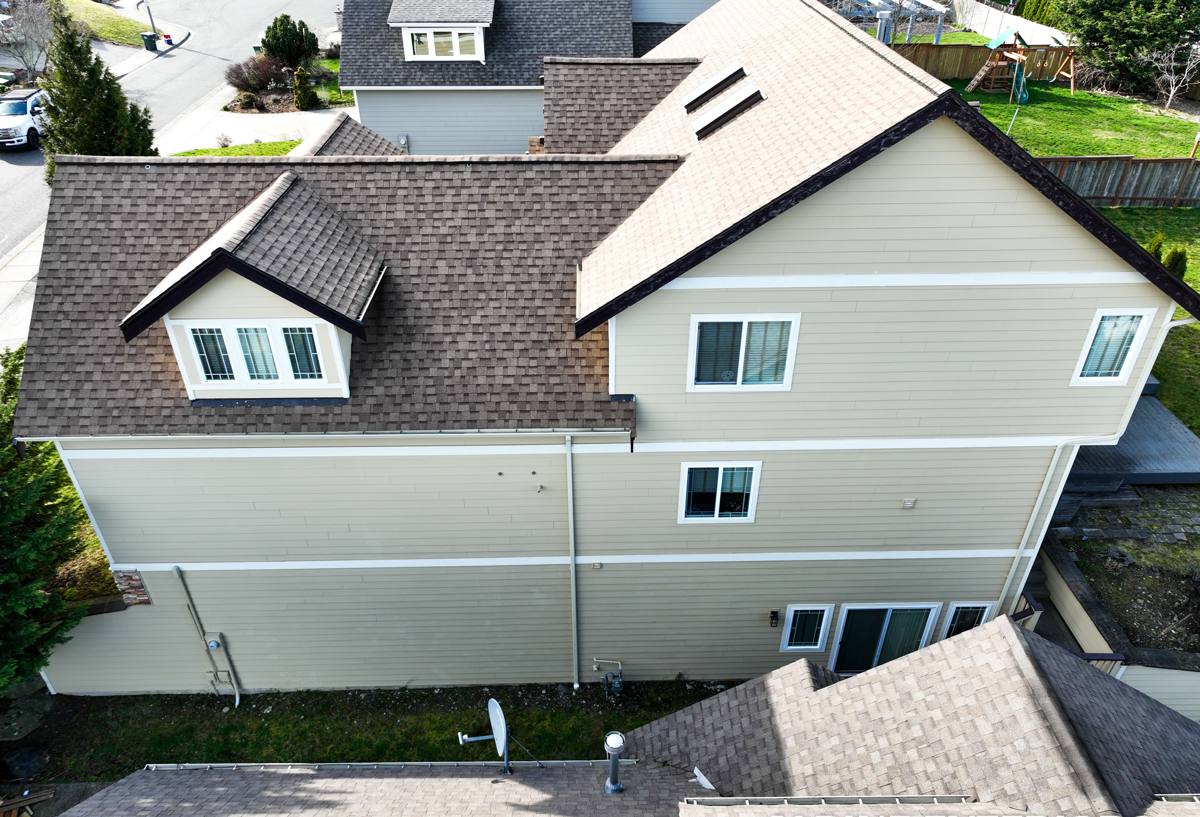
Signs Your Deck Needs Repair
Most deck problems out here don't show up overnight. They start small and get worse through a wet winter. Worth checking for:
- Soft or spongy spots underfoot, especially near the house or stair landing
- Rust streaks bleeding down from screw heads, bolts, or metal brackets
- Boards that are cupping, splitting, or starting to pull away from the joists below
- A visible gap opening between the ledger board and the house wall
- Green or black film that comes back within a few weeks of cleaning it off
- Railings or stair posts that flex, wiggle, or feel less solid than they used to
- Missing or damaged flashing where the deck attaches to the house
Any one of these on its own might just need a targeted fix. Several of them together, especially soft framing plus rust plus a loose ledger, usually means the repair needs to start below the decking, not at the surface.
What a Correct Deck Repair Actually Involves
Checking the Structure First
It's tempting to judge a deck by its top surface, but the boards you walk on are the last thing we look at, not the first. Before replacing anything visible, a proper repair starts by checking the framing underneath: joists, beams, posts, and — most importantly on an older deck — the ledger board connection to the house. That connection carries a huge share of the deck's load, and it's also the spot most exposed to trapped moisture if the flashing has failed. Repairing decking on top of a compromised ledger or rotten joist just hides the real problem for a season or two.
Flashing and Water Management
Where a deck meets the house is the single most important detail on the whole structure. Correct flashing sheds water away from the ledger board and the house wall instead of letting it collect and soak in. On older or DIY-built decks, this is one of the most commonly missing or poorly installed details, and it's a common source of the rot we find when we open up a ledger area for repair. Fixing it right means integrating flashing with the siding and house wrap, not just caulking a gap and calling it done.
Matching Materials, Not Just Patching
Swapping in whatever board is on hand at the lumber yard isn't a repair, it's a patch. A correct repair matches species, treatment level, and fastener type to what's already there, or upgrades the whole section consistently so you don't end up with mismatched boards that age at different rates and telegraph the repair for years.
Decking Material Considerations for Island Exposure
There's no single "best" decking material for every home — it depends on your budget, how much upkeep you want to do, and how exposed the deck is to wind-driven rain and salt spray. Here's how the common options typically hold up in this kind of environment:
| Material | Salt Air & Moisture Behavior | Maintenance | Best Fit |
|---|---|---|---|
| Pressure-treated lumber | Handles moisture well if properly sealed; fasteners are the weak point in salt air | Needs regular cleaning and re-sealing, especially in shaded areas | Budget-conscious repairs, framing and structural members |
| Cedar | Naturally moisture- and rot-resistant, but softer and can gray or check faster near salt spray | Periodic cleaning, oiling, or staining to maintain appearance | Homeowners who want a natural look and don't mind upkeep |
| Composite / PVC decking | Does not absorb moisture or rot, resists salt exposure well | Occasional washing to prevent moss and algae buildup on the surface | Low-maintenance priority, long-term island exposure |
Whatever material a homeowner chooses, the fasteners and framing underneath matter just as much as the decking on top — a composite board fastened with the wrong hardware will still show rust and joint failure in a salt-air environment.
Cost Factors in a Lummi Island Deck Repair
Every deck is different, and final pricing depends on what we find once we're on site, but repairs generally fall into a few tiers:
| Repair Scope | What's Typically Involved | Broad Cost Range |
|---|---|---|
| Spot repair | Replacing a handful of boards, tightening railings, re-fastening loose areas | Several hundred dollars |
| Structural repair | Joist or ledger repair, re-flashing, replacing a section of framing | Low to mid thousands |
| Larger rebuild or resurface | Full decking replacement over existing structure, or rebuilding a significant section | Mid to upper thousands, depending on size and material |
We'll always give you an honest read on which tier your deck actually falls into before any work starts, and flag if what looked like a spot repair turns out to be a structural issue once we open things up.
How We Handle Ferry and Island Logistics
Working on Lummi Island isn't the same as pulling up to a mainland job site. Access is by ferry, which means trip timing and load planning matter. We plan island jobs around getting the right crew, tools, and materials over in as few trips as possible — that means confirming the full scope of work up front, ordering materials with enough lead time, and scheduling crew days that make the most of the time we're on the island rather than losing hours to back-and-forth.
This is also why a crew that already works Lummi Island regularly tends to move faster and more predictably than one making its first trip out. We're not learning the logistics on your job.
Fasteners and Hardware Matter More Here
In a marine-influenced climate, the hardware holding a deck together often fails before the wood does. Standard coated deck screws and connectors can start showing rust bleed within a few seasons in salt air, and once corrosion starts on a fastener, it weakens the joint from the inside even if the surface still looks okay. For repairs on Lummi Island, we favor stainless steel or marine-grade fasteners and structural connectors in areas exposed to the weather, even where a standard coated fastener might be acceptable on an inland job. It costs a bit more up front and saves you from redoing the same repair in a few years.
Keeping Moss and Mildew From Coming Back
A repair only holds up as long as the deck stays maintained afterward. A few habits go a long way on shaded, moisture-prone lots:
- Sweep and clean the deck surface a few times a year, especially heading into the wet season
- Keep nearby branches and shrubs trimmed back so the deck gets more sun and airflow
- Check and clear gaps between boards where debris and moisture collect
- Re-seal or re-stain wood decking on the schedule the product calls for, not just when it looks worn
- Address small issues — a loose board, a bit of surface mildew — before they sit through a full winter
None of this is complicated, but it's the difference between a repair that lasts a decade and one that needs revisiting in two or three years.
Why a Local Crew That Already Works the Island Matters
Deck repair here isn't just carpentry — it's carpentry that accounts for salt exposure, driving rain, moss season, and the practical realities of getting a crew and materials to an island job efficiently. A contractor who already works Lummi Island regularly knows what fails first in this environment, brings the right fasteners and materials the first time, and plans the job around the ferry instead of being surprised by it. That familiarity translates into fewer surprises, fewer callbacks, and a repair that's actually built for where it sits, not a generic mainland job dropped onto an island lot.
As a Ferndale-based crew serving Whatcom County, we treat Lummi Island jobs as a normal part of our week, not a special trip — and we build every repair with the salt air, rain, and moss this area is known for in mind.
If you've got a deck on Lummi Island that's showing rust, soft spots, or that moss that just won't quit, we're happy to take a look. Reach out for a free, no-pressure estimate using the form below.