 Ferndale Exterior
 Marietta's Climate Is Hard on Decks
Marietta sits close to the water on the edge of Ferndale, and that proximity comes with a cost for anything built outdoors. Salt-laden air off the bay works its way into fasteners, flashing, and any exposed metal hardware, corroding it faster than homes further inland ever see. Add in Whatcom County's long, wet fall-through-spring stretch of driving rain, and a deck's wood components are under near-constant moisture load for months at a time. Then comes moss season — and in Marietta, it isn't a few weeks, it's a good chunk of the year. Moss holds water against decking boards, stair treads, and railings long after the rain has stopped, which is exactly the condition wood rot needs to take hold.
None of this means a deck in Marietta is doomed. It means the repair has to account for what's actually attacking the structure, not just patch the symptom you can see. A board that's soft on top might be telling you the joist underneath is already compromised. A wobbly rail post might be a sign that the fasteners holding it have corroded through. Repairing a deck here is as much about diagnosing moisture and salt damage as it is about carpentry.
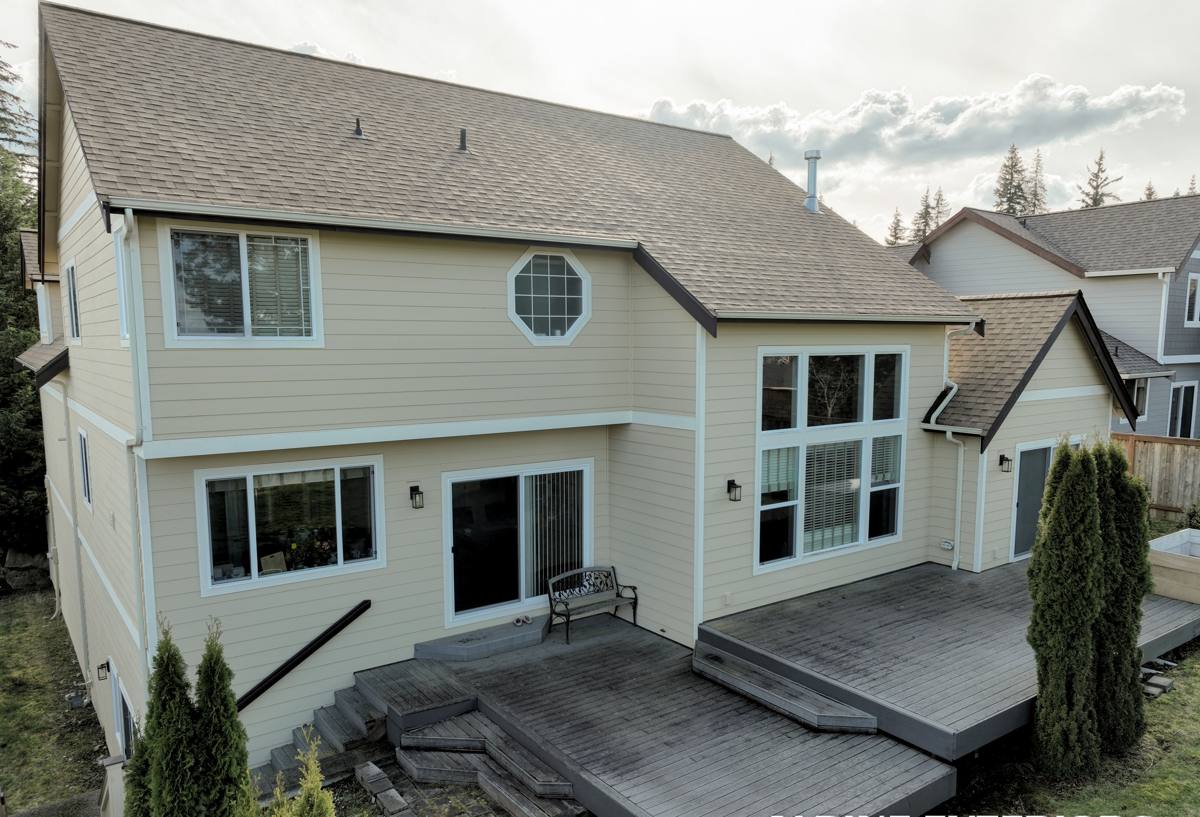
Signs Your Deck Needs Repair — Not a Full Replacement
Most decks we look at in Marietta don't need to be torn out and rebuilt. They need targeted repair to specific components that have failed while the rest of the structure is still sound. Knowing the difference matters, because a full replacement costs several times more than repairing the parts that actually failed.
Cosmetic and surface issues
- Gray, weathered decking boards that are still solid when you press on them
- Moss or algae staining on the surface without soft or spongy spots underneath
- Loose or missing deck screws where the board itself is still in good shape
- Faded or peeling stain/sealant on wood that hasn't started to rot
Structural warning signs
- Soft, spongy, or springy decking boards, especially near the house or stair landings
- Rust streaks bleeding out from fasteners or metal connectors
- Any gap, crack, or separation where the deck ledger board meets the house
- Wobble or movement in railing posts when you push on them
- Visible rot at post bases, especially where they meet concrete footings
If you're seeing structural warning signs, especially anything involving the ledger board connection to the house, that's not a wait-and-see situation. Ledger failures are one of the more serious ways a deck can fail, and they're also one of the most common problems we find on older decks in wet coastal areas like Marietta.
What a Correct Deck Repair Actually Involves
A repair that only replaces what's visible from the top often misses the real problem. Doing it right means checking the parts of the deck you can't see from a chair on the patio.
The ledger board and house connection
This is the board that attaches the deck to your house, and it takes on more structural load than almost any other single component. In a climate with this much sustained rain, ledger rot from trapped moisture is one of the most common failure points we find. A correct repair checks the flashing behind the ledger, confirms the fasteners are appropriately rated for outdoor and, where relevant, coastal exposure, and replaces any wood that's gone soft — not just caulks over the gap and calls it done.
Joists and framing
Joists carry the deck surface and everything on it. Because they sit underneath the decking boards, damage here often goes unnoticed until a board fails or the deck starts to feel spongy underfoot. We check joists for rot at the ends, at hanger connections, and anywhere water tends to pool or run.
Fasteners and hardware
In salt air, standard fasteners corrode faster than the wood around them fails. Corroded joist hangers, bolts, and screws lose holding strength long before the damage is obvious from the outside. Replacing wood but leaving compromised hardware in place is a shortcut that shows up again within a year or two.
Posts and footings
Posts that sit in or near standing water, or that were installed without a proper base or moisture break, are prone to rot right at ground level — often the least visible spot on the whole structure. We check post bases and footing connections any time we're already opening up the structure for other repairs.
Decking boards, stairs, and railings
These are the components most exposed to moss, standing water, and foot traffic, so they're usually the most visibly worn parts of the deck. Replacement boards need to match the existing structure's spacing and fastening pattern so the repair doesn't create a new weak point right next to the old one.
Repair vs. Replace: How We Make the Call
| Factor | Favors Repair | Favors Replacement |
|---|---|---|
| Ledger board condition | Solid, properly flashed | Rotted or repeatedly failing |
| Framing (joists/beams) | Sound in most areas, isolated soft spots | Widespread rot or undersized framing |
| Age of structure | Under 15-20 years, built to a reasonable standard | Older structure, outdated fastening or footing methods |
| Extent of damage | Contained to specific boards, posts, or connections | Damage spread across multiple structural systems |
| Code compliance | Meets current railing/attachment standards | Undersized rail height, spacing, or missing structural connectors |
We walk you through where your deck lands on this before recommending anything. A deck with a failing ledger and rotted framing usually isn't worth patching piece by piece — the labor to do it right approaches replacement cost anyway. A deck with isolated damage and a sound structural core is usually a good repair candidate, and there's no reason to pay for a full rebuild.
Our Deck Repair Process
1. On-site inspection
We walk the full deck — surface, framing where accessible, ledger connection, posts, and footings — and probe suspect areas rather than just looking at them. Soft wood doesn't always look different from the top.
2. Straight assessment
You get a plain explanation of what's failed, what's still sound, and what we'd recommend. If it's a repair, we say so. If the damage is bad enough that repair doesn't make sense, we tell you that too, rather than stretching a patch job past its useful life.
3. The repair itself
We open up affected areas fully rather than working around them, replace compromised wood and hardware with materials suited to this climate, and reseal or reflash any connection point we disturb. Fasteners and connectors are matched to the exposure the deck actually gets, including proximity to salt air where that's a factor.
4. Final check and protection recommendations
Once the repair is complete, we check the deck for level, secure connections, and proper drainage, and we'll tell you what maintenance will actually extend the life of the repair — not a generic list, but what matters for your specific deck and its exposure.
Materials: Matching the Repair to the Environment
Not every repair material holds up the same way under salt air and constant moisture. We choose materials based on what the specific component needs to withstand, not on what's cheapest to install.
Wood framing repairs
Pressure-treated lumber rated for ground contact or structural use is the standard for joists, posts, and ledger repairs. It resists rot far better than untreated wood, though it still needs proper flashing and fastening to perform as intended — the treatment protects the wood, it doesn't replace good detailing.
Decking surface repairs
Wood decking is a reasonable, cost-effective choice when it's properly maintained, but it does require periodic sealing to perform well through wet Whatcom County winters. Composite decking costs more upfront but needs far less maintenance and doesn't absorb moisture the way wood does, which matters in a climate with this much sustained rain. We'll walk you through the honest trade-offs for your situation rather than pushing one option.
Fasteners and hardware
Given the salt air in Marietta, we favor stainless steel or heavy hot-dip galvanized fasteners and connectors over standard coated hardware. The cost difference is modest; the difference in how long the connection lasts is not.
Common Problems We See on Marietta Decks
- Moss buildup trapping moisture against decking boards and stair treads, accelerating rot in spots that never fully dry out
- Corroded fasteners near the water where salt air speeds up rust well beyond what you'd see on an inland deck
- Ledger rot where flashing was missing, undersized, or has failed over time, letting water track behind the board and into the house rim joist
- Post base rot where posts sit too close to grade or lack a proper moisture break from concrete footings
- Undersized or outdated railing connections on older decks that don't meet current structural standards
After the Repair: A Maintenance Checklist
A repair holds up longer when it's paired with a little regular upkeep. This is the short list we give homeowners after finishing a repair in this climate:
- Clear moss and debris from decking boards and stair treads at least twice a year
- Keep gutters and downspouts clear so runoff isn't draining directly onto or under the deck
- Reseal or restain wood decking on the schedule appropriate for the product used — don't wait until it's visibly gray and worn
- Check the ledger board area for gaps, cracks, or staining once a year
- Look for rust streaks around fasteners and connectors as an early warning sign
- Keep plants and landscaping from growing directly against posts or the underside of the deck, which traps moisture
Why It Matters to Hire a Crew That Already Works Marietta
A deck repair done by someone unfamiliar with this stretch of Whatcom County often addresses the wrong problem — replacing a board without checking why it failed, or using standard hardware that won't hold up to salt air the way it needs to. We work in Ferndale and the surrounding communities regularly, including Marietta, so we already know what tends to fail first here and why. That means we're not guessing at what's driving the damage; we're checking the specific points that this climate stresses hardest, and repairing accordingly.
It also means we're not disappearing after the invoice. If something about the repair doesn't hold up the way it should, you're calling a company that's still working in your neighborhood, not chasing down someone who did a one-off job and moved on.
Get a Straight Answer on Your Deck
If your deck in Marietta has soft spots, rust stains, a wobbly rail, or you're just not sure whether it needs repair or replacement, we'll come take a look and give you an honest answer — no pressure, no upsell. Fill out the form below for a free estimate.