 Ferndale Exterior
 Why Bellingham Decks Wear Out the Way They Do
If you own a home in or near Bellingham, you've probably noticed your deck ages differently than one in a drier part of the state. Whatcom County sits close enough to the water that salt-laden air reaches yards well inland, and it combines with a rainy season that can run for months at a time. That mix is hard on wood and hard on metal. Fasteners corrode faster than the warranty paperwork suggests they should. Board edges stay damp long after a storm has passed, which is exactly the condition moss and mildew need to take hold. By the time most homeowners call us, the deck isn't just cosmetically tired — the structure underneath has usually been quietly losing integrity for a few seasons.
A deck replacement done right in this climate isn't the same job as one done in a dry inland town. It has to account for standing moisture, slow-drying shade from mature trees (common on a lot of Bellingham properties), and a moss season that can start earlier and last longer than people expect. We build with all of that in mind, not just with whatever's fastest to install.
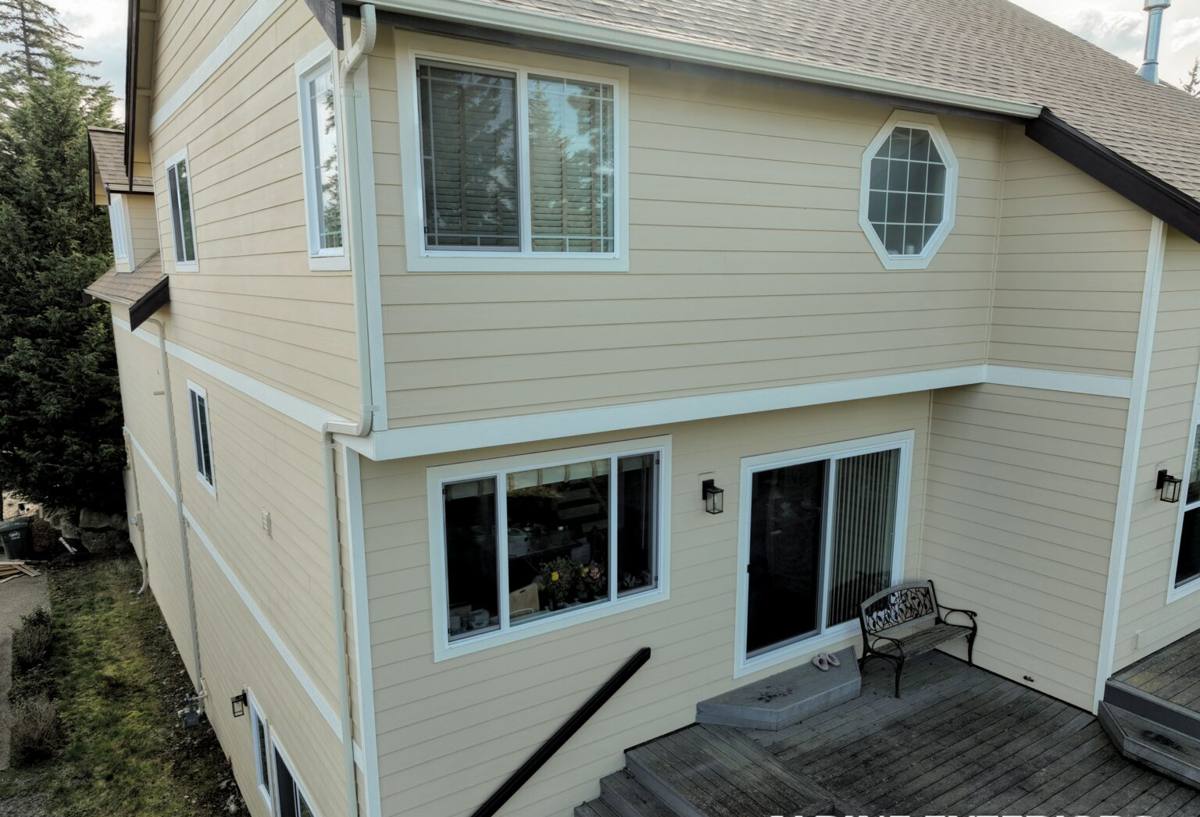
Signs You Need Replacement, Not Another Repair
Repairs make sense when the problem is isolated — a cracked board, a loose railing baluster, a step that's started to sag. Replacement becomes the honest recommendation when the damage is systemic. Here's how we tell the difference on a typical visit.
- Soft or spongy spots in multiple areas of the decking, not just one board
- Ledger board separating from the house, or visible gaps at the rim joist
- Support posts with rot at the base, especially where they meet concrete footings
- Persistent moss or algae that returns within weeks of cleaning
- Rust streaking from fasteners, a sign the metal itself is failing, not just staining the wood
- Railings that flex or wobble under normal weight
- A deck more than 20-25 years old that has never been rebuilt from the frame up
If you're only seeing one or two of these, a repair may still buy you time. If you're seeing several at once, patching individual spots usually just delays a full rebuild by a season or two, while you keep paying for repeated repair visits.
What a Correct Deck Replacement Actually Involves
Framing and Footings
This is the part that's invisible once the decking goes down, and it's the part most likely to get shortcut on a rushed job. In our climate, footings need to sit below frost depth and bear on undisturbed, well-drained soil — not backfill that will hold water against the concrete. We check post spacing and joist sizing against current code span tables rather than just matching whatever was there before, since older decks were often built to looser standards than what's required now.
Ledger Attachment and Flashing
The ledger board — where the deck attaches to the house — is the single most common failure point we find on older decks in this area. Water gets behind an improperly flashed ledger and rots both the ledger and the house rim joist behind it, sometimes without any visible sign from the deck surface. A correct replacement uses proper flashing, a water-resistant barrier, and structural fasteners rated for exterior use, installed so water sheds away from the house instead of pooling at the connection.
Decking Fasteners and Hardware
Given the salt content in the air here, we use corrosion-resistant, code-rated hardware throughout — hidden fasteners or coated screws depending on the material, and structural connectors rated for exterior exposure. Mismatched or bargain hardware is one of the fastest ways a new-looking deck starts showing rust streaks and loosening boards within a couple of years.
Railings and Code Compliance
Railing height, baluster spacing, and guard requirements are set by code for a reason, and older decks frequently fall short of current standards. A full replacement is the right time to bring railings up to code rather than reinstalling something that technically doesn't pass.
Choosing a Decking Material for This Climate
There's no single "best" decking material — there's a best material for your budget, your maintenance appetite, and how much sun or shade your deck gets. Here's how the common options actually perform in a wet, moss-prone climate like ours.
| Material | Upfront Cost | Maintenance | How It Handles Our Climate |
|---|---|---|---|
| Pressure-treated wood | Lowest | Annual cleaning, periodic sealing/staining | Good performance if maintained consistently; skipped maintenance shortens lifespan noticeably in wet shade |
| Cedar | Moderate | Regular sealing to hold color and resist moisture | Naturally more rot-resistant than treated wood, but still needs upkeep to prevent graying and moss growth |
| Composite decking | Higher | Occasional washing, no staining/sealing | Resists rot well; can still develop surface mold in constant shade if not rinsed periodically |
| PVC/capped polymer | Highest | Lowest — mostly just washing | Best moisture resistance of the group; a solid choice for shaded, damp yards common around Bellingham |
We're honest with clients about trade-offs rather than pushing whatever has the best margin. A low-maintenance material costs more up front but can make sense if you don't want to be out there sealing wood every year. A wood deck costs less initially but only performs well if the maintenance actually happens — and we'll tell you straight if that's not realistic for your situation.
Our Replacement Process
1. On-Site Assessment
We walk the existing deck, check the framing and footings where accessible, and identify what's driving the failure — moisture, age, undersized framing, or a combination. This tells us whether replacement is really the right call or whether a targeted repair would do.
2. Design and Material Selection
We talk through layout, railing style, and material options based on your budget and how the deck gets used and how much sun or shade it sees.
3. Permitting
Most deck replacements in Whatcom County and the City of Ferndale require a building permit, particularly when the structure is being rebuilt rather than resurfaced. We handle the permit application and inspections as part of the job so you're not navigating that process on your own.
4. Demolition and Disposal
Old decking, framing, and hardware are removed and hauled off. We inspect the ledger and house connection point at this stage, since that's often where hidden rot shows up.
5. Rebuild from the Ground Up
Footings, framing, ledger flashing, decking, and railings are installed in that order, each inspected before the next stage covers it up.
6. Final Walkthrough
We go over the finished deck with you, cover basic care for whatever material you chose, and make sure everything's been signed off by the building inspector.
Permits and Local Building Requirements
Deck work is one of the more commonly under-permitted home projects, partly because homeowners assume replacing an existing structure doesn't need a new permit. In most cases it does, especially once footings or framing are being redone rather than just the surface boards. Skipping the permit can create real problems later — at resale, with insurance claims, or if the work doesn't meet current guardrail and structural standards. We pull the required permits and schedule inspections as a normal part of the project, so the deck is documented as code-compliant when it's done.
Keeping Your New Deck in Good Shape
A properly built deck can last decades, but the climate here doesn't let you ignore maintenance entirely no matter what material you choose. A little consistent care goes a long way.
- Sweep debris and standing leaves off the surface regularly, especially in fall
- Rinse or wash the deck a few times a year to interrupt moss and algae before it establishes
- Check that gaps between boards stay clear so water can drain instead of pooling
- Reseal or stain wood decking on the schedule the product calls for — don't wait until it looks obviously dry
- Inspect railings and stair connections once a year for looseness
- Trim back overhanging branches that keep sections of the deck shaded and slow to dry
Why a Bellingham-Area Local Crew Matters Here
Deck problems in this region tend to follow patterns — ledger rot from a specific style of older flashing, footing issues on lots with heavier clay soil, moss buildup on decks shaded by tall evergreens. A crew that works Bellingham and the surrounding Ferndale area regularly has already seen those patterns play out on other homes nearby, which means we're not guessing at what's likely wrong or what will actually hold up here. We're also familiar with the permitting process through Whatcom County and the City of Ferndale, so that step doesn't turn into a bottleneck on your project.
If your deck is showing its age, we're glad to come take a look. A free, no-pressure estimate gets you a straight answer on whether you're looking at a repair or a full replacement, with no obligation either way — just use the form below.