 Ferndale Exterior
 Why Decks in Sandy Point Wear Out Faster Than Decks Inland
Sandy Point sits right up against the water, and that changes what a deck has to survive. Homes just a few miles inland in Ferndale deal with plenty of Pacific Northwest moisture, but they don't get the constant salt-laden wind coming off the water. That salt air works its way into everything — fasteners, hardware, the end grain of boards, the metal brackets holding your ledger board to the house. Add in driving rain that comes in sideways during winter storms and a moss season that can stretch from October through April, and you've got a combination that ages an average deck a lot faster than the manufacturer's warranty paperwork suggests.
We've replaced enough decks in this stretch of Whatcom County to know the failure pattern by heart: it usually starts underneath, where nobody's looking, long before it shows up on the surface.
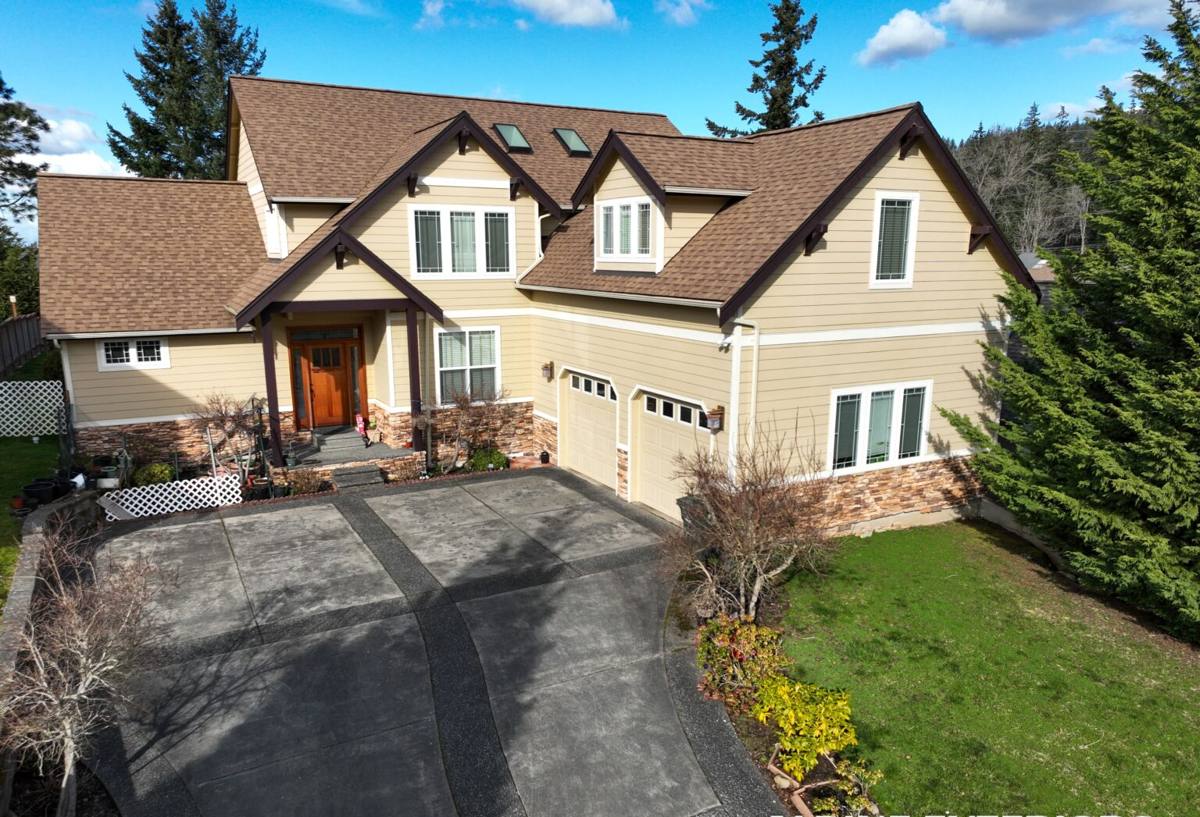
How Salt Air, Rain, and Moss Actually Damage a Deck
Salt Air and Metal Hardware
Salt accelerates corrosion. Standard deck screws, joist hangers, and bolts that would last decades in a drier inland yard can start rusting and weakening within a handful of years this close to the water. Once a fastener corrodes, it loses grip strength — and a deck is only as strong as the hardware holding it together, not the boards sitting on top.
Driving Rain and Water Intrusion
Wind-driven rain doesn't just fall on a deck, it gets pushed sideways and upward into gaps, board ends, and anywhere flashing is missing or poorly lapped. Water that gets trapped between a ledger board and the house, or between decking boards and joists, doesn't dry out quickly in our climate. That's where rot starts.
Moss and Trapped Moisture
Moss holds moisture against wood and framing far longer than open rain exposure does. On shaded sides of a house, or under furniture and planters that never get moved, moss and algae buildup can keep boards damp for weeks at a stretch, even when the rest of the deck has dried out. Over a few seasons that constant dampness softens wood fiber and sets the stage for rot underneath a still-decent-looking top surface.
Signs a Sandy Point Deck Needs Replacement, Not Just Repair
Not every tired-looking deck needs to come out. But there's a real difference between cosmetic wear and structural failure, and it's worth knowing which one you're looking at before you spend money on either repair or a full rebuild.
| What You See | Likely Cause | Repair or Replace |
|---|---|---|
| Faded, graying surface, some splinters | UV and weathering on the wear layer | Often repairable — sanding, sealing, board swaps |
| Soft or spongy spots underfoot | Rot in decking or joists below | Replace affected framing at minimum; often a sign to rebuild |
| Rust streaks around fasteners | Corroding hardware from salt exposure | Replace hardware; inspect framing it was holding |
| Deck feels bouncy or sways at the railing | Weakened structural connections | Replace — this is a safety issue, not cosmetic |
| Green or black film that keeps coming back | Moss/algae holding moisture against wood | Depends on what's underneath once cleaned |
| Gaps opening at the ledger board/house connection | Water intrusion behind flashing | Replace ledger and inspect house sheathing behind it |
If you're only seeing surface wear, a repair or refinish can buy real years. If you're seeing anything structural — softness, movement, corroded connections — replacement is the honest recommendation, because patching a compromised frame just hides the problem under new boards.
What a Correct Deck Replacement Actually Involves
Footings and Framing
Everything starts below the decking you'll actually stand on. Footings need to sit below frost depth and bear on solid, undisturbed soil — not fill dirt or a shortcut poured against an old, questionable footing. Framing lumber should be pressure-treated and rated for ground contact where it's within a few inches of soil or moisture exposure, with joist spacing set to match the decking material's span rating rather than whatever the old deck happened to use.
The Ledger Board Connection
This is the single most common failure point we find on older decks near the water, and it's almost always hidden until the deck is opened up. A proper ledger installation uses continuous flashing that directs water away from the house framing, not caulk alone. Given how much wind-driven rain this area sees, we treat ledger flashing as non-negotiable, not optional upgrade.
Fasteners and Hardware
Given the corrosion issue covered above, hardware selection matters more here than in most parts of the county. Stainless steel or heavy-duty coated fasteners rated for coastal/high-corrosion exposure cost more up front than standard galvanized hardware, but replacing rusted-out joist hangers five years down the road costs a lot more than the difference.
Railings and Guards
Railings take direct wind load in a way that flat decking doesn't, and a failed railing is a fall hazard, not a cosmetic issue. We build railing posts with through-bolted connections into the framing rather than surface-mounted brackets alone, and we check that height and baluster spacing meet current code before calling the job done.
Decking Material Options for This Kind of Exposure
There's no single "best" decking material — there's a best fit for your budget, your maintenance appetite, and how much salt air and shade your particular deck sits in. Here's how the main options actually compare for a Sandy Point property.
| Material | Upfront Cost | Maintenance | How It Handles This Climate |
|---|---|---|---|
| Pressure-treated wood | Lowest | Annual cleaning, periodic sealing/staining | Affordable and repairable, but needs consistent upkeep to resist moss and moisture in a coastal setting |
| Cedar | Mid | Regular sealing to hold color and resist moisture | Naturally moisture-resistant and handsome, but still needs maintenance discipline near salt air |
| Composite decking | Higher | Occasional washing, no staining/sealing | Resists rot and doesn't absorb moisture like wood; some boards can be more prone to surface mold in constantly damp, shaded spots without regular cleaning |
| PVC decking | Highest | Lowest — occasional washing | Fully non-organic, so it won't rot; performs consistently in wet, salty, shaded conditions |
We'll walk you through this trade-off honestly rather than steering you toward whatever has the best margin. If you want the lowest lifetime maintenance and don't mind the higher upfront cost, composite or PVC makes sense this close to the water. If you like the look and feel of real wood and are willing to stay on top of cleaning and sealing, wood is still a legitimate choice — it just demands more from you as the owner.
Our Deck Replacement Process
- On-site assessment. We inspect the existing deck, footings, ledger connection, and framing to determine what's actually driving the failure before recommending full replacement.
- Honest scope and estimate. You get a clear breakdown of what's being removed, what's being rebuilt, material options, and price — no vague allowances that turn into surprise change orders.
- Permitting. We handle the permit application and coordinate any required inspections through the applicable jurisdiction.
- Demolition and disposal. Full removal of the old structure, including footings that don't meet current code or are found to be compromised.
- Rebuild. New footings and framing, corrosion-resistant hardware, properly flashed ledger connection, and your chosen decking and railing system.
- Final walkthrough. We go over the finished deck with you and cover basic care so you know what upkeep is actually needed versus optional.
Permits and Code Considerations
Most deck replacements of any real size require a permit, and if your existing deck was built years ago, current code may call for different footing depth, railing height, guard spacing, or ledger attachment than what's there now. We build to current code as a baseline, not to whatever the original deck happened to meet at the time it went up. Skipping permits on a deck attached to your home isn't a shortcut worth taking — it can create real problems if you ever sell the house or file an insurance claim tied to the structure.
Maintenance That Actually Extends the Life of a New Deck Here
A properly built deck still needs some ongoing attention in a salt-air, high-rain climate. None of it is complicated, but skipping it is exactly how a 25-year deck turns into a 12-year deck.
- Rinse salt spray and debris off the surface periodically, especially after storms
- Sweep moss and organic debris off before it has a chance to hold moisture against the boards
- Keep gutters and downspouts near the deck clear so runoff isn't draining directly onto it
- Check railing connections and fasteners once a year for early corrosion or looseness
- Reseal or restain wood decking on the manufacturer's recommended schedule — don't wait until it looks bad
- Move planters and furniture occasionally so moisture and moss don't get a permanent foothold underneath
- Keep an eye on the ledger board area where the deck meets the house — it's the spot most prone to hidden water damage
Why a Crew That Already Works in Sandy Point Matters
A deck built to a generic inland spec doesn't hold up the same way out here. Hardware that's fine in a dry, sheltered yard corrodes faster with salt air blowing off the water. Flashing details that are "good enough" elsewhere aren't good enough when driving rain is a regular occurrence rather than an occasional storm. We work throughout Ferndale and this part of Whatcom County, and we build every deck replacement — decking material aside — to handle the specific combination of salt exposure, wind-driven rain, and moss that this location deals with every year. That's not a marketing line, it's just what the site conditions require if you want the deck to still be solid in fifteen years instead of five.
If your deck is showing any of the warning signs above, or you're just ready to stop patching an old one, we're happy to take a look and give you a straightforward, no-pressure estimate. Use the form below to get started.