 Ferndale Exterior
 Deck Replacement Built for Everson's Conditions, Not a Generic Climate
Everson sits inland along the Nooksack River corridor, and that setting shapes how a deck ages here. Homes tucked under mature trees or close to the river get more shade and standing moisture on their deck boards than homes out in the open, and that combination is what actually kills a deck long before the framing gives out. Add in the broader Whatcom County pattern of long wet stretches through fall, winter, and spring, and you've got a climate that rewards decks built with drainage and airflow in mind and punishes decks that weren't.
We're based out of Ferndale and already work the roads between here and Everson on a regular basis, so this isn't a one-off job for us. We know which details matter for decks in this specific stretch of Whatcom County — where moss takes hold first, where ledger boards tend to trap water against the house, and where a deck built with the wrong gap spacing or the wrong flashing turns into a soft, spongy problem within a handful of years.
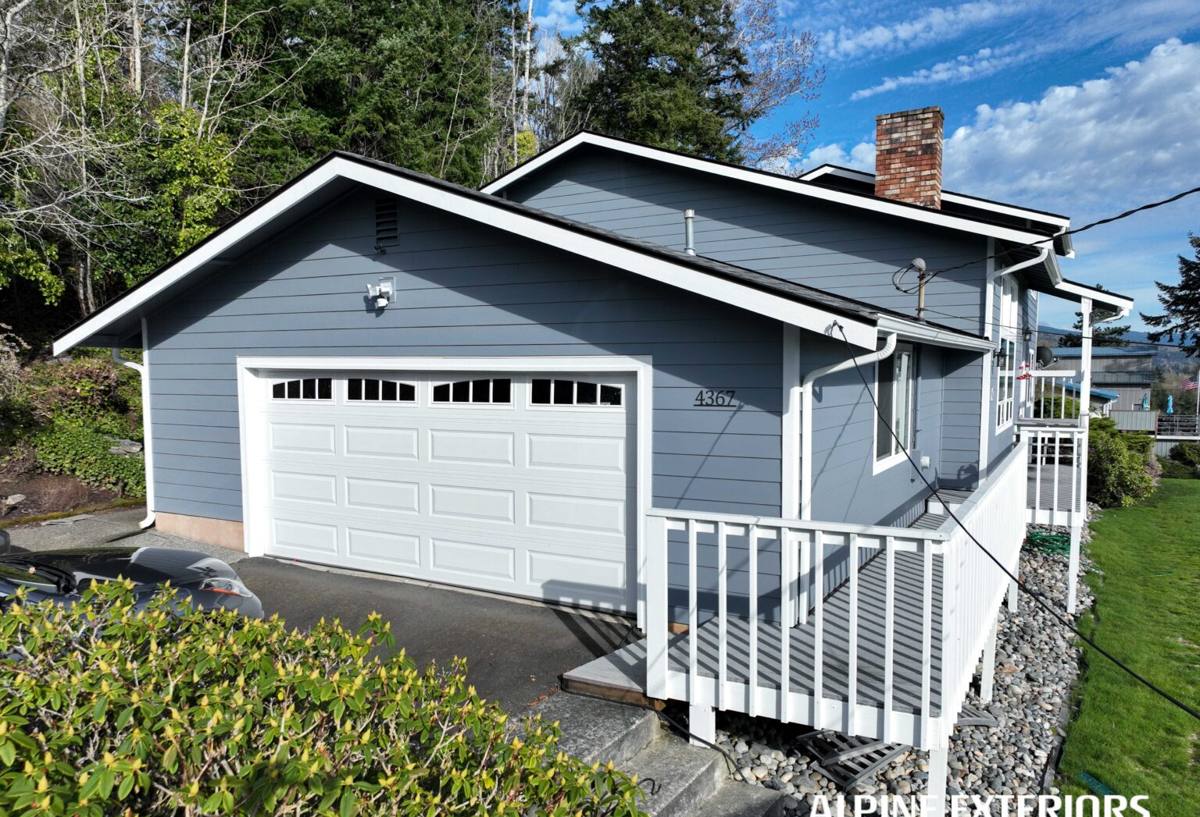
Why Decks Wear Out Faster Around Everson
Shade, Moisture, and a Long Moss Season
Tree cover near the Nooksack keeps things cooler in summer, but it also means decks dry out slower after rain. Boards that stay damp for days at a time grow moss and algae, and moss holds moisture against the wood surface even on sunny days. Over a few seasons, that constant damp cycle softens wood fibers, works fasteners loose, and turns a smooth board surface into a slick, spotted one.
Driving Rain and Water Management
Whatcom County doesn't just get rain — it gets sustained, wind-driven rain that finds gaps in flashing and pushes water sideways into ledger connections and post bases. A deck that wasn't built with proper ledger flashing or that has decking boards laid without enough gap for water to shed will hold moisture right where rot starts: at the house connection and at the joists underneath.
Ground Contact and Footings
Older decks in this area are sometimes built on footings that sit too shallow, or on posts that make direct ground contact. Wet soil against untreated or under-treated wood is one of the most reliable ways to rot a deck from the bottom up, and it's usually invisible until you're pulling up boards and finding soft, spongy joists.
Signs You Need Replacement, Not Just a Repair
A repair makes sense when the problem is isolated — one bad board, one loose railing baluster. Replacement becomes the honest recommendation when the problems are systemic. Here's what tells us a deck has crossed that line:
- Soft or spongy spots when you walk across the decking, especially near the house or stair landing
- Visible gaps or separation where the deck meets the house (ledger board pulling away)
- Persistent moss or dark staining that comes back within weeks of cleaning
- Fasteners that are rusted, popped up, or stripped out of the wood
- Railings or stair stringers that flex or feel loose under normal use
- Joists or beams with visible rot, cracking, or insect damage underneath the deck
- A deck older than 20-25 years that's never had the substructure inspected
If more than one or two of these show up, patching individual boards just delays the same conversation a year or two down the road, usually after the framing has gotten worse underneath.
What a Correct Deck Replacement Actually Involves
A deck replacement done right isn't just swapping old boards for new ones on the same frame. It's a chance to fix the water-management and structural issues that caused the original deck to fail. Our process addresses each layer:
Ledger Board and Flashing
The ledger board — where the deck attaches to the house — is the single most common failure point we find. We install proper flashing that directs water away from the house wall and use ledger fasteners rated for structural load, not the deck screws sometimes used as a shortcut.
Footings and Framing
Footings get set below frost depth per Whatcom County code, and posts are kept off direct ground contact using post bases rather than buried wood. Joists are sized and spaced for the actual span and load, with joist tape or flashing on top of each joist to keep decking fasteners from creating a path for water into the wood.
Decking Surface
Board spacing is set to allow drainage and airflow underneath — tight enough to be safe, loose enough that water and debris don't just sit in the gaps. Fastening method depends on the material chosen, and we'll walk you through hidden-fastener systems versus face-screwed boards and what each means for maintenance down the road.
Railings and Stairs
Railings and stair systems are rebuilt to current code, not just reattached to old framing. This matters for safety and for resale — an outdated railing height or spacing is one of the first things a home inspector flags.
Choosing a Decking Material for This Climate
There's no single "best" decking material — there's a best fit for your budget, your maintenance appetite, and how much shade and moisture your specific deck deals with. Here's how the common options compare for a deck built in the Ferndale/Everson area:
| Material | Moisture & Moss Resistance | Maintenance | Typical Lifespan |
|---|---|---|---|
| Pressure-treated wood | Fair — needs sealing to perform well | Annual cleaning and re-sealing recommended | 10-15 years |
| Cedar | Good natural resistance, but surface still grays and can moss in shade | Periodic cleaning and oiling for appearance | 15-20 years |
| Capped composite | Very good — cap layer resists moisture absorption and staining | Occasional washing, no sealing or staining | 25-30 years |
| Uncapped composite | Fair — earlier generations can absorb moisture at cut edges | More prone to mold in constant shade | 15-20 years |
| PVC decking | Excellent — no wood fiber to hold moisture | Low; occasional washing | 25-30+ years |
For decks that sit under heavy tree cover — common in parts of Everson — we generally steer homeowners toward capped composite or PVC, simply because uncapped or untreated wood surfaces in constant shade are the ones we get called back to clean moss off year after year. That's not a knock on wood as a material; it's just an honest maintenance trade-off worth knowing before you choose.
Our Process, Start to Finish
- On-site evaluation. We walk the existing deck, check the substructure where accessible, and talk through what's driving the replacement — cosmetic wear, structural failure, or both.
- Honest scope and estimate. You get a clear breakdown of what's being replaced, what materials are proposed, and why — no vague allowances.
- Permitting. Deck replacements of most sizes require a Whatcom County permit; we handle that paperwork so it doesn't fall on you.
- Demolition and disposal. Old decking, framing, and debris are removed and hauled off.
- Rebuild. Footings, framing, ledger flashing, decking, and railings installed to current code.
- Final walkthrough. We inspect the finished deck with you before calling the job complete.
Permits and Code in Whatcom County
Most deck replacements that involve new footings, framing, or a deck attached at a certain height above grade require a building permit through Whatcom County. Guardrail height, baluster spacing, and stair rise/run are all governed by code — not preference — and an inspector will check them. Skipping the permit process might save time up front, but it creates real problems at resale and can leave you without recourse if something's built wrong. We pull permits as a standard part of the job rather than treating it as optional.
Why It Matters That We Already Work in Everson
A crew that's unfamiliar with the area is guessing at things a local crew already knows: how Whatcom County's permitting office likes plans submitted, which suppliers can get materials out this direction without delay, and what a deck built for a shaded, river-adjacent lot actually needs versus a deck built for an open, sunny yard. Being based in Ferndale means we're not adding a long drive-time premium to your estimate, and we can get back out for a follow-up or a warranty check without it being a special trip.
Local experience also means fewer surprises mid-project. We've seen how the ground behaves after a wet Whatcom County winter, what kind of drainage issues show up on river-corridor lots, and how to sequence a build so it isn't derailed by the first heavy rain.
Keeping a New Deck in Good Shape
Whatever material you choose, a little seasonal attention goes a long way in this climate:
- Clear leaves and debris from between boards before they trap moisture through fall and winter
- Wash off moss and algae growth early in the season before it spreads across the surface
- Check railing connections and stair fasteners once a year for looseness
- Keep gutters and downspouts near the deck clear so runoff isn't dumping onto or under it
- For wood decking, plan on resealing or restaining on the schedule the manufacturer recommends
If you're in Everson or anywhere in the Ferndale service area and your deck is showing the soft spots, moss buildup, or loose framing that signal it's time for a real replacement, we're glad to come take a look. The estimate is free, there's no pressure to commit on the spot, and you'll get a straight answer about whether repair or full replacement makes sense for your situation.